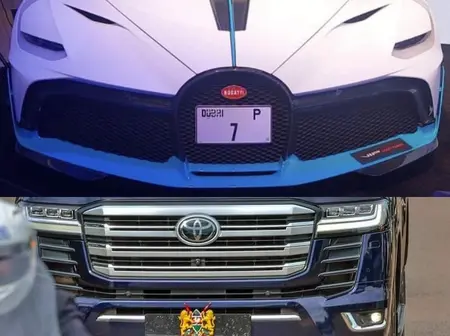
The most expensive car number plate in the world is "P7"The number plate P 7, sold in Dubai, United Arab Emirates (UAE), holds the Guinness World Records title for the most expensive car registration plate.On 8 April 2023, an anonymous bidder paid AED55 million (approximately US$14.97 million) at a charity auction organised by Emirates Auction.
Category: Auto
-
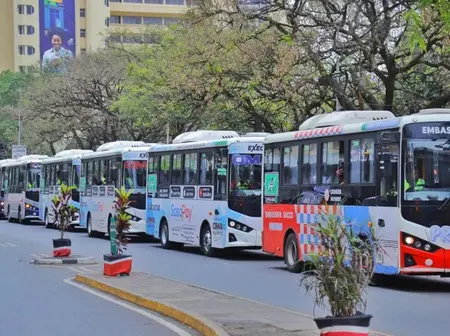
NEMA explains conditions for importing used electric vehicles to Kenya
Kenya has outlined new environmental and quality requirements for used electric vehicle (EV) imports, with the National Environment Management Authority (NEMA) warning that proper battery disposal systems must keep pace with the growing shift to electric mobility.
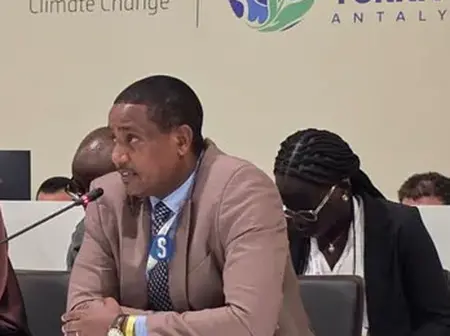
Representing NEMA Director General, Dr. Mamo B. Mamo, during the ongoing United Nations Climate Change Conference COP 31 at the Antalya Expo Centre in Antalya, Türkiye, Dr Anne Omambia said Kenya is open to importing used electric vehicles but stressed that the vehicles must meet verified quality standards and come with a clear plan for managing their batteries once they reach the end of their useful life.
The position was presented by Dr Anne Omambia, who represented Mamo during a UNEP and Naspers-Prosus side event at the ongoing United Nations Climate Change Conference COP31 at the Antalya Expo Center in Antalya, Türkiye.
In an update shared on Sunday, November 15, 2026, NEMA said the discussions addressed Kenya’s position on used EV imports, vehicle quality standards, environmental safeguards and the responsibilities of regulators in the electric mobility sector.
NEMA also pointed to the Sustainable Waste Management (Extended Producer Responsibility) Regulations, 2024, which require producers and importers of batteries to register with NEMA and join an approved Extended Producer Responsibility (EPR) scheme.
“Whoever puts a battery on the Kenyan market is responsible for its end-of-life,” NEMA quoted the Director General as saying.
The requirement is particularly important as Kenya’s electric vehicle market expands, bringing with it the need for systems that can safely handle batteries that are no longer suitable for use.
While electric vehicles offer environmental benefits, NEMA noted that the country still faces practical challenges in managing the waste generated by the technology.
According to the authority, electric vehicles can reduce lifecycle emissions by up to 70 per cent compared with equivalent petrol-powered vehicles.
However, Kenya has limited facilities for safely collecting, transporting, reusing and recycling large volumes of lithium-ion batteries.
The authority also identified gaps in charging infrastructure and reliable local information on battery health, vehicle mileage and vehicle history.
These challenges could make it difficult to establish the actual condition of imported used electric vehicles and determine how long their batteries can remain in service.
“Kenya welcomed the importation of the EVs but with verified quality at the border and a plan for the battery end-of-life,” he said.
He noted that putting these safeguards in place would allow the used electric vehicle market to support Kenya’s transition to cleaner transport while reducing emissions.
The remarks place greater emphasis on the responsibility of importers, battery producers and regulators as Kenya seeks to expand electric mobility without creating a new environmental waste management challenge.
-
Nema outlines safeguards for used electric car imports at COP31
Kenya has outlined strict environmental and quality safeguards governing the importation of used electric vehicles as it seeks to accelerate the transition to clean transport without exposing the country to new environmental risks.
National Environment Management Authority (Nema) Director General Mamo Mamo said Kenya welcomes used EV imports as part of efforts to reduce transport-related emissions, but warned that the vehicles must meet stringent quality standards and have clear end-of-life battery management plans.
Speaking during a high-level side event organised by the United Nations Environment Programme (UNEP) and Naspers-Prosus at the ongoing United Nations Climate Change Conference (COP31) in Antalya, Türkiye, Mamo said the transition to electric mobility must be accompanied by robust environmental safeguards.
He noted that electric vehicles can reduce lifecycle emissions by up to 70 per cent compared with conventional petrol-powered vehicles, making them an important technology in efforts to decarbonise the transport sector.
However, he emphasised that imported vehicles must undergo verified quality checks at the border and meet clear requirements for the safe management of batteries once they reach the end of their useful life.
A key part of Kenya's regulatory framework is the Sustainable Waste Management (Extended Producer Responsibility) Regulations, 2024, which place legal responsibility on producers and importers for managing waste generated by products they introduce into the market.
“Under these regulations, there is mandatory registration. All producers and importers of batteries must register with Nema,” Mamo said.
He added that importers must also belong to an approved Extended Producer Responsibility (EPR) scheme.
“Any entity introducing a battery onto the Kenyan market bears full responsibility for its end-of-life management,” he said.
The framework is intended to ensure that battery waste is properly collected, transported, reused or recycled rather than becoming an environmental and public health hazard.
Despite the regulatory framework, Nema acknowledged that Kenya faces practical challenges in managing the growing electric mobility sector.
The country has a shortage of specialised facilities capable of safely collecting, transporting, reusing and recycling large volumes of lithium-ion batteries.
Other challenges include the uneven distribution of charging infrastructure and limited access to reliable local data on battery health, vehicle mileage and vehicle history.
The safeguards come as Kenya seeks to reduce emissions from a transport sector heavily dependent on fossil fuels.
The country's economic expansion, driven by agriculture, services, construction and manufacturing, has increased demand for motorised transport, contributing to rising greenhouse gas emissions.
More economic activity also means increased movement of people and goods, further driving demand for petrol and diesel-powered vehicles.
The transport sector consumes about 72 per cent of the petroleum products imported into Kenya, highlighting its dependence on fossil fuels.
In 2015, transport accounted for 13 per cent of the country's greenhouse gas emissions, a figure projected to rise to 17 per cent by 2030, largely due to population growth and industrialisation.
To address this challenge, the government has developed an e-mobility policy that identifies electric vehicles as a key decarbonisation technology in its ambition to achieve net-zero carbon emissions by 2050.
Electric mobility refers to the use of electric power for transportation and covers a range of vehicles, including cars, buses, two-wheelers and three-wheelers.
The wider e-mobility category also encompasses trains, trucks, ships, ferries and off-road vehicles.
Through stricter import controls, producer accountability and improved battery waste management, Kenya aims to develop a circular electric mobility ecosystem that supports emissions reduction while protecting public health and the environment.
-
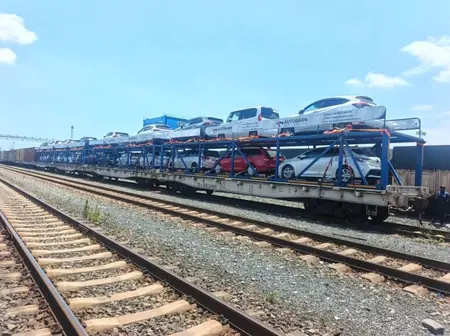
No Plates at the Port: Inside KRA’s New Rules Changing How Imported Cars Enter Kenya
A quiet revolution is underway at the Port of Mombasa and across car showrooms nationwide after the Kenya Revenue Authority (KRA) rolled out new rules altering what happens to imported vehicles before they are officially registered.
Previously, licensed dealers had to pay both customs duties and NTSA registration fees upfront before a car could leave port custody. That system forced dealers to register vehicles under their own company names first, leaving retail buyers with "second-hand" logbooks and extra transfer expenses.
Under the revised rules, the pre-registration journey now follows a tightly monitored four-step pipeline:
First, dealers lodge their import entries in KRA's customs system and settle all mandatory import taxes and levies without paying NTSA registration fees.
Second, instead of issuing standard number plates, NTSA generates a unique digital tracking code combining the dealer’s KD number and the vehicle’s chassis number, linking it directly into KRA’s system.
Third, customs officers physically verify the car against the digital identifier before a Centralised Release Officer authorizes its transfer to the dealer's showroom yard.
While the automated KRA-NTSA data trail prevents dealers from diverting untaxed vehicles onto public roads, the overhaul delivers immediate relief to the auto market: faster port clearances, lower showroom overhead, and cleaner ownership histories for Kenyan motorists.
Source:https://peopledaily.digital/insights/explainer-what-happens-to-imported-cars-before-they-are-registered-under-the-new-kra-rules
-
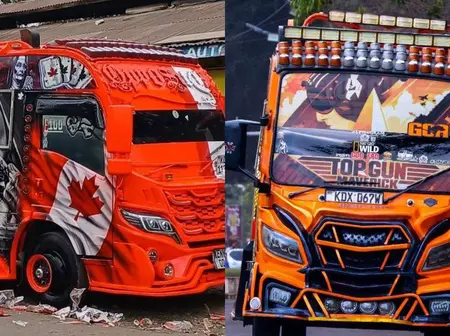
Matatu Awards: Kasarani’s Ronin, Kayole’s Topgun and Umoja’s Opposite nominated for Kenya 1 title
Ma3 TV Show has unveiled seven customised Nairobi matatus nominated for the coveted Kenya 1 title at the 2026 Ma3 Gala Awards, setting up a contest involving some of the city’s most recognisable nganyas.In a Facebook post shared on Wednesday, November 4, the organisers announced the nominees for the seventh edition of the awards, listing Ronin, Ferrari, Optimus, Baba Yaga, 1977, Topgun and Opposite in the Kenya 1 category.
-

Zuchu Swags Up: Singer Buys Dream Bentley
In SummaryZuchu Swags Up: Singer Buys Dream Bentley.A new Bentley costs between $200,000 and $420,000 for standard production models whereas Zuchu Swags Up: Singer Buys Dream Bentley can go up to $1,000,000.Zuchu asserted that the development is an affirmation that dreams are valid.
-
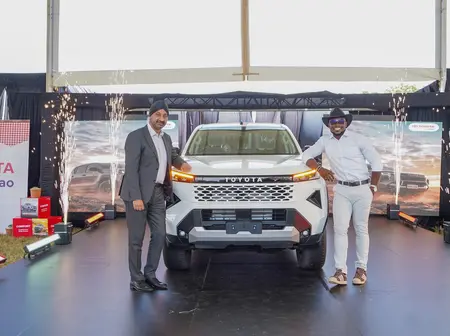
All about the new ninth-generation Toyota Hilux by CFAO Mobility
Kenyan businesses will pay at least Sh7.87 million for the latest Toyota Hilux as CFAO Mobility Kenya rolls out the ninth-generation pickup, betting on rising demand for commercial vehicles amid an expanding vehicle market.The new Hilux, locally assembled and adapted to Kenyan conditions, comes as pickups emerge as the fastest-growing category in the country's new vehicle market, highlighting increased demand for vehicles used in trade, construction, agriculture and logistics.
-
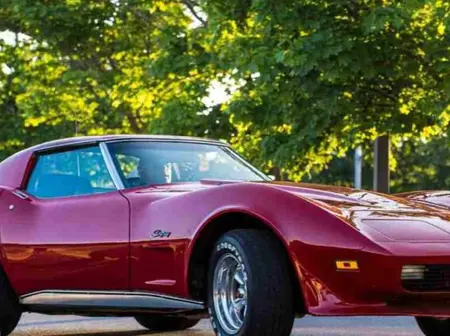
6 Key Things Every Classic Corvette Owner Should Know
A classic Corvette combines distinctive styling, American performance, and decades of automotive history. However, buying one involves more than choosing a favourite generation or paint colour. Below, we break down what to know about owning a classic Corvette.Learn the Differences Between GenerationsEach Corvette generation delivers a different driving experience.
-

2mbili Buys a BMW X3 as He Returns to Driving After Six-Month Break Following Fatigue-Related Accidents
Kenyan content creator and media personality 2mbili has returned to driving after taking a six-month break following a series of accidents that he attributed to fatigue. The return marks an important moment for the entertainer, who has now revealed that he has bought a BMW X3 as he gets back behind the wheel. His decision to step away from driving for half a year came after repeated incidents raised concerns about the risks associated with exhaustion on the road. The new vehicle signals a fresh chapter for 2mbili, but his experience also highlights the importance of recognising fatigue as a serious road safety issue. By taking time away from driving, he gave himself an opportunity to step back from the situation and reassess his approach to road travel.
Fatigue can significantly affect a driver’s ability to remain alert, react quickly and make sound decisions behind the wheel. Long working hours, inadequate rest and demanding schedules can contribute to tiredness and reduce concentration, creating conditions that increase the risk of an accident. For someone working in the entertainment and media industry, irregular schedules can make adequate rest more difficult to maintain. 2mbili’s decision to stop driving for six months after experiencing several accidents shows the seriousness with which he approached the situation. Instead of immediately returning to the road, he chose to take an extended break, allowing time to distance himself from a pattern that had resulted in dangerous consequences.
The purchase of a BMW X3 adds another dimension to 2mbili’s return to driving. The BMW X3 is a premium sport utility vehicle that combines passenger space with features designed for everyday driving and long-distance travel. For 2mbili, the new vehicle represents more than a new addition to his lifestyle because it arrives at a point when he is deliberately returning to an activity he had temporarily abandoned. The purchase also reflects the confidence he has in getting back on the road after his extended break. However, the vehicle itself cannot eliminate the dangers associated with driver fatigue, making responsible driving habits especially important as he resumes driving.
2mbili’s experience serves as a reminder that road accidents can happen even to experienced drivers when fatigue affects their ability to concentrate. A driver who feels extremely tired may struggle to maintain attention, react appropriately to sudden situations or recognise hazards in time. Fatigue can also create periods of reduced awareness that make driving particularly dangerous, especially during long journeys or late hours. Taking a break from driving can be an important step when a person recognises that exhaustion has become a recurring problem. In 2mbili’s case, the six-month break demonstrates that acknowledging the problem and changing behaviour can be more important than simply getting back on the road immediately after an accident.
His return is also likely to attract attention from fans who have followed his career and personal updates. 2mbili has built a public profile through entertainment and digital media, meaning significant changes in his life often become part of conversations among his audience. The decision to share news about his BMW X3 gives followers an insight into a new phase after a challenging period involving multiple accidents. It also creates an opportunity for the public to discuss the circumstances that led him to stop driving in the first place. The story is therefore about both a new vehicle and a personal decision to approach driving differently after experiencing the consequences of fatigue.
Buying a new vehicle after a difficult period can also carry an emotional significance for someone who has experienced multiple accidents. The BMW X3 may represent a sense of moving forward and regaining independence after months away from driving. At the same time, returning to the road can come with a greater awareness of the responsibilities that come with operating a vehicle. 2mbili’s previous experiences could encourage him to place greater emphasis on rest and planning before travelling. His story can also remind other motorists that there is no benefit in continuing to drive when exhaustion makes it difficult to remain fully alert.
The six-month period away from driving is particularly significant because it shows that 2mbili did not treat the accidents as isolated incidents. A series of crashes connected to fatigue can point to a wider problem with schedules, rest and the pressure to keep moving despite exhaustion. Taking an extended break gave him time to change his routine rather than simply hoping that another accident would not occur. Returning to driving with greater awareness could help him avoid repeating the circumstances that previously placed him and other road users at risk. The experience demonstrates why drivers should take warning signs of fatigue seriously before they become involved in an accident.
The arrival of the BMW X3 also places attention on the broader relationship between cars and public figures in Kenya’s entertainment industry. Vehicles often form part of an entertainer’s public image, particularly when celebrities share their purchases and lifestyle updates with followers. Yet 2mbili’s story stands out because the new vehicle follows a period in which he deliberately chose not to drive. The focus is therefore not simply on the model he has purchased but on why he stopped driving and what has changed since then. His return could encourage a more responsible conversation about driving habits, particularly among people whose professional schedules require frequent travel.
As 2mbili resumes driving, his experience offers a practical lesson for other motorists who struggle with demanding schedules and inadequate rest. A vehicle can have modern safety features, but those features cannot replace an alert and responsible driver. When fatigue becomes overwhelming, taking a break, postponing a journey or finding another way to travel can prevent a potentially serious accident. 2mbili’s six-month decision to stay away from driving shows that stepping back can be necessary when circumstances make driving unsafe. His return should therefore be accompanied by the same awareness that led him to take the break in the first place.
The purchase of the BMW X3 marks a new chapter for 2mbili as he returns to the driver’s seat after six months away from the road. His decision to take that break followed a series of accidents linked to fatigue, making the return more significant than an ordinary new-car purchase. The experience has highlighted the risks that exhaustion can create for motorists and the importance of making safety a priority. As he begins driving again, his story offers a reminder that responsible road use starts with knowing when you are not fit to drive. The BMW X3 may symbolise his return to the road, but the most important change will be the lessons he carries with him from the six months he spent away from driving.
-

4 Ways Preventive Maintenance Leads to Better and Safer Driving
Preventive maintenance supports safer driving during daily commutes and long road trips. Drivers often ignore small issues because the car still runs without obvious trouble, but these minor problems can quickly affect steering control and tyre traction on the road. Many accidents happen because drivers delay repairs or skip basic maintenance checks.