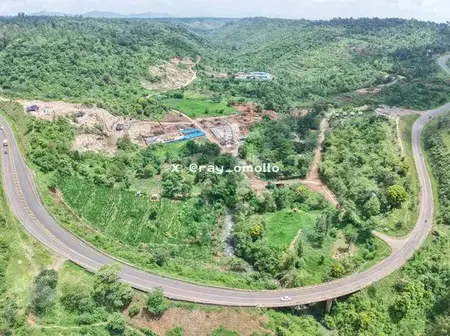
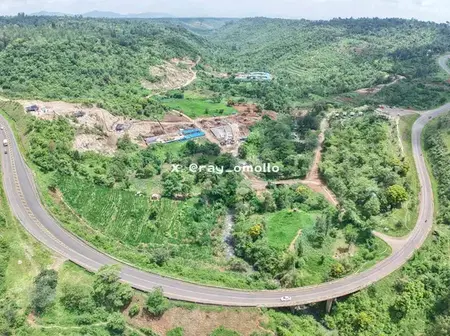
Interior Principal Secretary Raymond Omollo has highlighted progress on the reconstruction of Nithi Bridge, a major infrastructure project expected to improve road safety and connectivity along the Makutano–Embu–Meru (A9) Highway.
In an update shared on Monday, November 23, Omollo outlined key features of the ongoing project, which seeks to address longstanding safety challenges associated with the existing crossing.
Originally constructed in 1985, Nithi Bridge has over the years gained notoriety as a dangerous road section because of its steep gradients, sharp bends and challenging terrain.
Despite several repair works, the underlying design challenges have continued to expose motorists to road accidents, prompting the government to pursue a comprehensive reconstruction.
According to Omollo, the new crossing will feature an 880-metre high-level viaduct rising approximately 100 metres above the Nithi River valley.
The project will also incorporate 2.7 kilometres of realigned approach roads connecting Marima and Mitheru, allowing motorists to bypass the dangerous descent along the existing route.
Other planned features include wider carriageways, pedestrian walkways, crash barriers and improved visibility to enhance protection for motorists and pedestrians.
Once completed, the upgraded infrastructure is expected to transform the notorious black spot into a safer transport corridor.
The bridge will also improve connectivity between Nairobi, Central Kenya, Tharaka Nithi, Meru and the wider Upper Eastern region, facilitating the movement of passengers and goods.
The improved transport link is further expected to support trade, tourism and other economic activities across the region.
Omollo added that the State Department for Internal Security and National Administration was supporting the initiative through road safety awareness, community engagement and improved access to government services.
The reconstruction represents a significant government investment in addressing persistent road safety challenges through modern infrastructure development.
Although it has undergone several repairs, the underlying design challenges remained unresolved.
The government is now pursuing major reconstruction project intended to provide a lasting solution and improve safety for motorists using the busy highway.
According to details shared by Omollo, new crossing will feature an 880-metre high-level viaduct rising approximately 100 metres above the Nithi River valley.
The project also includes 2.7 kilometres of realigned approach roads connecting Marima and Mitheru, allowing vehicles to navigate the area without negotiating the dangerous descent that has characterised the existing route.
Additional safety features will include wider carriageways, pedestrian walkways, crash barriers and improved visibility to protect motorists and other road users.
Once completed, the upgraded bridge is expected to transform one of Kenya's notorious road black spots into a safer transport link.
Omollo noted that the State Department for Internal Security and National Administration was supporting initiative through road safety awareness, community engagement and improved access to govt services.
The project represents a major effort to address persistent road safety challenges through long-term infrastructure investment.
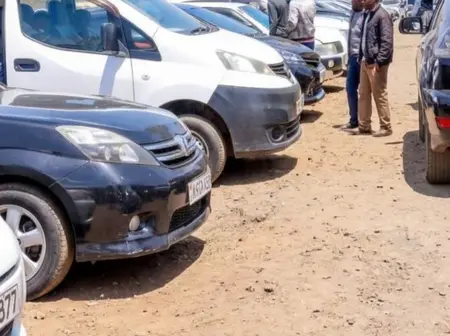
Onyango & Tarus Advocates has invited interested buyers to submit offers for the vehicles through a private treaty arrangement conducted on behalf of the respective owners.
The vehicles are located at different storage facilities and yards across several counties, including Nairobi, Kiambu, Uasin Gishu, Nakuru, Kisii, Bungoma, Narok and Garissa.
The collection features different categories of vehicles, including saloon cars, SUVs, station wagons, pickups and commercial trucks. Their manufacturing years range from 2000 to 2017.
Toyota accounts for a significant portion of the available units, with models such as the Probox, Premio, Allion, Harrier, Noah, Crown Royal and Corolla Fielder included in the catalogue.
Other manufacturers represented are Nissan, Honda, Subaru, Mazda, Isuzu, Daihatsu, Ford, Mercedes-Benz and Volkswagen.
The least expensive vehicle is a 2012 Subaru Forester S/Tb 2.0X S15 Auto, which has a reserve price of KSh 167,000. It is available for inspection at Capital Diamond in Thika.
At the other end of the price range is a 2017 Volkswagen Arteon valued at KSh 2,668,000, with viewing arranged at Naivasha Storage.
A 2015 Ford Ranger is also among the higher-priced options, carrying a reserve price of KSh 2,595,000. It is located at Kefa Autobazaar.
Other notable entries include a 2010 Mercedes-Benz ML 350 Petrol priced at KSh 1,541,000 and a 2008 Isuzu FVR23P truck listed at KSh 1,415,000.
Buyers interested in more affordable options can consider a 2002 Nissan Sunny FB15 listed at KSh 235,000, a 2000 Toyota Carina AT212 at KSh 265,000 or a 2010 Nissan Note E11 at KSh 293,000.
The catalogue also includes a 2014 Toyota Probox priced at KSh 495,000, a 2007 Toyota Noah going for KSh 460,000 and a 2006 Toyota Harrier listed at KSh 794,000.
According to the sale notice, all vehicles will be disposed of on an 'as is where is' basis. This means successful buyers will acquire the units in their existing condition, making physical inspection an important step before submitting an offer.
Prospective buyers have been directed to visit the designated yards to assess the vehicles before making their bids.
Offers are to be submitted through the Eezy Cars platform at www.eezycars.co.ke.
Those seeking additional information can contact the organisers through sales@eezycars.co.ke or call 0783 616458 and 0709 335005.
The deadline for submitting offers is December 1, 2026.
Interested bidders are therefore encouraged to establish the condition of their preferred vehicles, confirm their viewing locations and review the sale requirements before placing their offers.
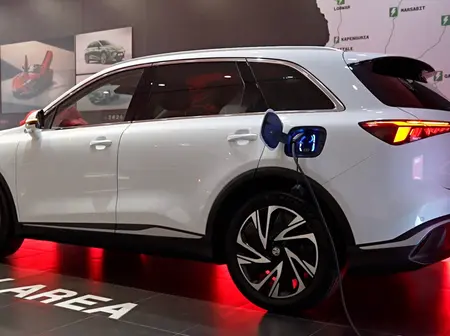
Simba Corporation has launched MG in Kenya as the British-born brand's exclusive distributor.The company is bringing in four electric and petrol models and plans to assemble MG cars locally in Mombasa.The models will be built on Simba's Sh1 billion electric vehicle assembly line at Associated Vehicle Assemblers (AVA).
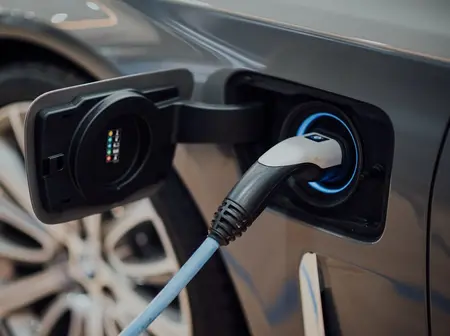
South Africa’s electric vehicle market is expanding faster than its public charging infrastructure, putting greater emphasis on residential electricity generation as motorists look for affordable ways to run rechargeable cars.
New Energy Vehicle (NEV) sales reached 22,389 units between January and September 2026, surpassing the 16,703 recorded during the whole of 2025, according to the Automotive Business Council (Naamsa). Yet the country has approximately 445 public electric vehicle charging locations against an estimated 4,600 conventional petrol and diesel service stations, according to GoSolr’s Electric Vehicle Light Paper.
The difference is particularly relevant for motorists considering battery electric vehicles and plug-in hybrids, whose ownership economics depend partly on access to affordable electricity. GoSolr’s research puts residential solar generation at the centre of that calculation, with the company’s chief technology officer, Dr Patrick Narbel, reporting substantially lower running costs after switching from petrol to an electric SUV powered largely by his household solar installation.
The composition of new energy vehicle sales is changing alongside the growth in overall volumes. Naamsa reported that rechargeable vehicles, comprising battery electric vehicles (BEVs) and plug-in hybrids (PHEVs), accounted for 50.5% of cumulative NEV sales by September 2026. Traditional hybrids represented the remaining 49.5%.
September also produced a notable sales milestone, with one in every nine new vehicles sold being an NEV, according to the industry body.
The figures indicate a growing contribution from vehicles that require external electricity charging, placing additional attention on the infrastructure needed to support ownership. Naamsa also reported early adoption across light and medium commercial vehicle categories, extending electrification beyond private passenger transport.
The market’s expansion is creating opportunities across vehicle distribution, charging services and energy supply. However, the geographical distribution of charging facilities remains uneven.
GoSolr estimates that 78% of South Africa’s public charging points are concentrated in Gauteng and the Western Cape. Motorists travelling through other provinces face fewer charging options, particularly along some of the country’s longer intercity routes.
South Africa is targeting its 1,000th public EV charging station by the end of 2026, according to the report.
Residential electricity generation offers another route for EV owners seeking to manage charging expenses. GoSolr CTO Dr Patrick Narbel’s experience provides a practical illustration of how solar panels, battery storage and intelligent charging equipment can work together.
After driving 7,000km in a mid-size electric SUV with a 68kWh battery and approximately 400km of practical range, Narbel reported average consumption of 13.3kWh per 100km. His household installation comprises a 12kW hybrid inverter, 15kWh of battery storage and slightly more than 8kW of solar panels.
The system allows him to charge the vehicle primarily from electricity generated at home. Narbel said approximately 60% of his charging came directly from solar during winter, with an estimated annual contribution of 70%. He expects the share to approach 100% during high summer with careful charging schedules.
His experience also demonstrates the importance of managing household electricity demand. An ordinary wall socket initially proved inadequate for routine charging, returning approximately half the vehicle’s battery capacity after 10 hours. A dedicated home charger improved charging speed, but operating it alongside appliances such as the geyser and oven repeatedly overloaded the household supply.
Narbel subsequently installed a dynamic charger that monitors electricity consumption across the house and adjusts the vehicle’s charging rate when other appliances draw power.
The financial comparison is substantial. According to Narbel, a full 68kWh charge using electricity from his Cape Town grid tariff costs approximately R280. With around 70% of his charging supplied by rooftop solar, the effective cost falls to roughly R85.
His previous Volkswagen Polo averaged 5.5 litres per 100km. At R25 per litre, covering 400km cost approximately R550 in petrol. A similarly sized petrol SUV such as the Hyundai Creta, using around eight litres per 100km, would require approximately R800 in fuel for the same distance.
Public charging remains more expensive than his residential solar arrangement. GoSolr puts public charging prices at between R5 and R8.50 per kWh.
Narbel said he had needed to alter his route to accommodate charging only once during his 7,000km of driving, on a longer journey covering Cape Town, De Hoop, the Karoo and Calitzdorp.
South Africa’s charging network is being expanded by operators including Rubicon, GridCars and Zero Carbon Charge. The latter is planning solar-powered charging hubs approximately 150km apart along national routes.
The spacing is intended to improve charging access for motorists undertaking longer journeys, particularly on routes where existing infrastructure is limited.
One example identified by GoSolr is the approximately 300km stretch of the N1 between Beaufort West and Three Sisters, which lacks public charging facilities. Such gaps complicate long-distance travel for EV owners who depend on the public network.
Infrastructure costs are also affecting the pace of expansion. GoSolr estimates that extending a reliable electricity connection to a remote charging location along the N1 can cost up to R2 million for a single site.
This adds a substantial infrastructure expense to the installation of charging equipment, particularly in areas with limited existing electricity distribution networks.
The company argues that residential charging can reduce dependence on public facilities for routine journeys. Its CEO, Andrew Middleton, said: “The charger that matters is the one on your own roof, and once that’s in place, the everyday range anxiety and the forecourt queue fall away.”
He added that long-distance journeys still depend on the public charging network.
Developments in Kenya provide a regional example of how fuel retailers and electricity companies are participating in electric mobility infrastructure.
In July 2026, EcoNews reported that BasiGo and Rubis were expanding their charging partnership, including a 100kW DC fast-charging installation at Rubis Sabaki in Athi River. The installation supports CCS2 and GB/T charging standards, with the companies identifying additional locations in Meru, Nanyuki and Nyeri for expansion.
Rubis operates more than 300 service stations in Kenya, giving the partnership access to an established fuel retail network.
Kenya Power has also reported growth in electricity sales to the e-mobility sector. According to figures reported by EcoNews, cumulative EV charging revenue reached KSh382 million between July 2023 and April 2026, while monthly revenue increased to KSh35 million.
The commercial transport market is also attracting financing. Co-operative Bank committed KSh1.5 billion over 12 months to electric public service vehicle financing in November 2026, according to EcoNews. Its programme covers vehicle acquisition and associated charging infrastructure.
These developments illustrate the different businesses involved in building an EV charging ecosystem, from established fuel retailers and electricity utilities to commercial lenders.
Electric vehicle charging will add to electricity demand as more rechargeable vehicles enter the market. The availability of generation, storage and distribution infrastructure will therefore remain relevant to both public charging operators and residential consumers.
Kenya’s electricity storage investment provides another example of the infrastructure requirements associated with renewable energy integration. EcoNews reported in November 2026 that KenGen had secured KSh10.5 billion in financing for a planned 100MWh battery energy storage system across Olkaria, Kipevu, Embakasi and Muhoroni.
The project is intended to store surplus renewable electricity for use during periods of higher demand.
South Africa’s charging operators face a more immediate site-level challenge in connecting remote locations to reliable electricity supplies, while residential EV owners are exploring solar generation and household battery storage to manage their own consumption.
For Naamsa, sustained growth in the NEV market will require policy support, charging infrastructure expansion and local manufacturing investment. The industry body also sees commercial vehicle electrification as an opportunity to extend the transition into logistics and fleet operations.
As South African rechargeable vehicle sales continue to expand, the economics of ownership will depend on more than the purchase price of the car. Access to charging, electricity costs and the investment required to supply power at home and along national routes will increasingly influence the market.
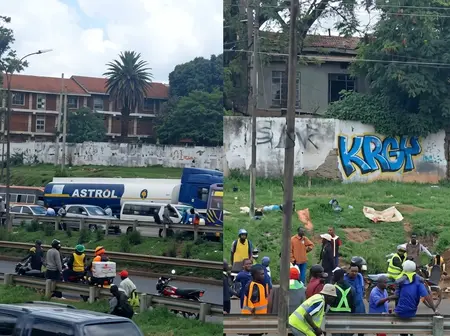
Motorists using Thika Superhighway encountered major delays on Monday, November 23, 2026, after demonstrations disrupted traffic around the Roysambu area.
The incident affected one of Nairobi's busiest transport routes, with vehicles reportedly experiencing difficulties moving past the section where protesters had gathered.
Videos circulating from the scene showed a group of men, some arriving on motorcycles, occupying part of the highway and preventing motorists from proceeding freely.
The disruption resulted in a significant traffic build-up, with congestion reportedly extending from Roysambu towards Kahawa Wendani.
Motorists heading towards Nairobi's Central Business District were among those affected, with the situation causing delays for commuters travelling from Kasarani, Ruiru and other areas along the Thika Road corridor.
The protests interrupted the normal movement of vehicles along the highway, forcing motorists to navigate through the affected section as traffic continued accumulating.
Although the demonstrators were initially identified in reports as boda boda operators, the precise identity of everyone involved had not been independently established.
The reasons behind the demonstrations also remained unclear by the time the incident was reported.
Thika Superhighway is a major transport connection serving thousands of motorists travelling between Nairobi and neighbouring residential and commercial centres.
Consequently, any disruption along the route can affect commuters, public service vehicles and other road users relying on the highway for their daily journeys.
Motorists travelling through Roysambu and neighbouring areas were urged to remain alert and consider alternative routes where possible as the situation developed.
It was not immediately established how long the blockade would continue or when normal traffic movement would resume.
There was also no immediate confirmation of whether security agencies had intervened to restore movement along the affected section.
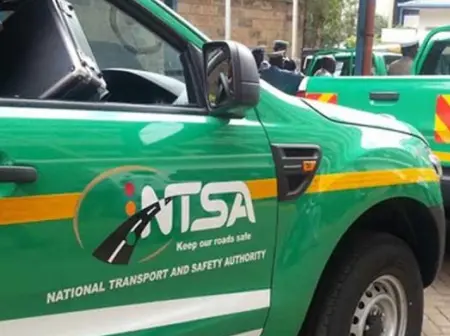
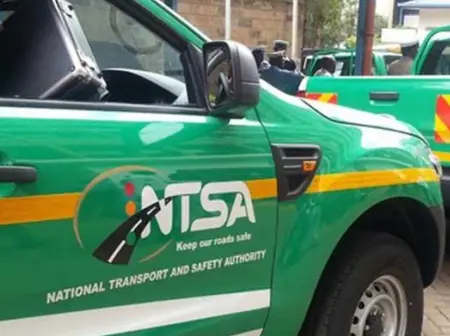
In an advisory shared on Monday, November 23, 2026, the authority urged drivers to obey traffic regulations, avoid speeding, and exercise heightened caution as highway traffic builds up across the country.
At the same time, NTSA challenged passengers to play an active role in protecting their own lives by fastening their seat belts and speaking up immediately whenever a driver engages in dangerous or reckless behaviour.
The Monday reminder builds on earlier festive advisories issued by the agency—including a November 19 appeal stressing that families traveling with children under 12 must use properly installed, age-appropriate child car seats because standard adult seat belts do not adequately protect young children.
The warning forms part of NTSA’s broader "Msimu Bila Ajali" festive safety campaign, under which enforcement officers have intensified day-and-night compliance checks targeting drink-driving, speeding, faulty speed limiters, worn-out tyres, unroadworthy vehicles, and invalid licences or PSV badges.
The push comes amid sobering road safety figures showing 4,532 road crash fatalities recorded between January 1 and November 10, 2026—up from 4,138 over the same period in 2025—prompting renewed appeals for discipline during the busy year-end travel window.
What are your thoughts about this article? Share your reactions in the comment section and don't forget to share and follow for more updates.
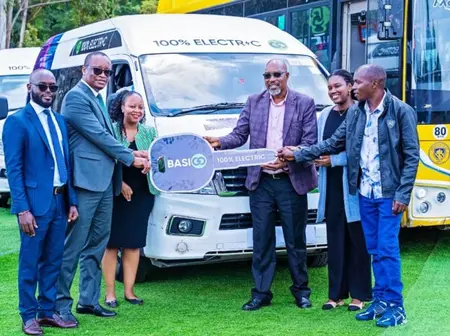
The growing fleet, assembled largely in Kenya using technology and components sourced from China, is introducing a new option for public service vehicle operators seeking alternatives to traditional diesel-powered buses.
The Chinese Embassy in Kenya highlighted the development on Monday, November 23, describing the vehicles as part of efforts to reduce transport-related emissions and noise while improving passenger experience.
The deployment is being spearheaded by local electric mobility company BasiGo, which works with Kenya Vehicle Manufacturers to assemble the buses at its facility in Thika, Kiambu County.
BasiGo Managing Director Moses Nderitu told Xinhua that between 70 and 80 per cent of the buses are assembled locally using Completely Knocked Down kits imported from China.
The partnership is also creating opportunities for local employment and technical skills development while supporting Kenya’s vehicle manufacturing industry.
What the Electric Buses Mean for Matatu Operators
For SACCOs and individual transport businesses, electric buses offer an alternative to vehicles that depend on diesel, whose prices can fluctuate and affect operating costs.
The buses can cover approximately 190 to 230 kilometres during a normal working day before returning to charging depots. A full charge takes about two hours.
Drivers have also reported differences in comfort when operating the battery-powered vehicles.
Johnson Kamau Wanja, who spent 17 years driving diesel buses before switching to electric models, told Xinhua that the experience was more comfortable.
He attributed the difference to the quieter operation of electric vehicles compared to conventional buses.
Financing and Infrastructure Remain Key Challenges
Despite the growing fleet, high purchase prices remain a major obstacle to wider adoption. Charging facilities, availability of spare parts and access to technicians trained in electric vehicle maintenance are also important considerations.
Financing could help more PSV operators acquire the vehicles. On November 13, Co-operative Bank of Kenya launched an e-mobility financing programme targeting matatu SACCOs.
Kenya's electricity mix, which includes geothermal, wind and solar power, also offers an opportunity to support the expansion of electric transport.
The deployment of 102 buses marks progress in introducing electric mobility into the matatu industry. However, wider adoption will depend on whether operators can afford the vehicles and whether charging and maintenance infrastructure can keep pace with demand.
A major legal battle has put Chinese car manufacturer BYD in a difficult position after a European court issued an order blocking the sale of one of its latest SUVs across the European Union.
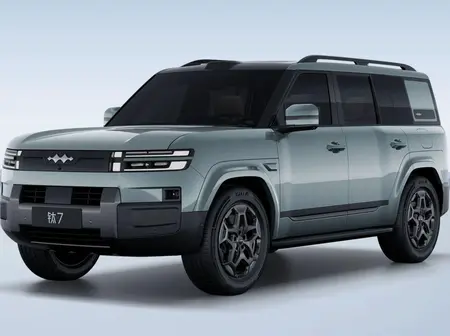
The decision concerns the BYD Ti7, a seven-seater vehicle that has attracted attention because of its resemblance to the popular Land Rover Defender.
On Friday, November 20, 2026, a district court in The Hague, Netherlands, ruled that the design of the Chinese-made SUV infringes on Jaguar Land Rover's registered European Union design rights for the Defender.
The court found that several distinctive features of the Defender were reflected in the BYD Ti7. These include its boxy shape, upright body, squared wheel arches and rear design.
Following the ruling, BYD was ordered to stop importing, producing, advertising, selling and distributing the vehicle within the European Union. The restriction also affects plans to manufacture the SUV at the company's upcoming factory in Hungary.
The dispute began after BYD announced plans to introduce the seven-seater Ti7 to British customers, with deliveries expected to start in January 2027.
Jaguar Land Rover, which is owned by India's Tata Motors, took legal action to protect the design of its Defender model.
BYD has strongly disagreed with the court's decision, maintaining that the Ti7 was developed through its own independent design process. The company has also announced plans to appeal the ruling.
The Chinese automaker has recorded significant growth in Europe, with its vehicle sales more than doubling during the first nine months of 2026 compared with the same period in 2025.
The court battle now presents another challenge as the company seeks to strengthen its position against established automotive brands.
In public messaging shared across its official channels, the authority emphasized that road safety is a shared obligation and urged road users to treat compliance as a top priority throughout the holiday period.
NTSA’s appeal directs clear responsibilities to both sides of a journey. Motorists have been instructed to strictly observe traffic regulations, avoid speeding, guard against driver fatigue, and exercise heightened caution—especially as weather shifts and highway traffic intensifies.
At the same time, the authority has challenged passengers to fasten their seat belts and speak up immediately if a driver engages in reckless or dangerous conduct.
NTSA has also placed strong emphasis on child passenger protection, reminding parents and guardians that standard seat belts do not adequately protect children under the age of 12 and urging the use of properly fitted child car seats suited to each child's age, weight, and height.
The warning comes amid sobering crash statistics and heightened enforcement under the authority's Msimu Bila Ajali festive season campaign.
According to NTSA data, 4,532 people lost their lives in road crashes between January 1 and November 10, 2026, up from 4,138 during the same period in 2025, with vulnerable road users—including pedestrians, motorcyclists, and passengers—accounting for a majority of fatalities.
Working alongside the National Police Service and the Judiciary, NTSA has intensified day and night compliance checks targeting speeding, drunk driving, overloading, driver fatigue, unroadworthy vehicles, and invalid licences or PSV badges, warning offenders of arrest, fines, prosecution, and vehicle impoundment.
What are your thoughts about this article? Share your reactions in the comment section and don't forget to share and follow for more updates.