Author: lincor

  • Government releases Sh1.69 billion for Inua Jamii payout

    Government releases Sh1.69 billion for Inua Jamii payout

    The government has released Sh1.69 billion to 423,520 households caring for orphans and vulnerable children under the Inua Jamii social protection programme.

    The latest disbursement, announced by the Ministry of Gender, Culture and Children Services on Wednesday, covers the September-October 2026 payment cycle, with each beneficiary household receiving Sh4,000.

    Children Services Principal Secretary Carren Ageng'o said the payments would be made through the contracted payment service provider, with disbursement commencing on Wednesday.

    The allocation amounts to Sh1,694,080,000 and is intended to support vulnerable households in meeting the needs of children under their care.

    The Cash Transfer for Orphans and Vulnerable Children (CT-OVC) programme seeks to encourage families and communities to foster and retain orphans and vulnerable children rather than have them separated from their communities.

    It also supports children's enrolment and transition in education, improves access to healthcare and nutrition, strengthens household food security and promotes child protection.

    The latest payment follows a Sh850.696 million disbursement to 425,348 households in September, covering the July 2026 payment cycle. At the time, each household received Sh2,000.

    The two payment announcements cover different periods, with the latest Sh4,000 allocation covering two months.

    The CT-OVC programme is one of several components of Inua Jamii, which also supports older persons aged 70 and above and people with severe disabilities.

    The programme was launched in 2004 in response to the effects of the HIV/AIDS epidemic, which left many children orphaned or vulnerable. It targets extremely poor households with at least one orphan or vulnerable child as a permanent member.

    The wider social protection initiative provides a safety net for Kenyans facing poverty, old age, disability and other forms of vulnerability.

    Its impact is reflected in the experiences of beneficiaries across the country.

    In October, 81-year-old Peter Nzioka, a resident of Sofia slum in Athi River, Machakos County, said that the Sh2,000 monthly stipend he receives under the Older Persons Cash Transfer had helped him meet basic household needs.

    Nzioka, who has eight children, 19 grandchildren and four great-grandchildren, said he used the money to buy food and household essentials.

    "I use the money to buy basics like maize flour, sugar, cooking oil and soap. Inua Jamii is really helpful," he said.

    Although Nzioka benefits from a different component of the programme, his experience illustrates how cash transfers help households facing financial difficulties meet basic needs.

    The government has also introduced verification measures, including a biometric proof-of-life exercise, to ensure payments reach eligible beneficiaries and curb fraudulent claims.

    Beneficiaries are required to undergo verification every six months to remain on the register. The exercise is intended to identify deceased or ineligible recipients and improve accountability in the management of public funds.

    Payments under Inua Jamii were shifted from a bimonthly to a monthly schedule in July 2023, according to the State Department for Social Protection and Senior Citizen Affairs.

    The government says the programme is designed to cushion vulnerable Kenyans against poverty and improve their access to essential services.


  • Former Arsenal players to hold football clinic in Nairobi

    Former Arsenal players to hold football clinic in Nairobi

    Crawford International will host a football clinic featuring former Arsenal players at its Tatu City campus on Saturday, November 14.

    The clinic will give learners an opportunity to train with the former professionals, learn football skills and hear about their experiences playing at the highest level.

    The sessions will also focus on teamwork, discipline, perseverance and confidence, lessons that extend beyond the football pitch.

    Amanda Birkenstock, Executive Principal at Crawford International, said the school wanted learners to benefit from opportunities outside the classroom.

    "At Crawford International, we believe that a premiere education is defined not only by what learners achieve academically, but also by the breadth and quality of experiences that shape their development. We are intentional about creating opportunities that expose our learners to accomplished individuals, challenge their perspectives, and allow them to discover and develop their individual strengths. Extracurricular activities, particularly sport, play an important role in this journey. They build confidence, leadership, resilience and the ability to work collaboratively. The idea and actualisation of bringing former Arsenal players to engage directly with our learners is an example of the kind of enriching experience we believe every young person should have access to as they explore their potential and prepare for the future."

    Lloyd Musara, representing the visiting former Arsenal players, said football could help young people develop skills useful in other areas of life.

    "Sport has an incredible ability to shape young people, not just as athletes but as individuals. The discipline required to improve, the ability to work with others and the confidence to keep pushing despite challenges are lessons that extend well beyond football. It is encouraging to see institutions such as Crawford International create opportunities for learners to experience the game at a different level and interact with people who have lived these experiences."

    The clinic will combine practical coaching with discussions on the experiences of professional footballers. Learners will get an opportunity to interact with the visitors and learn about the demands of playing competitive football.

    For aspiring players, the event will provide an opportunity to develop their skills while learning about the commitment and discipline required to progress in the sport.

    The school said the clinic was part of its extracurricular programme, which includes activities intended to help learners explore their interests and talents alongside their academic studies.

  • Kenya extends temporary fuel sulphur limit for six months amid global supply uncertainty

    Kenya extends temporary fuel sulphur limit for six months amid global supply uncertainty

    ‎The government has extended by another six months the temporary adjustment of sulphur limits in petrol and diesel, citing continued geopolitical uncertainty in the Middle East and disruptions to global petroleum supply chains.

    ‎The decision allows fuel supplied in Kenya to contain a maximum of 50 milligrams of sulphur per kilogram (50mg/kg), extending a temporary measure introduced to widen the country's access to fuel supplies and guard against potential shortages.

    ‎In a notice, Investments, Trade and Industry Cabinet Secretary Lee Kinyanjui said the extension followed a request from the Ministry of Energy and Petroleum and a recommendation by the National Standards Council.

    ‎“The decision follows a technical assessment and monitoring of the continuing geopolitical uncertainty in the Middle East and related disruptions affecting global petroleum supply chains, including the Strait of Hormuz,” Kinyanjui said.

    ‎The adjustment applies to two fuel standards: KS EAS 177:2025, which governs automotive gas oil (diesel), and KS EAS 158:2025, covering automotive gasoline, commonly known as premium motor spirit (petrol).

    ‎Kinyanjui said the decision was informed by a technical assessment and continued monitoring of international petroleum markets, particularly disruptions linked to tensions in the Middle East.

    ‎The Strait of Hormuz, a critical global shipping route through which a significant share of the world's oil supplies passes, remains a major concern for energy-importing countries amid geopolitical uncertainty.

    ‎The government said the temporary adjustment would give Kenya access to a wider range of compliant fuel sources at a time when disruptions to international supply chains could affect availability.

    ‎"The decision follows a technical assessment and monitoring of the continuing geopolitical uncertainty in the Middle East and related disruptions affecting global petroleum supply chains, including the Strait of Hormuz," Kinyanjui said.

    ‎He added that the extension was intended to widen available sources of compliant fuel and safeguard the country against supply shortages.

    ‎The move comes as Kenya remains exposed to fluctuations in international oil prices and supply disruptions because it relies heavily on imported petroleum products to meet domestic demand.

    ‎Any prolonged disruption to shipments through major international shipping routes could affect the cost and availability of petroleum products, with possible consequences for transport, manufacturing, agriculture and the wider economy.

    ‎Fuel prices are particularly sensitive to international market movements because petroleum products account for a significant share of Kenya's import expenditure and influence the cost of transporting goods and delivering services.

    ‎The government said the adjustment was a temporary intervention aimed at maintaining uninterrupted fuel availability and protecting economic stability.

    ‎The extension will remain in force for six months, after which authorities will review the measure.

    ‎It may also be reconsidered earlier if international supply conditions improve.

    ‎The latest decision effectively gives fuel suppliers additional flexibility in sourcing petroleum products while maintaining the specified sulphur ceiling under the temporary arrangement.

    ‎Sulphur content is an important fuel quality parameter because burning sulphur-containing fuels releases sulphur dioxide, a pollutant associated with respiratory problems and environmental damage.

    ‎The temporary adjustment therefore raises the importance of balancing energy security and affordability with environmental and public health considerations.

    ‎The government has maintained that the measure is driven by exceptional international supply conditions rather than a permanent change to Kenya's fuel quality standards.

    ‎Kinyanjui said the six-month review period would allow authorities to assess developments in global petroleum markets and determine whether the temporary adjustment remains necessary.

  • Youth Olympics: Senegal showcases a fast-growing sport

    Youth Olympics: Senegal showcases a fast-growing sport

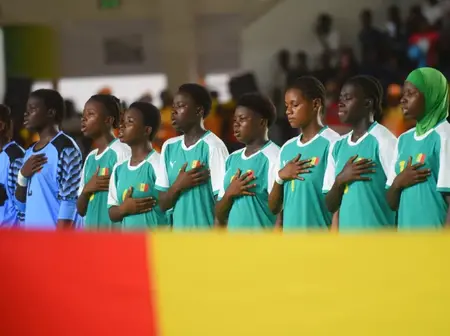
    Football is the most popular sport in Africa, but the ongoing Youth Olympic Games in Dakar, Senegal, have turned the spotlight on one of the fastest-growing sports: futsal.

    With the four finalists now confirmed in the futsal tournaments at the Dakar 2026 Youth Olympic Games (YOG), the sport's growth worldwide, particularly in Senegal, is opening up new opportunities.

    As hosts of this second edition, Senegal has provided participating teams with a remarkable atmosphere and demonstrated, through the commitment of its supporters and football federation, the potential of futsal on the African continent.

    Africa is represented by hosts Senegal and Cameroon in the women's category, while Morocco features in the men's competition. Kenya has a futsal team but did not send representatives to the junior games taking place in West Africa.

    A clear rise in the level of play

    The sporting assessment following the group stage has been very positive, as FIFA Futsal Technical Expert and former England futsal head coach Graeme Dell noted in his initial assessment of the competition.

    “The Youth Olympic futsal tournaments 2026 in Dakar have, so far, exceeded my expectations. We have seen fantastic matches in the group stage, with excellent team performances. The level of play has visibly improved since the first edition in Buenos Aires in 2018, and I am very happy about that.

    “This progress is no coincidence. Since 2016, FIFA has invested more than USD 100 million in futsal, through the FIFA Futsal World Cups and development via FIFA Forward, supporting more than 100 projects worldwide. These investments cover infrastructure and competitions as well as the training of coaches, referees and national teams.”

    The FIFA Technical Study Group, which includes Dell and Rute Carvalho, Portugal's women's Under-15 futsal coach, shares this assessment.

    Dell noted a general improvement since 2018, with more teams, particularly the leading sides, now playing according to clear game plans and demonstrating better control of tempo.

    “In Buenos Aires in 2018, we had a lot of football teams competing rather than futsal teams,” he said.

    Teams have favoured mid or low defensive blocks over high pressing. Carvalho pointed to the 3:1 system in the women's tournament and the 4:0 formation in the men's competition, stressing that collective organisation depends on individual technique.

    Dell also said several women's matches would have ranked among the top 12 at the FIFA Futsal Women's World Cup in Manila. He added that some teams had made significant progress during the tournament.

    “What is encouraging is how much some teams have grown during the tournament. Cameroon, in the women's competition, showed more each time they faced stronger opponents,” he said.

    Packed venues and a fantastic atmosphere

    On the pitch and in the stands, Dakar has lived up to its promise. Matches at the Iba Mar Diop Stadium were often sold out, while those at the Dakar Arena generated a fantastic atmosphere.

    Backed by large and passionate crowds, the players competed in a setting worthy of the event.

    Among the spectators supporting the Senegalese teams were influencer Khaby Lame, former national team coach Pape Thiaw and political figures, including Prime Minister Ahmadou Al Aminou Lo.

    Senegal's potential recognised by FIFA

    For Kasra Haghighi, FIFA Head of Olympics, Futsal and Beach Soccer, the enthusiasm generated by the competition demonstrates the growth potential of futsal in Senegal and across Africa.

    “The Senegalese people have brought incredible heart and atmosphere to both the men's and women's tournaments so far. Their passion for futsal is clear to everyone, and they have been a wonderful support for all participating teams,” Haghighi said.

    “The Senegalese Football Federation has been investing for several years in developing its futsal national teams in this age category. Seeing both teams win matches against some of the best sides in the world is a tremendous achievement and a reflection of that commitment.

    “The futsal surface, funded with FIFA's support, will also leave a lasting legacy. It will be an important piece of infrastructure for the continued development of futsal and for the next generation of Senegalese talent. We hope this tournament will inspire even more young people to take up futsal and will contribute to the growth of the sport in Senegal in the years to come.”

    Towards the finals

    The final phases are being played this week at the Dakar Arena. In the women's competition, Venezuela and Ukraine will contest the gold medal, while the men's finalists have also been confirmed.

    Beyond the sporting results, the growth of futsal worldwide, particularly in Senegal, signals new opportunities. Infrastructure, competitions, training and a new generation of talent are all key to ensuring the Dakar 2026 legacy becomes a springboard for African futsal.

    Schedule for Wednesday, November 11

    ·        Women's third-place playoff: Iran vs Italy.

    ·        Women's gold medal match: Venezuela vs Ukraine.

    Schedule for Thursday, November 12

    ·        Men's third-place playoff: Afghanistan vs Morocco.

    ·        Men's gold medal match: Portugal vs Argentina.

  • Which countries rely most on international trade?

    Which countries rely most on international trade?

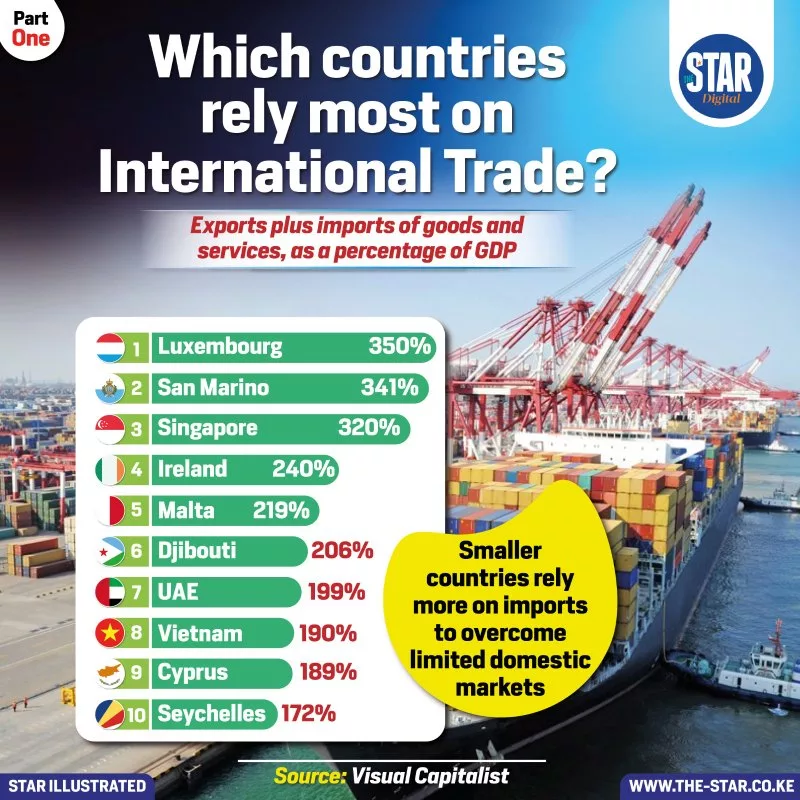
    Global economic data measuring international trade—calculated as the sum of exports and imports of goods and services as a percentage of gross domestic product—reveals that smaller nations heavily rely on trade to overcome limited domestic markets.

    Luxembourg leads the global rankings by a significant margin, recording a trade-to-GDP ratio of 350 percent.

    San Marino follows closely behind in second place at 341 percent, while Singapore secures third place with 320 percent.

    The rankings continue with Ireland registering 240 percent and Malta standing at 219 per cent. Djibouti records 206 per cent, closely followed by the United Arab Emirates at 199 per cent, Vietnam at 190 per cent, and Cyprus at 189 per cent.

    Seychelles rounds out the top ten economies with a trade ratio of 172 percent.

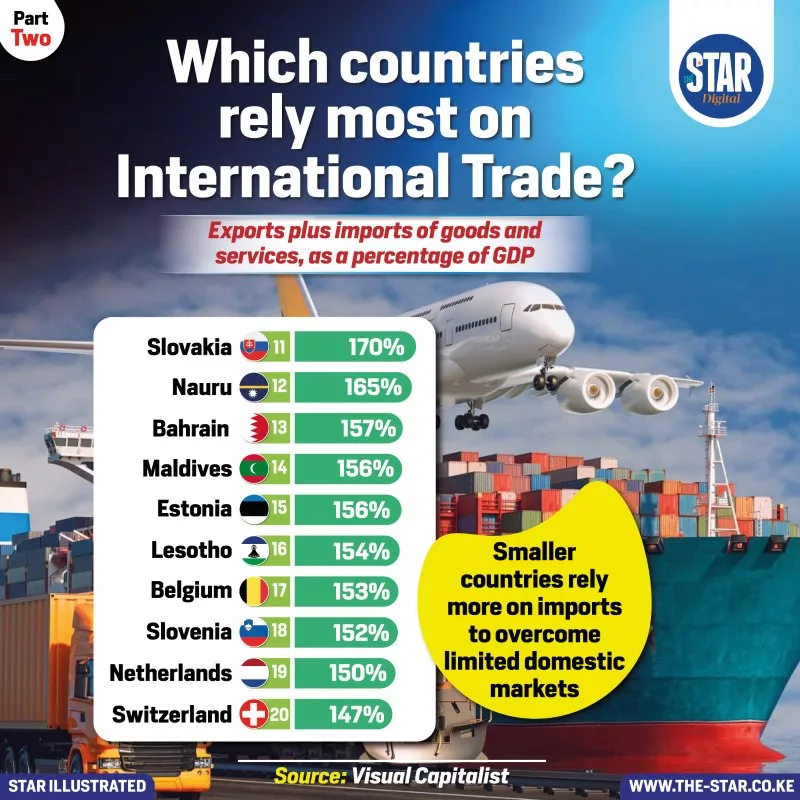
    Moving further down the global index, Slovakia registers 170 per cent, Nauru follows at 165 per cent, and Bahrain stands at 157 per cent.

    Both the Maldives and Estonia share a ratio of 156 percent, while Lesotho records 154 per cent and Belgium registers 153 per cent.

    Slovenia follows at 152 percent, the Netherlands at 150 per cent, and Switzerland concludes the upper tier of the rankings at 147 per cent.

    Across all these nations, extensive engagement in cross-border commerce serves as a vital economic driver, frequently exceeding the entire monetary value of their domestic economic output.

  • Kenyan avocados eye bigger China market as zero tariffs open new opportunities

    Kenyan avocados eye bigger China market as zero tariffs open new opportunities

    Kenyan avocado exporters are targeting a bigger share of the Chinese market after Beijing scrapped import tariffs for Kenya and 52 other African countries, creating fresh opportunities for agricultural trade.

    The opportunity was highlighted at the ninth China International Import Expo (CIIE) in Shanghai, where Kenya showcased avocados, tea and fresh-cut flowers as it seeks to strengthen its presence in the Asian market.

    China extended zero-tariff treatment to all 53 African countries with which it maintains diplomatic relations on May 1, 2026. The move brought another 20 countries, including Kenya, Ghana and South Africa, under the arrangement.

    The expanded policy is expected to make African products more competitive in China by reducing the cost of accessing the market. For the newly covered countries, the arrangement is set to remain in place until April 2028.

    According to the Chinese Embassy in Nairobi, 6.9 tonnes of fresh Kenyan avocados arrived at Guangzhou Port on May 1, while another 320 tonnes of Kenyan crude avocado oil docked at Dalian Port on May 9.

    The shipments formed part of the inaugural exports flagged off on March 24 at the Standard Gauge Railway terminus in Nairobi by Chinese Vice President Han Zheng and Kenya’s Deputy President Kithure Kindiki.

    China Ambassador to Kenya Guo Haiyan noted that the initiative is expected to deepen trade cooperation between the two countries while increasing earnings for Kenyan farmers and exporters.

    The policy removes tariffs on selected products from African countries, making them more competitive in the Chinese market and encouraging higher exports.

    China has also upgraded its green channel for African agricultural and food products, streamlining quarantine procedures to facilitate imports.

    The benefits are already being felt by other African exporters. China Daily reported that tariffs on South African citrus imports had fallen from between 10 and 12 per cent to zero.

    Chinese fruit importer Joy Wing Mau said its imports of South African citrus had increased by 50 per cent year-on-year since the policy took effect.

    Beyond fresh produce, the expanded trade arrangement is opening opportunities for African businesses to explore new markets and develop partnerships with Chinese companies.

    The ninth CIIE has provided a platform for exporters to showcase their products, meet potential buyers and pursue business partnerships. Kenya's pavilion features agricultural products, including avocados, tea and fresh-cut flowers.

    The broader trade relationship is also expanding. China-Africa trade reached 312.11 billion US dollars in the first nine months of 2026, representing a 22.3 per cent increase year-on-year. China's imports from Africa rose by 18.5 per cent to 109.14 billion dollars over the same period.

    For Kenyan exporters, the zero-tariff arrangement offers an opportunity to grow shipments, reach more consumers and strengthen the country's agricultural export market in China.

    According to Beijing, the policy demonstrates China’s commitment to deepening economic cooperation with Africa and supporting the continent’s exports through easier market access.

    This makes China the first major economy to voluntarily extend such broad tariff exemptions to African states.

    For Kenya, the development is being viewed as a major boost for exporters who have been pushing for better access to the Chinese market to help narrow the long-standing trade imbalance between Nairobi and Beijing.

    President William Ruto is among African leaders who have welcomed the initiative, seeing it as an opportunity for African products to become more competitive in China.

    African Union Commission Chairperson Mahmoud Ali Youssouf also praised the move, describing it as ‘very timely’ and calling it a ‘brotherly gesture.’

    Kenya’s avocado sector is expected to be among the immediate beneficiaries of the policy.

    With tariffs now removed, Kenyan avocados could gain a stronger pricing advantage, potentially increasing demand among Chinese consumers.

    Industry stakeholders say the policy could also create new export opportunities for Kenyan tea, macadamia nuts, coffee, flowers and seafood if producers meet China’s strict quality and phytosanitary requirements.

    Chinese authorities say the zero-tariff policy is accompanied by other trade facilitation measures aimed at making it easier for African products to access Chinese markets.

    These include upgraded ‘green lanes’ for African agricultural imports, with quarantine clearance procedures made simpler.

    China has also committed to risk-based customs management systems intended to reduce delays at ports.

    The measures are particularly important for the country’s fresh produce exporters whose products require fast clearance to maintain quality.

    Faster customs processing and lower import costs are believed to improve profitability for Kenyan exporters while making African goods more attractive to Chinese buyers.

    The initiative also comes as Kenya seeks to diversify export destinations and strengthen economic ties with Asian markets.

    China remains one of Kenya’s biggest trading partners, although the country still heavily imports manufactured goods from China.

    Kenya is being rallied to increase production capacity, improve value addition and strengthen logistics systems to fully benefit from the preferential access.

  • Paul Ilado: Media is not dying, but traditional business models have collapsed

    Paul Ilado: Media is not dying, but traditional business models have collapsed

    ‎Radio Africa Group Editorial Director Paul Ilado has challenged journalism graduates to take an active role in reshaping the media industry, saying traditional business models have collapsed but journalism itself still has a future.

    ‎Ilado said the rapid transformation of the media landscape presented graduates with an opportunity to develop new ways of producing, distributing and commercialising content rather than depend entirely on conventional media houses for employment.

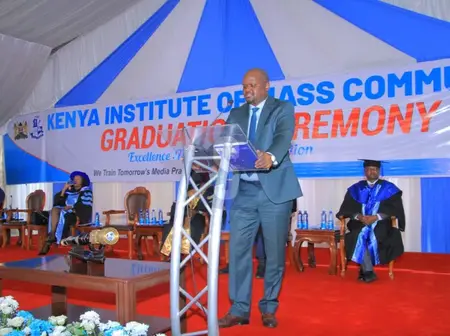
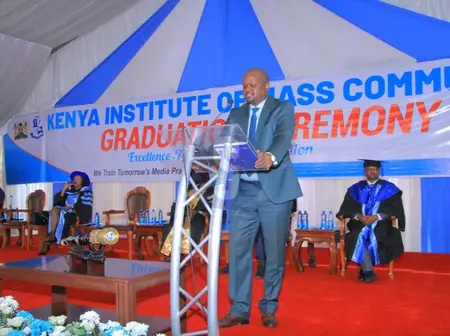
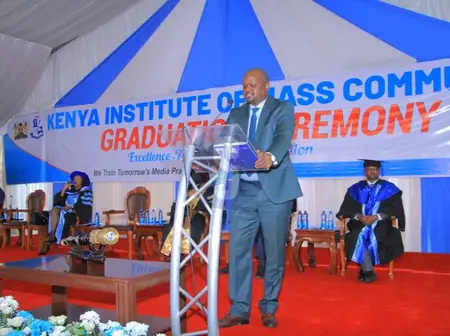
    ‎Addressing 498 graduands at the Kenya Institute of Mass Communication (KIMC) on Wednesday, Ilado said the industry needed a new generation of creative practitioners capable of building sustainable media enterprises and responding to technological changes.

    ‎"All the business models that have traditionally run media have collapsed, and this is where we need you, the class of 2026. We need you to participate in creating a new order," he said.

    He challenged the graduates to use the skills acquired during their training to develop functional and sustainable media houses, arguing that the industry's difficulties should not be mistaken for the death of journalism.

    ‎"There is a future in the media, and no one should lie to you. No media is dying. What is happening is transformation," Ilado said.

    ‎He warned that graduates who failed to participate in that transformation risked becoming frustrated as the industry continued to evolve.

    ‎"You are either part of that transformation or you are not. And if you are, you will be grateful. If you are not, you will be extremely frustrated," he said.

    ‎Ilado used the contrasting experiences of English Premier League clubs Arsenal and Manchester United to illustrate the importance of managing transitions and continuously improving.

    ‎He recalled how Arsenal underwent a major transition following the departure of long-serving manager Arsene Wenger, while Manchester United struggled to maintain its previous standards after the exit of Alex Ferguson.

    ‎He said the experiences demonstrated that organisations could lose their standing when leadership transitions were poorly managed and when they failed to invest in the right talent and ideas.

    ‎"The biggest lesson we take from these two teams is that you can be great today, but if you do not continuously improve yourself, you will one day be fighting for your life, let alone your career," he said.

    ‎He urged graduates to remain passionate about their profession, develop their talents and embrace innovation rather than assume their qualifications alone would guarantee success.

    ‎Ilado said the media industry was undergoing changes that required journalists to think beyond conventional employment arrangements.

    ‎He noted that technology had lowered the barriers to establishing media platforms, with individuals now able to create and distribute content using relatively accessible digital tools.

    ‎"Today, just with an email, you can open a media house," he said, urging the graduates to participate in shaping the future of the profession.

    ‎KIMC Director and Chief Executive Peter Wakoli said the institution had been realigning its curriculum to prepare students for the changing demands of the media industry and the country's digital economy.

    ‎He said the institute was conscious of its responsibility to contribute to the digital superhighway and creative economy agenda by producing practitioners equipped for both present and future challenges.

    ‎Wakoli described the 2026 graduating class as distinctive, noting that some students had already developed award-winning creative productions before their official graduation.

    ‎"Many of these graduates seated here are already airborne, undertaking multimedia storytelling, utilising artificial intelligence in content creation and, more importantly, navigating the complexities of digital and social media journalism by running self-initiated content dissemination platforms," he said.

    ‎He added that the graduates had been trained to respond to emerging challenges in content creation and manipulation.

    ‎The institute, he said, had also drawn on industry practitioners to mentor students and expose them to the realities of professional media work.

    ‎ICT Authority Chief Executive Jessy Maruti welcomed the graduates into the industry, saying their skills would be important in strengthening how stories about the country are told.

    ‎"I'm looking forward for these graduates to join us so that they can tell the story the way it's supposed to be told," Maruti said.

    ‎The graduation, attended by industry stakeholders and other guests, was held under the theme of excellence, talent, trust and innovation.

  • Look for Opinions of Kenyans Who Are Sober – Ruto Claps Back at Uhuru

    Look for Opinions of Kenyans Who Are Sober – Ruto Claps Back at Uhuru

    thumbnail

    Dress Down"The information you have received is from people at bars and drinking dens. Get information from sober Kenyans."President William Ruto rebutted claims by his predecessor, Uhuru Kenyatta, that Kenyans had already made up their minds about the Kenya Kwanza government and were waiting for the United Opposition to produce a candidate.

  • Radio Africa Editorial Director Paul Ilado warns KIMC graduates against quick riches

    Radio Africa Editorial Director Paul Ilado warns KIMC graduates against quick riches

    Young professionals have been warned against pursuing quick riches and celebrity status at the expense of integrity, with Radio Africa Group Editorial Director Paul Ilado cautioning that shortcuts to success could undermine their careers and damage their character.

    Ilado challenged 498 journalism graduates of the Kenya Institute of Mass Communication (KIMC) to build their careers through patience, hard work, continuous learning and a commitment to excellence.

    Addressing the graduands, he said success meant different things to different people. He cautioned against measuring achievement solely through wealth, expensive cars, prestigious addresses or the speed at which one attained public recognition.

    "There is a big temptation to choose materialism, so you can get rich quickly, and that, in my opinion, will be one of the biggest challenges you have to deal with," he said.

    He warned that the pressure to accumulate wealth and acquire material possessions could push young professionals into compromising their values in pursuit of immediate rewards.

    "That road is fraught with a lot of landmines. Those landmines compromise your character, your integrity and your value system. This road displays a poverty of ambition. It puts you on a fast lane to self-destruction," Ilado said.

    He urged the graduates to resist a culture that prioritises appearances over substance, celebrity over character and short-term gains over lasting achievements.

    "The impression created, the elevation of appearance over substance, of celebrity over character, of short-term gains over lasting achievements is what I'm asking you to avoid," he said.

    Ilado said young journalists entering the profession would face different expectations and pressures, particularly in an environment where social media had created opportunities for instant visibility and public recognition.

    He challenged them not to confuse popularity with professional achievement or assume that becoming a household name was the only measure of success.

    He observed that some graduates might aspire to own expensive cars, live in prestigious neighbourhoods or accumulate substantial sums of money, while others might define success through professional recognition and the opportunity to occupy prominent broadcasting positions.

    He cited established media personalities, including Maina Kageni, Giddy and Ghost, and Jeff Koinange, as examples of the professional visibility some young graduates might aspire to attain.

    However, he said individual career journeys were different and graduates should establish their own sustainable paths rather than measure themselves against the achievements of others.

    Ilado also urged the graduands not to become complacent after completing their studies, saying the certificate was a milestone rather than the conclusion of their professional development.

    Using the contrasting experiences of English Premier League clubs Arsenal and Manchester United, he illustrated how even successful institutions could lose their standing when they failed to manage transitions and continuously improve.

    He recalled the departures of Arsene Wenger from Arsenal after 18 years and Alex Ferguson from Manchester United, saying the subsequent managerial changes at the clubs offered lessons on the importance of succession planning and maintaining standards.

    "The biggest lesson we take from these two teams is that you can be great today, but if you do not continuously improve yourself, you will one day be fighting for your life, let alone your career," he said.

    He urged graduates to remain passionate about their chosen professions, nurture their talents and actively seek opportunities to improve their skills.

    "It doesn't matter what you've done so far. It will not matter what you will do in the next four or five years of your life. There is always room for you to learn more, to achieve more and to be able to break the glass ceiling," he said.

    Ilado said the graduates were entering a fast-paced environment shaped by innovation, critical thinking and creativity, requiring them to take personal responsibility for their professional development.

    KIMC Director and Chief Executive Peter Wakoli said the institution had aligned its training programmes with changing demands in the media industry and the creative economy.

    He said the 2026 cohort had demonstrated its capabilities through multimedia storytelling, artificial intelligence-assisted content creation and independently run digital platforms.

    Wakoli said the institution was committed to producing graduates who could adapt to emerging technologies while maintaining professional standards.

    ICT Authority Chief Executive Jessy Maruti also welcomed the graduates, saying their skills would be valuable in improving communication and storytelling.

    "I'm looking forward for these graduates to join us so that they can tell the story the way it's supposed to be told," Maruti said.

    The 498 graduands completed their studies under the theme of excellence, talent, trust and innovation.

  • Paul Ilado warns KIMC graduates against quick riches, celebrity culture and shortcuts to success

    Paul Ilado warns KIMC graduates against quick riches, celebrity culture and shortcuts to success

    Young professionals have been warned against pursuing quick riches and celebrity status at the expense of integrity, with Radio Africa Group Editorial Director Paul Ilado cautioning that shortcuts to success could undermine their careers and damage their character.

    Ilado challenged 498 journalism graduates of the Kenya Institute of Mass Communication (KIMC) to build their careers through patience, hard work, continuous learning and a commitment to excellence.

    Addressing the graduands, he said success meant different things to different people. He cautioned against measuring achievement solely through wealth, expensive cars, prestigious addresses or the speed at which one attained public recognition.

    "There is a big temptation to choose materialism, so you can get rich quickly, and that, in my opinion, will be one of the biggest challenges you have to deal with," he said.

    He warned that the pressure to accumulate wealth and acquire material possessions could push young professionals into compromising their values in pursuit of immediate rewards.

    "That road is fraught with a lot of landmines. Those landmines compromise your character, your integrity and your value system. This road displays a poverty of ambition. It puts you on a fast lane to self-destruction," Ilado said.

    He urged the graduates to resist a culture that prioritises appearances over substance, celebrity over character and short-term gains over lasting achievements.

    "The impression created, the elevation of appearance over substance, of celebrity over character, of short-term gains over lasting achievements is what I'm asking you to avoid," he said.

    Ilado said young journalists entering the profession would face different expectations and pressures, particularly in an environment where social media had created opportunities for instant visibility and public recognition.

    He challenged them not to confuse popularity with professional achievement or assume that becoming a household name was the only measure of success.

    He observed that some graduates might aspire to own expensive cars, live in prestigious neighbourhoods or accumulate substantial sums of money, while others might define success through professional recognition and the opportunity to occupy prominent broadcasting positions.

    He cited established media personalities, including Maina Kageni, Giddy and Ghost, and Jeff Koinange, as examples of the professional visibility some young graduates might aspire to attain.

    However, he said individual career journeys were different and graduates should establish their own sustainable paths rather than measure themselves against the achievements of others.

    Ilado also urged the graduands not to become complacent after completing their studies, saying the certificate was a milestone rather than the conclusion of their professional development.

    Using the contrasting experiences of English Premier League clubs Arsenal and Manchester United, he illustrated how even successful institutions could lose their standing when they failed to manage transitions and continuously improve.

    He recalled the departures of Arsene Wenger from Arsenal after 18 years and Alex Ferguson from Manchester United, saying the subsequent managerial changes at the clubs offered lessons on the importance of succession planning and maintaining standards.

    "The biggest lesson we take from these two teams is that you can be great today, but if you do not continuously improve yourself, you will one day be fighting for your life, let alone your career," he said.

    He urged graduates to remain passionate about their chosen professions, nurture their talents and actively seek opportunities to improve their skills.

    "It doesn't matter what you've done so far. It will not matter what you will do in the next four or five years of your life. There is always room for you to learn more, to achieve more and to be able to break the glass ceiling," he said.

    Ilado said the graduates were entering a fast-paced environment shaped by innovation, critical thinking and creativity, requiring them to take personal responsibility for their professional development.

    KIMC Director and Chief Executive Peter Wakoli said the institution had aligned its training programmes with changing demands in the media industry and the creative economy.

    He said the 2026 cohort had demonstrated its capabilities through multimedia storytelling, artificial intelligence-assisted content creation and independently run digital platforms.

    Wakoli said the institution was committed to producing graduates who could adapt to emerging technologies while maintaining professional standards.

    ICT Authority Chief Executive Jessy Maruti also welcomed the graduates, saying their skills would be valuable in improving communication and storytelling.

    "I'm looking forward for these graduates to join us so that they can tell the story the way it's supposed to be told," Maruti said.

    The 498 graduands completed their studies under the theme of excellence, talent, trust and innovation.