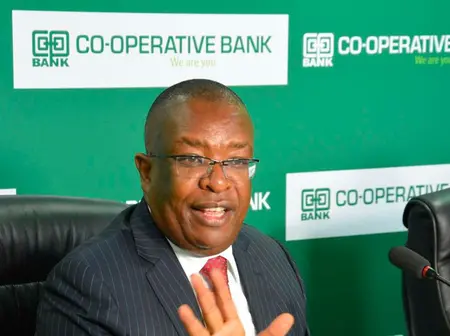
Co-operative Bank of Kenya has raised its interim dividend by 50 percent to Sh1.50 per share after the lender’s net profit for the nine months ended September rose 27.2 percent to Sh27.43 billion.
The net earnings grew from Sh21.56 billion posted in the third quarter ended September 2024 and came on the back of a rise in interest and non-interest income.
John Stones could have his Inter Milan contract ripped up, just four months after joining on a free transfer from Manchester City.
After an incredible decade at the Etihad Stadium, where he won six Premier League titles, three FA Cups and a Champions League, Stones' emotional exit from City was confirmed earlier this year.
The Englishman made 295 appearances for the Cityzens, establishing himself as one of Europe's best ball-playing defenders when he was at the peak of his powers. Now, at the age of 32, the former Everton star is on the decline, and his injury woes have continued in Italy.
Stones was inundated with offers when he came to the end of his contract at City. Arsenal and Chelsea were among the clubs that showed interest in the defender without submitting an offer. They were shortly joined by Juventus, who explored a move to land him before Inter offered him a two-year deal.
Joining Liverpool midfielder Curtis Jones at the Nerazzurri, Stones was supposed to add class and experience to an Inter defence, but injury problems have hampered the ball-playing defender from showcasing his talents in Serie A.
Inter's No.6 has been sidelined with a thigh injury since mid-September after playing just 62 minutes in the 5-3 victory over Udinese. That is one of just four appearances he has made in all competitions, with reports in Italy indicating his future at the San Siro hinges on his ability to stay fit.
According to Gazzetta, the 32-year-old could leave in the January window or be left out of their updated squad list if he cannot improve his availability, creating the unfortunate possibility of his contract being ripped up.
The above article doesn't say where Stones could go next if he leaves the Italian giants, but a return to the Premier League is surely a possibility. Everton have long been linked with a move to re-sign the defender, a decade after leaving Merseyside, though his obvious injury problems will make any club wary of capturing him on big wages.
After seeing his minutes become limited at Man City due to injury and Pep Guardiola preferring other players over him, Stones saw leaving the Etihad as an opportunity to get a fresh start elsewhere.
Like many other players reaching the latter stages of their careers, Italy's top division is a common destination, with Stones describing his sense of pride when reflecting on his arrival at Inter.
"I felt a lot of emotions; it was an overwhelming feeling of happiness and pride," he said after joining. "I'm really grateful for this opportunity, I'm excited to be here. I'd describe myself as kind, happy and competitive. As a child I was never still, always moving; I was really active."
Reflecting further on his switch, Stones was initially relaxed about playing for a club of Inter's stature after experiencing the huge weight of expectation at Man City.
"When you play the pressure is always there, it's positive," he continued. "It lets you give your best if you manage it well, and you end up getting used to it. It's about knowing what you've done in the past and during the week so you feel good in the game."
Stones is remaining upbeat, despite his continuous injury problems, but what his long-term future in Italy holds remains to be seen.
A founder short of cash may offer a talented recruit a small salary and a large future. The recruit is entitled to ask how large, how likely, and under what conditions that future becomes spendable.Employee equity can align incentives, but its value depends on much more than a percentage.
A subscription turns a sale into a continuing promise. The customer agrees to pay again because the business agrees to remain useful again. Calling ordinary repeat billing a recurring-revenue strategy does not change that bargain.The appeal is understandable: more predictable receipts can support staffing, inventory and investment.
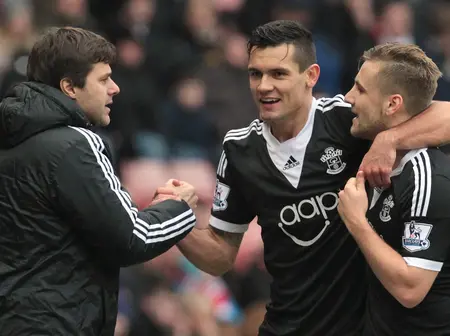
Mauricio Pochettino went to extraordinary lengths to ensure Luke Shaw ate the right food at Southampton, and his comments are even more fitting now that he's the strongest contender to replace Michael Carrick at Manchester United.
According to David Ornstein, United are finalising a deal to appoint Pochettino if they decide to sack Carrick. Sir Jim Ratcliffe will hold a meeting with chief executive Omar Berrada and sporting director Jason Wilcox in Monaco on Wednesday, where they will recommend parting ways with the 45-year-old.
Carrick is on the brink of being relieved of his duties at Old Trafford after recording their worst start to a Premier League campaign. They've collected just one victory and eight points from their opening 10 matches, needing a miracle to turn their season around and qualify for the Champions League.
On Tuesday, it emerged that United would have to pay a compensation fee worth $10 million (£7.5m) to buy Pochettino out of his four-year contract with the USMNT after he signed an extension in August.
The Argentine is said to be open to taking the role at Old Trafford if offered it and will not only bring his own coaching staff to the club, but also enforce some strict rules that his players must follow.
For example, during his 16-month spell in charge of Southampton from January 2013 to May 2014, Pochettino famously stopped Luke Shaw eating pizza – and even went to extreme measures to ensure the left-back wasn't.
The story was brought up on an episode of The Overlap, where Gary Neville asked: “Was it true that when you was at Southampton like with Luke Shaw, that you used to go round to his house because he was eating pizzas and you used to make the players eat the right foods all the time? Is that true about the Luke Shaw story or is that a myth?”
Pochettino confirmed the tale, saying: "Yes. It’s like another thing that makes us proud because OK, you asked two questions yes.”
Shaw cemented his place under the Argentine tactician as an 18-year-old at Southampton, making 35 Premier League appearances during the 2013/14 campaign before completing a £30million move to Manchester United in June 2014 – world record for a teenager at the time – a month after Pochettino joined Tottenham Hotspur on a five-year deal.
12 years after working with the Englishman at St Mary's, there is a huge chance he could reunite with the left-back at Old Trafford, and he will have to abide by some of his strict policies once more.
At his past clubs, Pochettino has generally preferred personal accountability and unique physical or social forfeits instead of traditional monetary fines.
During his spell as manager of Chelsea, after Nicolas Jackson picked up an accumulation of yellow cards for dissent and arguing with referees in 2023, he forced the striker to do a grueling, long-distance cross-country run in training.
The Argentine famously matched the discipline by buying dinner for the entire squad and staff because he couldn't run due to his own touchline ban.
Jackson was also involved in another telling-off from the manager. In their clash against Everton in 2024, Jackson and Noni Madueke aggressively pushed and shoved each other to take a penalty instead of deferring to designated penalty taker Cole Palmer.
He did not issue individual fines, instead slamming them for their actions in public and private, claiming he was "so upset" over the dispute after the Blues smashed Everton 6-0.
"I can't accept this kind of behaviour," said Pochettino. "I told them it's the last time I want to see this kind of behaviour."
"It is impossible to have this type of behaviour after this performance. If we want to be a great team, we need to change and think in a collective way."
Should he become Man United manager, expect the 54-year-old to use harsh punishments on his players for acting out of line.
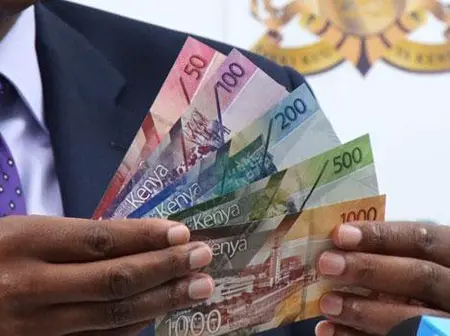
DisbursedThe government has disbursed Ksh1.69 billion to 423,520 households under the Cash Transfer for Orphans and Vulnerable Children (CT-OVC) Programme, as part of its ongoing Inua Jamii initiative.The government has disbursed Ksh1.69 billion to 423,520 households under the Cash Transfer for Orphans and Vulnerable Children (CT-OVC) Programme, as part of its ongoing Inua Jamii initiative.
Kenya’s booming illicit cigarette market is largely fed by Uganda, which accounts for most contraband tobacco products entering the country. This has deprived the government of Sh47 billion in tax revenue over the five years.
The study by Kantar Insights East Africa, a market research firm, shows that 95 percent of illicit cigarettes entering Kenya originate in Uganda. The remaining five percent comes from South Sudan and Somalia.
Wayne Rooney is 'excited' about entering the Australian jungle for the 2026 series but has four main reservations, according to his former England team-mate Alan Shearer.
Manchester United legend Rooney has now been officially confirmed by ITV as one of the 10 celebrities that will take part in this year's show. Leigh Francis was part of the reported line-up but has not yet been announced, fuelling speculation that the 'Celebrity Juice' star will be one of the two late arrivals.
Rooney, though, will be comfortably the highest-paid celebrity in the jungle, with ITV doubtless hoping that his global football following will vote for him to do a number of 'Bushtucker Trials'. Shearer says he will be doing exactly that.
Speaking to Betfair, Shearer has admitted he will be voting for Rooney as many times as possible to do the renowned daily trials – though an ITV rule will stop him doing more than two trials consecutively.
And he revealed he spoke with his Match of the Day colleague about how he would approach the jungle.
"Wayne Rooney's going into the jungle for I'm A Celebrity… Get Me Out of Here and, when I saw him the other week, he was looking forward to it," Shearer said. "He's excited. He's in great shape.
"I asked him what he was scared of and he said he's claustrophobic. He doesn't like rats. He doesn't like snakes and he doesn't like heights. So I said, 'Apart from that, you're going to be alright then!'
"It's going to cost me a fortune every night when I'm voting him at least 20 times. The eating challenges are the worst. I couldn't do that, so there is no way you will catch me going to the jungle. But good luck to Wayne."
Rooney is the second member of his family to enter the jungle, with his wife Coleen having done so in 2024.
He wasn't able to fly to Australia when Coleen won the opportunity to have a family visit during the show, as he was managing Championship side Plymouth Argyle at the time.
Two years on, though, and Rooney has put his managerial career on hold, having been sacked by Argyle in January 2025. He's now a pundit and won the Pundit of the Year award at the Broadcast Sports Awards last week – and says the timing is right for I'm A Celebrity.
Speaking ahead of the show, Rooney said (via Liverpool Echo): "She [Coleen] is [proud], obviously. I think because she has done it, she knows what it is, so she knows how difficult it is as well. It will be nice for her to sit down and be invested in it.
"I hope people will see me for who I am. I like to have fun and I like to think I am actually a fun guy to be around. I do like to mess around a bit and I do talk a lot. People will have their own opinions, but I hope they will see me as a genuine person."
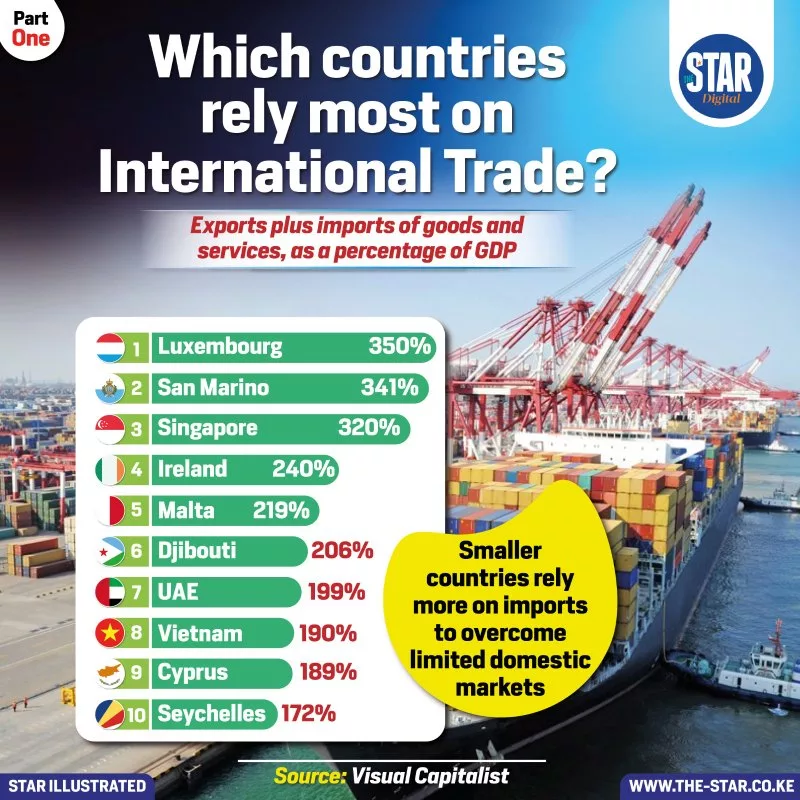
Global economic data measuring international trade—calculated as the sum of exports and imports of goods and services as a percentage of gross domestic product—reveals that smaller nations heavily rely on trade to overcome limited domestic markets.
Luxembourg leads the global rankings by a significant margin, recording a trade-to-GDP ratio of 350 percent.
San Marino follows closely behind in second place at 341 percent, while Singapore secures third place with 320 percent.
The rankings continue with Ireland registering 240 percent and Malta standing at 219 per cent. Djibouti records 206 per cent, closely followed by the United Arab Emirates at 199 per cent, Vietnam at 190 per cent, and Cyprus at 189 per cent.
Seychelles rounds out the top ten economies with a trade ratio of 172 percent.
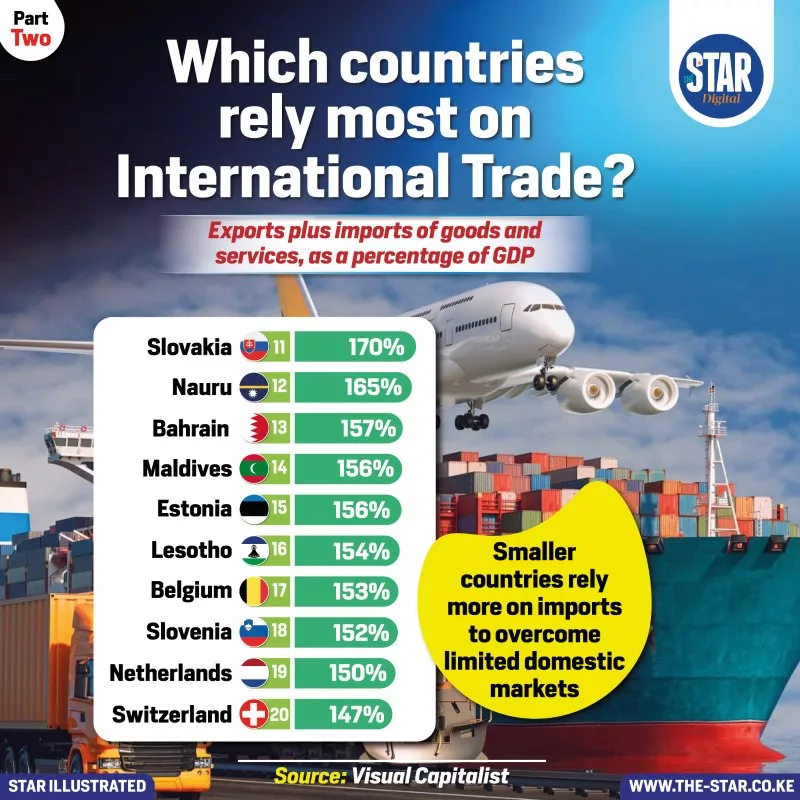
Moving further down the global index, Slovakia registers 170 per cent, Nauru follows at 165 per cent, and Bahrain stands at 157 per cent.
Both the Maldives and Estonia share a ratio of 156 percent, while Lesotho records 154 per cent and Belgium registers 153 per cent.
Slovenia follows at 152 percent, the Netherlands at 150 per cent, and Switzerland concludes the upper tier of the rankings at 147 per cent.
Across all these nations, extensive engagement in cross-border commerce serves as a vital economic driver, frequently exceeding the entire monetary value of their domestic economic output.
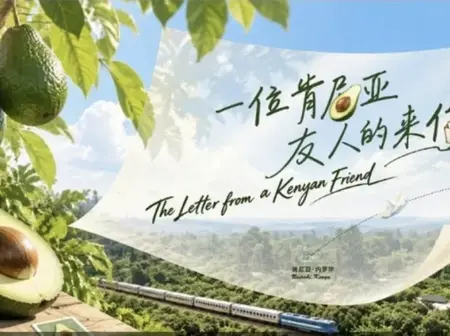
Kenyan avocado exporters are targeting a bigger share of the Chinese market after Beijing scrapped import tariffs for Kenya and 52 other African countries, creating fresh opportunities for agricultural trade.
The opportunity was highlighted at the ninth China International Import Expo (CIIE) in Shanghai, where Kenya showcased avocados, tea and fresh-cut flowers as it seeks to strengthen its presence in the Asian market.
China extended zero-tariff treatment to all 53 African countries with which it maintains diplomatic relations on May 1, 2026. The move brought another 20 countries, including Kenya, Ghana and South Africa, under the arrangement.
The expanded policy is expected to make African products more competitive in China by reducing the cost of accessing the market. For the newly covered countries, the arrangement is set to remain in place until April 2028.
According to the Chinese Embassy in Nairobi, 6.9 tonnes of fresh Kenyan avocados arrived at Guangzhou Port on May 1, while another 320 tonnes of Kenyan crude avocado oil docked at Dalian Port on May 9.
The shipments formed part of the inaugural exports flagged off on March 24 at the Standard Gauge Railway terminus in Nairobi by Chinese Vice President Han Zheng and Kenya’s Deputy President Kithure Kindiki.
China Ambassador to Kenya Guo Haiyan noted that the initiative is expected to deepen trade cooperation between the two countries while increasing earnings for Kenyan farmers and exporters.
The policy removes tariffs on selected products from African countries, making them more competitive in the Chinese market and encouraging higher exports.
China has also upgraded its green channel for African agricultural and food products, streamlining quarantine procedures to facilitate imports.
The benefits are already being felt by other African exporters. China Daily reported that tariffs on South African citrus imports had fallen from between 10 and 12 per cent to zero.
Chinese fruit importer Joy Wing Mau said its imports of South African citrus had increased by 50 per cent year-on-year since the policy took effect.
Beyond fresh produce, the expanded trade arrangement is opening opportunities for African businesses to explore new markets and develop partnerships with Chinese companies.
The ninth CIIE has provided a platform for exporters to showcase their products, meet potential buyers and pursue business partnerships. Kenya's pavilion features agricultural products, including avocados, tea and fresh-cut flowers.
The broader trade relationship is also expanding. China-Africa trade reached 312.11 billion US dollars in the first nine months of 2026, representing a 22.3 per cent increase year-on-year. China's imports from Africa rose by 18.5 per cent to 109.14 billion dollars over the same period.
For Kenyan exporters, the zero-tariff arrangement offers an opportunity to grow shipments, reach more consumers and strengthen the country's agricultural export market in China.
According to Beijing, the policy demonstrates China’s commitment to deepening economic cooperation with Africa and supporting the continent’s exports through easier market access.
This makes China the first major economy to voluntarily extend such broad tariff exemptions to African states.
For Kenya, the development is being viewed as a major boost for exporters who have been pushing for better access to the Chinese market to help narrow the long-standing trade imbalance between Nairobi and Beijing.
President William Ruto is among African leaders who have welcomed the initiative, seeing it as an opportunity for African products to become more competitive in China.
African Union Commission Chairperson Mahmoud Ali Youssouf also praised the move, describing it as ‘very timely’ and calling it a ‘brotherly gesture.’
Kenya’s avocado sector is expected to be among the immediate beneficiaries of the policy.
With tariffs now removed, Kenyan avocados could gain a stronger pricing advantage, potentially increasing demand among Chinese consumers.
Industry stakeholders say the policy could also create new export opportunities for Kenyan tea, macadamia nuts, coffee, flowers and seafood if producers meet China’s strict quality and phytosanitary requirements.
Chinese authorities say the zero-tariff policy is accompanied by other trade facilitation measures aimed at making it easier for African products to access Chinese markets.
These include upgraded ‘green lanes’ for African agricultural imports, with quarantine clearance procedures made simpler.
China has also committed to risk-based customs management systems intended to reduce delays at ports.
The measures are particularly important for the country’s fresh produce exporters whose products require fast clearance to maintain quality.
Faster customs processing and lower import costs are believed to improve profitability for Kenyan exporters while making African goods more attractive to Chinese buyers.
The initiative also comes as Kenya seeks to diversify export destinations and strengthen economic ties with Asian markets.
China remains one of Kenya’s biggest trading partners, although the country still heavily imports manufactured goods from China.
Kenya is being rallied to increase production capacity, improve value addition and strengthen logistics systems to fully benefit from the preferential access.