Author: lincor

  • Foreign investors strengthen their grip on Kenya’s supermarket industry as Quickmart IPO reshapes ownership

    Foreign investors strengthen their grip on Kenya’s supermarket industry as Quickmart IPO reshapes ownership

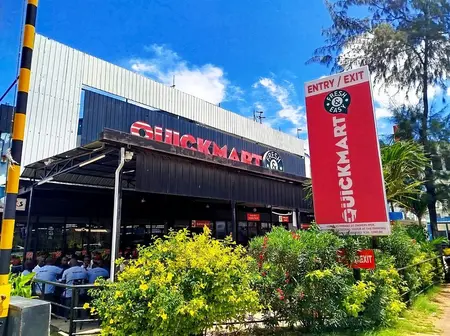
    Exterior view of a Quickmart supermarket store branch with prominent red signage, highlighting the Quickmart NSE IPO valuation.

    Kenya’s supermarket ownership is becoming increasingly international, with foreign investors now holding 52.9% of Quickmart following its initial public offering (IPO). The shift leaves overseas shareholders with a larger combined stake even after private equity firm Adenia Partners sold half of its original holding, while four international institutions secured substantial positions in the retailer.

    The final allocation figures show that foreign ownership rose from 50.8% before the offer to 52.9% afterwards. Founders and local investors collectively hold the remaining 47.1%, down from 49.2%. The change reflects the composition of the shares sold and the allocation of the offer, rather than a new capital injection into Quickmart.

    Adenia Partners and its associates retained 25.4% of the supermarket after selling half of their original stake. The private equity firm had acquired a majority interest in Quickmart in 2019, following its earlier investment in Tumaini in 2018. The two businesses were subsequently brought together under the Quickmart brand.

    The IPO therefore changes the distribution of ownership without removing Adenia from the shareholder register. Its retained holding remains a significant part of the foreign-owned share base, alongside the stakes taken by the four cornerstone investors and other international shareholders.

    Four cornerstone investors acquired a combined 21.6% stake in Quickmart. The International Finance Corporation (IFC) received 258 million shares, equivalent to 6.45% of the retailer, against an initial commitment of KSh1.94 billion. US-based 337 Frontier received 259.7 million shares, representing 6.5%, while UK fund manager RWC LLC secured 173.15 million shares, or 4.32%, against its KSh1.3 billion commitment.

    The UK government-backed MOBILIST programme received 173.33 million shares, equivalent to 4.33%. Its final allocation was lower than the initial commitment of KSh1.94 billion, with the programme reducing its subscription to accommodate demand from local investors. The four institutions now hold positions that give international institutional capital a substantial presence in the supermarket’s shareholder base.

    Other foreign investors received 236 million shares, representing 5.9% of Quickmart. They had applied for 476.8 million shares, meaning their final allocation covered less than half of the demand. Taken together with Adenia’s retained stake and the cornerstone holdings, these investors account for the 52.9% foreign ownership recorded after the IPO.

    The allocation also left local retail and institutional investors with a smaller proportion of the offer than initially envisaged. Their pool was reduced from 1.34 billion shares, equivalent to 67% of the IPO stock, to 880 million shares, or 44%. The final ownership figures therefore show how the offer brought in new international shareholders while reducing the relative position of local investors.

    Quickmart’s new ownership structure sits within a supermarket market where two of its largest competitors also have substantial foreign shareholding. Naivas, which held an estimated 31% of the market in 2025, is 51% owned by a consortium led by Mauritius-based IBL Group. The family of its late founder, Peter Mukuha, holds the remaining 49%.

    IBL’s exposure to Naivas also runs through Mambo Retail, in which it has an indirect 37.33% interest alongside French development finance institution Proparco and Germany’s DEG. Naivas reported revenue of KSh123.66 billion for the financial year ended June 2026, an 11% increase from KSh111.34 billion. Its net profit rose 41.7% to KSh3.37 billion from KSh2.38 billion in the previous financial year.

    Carrefour Kenya is wholly controlled by UAE-based Majid Al Futtaim, which entered the market in 2016. The retailer recorded revenue growth of 13.7% to AED1.386 billion, from AED1.219 billion in 2024. Its estimated market share stood at 14% in 2025, placing it close to Quickmart’s 15%, while Naivas remained the largest operator.

    The three retailers accounted for an estimated 60% of Kenya’s supermarket revenue in 2025. Magunas held 6%, while Foodplus accounted for 4%. The figures place the country’s three largest chains in a market where foreign investors have interests across the leading operators, although their ownership arrangements differ.

    Quickmart had 72 outlets across 16 counties and more than 8,000 employees by August 2026. Its revenue reached KSh50.43 billion in 2025, up 9.3%, while statutory net profit increased 33% to KSh1.51 billion. The retailer also reported adjusted profit after tax of KSh1.7 billion for the year, a separate measure from its statutory net profit.

    The company has expanded in a market reshaped by the collapse or contraction of several established chains. Nakumatt and Tuskys collapsed, Uchumi scaled back its operations, while international retailers Shoprite and Choppies exited Kenya. Naivas, Quickmart and Carrefour have continued expanding as the market consolidated around a smaller group of large operators.

    However, the IPO does not provide Quickmart with fresh funds to finance that expansion. The offer involved existing shareholders selling half of their four billion shares, with the proceeds going to the selling shareholders rather than into the retailer’s balance sheet. The transaction has therefore widened the shareholder base and changed the balance of ownership without directly increasing the company’s expansion capital.

    Quickmart’s position in the market will continue to depend on its ability to grow its store network and compete with Naivas and Carrefour. Its IPO has brought more international institutional investors into the business, but the final ownership figures also show that foreign shareholders now collectively hold the larger stake in one of Kenya’s biggest supermarket chains.

  • Mauricio Pochettino used secret tactic with Spurs stars that makes him the perfect fit for Man Utd

    Mauricio Pochettino used secret tactic with Spurs stars that makes him the perfect fit for Man Utd

    Mauricio Pochettino used secret tactic with Spurs stars that makes him the perfect fit for Man Utd

    Mauricio Pochettino is closing in on becoming the new head coach of Manchester United – and a secret tactic he has used throughout his managerial career could help him to deliver success to Old Trafford.

    The Athletic reported on Wednesday morning that United were finalising terms to appoint Pochettino as their new head coach, replacing Michael Carrick. United executives will make a final decision over whether to part company with Carrick during a meeting in Monaco on Wednesday.

    Should Pochettino make the move to Old Trafford, United would be his fourth Premier League club after Southampton, Tottenham and Chelsea. He is currently in charge of the United States men's national team – where he has continued to apply principles that should help to propel United up the Premier League table.

    Pochettino had his most prolonged period of success in charge of Spurs, guiding them to second place in the 2015/16 Premier League table before a Champions League final appearance in 2019.

    He was sacked by the club at the beginning of the 2019/20 season, but his impact on the club has been such that Spurs fans have regularly called for his return in the years since.

    One of Pochettino's biggest strengths was his trust in young players, with academy midfielder Ryan Mason being called up to the senior squad during the Argentine's time in charge in 2014 before making 66 appearances in all competitions across the next two seasons.

    Speaking to ESPN in 2018, shortly before retiring from professional football due to a serious head injury sustained while playing for Hull, Mason spoke about what Pochettino and his assistant, Jesus Perez, were like on the training ground – and how they implemented one particular principle that completely transformed Spurs' fortunes.

    "I still hear Jesus' voice now," Mason said. "When I'm training or playing and my body is telling me, 'You're knackered', I still hear his voice saying, 'You're a strong boy, Mase!' That stuck. It's always there.

    Jesus Perez and Mauricio Pochettino pictured while at Spurs (Image: Getty)

    "They made you believe in your body and trust your body, and push it to a level which you may not have reached. It's easy to think you're tired and that you don't have anything else in you. But they train your brain to tell your body you're not tired.

    "Everything was positive. There was never anything negative. Your brain gets used to hearing this positivity all the time. They understand the mental side, the stress you go through away from the pitch. Everything is geared towards the mental. It's not just solely physical or tactical – it's your life as well, and how you go about it daily. They cover angle."

    That tactic should apply well to Old Trafford, where the pressures of playing for a club like United are among of the biggest across world football.

    But it also applies to the numbers as well. United rank 19th for distance covered across Premier League clubs this season, with only Liverpool below them. The players have been criticised at times for their lack of running this season, and Pochettino would need his players to improve significantly in that area should be appointed.

    All that is left to do now is to pay the reported $10 million (£7.5m) compensation clause to prise him out of his USMNT contract – and the additional fees required to bring his key backroom staff with him.

  • Government opens AI-powered cybersecurity centre as businesses face growing digital risks

    Government opens AI-powered cybersecurity centre as businesses face growing digital risks

    Korean tech firms to establish $1.4m manufacturing plant at Konza

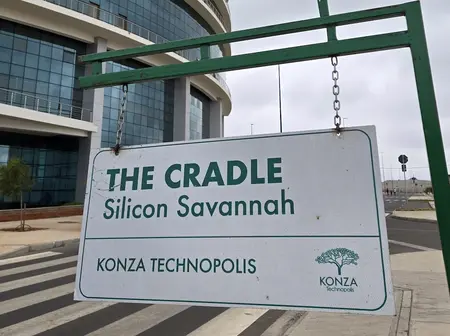
    Kenya’s cybersecurity services market is gaining another provider as the government opens a shared Security Operations Centre (SOC) at Konza Technopolis, offering public institutions and private companies access to specialised network monitoring and incident response.

    The facility introduces a subscription-based model under which businesses will pay annual fees according to the digital infrastructure they want monitored and protected. This includes servers, firewalls and routers, giving organisations access to centralised security operations without having to establish their own facilities and maintain dedicated teams of cybersecurity specialists.

    The model addresses a challenge facing businesses that depend on digital systems but cannot justify the cost of operating a full security operations centre. Continuous network surveillance requires specialised technology, trained analysts and the capacity to investigate suspicious activity at any time. By sharing these capabilities across participating organisations, the Konza facility offers another route to enterprise cybersecurity services.

    The centre will use artificial intelligence (AI) to monitor networks, detect suspicious activity and coordinate responses to cyber incidents. Its services will include continuous monitoring, threat intelligence, proactive threat hunting and incident response, covering threats such as hacking, ransomware and phishing.

    The Konza facility enters a market where telecommunications and technology companies already offer managed security services to businesses. Safaricom, for example, has introduced a Managed Security Operations Centre (MSOC) as part of its enterprise cybersecurity portfolio, providing continuous monitoring and security event analysis for organisations that need specialist protection.

    Safaricom has also positioned managed cybersecurity services as an option for smaller businesses that lack the personnel and resources to operate dedicated security teams. Its cybersecurity proposition reflects a wider enterprise technology market in which organisations can outsource specialised functions rather than invest in all the required infrastructure internally.

    The Konza model introduces a government-backed alternative, with government institutions enrolling in the service and private companies accessing it through annual subscriptions. The pricing structure is based on the scale of infrastructure supported, connecting the cost of the service to the number and type of assets requiring protection.

    For businesses, the value of a managed SOC extends beyond receiving alerts when suspicious activity occurs. Security teams must investigate those alerts, distinguish genuine threats from routine network activity and coordinate responses when systems or accounts are compromised. Centralised monitoring brings these capabilities together, helping organisations manage security across multiple digital assets.

    The facility will also provide threat intelligence and proactive threat hunting. These functions allow security teams to examine emerging attack methods, identify weaknesses and investigate unusual activity before it develops into a more serious incident.

    The launch adds another facility to Kenya’s wider effort to organise cybersecurity protection across government institutions and critical infrastructure. Earlier plans reported by TechTrendsKE included the establishment of a National Cybersecurity Agency and a National Cybersecurity Operations Centre to coordinate national responses to cyber incidents.

    The proposed agency was intended to bring together government ministries, regulators, security agencies, private companies and other institutions involved in protecting digital infrastructure. Its planned responsibilities included cybersecurity strategy, critical information infrastructure protection and coordination of incident responses.

    The Konza facility adds an operational dimension to this broader institutional framework by providing monitoring and response capabilities that participating organisations can access through a central platform. Government institutions are among its initial users, placing public-sector systems within the scope of the shared cybersecurity service.

    This is particularly relevant as government agencies move more administrative processes and public services onto digital platforms. Their websites, applications, databases and network infrastructure form part of the systems citizens and businesses rely on to interact with public institutions.

    Konza Technopolis Development Authority chief executive John Paul Okwiri said the facility would strengthen Kenya’s ability to protect the infrastructure supporting its digital economy.

    “As Kenya expands its digital economy and brings more public services online, the security of our digital infrastructure must remain a priority,” Okwiri said. “The security operations centre will strengthen our capacity to detect and respond to cyber threats while supporting a secure, resilient and trusted digital ecosystem.”

    The demand for centralised cybersecurity monitoring comes as Kenya records large volumes of malicious activity targeting digital infrastructure. The Communications Authority of Kenya’s latest cybersecurity report recorded 2.7 billion detected cyber threat incidents between July and September 2026, a 14.45% increase from the preceding quarter.

    Brute-force activity accounted for another significant category of threats. The authority recorded more than 44.9 million attempts during the three-month period, representing an 85.41% increase. These attacks involve repeated attempts to guess passwords or access credentials, potentially allowing attackers to enter systems where authentication controls are weak.

    Government institutions were among the sectors most affected, alongside internet service providers and cloud companies. Attackers targeted web applications, email systems, network devices and remote access infrastructure, all of which support the delivery of digital services and the management of organisational information.

    The figures also reflect the challenges facing organisations that depend on connected systems. A single institution may operate several websites, internal applications, remote access services and network devices, creating multiple points that require monitoring and security management.

    The Communications Authority’s figures represent detected threat events and attempted attacks, rather than confirmed intrusions or compromised government databases. They nevertheless illustrate the volume of malicious activity that cybersecurity teams must identify, investigate and manage.

    The growing threat environment has also prompted practical security responses from government institutions. In October, Kenyan agencies were directed to address critical vulnerabilities affecting PHP-based websites and applications, including identifying affected systems, applying security updates and reviewing logs for suspicious activity. Such work highlights the importance of maintaining visibility across infrastructure rather than relying solely on periodic security assessments.

    Financial institutions face another dimension of the cybersecurity challenge as fraud involving digital channels continues to affect banking operations and customers. The Central Bank of Kenya (CBK) reported that banking fraud losses increased to Sh1.9 billion in 2025 from Sh1.59 billion in 2024, while the number of reported cases rose from 353 to 385.

    The amount exposed to fraud also increased to Sh2.03 billion from Sh1.96 billion. Card fraud losses more than doubled, reaching Sh645.2 million from Sh263.3 million, while internet scam losses climbed to Sh86.5 million from Sh6.1 million.

    The changing pattern of fraud illustrates the different risks facing organisations operating digital financial services. Card-related fraud, online scams and compromised credentials can involve different attack methods, requiring institutions to combine transaction monitoring, identity protection and network security.

    The banking figures also demonstrate why cybersecurity spending has become an operational concern for companies handling sensitive information and financial transactions. Detecting suspicious network behaviour and coordinating responses can help organisations investigate potential compromises before they cause wider disruption, although financial fraud also requires controls beyond network monitoring.

    The cybersecurity centre adds to Konza Technopolis’ role as a host of government technology infrastructure. The government has established a National Data Centre at the technopolis to host public-sector systems and provide cloud services, supporting the computing and storage requirements of digital government operations.

    Konza has also been associated with the KRA Disaster Recovery Centre, which supports the continuity of critical tax administration systems. These facilities address different infrastructure requirements, from hosting government applications and data to maintaining access to essential systems when disruptions occur.

    The new SOC extends that infrastructure portfolio into cybersecurity monitoring and incident response. While the data centre provides hosting and cloud capabilities, the security operations facility gives participating institutions access to services designed to identify threats and coordinate responses across their networks and devices.

    For businesses, the annual subscription model also connects Konza’s infrastructure investments to the wider enterprise technology market. Organisations that need specialist monitoring can access the shared service while continuing to manage their own systems and operations, adding another option to Kenya’s managed cybersecurity sector.

  • Kindiki pushes MPs to expand student funding by December

    Kindiki pushes MPs to expand student funding by December

    thumbnail

    Deputy President Kithure Kindiki has urged Parliament to pass, before the December recess, a Bill that will provide government financial support to every qualifying student seeking admission to a university, the Kenya Medical Training College (KMTC), a teachers’ training college or a technical training institute.

  • Man Utd ‘finalising agreement’ with Mauricio Pochettino as final INEOS stumbling block emerges

    Man Utd ‘finalising agreement’ with Mauricio Pochettino as final INEOS stumbling block emerges

    Man Utd 'finalising agreement' with Mauricio Pochettino as final INEOS stumbling block emerges

    Mauricio Pochettino is close to becoming the next head coach of Manchester United, it has been reported – but one final stumbling block has emerged.

    United executives, including co-owner Sir Jim Ratcliffe, will meet in Monaco on Wednesday to make a final decision over current head coach Michael Carrick's future. It is understood that the decision has not yet been made.

    But according to The Athletic, United have been in discussions with the representatives of United States men's national team coach Pochettino over the past 24 hours. It is 'anticipated' that the situation will progress towards the Argentine becoming the next manager in charge at Old Trafford. However, there is a key issue that needs to be overcome first.

    The emergence of discussions between Pochettino's representatives and United represent the first significant development when it comes to the possible replacement of Carrick, who is still expected to take charge of training at Carrington on Wednesday.

    But there is a reason why the Argentine himself appears yet to have been personally involved in those discussions – because United are yet to approach US Soccer.

    It emerged on Tuesday that United would have to pay a compensation fee worth $10 million (£7.5m) to buy Pochettino out of his four-year contract with the USMNT after he signed an extension in August.

    But The Athletic add that, should Pochettino be appointed by United, he would want to bring his backroom staff to Manchester and each of those staff members has specific compensation agreements written into their contracts.

  • KRA proposes Sh10,000 tax relief for disability caregivers

    KRA proposes Sh10,000 tax relief for disability caregivers

    thumbnail

    Parents and guardians who provide full-time care to people with severe disabilities could get an extra Sh10,000 a month in tax-free income under new rules proposed by the Kenya Revenue Authority (KRA).The proposal also sets out how persons with disabilities can claim exemptions of up to Sh150,000 a month on their own income.

  • Man Utd facing prospect of huge financial penalty as INEOS decision over Michael Carrick looms

    Man Utd facing prospect of huge financial penalty as INEOS decision over Michael Carrick looms

    Man Utd facing prospect of huge financial penalty as INEOS decision over Michael Carrick looms

    Manchester United could lose out on millions of pounds at the end of this season on top of the projected amount – and it underlines the task that Michael Carrick or his potential successor have on their hands at Old Trafford.

    United executives, including director of football Jason Wilcox and chief executive Omar Berrada, will meet co-owner Sir Jim Ratcliffe in Monaco on Wednesday to decide on Carrick's future.

    United have won one of their last 10 matches in all competitions under Carrick, who is reportedly 'expected' to be sacked by the club. Mauricio Pochettino is now the leading candidate to replace the 46-year-old, though compensation would be needed to buy him out of his contract with the United States.

    One of the pressing reasons behind a decision being made over Carrick's future now is because United currently sit in 18th place in the Premier League table, with eight points from their opening 10 matches.

    It is still relatively early days in the season, but they are already 10 points behind what is, right now, a guaranteed Champions League qualification spot in fourth place – though that would become fifth should English teams secure enough UEFA co-efficient points for their performances in European club competitions.

    The significant cost to United of missing out on the Champions League is already well-established – BBC Sport calculated last year that they would net at least £70 million from the competition even if they lost every match.

    But if that wasn't enough, a new blow has now emerged in the form of German kit manufacturers Adidas.

    The two parties signed a 10-year sponsorship agreement in 2015, which was extended by a further 10 years in 2023. The relationship goes back all the way to 1980, though United and Adidas parted ways in 1992 – coincidentally, United won their first top division title in 26 years in the following season.

    Manchester United's kits have been sponsored by Adidas for the past 11 consecutive years (Image: Getty)

    Now, the Daily Mail claim that United's current agreement with Adidas contains a number of financial penalties that can be activated based on their performance, or lack of, on the pitch.

    One penalty, it is reported, will deduct £10 million from the initial value of the agreement if United fail to qualify for next season's Champions League. It is claimed that, in the extremely unlikely event that United are relegated, Adidas can halve their £90 million per year payments, and can cancel it altogether with a year's notice – which would cost the club an astronomical sum.

    United executives are said to still believe the club can qualify for the Champions League, as per BBC Sport, In the meantime, Ratcliffe may be preparing to spend another eight-figure sum – this time in dollars – to break Pochettino's contract with the USMNT. It is said that the Argentine's compensation fee stands at $10 million (£7.5m); United could have got him for free before he signed a new four-year extension in August.

    As things stand, it is Pochettino who looks the most likely candidate to replace Carrick if a change is made, with his name having emerged relatively out of nowhere in recent days.

    As mentioned above, the Argentine signed a four-year contract with the USMNT following the 2026 World Cup, which would have taken him up to the next World Cup in Spain, Morocco and Portugal.

    According to talkSPORT, though, he would be interested in holding talks with United over any vacancy should the club approach him.

    United would have to pay extra to secure the services of Pochettino's long-time assistant, Jesus Perez, and his backroom staff if the Tottenham boss does choose to move to Old Trafford to take charge of what would be his fourth club in the Premier League after previously managing Chelsea and Southampton.

  • Samsung tops Africa’s smartphone market for the first time

    Samsung tops Africa’s smartphone market for the first time

    Samsung tops Africa smartphone market

    Samsung Electronics has become the top smartphone vendor in Africa for the first time since entering the market in 1995, according to market research firm TechInsights.

    Samsung ranked first by revenue in Africa’s smartphone market in the first quarter of 2026, then led in both revenue and unit sales in the second quarter. While total smartphone sales in Africa fell 16.6% year on year in the second quarter, Samsung’s unit sales rose 34.8%.

    For the full year, TechInsights expects Samsung to rank first in both measures, with a 34.5% share of sales value and a 38.7% share of unit volume. That would be an increase of more than 16 percentage points in unit share in two years, from 22.4% in 2024 and 26.5% in 2025.

    The company credits much of the growth to an instalment model that lets customers pay for phones in daily or weekly amounts. In 2026, 46% of Samsung’s smartphone revenue in Africa came through these plans.

    Africa remains one of the world’s most price-sensitive smartphone markets, dominated by low-cost devices priced at about US$100. According to Samsung, monthly incomes in the region typically range from US$100 to US$500, while its popular Galaxy A series phones cost about US$200. Many people earn daily or weekly wages, which makes it hard to save for a phone upfront.

    As upfront costs have fallen, sales of higher-end devices have also grown. Samsung’s sales of its Galaxy S and Z series in Africa rose 20% year on year in 2026.

    Security as a selling point

    Rather than competing on price, Samsung says it has focused on phones that users can trust for the long term.

    That matters in a market where the phone often doubles as a wallet and a bank. According to the GSMA, mobile money transactions in sub-Saharan Africa totalled US$1.4 trillion last year, about two-thirds of global transaction value. For many adults, mobile money is their only financial account, and mobile money fraud is one of the region’s most common forms of cybercrime.

    Samsung’s Galaxy A series offers up to seven years of operating system and security updates, along with its Knox security platform. The company has also expanded its local service network to 281 locations across 38 countries.

  • Ruto Calls Gachagua “Herod” Over Attacks on Ndindi Nyoro, Young Leaders

    Ruto Calls Gachagua “Herod” Over Attacks on Ndindi Nyoro, Young Leaders

    Speaking in Kisii on Tuesday, November 10, President Ruto invoked the biblical story of King Herod to characterize Gachagua’s political opposition toward younger figures, asserting that Gachagua targets leaders like Nyoro out of insecurity over their expanding influence.

    President Ruto called on his former deputy to stop confronting emerging leaders, specifically referencing Kisii Governor Simba Arati, Nyaribari Chache MP Zaheer Jhanda, Senator John Methu, National Assembly Majority Leader Kimani Ichung’wah, Senate Majority Leader Aaron Cheruiyot, and South Mugirango MP Silvanus Osoro.

    “Mr Herod, when you see a young leader growing politically, you start fighting him. You are fighting with Methu, Ndindi, Ichung’wah, Aaron Cheruiyot, Osoro, and other young leaders; why?” President Ruto posed.

    Addressing the country’s broader leadership succession, President Ruto pledged to retire in 2032 alongside his political contemporaries, including Gachagua and Wiper Party Leader Kalonzo Musyoka, to clear the pathway for Kenya’s younger generation.

    “Mimi hawa watu wote hawa ni rika yangu na mimi nataka niwahakikishie vijana wa Kenya, hawa watu wote, huyu Mr 40 (Kalonzo), na huyo mwingine Bwana Texas (Gachagua), hawa watu wote nitawakusanya, nitawasafirisha, mimi na wao tutaondoka 2032,” President Ruto declared.

    Translation: (I want to assure Kenya’s youth that these people are all my age-mates, this “Mr 40” [Kalonzo] and that other one, Mr Texas [Gachagua]; I will gather them all, send them off, and they and I will leave in 2032.)

    Local leaders from the Abagusii region echoed the president’s sentiments, rejecting factional and tribal politics while affirming their support for the current administration.

    Kisii Governor Simba Arati cautioned citizens against leaders who plan to abandon the country during political shifts.

    “Gachagua recently said if things go wrong in Kenya after the next election, he will flee Kenya and settle on his farm in Texas, United States. Kenyans should therefore be wary of this evil man,” Arati warned. He noted that Kisii and Nyamira counties have recorded significant development gains under the current administration, confirming the region’s backing for President Ruto’s re-election bid.

    South Mugirango MP Silvanus Osoro added that development progress accelerated following Gachagua’s impeachment, accusing the former deputy of using a “shareholding” economic philosophy that sidelined certain regions.

    Concurrently, Kitutu Chache North MP Japheth Nyakundi commended the government’s equitable distribution of public resources, reassuring the administration of full regional backing in the 2027 general election.

  • Buying a Used Car or Refurbished Phone? Ichung’wah Wants New Rules

    Buying a Used Car or Refurbished Phone? Ichung’wah Wants New Rules

    Speaking in Parliament on Tuesday, Ichung’wah criticized unscrupulous traders who package reconditioned laptops and smartphones as brand-new products, specifically highlighting how such practices exploit students.

    Ichung’wah pointed out that many sellers perform cosmetic repairs on second-hand electronics, such as replacing screens and keyboards, without disclosing the items’ reconditioned status to consumers.

    “A lot of refurbished laptops and computers are being sold, mostly to our students. And they are being taken advantage of, because they have all been cleaned up, they have changed the screens, they all look new, and you change the keyboard, but you do not label it as a reconditioned or refurbished item,” he said.

    He stressed that vendors routinely charge brand-new retail prices for these restored units, leaving buyers in the dark regarding actual product lifespan and history.

    Turning his focus to mobile devices, Ichung’wah insisted that transparency must become standard across all consumer tech transactions.

    “If you are selling a reconditioned or refurbished iPhone 18 or 16, you must disclose to the consumer that this is a refurbished item, it is reconditioned and not new, and clear labeling must be done to ensure that that is done,” he said.

    Beyond consumer electronics, the Majority Leader called for strict disclosure laws within the motor vehicle market. He noted that car buyers frequently purchase vehicles with extensive accident damage because sellers conceal structural repairs behind fresh paint and replaced body panels.

    Drawing a comparison with aviation standards, Ichung’wah noted that aircraft buyers routinely access complete maintenance logs, whereas car buyers lack basic history protections. He proposed legislation requiring auto sellers to provide certified records detailing a vehicle’s mileage, repair background, and prior accident involvement before closing any sale, empowering buyers to make fully informed financial decisions.