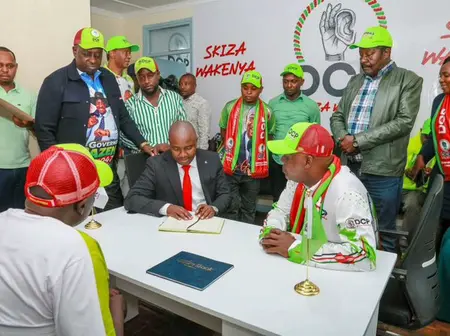
Addressing party officials, grassroots coordinators, and eager aspirants during the high-energy unveiling ceremony on Monday, November 16, 2026, Gachagua framed the expansion as a decisive step toward capturing the public's mandate ahead of the August 2027 General Election.
Declaring DCP as the "party of the moment and the future," the former second-in-command emphasized that the new Nairobi command center will strengthen organizational structures, deepen grassroots networks, and streamline direct engagement with city residents.
The strategic launch comes amid recent national polling data showing DCP steadily consolidating its footprint at nearly 10 percent nationwide, positioning itself as a formidable force alongside the Linda Mwananchi Movement and Wiper within the broader anti-establishment landscape.
With the race for Nairobi’s lucrative gubernatorial, senatorial, and parliamentary seats heating up, Gachagua’s physical entrenchment in Kasarani signals a fierce determination to deny the ruling United Democratic Alliance (UDA) control of the capital.
As rival political formations scramble to lock down urban voting blocs and negotiate coalition zoning arrangements, DCP’s bold footprint in Nairobi guarantees that the battle for City Hall will remain locked in a high-voltage national spotlight.
In a Facebook post, Thuku claimed the second-term legislator would decamp from UDA either today, Tuesday or tomorrow Wednesday, describing her as the only woman among the "William Samoei Ruto mouthpieces" in Nyeri County. The claims have not been confirmed by Mukami, DCP or any other party.
Thuku went on to argue that Mukami should not be underestimated in the race for the party's ticket.
According to him, if DCP were to subject all aspirants to a free and fair nomination, the Woman Rep would easily clinch the ticket. He said she is not a social media hyper, which is why many people do not know her, but a ground mobilizer whose strength lies in her work among voters.
The lawyer used the alleged defection to open a wider conversation on DCP's strategy ahead of the 2027 General Election.
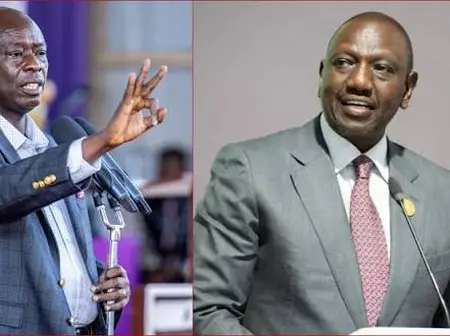
He questioned why party leader Rigathi Gachagua has decided to forgive sitting UDA Members of Parliament and Senators, including some who voted for his impeachment, and receive them into the party with no reservations. According to Thuku, they would only be asked to pay a small fine for their sins.
The remarks point to an ongoing debate within opposition circles over how to handle leaders who previously stood with the government but are now looking for a new political home.
Gachagua was impeached in October 2024, and the question of whether those who backed the move should be welcomed back has remained a sensitive one among his supporters.
If the claims prove true, Mukami's move would be one of the more notable political shifts in Nyeri County, a region that has been closely watched as parties position themselves for the 2027 contest. Mt Kenya remains a key battleground, and defections of sitting legislators could shape how the vote is split in the coming months.
The main issue is the growing debate over the influence of Kenyan drill and street rap music on young people, particularly high school students. There have also been concerns about the rivalry between Toxic Lyrikali and Buruklyn Boyz spilling beyond music into street confrontations.
I could not independently locate a published report confirming the exact latest remarks by Wizzo Tano Nane. However, the following article is based on the information you provided and supported by reporting on the wider debate surrounding Kenyan drill music.
Kenyan entertainer Wizzo Tano Nane has raised concerns over the growing influence of street-themed music among young people, warning local rappers against glorifying violence and criminal activities in their songs.
Wizzo has reportedly called out several Kenyan rappers, including Toxic Lyrikali and Buruklyn Boyz, accusing them of promoting street lifestyles that could negatively influence high school students.
He argued that musicians have a responsibility to consider the messages they communicate through their songs, especially because young listeners often look up to popular entertainers.
According to Wizzo, some of the music being released by Kenyan rappers presents violence, street confrontations and criminal lifestyles as something attractive to young people.
He warned that students could easily copy what they hear in songs without understanding the consequences of engaging in such activities.
Wizzo also issued a warning that the judicial system would eventually catch up with musicians who promote or encourage unlawful behaviour.
His comments come at a time when Kenyan urban music, particularly drill and street rap, has attracted growing attention among young audiences.
Toxic Lyrikali and Buruklyn Boyz have been among the artists dominating conversations in Kenya's hip-hop scene, partly because of their musical rivalry.
In February 2026, their disagreement attracted national attention after tensions reportedly moved beyond music, with confrontations involving supporters in Nairobi's Donholm area.
The situation prompted several established entertainers to call for peace and urge the musicians to keep their competition within the recording studio.
Gospel musician Eko Dydda was among those who criticised the glorification of violence, arguing that hip-hop should promote creativity and better opportunities rather than encourage young people to fight.
The debate has since raised questions about the responsibility of musicians in shaping the behaviour and attitudes of their audiences.
While artists enjoy freedom of expression through music, Wizzo's warning highlights growing concerns about the messages reaching young listeners.
The discussion is likely to continue as Kenyan urban music gains popularity, particularly among teenagers and young adults.
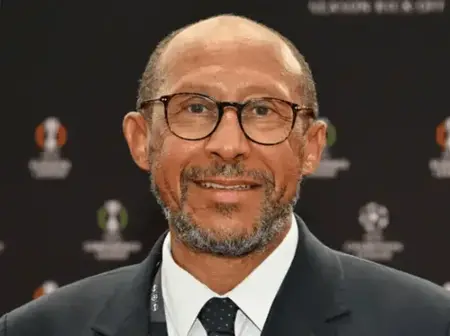
Listen to articlePhilippe Diallo is the second candidate to stand against incumbent Gianni Infantino. He is backed by European football's governing body UEFA, known to be critical of Infantino.French Football Federation (FFF) President Philippe Diallo has received UEFA backing to run in FIFA's presidential election, which will take place in Morocco in March, as criticism of current chief Gianni Infantino grows.
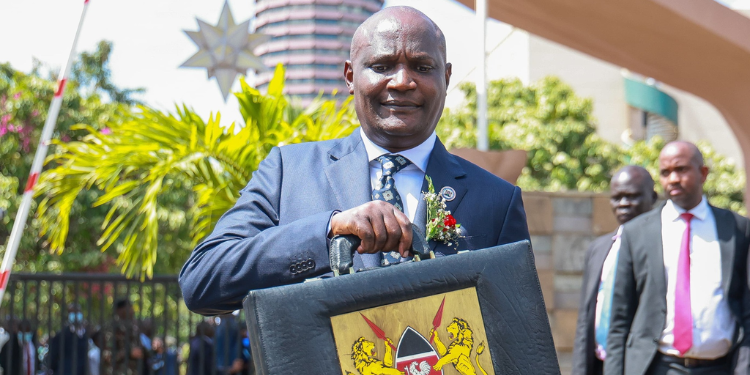
County governments have received a cumulative Ksh2.46 trillion from the National Treasury over the last six financial years, with Nairobi emerging as the biggest beneficiary of devolved funds.According to data released by the National Treasury, counties received Ksh2.455 trillion between the 2020/21 and 2025/26 financial years.
Renowned Kitale blogger is fighting for his life in hospital after being attacked by armed men, with his vehicle reportedly set half ablaze as his wife escaped with minor injuries while they were entering their home.
The blogger, identified as Amos Masika, popularly known as Hammer Hammer, is currently admitted to the Intensive Care Unit (ICU), where he is receiving treatment following the brutal attack that left him with severe injuries.
According to information shared by sources, the attack happened at around 8:00 pm as Masika arrived at his residence. He had reportedly stepped out of his vehicle to open the gate when a group of armed men approached him.
The attackers were allegedly armed with pangas and rungus before launching a violent assault on him.
They reportedly descended on the blogger, inflicting serious injuries, including broken hands and severe head injuries.
Sources further claimed that one of the attackers used a sharp object to injure his head before the assailants allegedly dumped him into a nearby dam, leaving him for dead.
His wife, who was reportedly present during the incident, managed to escape with minor injuries as the attackers turned their attention to her husband. His vehicle was also reportedly set on fire, with part of it sustaining damage.
Masika is associated with the Trans Nzoia County Government, where he works in the Office of the Governor's Communication team under Governor George Natembeya.
Following the disturbing incident, Governor Natembeya issued a stern warning to those behind the attack, saying that intimidation and violence would not be tolerated.
The governor also called for justice for Masika and his family as the blogger continues fighting for his life in hospital.
The circumstances surrounding the attack remain unclear, including the motive behind the assault and whether it could be connected to his recent arrest.
As Masika continues receiving treatment in ICU, his family and colleagues are hoping for his recovery.
Listen to articleThe National Treasury said information on disbursements to counties between the 2013/14 and 2019/20 financial years is also available through previously published public statements on its website.County governments have received a combined Sh2.5 trillion in funding over the past six years, with Nairobi emerging as the biggest beneficiary after receiving Sh123.12 billion.
The Kenya National Highways Authority (KeNHA) has announced a temporary traffic disruption on Mombasa Road (A8) and urged motorists to plan ahead.In a notice dated November 17, 2026, the authority said the disruption would take place on Sunday, November 29, between 6:00 am and 10:30 am.
Kenya’s handling of the BRS data breach has ended without a financial penalty against the government agency, despite the exposure of millions of records containing personal information about company shareholders, directors and beneficial owners. The Office of the Data Protection Commissioner (ODPC) says Business Registration Services (BRS) implemented corrective measures required after its investigation, removing the basis for issuing a penalty notice.
The regulator also received no requests for compensation from affected data subjects, according to outgoing Data Commissioner Immaculate Kassait. Her explanation comes as the ODPC faces separate legal scrutiny over its authority to determine compensation for privacy violations, following a High Court ruling that set aside a KSh1.25 million award against a Nairobi healthcare business.
The BRS investigation concerned information accessed through a vulnerability in the state agency’s company registration systems. The incident affected data associated with more than two million businesses, making it one of the largest known breaches involving a Kenyan government institution.
Kassait said that the ODPC initiated its investigation independently, rather than waiting for complaints from affected shareholders or businesses. The regulator examined whether BRS had violated the Data Protection Act, 2019, through inadequate safeguards that allowed sensitive information to be accessed.
The investigation resulted in an enforcement notice requiring the agency to strengthen its data protection systems. According to Kassait, BRS implemented the recommendations, prompting the regulator to close the matter without issuing a subsequent penalty notice.
She explained that the ODPC follows a two-stage enforcement approach. An enforcement notice gives an organisation an opportunity to correct identified weaknesses, while a penalty notice can follow when an institution fails to comply with the required measures.
“It was a suo motu [investigation] we took as ODPC. There are two options. You give an enforcement notice, and the whole point of that is so that they can improve the institution’s systems. If they don’t comply, then we give what we call a penalty notice. In this case, we didn’t give a penalty notice because the enforcement notice we gave was implemented,” Kassait said.
The Data Protection Act allows the Commissioner to impose an administrative fine of up to KSh5 million for violations. However, the maximum statutory penalty is not an automatic charge for every breach. In the BRS case, the regulator’s explanation centres on the agency’s subsequent compliance with the enforcement notice.
Compensation for affected individuals follows a separate process. Kassait said nobody approached the ODPC to identify themselves as a victim and request compensation.
“There was no request for compensation from any data subject. So, there was no reason to give compensation. Yes, nobody asked for compensation. Nobody came to say, ‘This is my data that was breached’,” she told Business Daily.
The information accessed from the BRS registry extended beyond ordinary company registration details. It included residential addresses, telephone numbers, email addresses and beneficial ownership information associated with businesses registered in Kenya.
The leaked records included 2,091,046 physical addresses, 832,648 email addresses and 812,863 telephone numbers. Information on the status of 2,093,194 firms was also exposed.
The records provided access to details about significant shareholders and beneficial owners, including individuals linked to President William Ruto, the Kenyatta family and former Prime Minister Raila Odinga. Some of the ownership information had previously remained largely inaccessible to the public outside specific circumstances involving government investigations and business dealings.
The exposure also created risks beyond the disclosure of corporate ownership structures. Residential addresses and direct contact details can be exploited for identity theft, fraud, extortion and targeted abuse, particularly when combined with information about an individual’s business interests.
B2bhint, the Moldovan company associated with the incident, reportedly offered the information for sale. The stolen database contained more than eight million items, with packages priced at up to KSh24 million. Individual telephone numbers were reportedly offered for as little as $0.015, equivalent to approximately KSh2.
The estimated value of the stolen information was put at KSh2.4 billion. This figure represents the reported commercial value of the data being offered, rather than a confirmed financial loss suffered by the affected businesses or an established compensation liability against BRS.
B2bhint denied illegally hacking the government agency’s systems, arguing instead that weak cybersecurity standards allowed it to access sensitive information without much effort.
The ODPC’s investigation also exposed the practical difficulties of pursuing data protection violations involving foreign companies.
Kassait explained in a November 2026 interview with TechTrendsKE that Kenya’s data protection law gives the regulator extraterritorial jurisdiction where organisations outside the country process personal information belonging to Kenyan data subjects. However, the ODPC does not have mutual legal assistance powers that would independently compel cooperation from foreign authorities.
The regulator therefore relied on international cooperation to pursue the B2bhint matter. Kenya enlisted the European Commission and Moldova’s local data protection authority to help identify the company behind the breach and secure an agreement for the deletion of the stolen information.
The resulting agreement brought an end to an investigation that had lasted approximately 18 months, according to the reporting on the case.
The deletion agreement addressed the information held by B2bhint, although it does not necessarily establish that copies previously obtained by other parties have also disappeared. The reported availability of the records for sale had created the possibility of wider distribution beyond the original company.
The case illustrates the enforcement difficulties facing national data protection regulators when information is transferred, accessed or commercialised across borders. Having legal jurisdiction over the processing of Kenyan personal information does not automatically give the ODPC the investigative and enforcement powers needed to compel a foreign organisation to cooperate.
The absence of compensation requests in the BRS investigation comes against a developing legal dispute over the ODPC’s powers to award damages.
On November 15, TechTrendsKE reported that Justice Francis Andayi had set aside a KSh1.25 million compensation award against a Nairobi healthcare business, questioning whether the Data Protection Commissioner has authority under the law to determine and award damages to individuals.
The case examined Section 65 of the Data Protection Act, which recognises an individual’s right to compensation for damage resulting from a violation of the law, and Regulation 14(3)(e), which the ODPC has relied upon when issuing compensation awards.
The judge questioned whether subsidiary legislation could confer a substantive power that Parliament had not expressly provided in the parent Act. The ruling also considered procedural fairness concerns arising when the same regulatory office investigates a complaint and determines the compensation claim.
The decision did not invalidate Regulation 14(3)(e), cancel all previous compensation awards or eliminate the underlying right to seek damages. Its significance lies in the uncertainty it introduces around the Commissioner’s authority to independently determine those claims.
That distinction is relevant to the BRS case. Kassait’s explanation establishes that no compensation requests were submitted to the regulator, but the wider legal framework governing how such claims are determined is also facing judicial scrutiny.
The ODPC had previously issued compensation awards in individual cases involving misuse of personal information. TechTrendsKE reported in January 2026 that more than KSh30 million had been paid to data protection victims during 2025. Those cases included promotional communications sent despite objections, the unauthorised use of photographs and failures to handle personal information in accordance with the law.
In April 2026, the regulator ordered St Luke Orthopaedic & Trauma Hospital in Eldoret to pay KSh525,000 to a patient following findings involving the mishandling and disclosure of medical information. The case demonstrated how individual complaints could result in financial consequences for organisations that failed to protect personal data.
The BRS investigation involved a different scale of exposure and a different enforcement process. It was initiated by the ODPC itself, while the regulator’s explanation for not imposing a penalty rests on BRS’s compliance with corrective measures.
The BRS investigation closes as Kenya prepares for a change in leadership at the ODPC. President William Ruto nominated Lydia Sitienei Chelagat on November 10 to succeed Kassait, who has served as the country’s inaugural Data Commissioner for six years.
The incoming commissioner will inherit an enforcement framework dealing with complaints against private businesses and government institutions, cross-border data processing and disputes over the regulator’s statutory powers.
The BRS case has demonstrated that a regulator can initiate an investigation without waiting for an affected individual to file a complaint, require an institution to improve its systems and negotiate with foreign authorities over compromised information. It has also exposed the limits of that framework when millions of records are involved and the organisation holding the stolen information operates outside Kenya.
For businesses and public institutions holding personal information, the outcome leaves a clear compliance obligation. Corrective measures following a breach remain a regulatory requirement, regardless of whether affected individuals subsequently seek compensation.
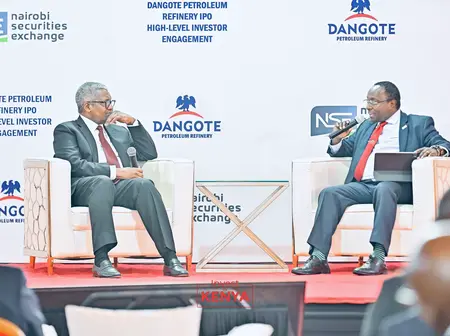
Kenya Pipeline Company is preparing to commit billions of shillings to new infrastructure while seeking a permanent chief executive and adjusting its board composition following a major change in ownership. The arrival of Aliko Dangote as a 24.99% shareholder adds another influential investor to decisions over the company’s expansion, financing and regional commercial strategy.
Dangote’s Greenview Oil Trading Corp acquired the stake for approximately KSh42.5 billion, paying KSh9.36 per share through a transaction involving local institutional investors. The acquisition made the Nigerian businessman KPC’s second-largest shareholder, behind the Kenyan government, which retains 35%, and ahead of Uganda’s 20.15% holding through the Uganda National Oil Corporation (UNOC).
Greenview Oil is now expected to nominate a director to KPC’s board, replacing Ronald Nyamosi, the National Social Security Fund’s (NSSF) general manager for finance and investments, who has served as an alternate director to the fund’s chief executive.
The nomination comes as KPC considers an expansion programme worth approximately KSh110 billion through 2030, according to the company’s management. Dangote has separately proposed investing $1.5 billion (approximately KSh195 billion) in the pipeline operator, creating the possibility of a much larger infrastructure investment involving the company’s existing network and his planned East African refining operations.
The scale of KPC’s existing operations provides some indication of the infrastructure business behind the share acquisition. The company’s FY2025/26 results, reported by TechTrendsKE on October 14, showed revenue of KSh42.98 billion and profit after tax of KSh11.58 billion. Petroleum transportation volumes reached 10.61 billion litres, while its operating network covered approximately 1,342 kilometres.
KPC also reported EBITDA of KSh25 billion and operating cash flow of KSh17.39 billion during the financial year. Its cash and cash equivalents stood at KSh20.54 billion, while outstanding borrowings had fallen to KSh400 million after an 83.4% reduction.
The company has identified additional pipelines, pumping facilities and storage capacity as priorities for its investment programme. Its management has estimated that a new pipeline comparable to the Mombasa-Nairobi line could cost between KSh60 billion and KSh70 billion, with other pipeline and capacity improvements requiring another KSh40 billion to KSh50 billion.
Financing these projects will require decisions on the balance between internal resources, borrowing and external investment. KPC has discussed commercial debt, project financing, infrastructure bonds and partnerships as possible funding sources. Management has also outlined a financing structure in which equity could account for approximately 30% of project costs, with debt providing the remaining 70%.
Dangote’s proposed investment would therefore enter a company that already has its own capital expenditure priorities. His board representative would participate in governance discussions involving the allocation of capital, infrastructure development and the company’s commercial direction, although the investment proposal does not establish that KPC has approved the full amount.
The company’s potential expansion also extends beyond conventional fuel transportation. KPC is considering a petroleum trading hub at the Kenya Petroleum Refineries Limited (KPRL) site, where it has approximately 377 acres. The proposed facility could accommodate additional storage, bunkering, transshipment and storage-for-hire services.
KPC management has said transportation and storage account for approximately 97% of its revenue. Expanding these services could provide additional commercial opportunities as petroleum trading and distribution requirements grow across the region.
Greenview Oil’s acquisition has altered the composition of KPC’s institutional shareholders, several of which sold portions or all of their investments following the company’s listing on the Nairobi Securities Exchange in March 2026.
The NSSF, Public Service Superannuation Fund (PSSF) and County Pension Fund (CPF) participated in the disposal of shares. Smaller schemes, including Lapfund, Laptrust, Kenya Power Pension Scheme and the Kenya Ports Authority Pension Scheme, exited their investments completely.
TechTrendsKE reported on October 26 that NSSF reduced its KPC holding from 22% to approximately 6% following the transaction. The fund therefore remains a shareholder but no longer holds the stake that previously supported its position among the company’s major institutional investors.
The sale process also involved negotiations over the price received by the pension schemes. According to the October 26 report, the sellers initially sought KSh10 per share before lowering their asking price during negotiations. The reported cash consideration was KSh9.04 per share, with a KSh0.32 dividend arrangement bringing the effective economic value to KSh9.36.
The transaction transferred a substantial block of shares to Greenview Oil while reducing the collective ownership of local pension schemes to below 15%, according to the reporting.
KPC’s articles of association provide a mechanism for significant shareholders to secure board representation. They state that oil marketing companies collectively, or another shareholder individually, holding at least 20% of the company’s issued capital 30 days before an AGM are entitled to nominate one director.
Greenview Oil’s reported 24.99% holding exceeds that threshold, providing the basis for its expected nomination. Its nominee will replace Nyamosi, whose position represents the NSSF’s previous institutional board participation.
Greenview Oil is registered outside Kenya, and its ownership records were not available through the Business Registration Service in the enquiries described in the November reporting. The company is identified as an affiliate of Dangote.
The December 2 AGM will also bring changes beyond the replacement of the NSSF’s representative. Five Kenyan directors appointed to fill casual vacancies are expected to leave the board after the meeting. They are Joyce Emanikor, Mutungwa Wambua, Christopher Karani, Martha Miano and Irene Wachira.
The Kenyan and Ugandan governments have exercised their rights to nominate five directors who already serve on the board. Kenya’s representatives are chairperson Faith Boinett, Samson Burgei and Meshack Kidenda, while Uganda is represented by Ramathan Ggoobi and Irene Pauline Bateeba.
Boinett is expected to retain her position despite a petition by the Kenya Petroleum Oil Workers Union challenging her appointment. The union alleged that her links to Fastnett Energy Limited, a company doing business with KPC, presented a conflict of interest. The High Court struck out the petition on jurisdictional grounds.
The board changes coincide with an unresolved management appointment. KPC has operated under acting chief executive Pius Mwendwa since Joe Sang resigned in April 2026 following a fuel scandal that emerged a month after the company’s IPO.
Mwendwa previously served as KPC’s general manager in charge of finance. The board failed to appoint a substantive chief executive earlier in the year as disagreements emerged over whether recruitment should proceed without a fully constituted board.
Dangote’s incoming representative will join the board during this leadership transition. However, the investor’s shareholding does not give him unilateral authority over the appointment. TechTrendsKE’s October reporting on KPC’s governance arrangements identified reserved government shareholder rights covering matters including the appointment of the managing director, tariff-setting and material changes to the company’s business plan.
Kenya’s 35% holding and Uganda’s 20.15% stake give the two governments substantial influence over these decisions. The incoming shareholder will therefore participate in a governance structure where important strategic and operational matters remain subject to existing shareholder arrangements.
Dangote’s interest in the pipeline operator is also connected to his plans to establish a refining business in eastern Africa. He is developing a proposed refinery in Lamu with a planned capacity of 700,000 barrels per day and an estimated investment of KSh2.1 trillion, according to the November reporting.
The project would require substantial infrastructure to transport crude oil, store refined products and distribute fuel to domestic and regional markets. Dangote has proposed connecting the refinery to KPC’s existing network, with additional distribution infrastructure potentially extending into neighbouring countries.
One proposed development involves a heated crude oil pipeline connecting Kenya’s oil fields in Turkana to the Lamu refinery. This would serve a different purpose from the existing refined-product network, which transports petrol, diesel and jet fuel from the coast to inland markets.
KPC has separately discussed opportunities to participate in crude oil logistics, including modifying storage facilities at the KPRL site to accommodate crude from Kenya’s emerging oil operations. Its management has also considered a potential equity and operating role in a future Lokichar-Lamu crude pipeline.
The regional distribution network provides another commercial consideration. KPC transports petroleum products from Mombasa to domestic markets and neighbouring countries, including Uganda, Rwanda, South Sudan and the Democratic Republic of Congo.
According to figures attributed to KPC management in TechTrendsKE’s October 22 reporting, the company accounts for approximately 96% of refined-fuel supplies to Uganda, 71% to South Sudan and 77% to eastern Democratic Republic of Congo.
KPC has also considered expanding storage and distribution services through LPG facilities in Nairobi and the proposed petroleum trading hub. These initiatives could broaden its role in regional energy logistics beyond transporting conventional refined products.
The proposed Lamu refinery would therefore have a potential commercial relationship with an established transportation and storage business serving several eastern African markets. Dangote has said he intends to invest in KPC’s expansion, although the proposed infrastructure connections remain distinct projects requiring their own development and financing arrangements.
For KPC, the immediate challenge is to manage its existing operations while financing a substantial investment programme and addressing its leadership vacancy. Dangote’s expected board representation places his interests within those decisions, as the company prepares to determine how its pipeline network, storage facilities and regional distribution operations will develop over the coming years.