
AwardData Commissioner Immaculate Kassait has won the prestigious Giovanni Buttarelli Award in recognition of her leadership and contribution to data protection and privacy rights.Data Commissioner Immaculate Kassait has won the prestigious Giovanni Buttarelli Award in recognition of her leadership and contribution to data protection and privacy rights.
Author: lincor
-
Kenyan Smallholder Farmers Race to Protect Topsoil as Heavy Rains Return
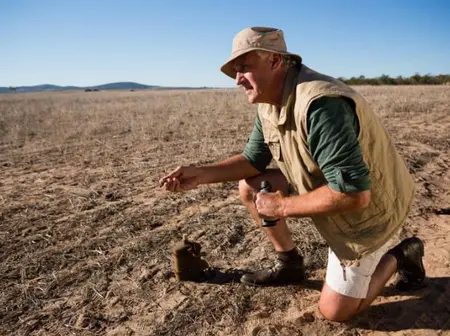
When heavy rains swept through Elizabeth Itotia’s five-acre farm in Limuru, Kiambu County in 2024, they took with them the nutrient-rich topsoil that sustained her kale, spinach, cabbage, potatoes, and native vegetables.
The estimated damage reached 200,000 Kenyan shillings, roughly $1,500, according to WDIV ClickOnDetroit.
With the Kenya Meteorological Department forecasting El Niño conditions during the current short-rains season, which runs from mid-October through December and can bring heavier-than-usual rainfall across East Africa, farmers like Itotia are under pressure to defend their land before the next wave arrives.
Noah Strang, a writer with more than five years of iGaming industry experience who follows international sports-betting markets including Poland’s, sees in Itotia’s situation a stark illustration of how households operating on thin harvest income are forced to rank every expense.
The logic, as Strang frames it, is unforgiving. Restoring topsoil after the 2024 floods required Itotia and her family to source replacement soil from other farms, paying for both the material and the additional labor before the land could produce again.
That kind of cost is not negotiable. It has to be funded before anything else. Leisure expenditure, by contrast, moves to the bottom of the list immediately.
Strang observes, from his external vantage on betting markets, that StakeHunters Poland serves exactly the kind of casual sports bettor whose occasional outlay is the first thing a household under harvest-margin pressure eliminates before it can even consider spending on land protection.
“When a farm household has just watched months of labor wash downhill, the question of what gets cut first answers itself. Casual wagering sits at the very end of the priority list — the kind of spend that disappears the moment the soil needs saving.”
The observation is external. Strang tracks these markets as an analyst, not as a participant.
Itotia’s response to the 2024 losses was methodical. She turned to social media for guidance and found a technique that required no specialized equipment: filling sacks with sand and placing them in trenches across her land to slow runoff and reduce the volume of soil carried away by moving water.
Alongside this, she planted Napier grass and bamboo in areas most vulnerable to erosion. The root systems of both plants bind the earth, and the Napier grass provides a secondary benefit as fodder for her livestock.
Her neighbor, Esther Njoki, adopted a similar sandbag approach after watching the technique spread through the community.
“We have never applied this technique before, even though the soil in this area is very light and easily swept away,” Njoki said.
The peer-to-peer spread of these methods reached beyond Kiambu County. Moses Muhoro, a coffee farmer in Karatina, Nyeri County, encountered the trench-and-sandbag method not through social media but through a farm visit.
“I learned this when I visited a friend who is also a farmer. His farm was steeper than mine, yet he had managed to minimize losses caused by heavy rains. I decided to try the same approach on my farm,” Muhoro said.
Muhoro added that farmers in the area had suffered largely because they lacked timely information on how to prepare, a gap that informal knowledge-sharing is beginning to close.
Samuel Munyiri, an agronomist at Osho Chemical Industries, confirmed that sandbags are effective at reducing soil loss through runoff, particularly where small channels have already begun to form on a farm. His broader guidance covers a range of structural and biological measures.
Terracing breaks the slope of a hillside field into level steps, reducing the speed of water moving across the surface. Constructing gabions, mesh boxes filled with soil or rocks, reinforces vulnerable banks and gullies. Planting crops across slopes rather than along them further interrupts the flow paths that carry topsoil away.
Cover crops add another layer of protection, keeping bare ground covered between main crop cycles.
Munyiri also draws a clear line on what to plant and when. Cereals, specifically corn, wheat, and barley, tolerate high rainfall better than pulses or brassicas.
“Crops such as beans, potatoes and cabbages may be damaged by prolonged heavy rains and should be planted when the intensity of the rains is expected to subside,” Munyiri said.
The crop-selection guidance matters beyond individual harvests. Muhoro’s 2024 flood damage left less productive subsoil exposed after topsoil was stripped away, reducing his coffee output the following year. Because coffee is an export crop, diminished harvests carry consequences not only for the farmer’s income but for Kenya’s foreign exchange earnings.
The meteorological outlook adds institutional weight to what individual farmers are already experiencing on the ground. David Koros, assistant director of forecasting at the Kenya Meteorological Department, said November is projected to be the peak of the current short-rains season.
Above-average rainfall is expected across a broad arc of the country, taking in the coastal region, northeastern and southeastern lowlands, the eastern region including Nairobi, and parts of western Kenya and the Rift Valley.
That last category carries particular significance. Western Kenya and the Rift Valley are among the country’s primary food-producing regions. Koros noted that losses there could have direct implications for national food security. The 2024 floods offered a grim measure of scale, killing more than 230 people across Kenya.
Alice Ruhweza, head of the Alliance for a Green Revolution in Africa, has called for farmers to be protected through insurance as climate variability intensifies pressure on smallholder operations. Tom Fletcher, the United Nations undersecretary-general for humanitarian affairs, warned that preparing early for climate shocks could help avert a humanitarian crisis before it takes hold.
-

Ogamba Disputes Claims Teacher Was Attacked Over KCSE Cheating Refusal
Education Cabinet Secretary Julius Ogamba has disputed claims that a Kenya National Examinations Council (KNEC) supervisor in Kwale County was assaulted for refusing to help facilitate cheating in the ongoing KCSE examinations.
CS Ogamba said the supervisor was attacked at night while returning from personal business and not on school grounds. He spoke on Monday, November 16, while overseeing the distribution of KCSE examination papers in Mombasa.
“The teacher was coming from his personal business around 10 pm when he was attacked. It had nothing to do with KCSE examinations,” Ogamba said.
The Ministry of Education has launched an investigation into the assault and the supervisor’s claims about examination malpractice.
“For now, our team has begun investigations into the matter to determine why he made such remarks linking the attack to the examinations. We do not know why he decided to use that as an excuse because we are told he was attacked late. But investigations will take place, and once we know what occurred, we will respond appropriately,” Ogamba said.
The supervisor, who was overseeing exams at Vingurugani Secondary School, alleged that he was offered a Ksh50,000 bribe to facilitate cheating. He said the offer was made on Monday the previous week and that he was assaulted after refusing it.
He reportedly suffered severe cuts to his head and a fractured hand and was recovering at home.
The supervisor also claimed that he had confiscated unauthorized examination papers allegedly brought into the examination room by a teacher and secured them as evidence. He said the materials were later stolen from his locker.
He further alleged that a quality assurance official summoned him to the Kinango education offices and pressured him to cooperate with other teachers.
The Ministry has rejected the allegations and said it will provide further information after its investigation is complete.
Ogamba said the national examination exercise had proceeded smoothly since beginning in mid-October, with few reported cases of irregularities as the 2026 exams entered their final week.
-
Treasury Says Sh469 Billion Reached Counties in 2025/26, but Sh16.77 Billion in Extra Funds Fell Short
Counties received Sh469 billion from the National Treasury in the 2025/26 financial year, up from Sh444.5 billion the previous year, according to figures attributed to the Treasury. The total covers the equitable share of nationally raised revenue as well as additional conditional transfers.
The equitable share for the year was set at Sh415 billion under the County Allocation of Revenue Act, 2025. Treasury Cabinet Secretary John Mbadi said the full amount had been released by the end of the financial year.
A separate pot of Sh70.67 billion was approved under the County Governments Additional Allocations (No. 2) Act, 2025. Of this, Sh53.90 billion, or 76.4 per cent, was disbursed, leaving Sh16.77 billion outstanding.
The additional funding was split between Sh12.63 billion from the national government’s share of revenue and Sh41.36 billion in loan and grant proceeds from development partners.
Treasury blamed the shortfall on several factors. It cited delays in enacting the additional allocations law, budget cuts following lower-than-expected ordinary revenue collections, some counties failing to meet conditions attached to donor-funded projects, and exchange rate movements between budgeting and disbursement.
Over the six financial years from 2020/21 to 2025/26, counties received a combined Sh2.5 trillion. Nairobi took the largest cumulative share at Sh123.12 billion, followed by Nakuru with Sh84.08 billion and Kilifi with Sh81.91 billion. Kakamega received Sh80.37 billion and Kiambu Sh77.97 billion.
Mandera followed at Sh72.17 billion, Bungoma at Sh69.05 billion and Kitui at Sh67.48 billion. Wajir received Sh64.35 billion, Meru Sh62.13 billion and Machakos Sh60.43 billion. Kisii, Kwale, Narok, Kisumu and Garissa each received between Sh54.14 billion and Sh58.36 billion.
Six other counties — Uasin Gishu, Makueni, Migori, Homa Bay, Mombasa and Kajiado — each received more than Sh50 billion. Lamu recorded the smallest cumulative allocation in the published figures at Sh21.72 billion, ahead of Tharaka Nithi at Sh29.57 billion, Elgeyo Marakwet at Sh31.34 billion and Isiolo at Sh32.06 billion.
The funds supported a range of devolved functions. They included Level Five hospitals and the Managed Equipment Services programme, as well as compensation for scrapped user fees at county health facilities. Financing also went to youth polytechnic rehabilitation and county headquarters construction.
Other supported areas included County Aggregation and Industrial Parks, the Community Health Promoters project, affordable housing committees, salary arrears for county health workers and mineral royalties. Road maintenance, water and sanitation, agricultural development, urban development and climate action also drew on the transfers.
The Treasury said information on county disbursements for the 2013/14 to 2019/20 period is available in earlier public statements published on its website.
-
Water shortage leaves Eastleigh residents struggling as families turn to vendors
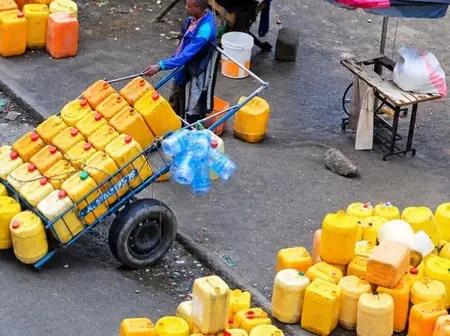
Listen to articleFamilies are spending up to Sh450 daily on water vendors as a supply shortage leaves parts of Eastleigh without running water for several days.Residents of Eastleigh have been forced to spend more on water after a supply shortage left large parts of the neighbourhood without running water for several days, disrupting household activities and straining family budgets.
-
How Equity is using technology and its banking network to widen access to insurance in Kenya
Insurance remains difficult to access for a large section of Kenya’s population, despite the range of products available in the market. For many households and small businesses, the challenge is not simply finding an insurer. It is understanding what cover they need, whether they can afford it and how to access a policy without navigating an unfamiliar process.
The 2024 FinAccess Household Survey found that access to insurance excluding NHIF stood at 6.3%, down from 6.9% in 2021. Including NHIF, access was 22%, compared with 23.7% in the previous survey. The findings point to a market where formal insurance remains outside the reach of many households.
Affordability is a major part of the problem. Some 76.2% of respondents cited cost as a barrier to taking up insurance, according to the survey. Limited awareness and the difficulty of understanding policy terms can also make it harder for potential customers to decide which products are relevant to them.
The wider industry has recorded growth, but penetration remains relatively low. Kenya’s insurance penetration reached 2.63% of GDP in 2025, compared with 2.45% in 2024, according to figures from the Insurance Regulatory Authority. The measure compares insurance premiums with the size of the economy; it does not represent the proportion of Kenyans who hold insurance policies.
For insurers, reaching more customers requires distribution models that extend beyond traditional insurance sales channels. Equity Group is using its banking network, insurance businesses and digital distribution capabilities to grow its presence in the sector.
Equity’s insurance operations bring together life, health and general insurance products under the group’s wider financial services business. The model gives the group access to customers who already interact with its banking services, alongside businesses and individuals seeking insurance products.
The group has developed a portfolio covering different needs, from life and medical protection to general insurance for businesses and property owners. Its business-facing products include covers designed to address risks associated with operating an enterprise, while its health insurance offering includes solutions for small and medium-sized businesses.
The opportunity is particularly relevant in a market where many small enterprises do not have formal employee benefits arrangements. Group medical insurance can give smaller employers a way to organise health protection for their workers, while general insurance products can address risks affecting business assets and operations.
Equity’s digital distribution strategy is another part of its approach. Its H1 2026 results show that 79% of policies issued by the Insurance Group were distributed digitally. The figure indicates the extent to which digital channels are being used in policy distribution, although it should not be interpreted as evidence that every insurance product can be purchased or fully managed through the bank’s mobile and online banking platforms.
For customers, digital distribution can reduce dependence on physical insurance sales processes and give insurers additional ways to reach people across different locations. The value of these channels ultimately depends on whether customers can understand the products, access support and receive clear information about policy conditions.
Equity’s H1 2026 results provide an indication of the scale of its insurance business. The group reported gross written premiums of KSh6.4 billion, representing a 24% increase from the same period in 2025. Profit before tax rose by 34% to KSh1.25 billion.
The reported premium contribution included KSh4.5 billion from life insurance, KSh1.2 billion from health insurance and KSh600 million from general insurance. The figures show activity across the group’s three main insurance categories, rather than performance from a single product.
Equity also reported 22.6 million life insurance policies issued to date and 7.2 million unique customers consuming life insurance products. These are separate measures: the policy figure is cumulative, while the customer figure refers to unique customers.
On the general insurance side, 24,745 MSMEs were consuming the group’s covers. The figure points to the role of business insurance in its distribution strategy, although it does not represent the number of businesses enrolled in Equity’s SME Health Plan.
The growth in premiums and earnings gives the group a larger operating base from which to expand its insurance activities. Reaching more customers, however, will depend on how well products match the needs and financial capacity of households and businesses that remain underserved.
The insurance gap is not uniform. A household looking for life protection has different requirements from a business seeking cover for its premises, vehicles or employees. A small enterprise may also need medical protection for its staff but lack the resources to negotiate and administer a conventional corporate health benefits arrangement.
Equity’s product range addresses several of these segments. Its SME Health Plan, for example, is aimed at smaller employers and organised groups seeking group medical cover. Other insurance products address life and general insurance needs, giving customers options based on the risks they want to protect against.
Insurance premium financing can also help customers manage the cost of paying premiums, particularly where a policy requires a substantial upfront payment. The availability and terms of any financing arrangement need to be considered alongside the insurance policy itself, including repayment obligations and the total cost to the customer.
Technology can support this distribution model, but wider uptake also depends on product design and customer understanding. Customers need to know what a policy covers, what it excludes, when benefits become available and what they must pay when making a claim. Clear communication and accessible support remain important, particularly for first-time insurance buyers.
The industry’s low access figures suggest that expanding distribution alone will not resolve the barriers facing potential policyholders. Premium affordability, trust, awareness and the relevance of available products will influence whether people move from considering insurance to maintaining active cover.
Equity’s H1 2026 performance shows that its insurance business is growing across life, health and general insurance. Its reported digital distribution share also indicates that technology is already part of how the group issues policies.
The next challenge is converting that reach into broader and sustained insurance uptake. That will require products suited to different income levels and business sizes, alongside channels that make it easier for customers to understand, obtain and use their cover.
For households and businesses considering insurance, Equity provides information about its products through its official insurance website, where prospective customers can review the available covers and begin an enquiry.
-

Steven Gerrard’s interesting non-football theory why Mauricio Pochettino was really chosen as new Man United manager
Steven Gerrard has shared a fascinating theory as to why Mauricio Pochettino was chosen to be Manchester United manager.
After just under 10 months, Carrick's spell leading his former club as head coach ended on November 12, with Pochettino confirmed as his replacement just over 24 hours later.
The Argentine will officially take over on November 18, following his final match as USMNT manager, but according to England legend Gerrard, there's actually one non-football reason why Pochettino has been appointed.
After managing USA for their Concacaf Nations League quarterfinals second leg against Haiti on Tuesday, Pochettino will reportedly fly straight to England on a private jet organised by United ahead of their clash with Liverpool on Sunday.
Pochettino was clearly top of United's list, with the former Spurs and Chelsea manager's experience said to be key to his appointment.
But according to Gerrard, there's another reason United chose Pochettino, his multilingual skills.
Speaking on The Overlap Daily, the Liverpool legend said: "The other thing to mention, I think, which is interesting, is if you look at Manchester United’s main players, I know some of them are coming to the end of their contracts, but Lisandro Martinez, Bruno Fernandes, Matheus Cunha, your Amad Diallo’s of this world, he will speak Spanish.
"Pochettino, of course, speaks Spanish as his native-tongue, but picked up English through his extensive time spent in the country – managing Southampton, Spurs, Chelsea and now Manchester United.
"He also has Italian ancestry, and despite not being fluent knows the language well.
“So, if he can get these players back into top form and enjoying themselves and smiling again, that’s a large chunk of this Manchester United team."
Of course, Pochettino wasn't the only former Premier League manager linked with the United job, with ex-Newcaslte boss Eddie Howe also believed to be a frontrunner.
And Gerrard believes that Pochettino's linguistic skills may have just been enough to see him pip Howe to the job.
“I think that will have had an impact as well, because if you look at Eddie Howe, he was available as well and it seemed as if they wanted the Pochettino road," Gerrard added.
“You wonder whether the Spanish-speaking thing has had a bit of an impact, because you look at a lot of the main players in that Manchester United team and squad."
“The Spanish-speaking could go a long way, I would say. And him being able to speak different languages might have been the reason why he’s just been picked over Eddie."
“I don’t know whether Eddie was a serious contender or not, but from afar, I think they would have been stupid not to have him on the list. I’m a massive fan of Eddie Howe as well, but you can understand maybe why they’ve gone down the Pochettino road.”
-

MP Irene Kasalu Commissions Fully Furnished Homes For Vulnerable Families In Kitui
The legislator described the development as an important milestone for beneficiaries who previously faced difficult living conditions, including spending cold nights without proper roofs over their heads.
She noted that the new homes would provide families with safer environments, giving parents and their children an opportunity to live with greater comfort and dignity.
According to Kasalu, the initiative is aimed at restoring hope among vulnerable households by ensuring they have access to decent places they can call home.
The MP further revealed that she intends to transform the programme into a countywide housing initiative if her ambition to become Kitui governor is realised.
She said the proposed expansion would target deserving families across all eight constituencies in the county, allowing more residents to benefit from improved housing conditions.
The housing programme is among the initiatives she has highlighted as part of her development agenda for the county.
However, the proposed countywide expansion would depend on the plans and resources available under a future county administration.
https://www.facebook.com/100057278028310/posts/1682406093678642/?app=fbl
-

Beautiful Photo of Newlywed Husband and Wife Who Died After Fire Engulfed Their Room
A newlywed couple in Nigeria were killed in a fire that broke out in their house while they were sleeping.
The fire broke out quickly and the newlyweds were unable to open their door according to a report by Daily Trust.
Residents rushed to the couple’s home
Several young men attempted to force open the door however were unable to do so due to the fire starting to spread. Eventually they were forced to break in through the window.
The couple were pulled from the room by the neighbours before firefighters arrived.
They were taken to Jos University Teaching Hospital (JUTH) to receive medical care for their injuries.
Unfortunately for the family, Sikiru died on Sunday. His wife, Ramlat died on Monday.
Residents suspect that a power surge caused the fire to break out. However it is not confirmed what caused the fire to start.
It is not clear exactly what happened in the situation.
The tragic incident has made residents reflect on how quickly a normal night can become a disaster.
Those who watched the rescue attempt will be particularly upset by the couple’s death as they were able to get to them.
This tragedy has highlighted the importance of being safe from fires in the home and having access to exits.
https://www.facebook.com/share/1E5zjuwW52/
-

Justin Muturi Makes U-Turn on Rigathi Gachagua Rift, Calls for Opposition Unity
Speaking during a television interview on Monday, November 16, Muturi said political leaders were entitled to hold different views on national issues without being regarded as enemies. He maintained that his disagreements with Gachagua should be understood within the context of democratic debate.
Muturi, however, urged Gachagua and other opposition leaders to tone down public attacks and political chest-thumping, warning that internal divisions could weaken the United Opposition ahead of the 2027 General Election.
The DP leader said opposition politicians needed to put aside personal ambitions and ideological differences and concentrate on building a united political front capable of challenging President William Ruto.
Muturi also criticised the delay in selecting the opposition's presidential candidate. He questioned proposals to wait until May 2027 before naming the coalition's flagbearer, arguing that the opposition needed sufficient time to organise its campaign and mobilise supporters.
He pointed to the electoral timetable, noting that political parties are expected to submit membership lists and details of candidates for their primaries by March 16, 2027. Party primaries are scheduled between March 17 and April 10, while the nomination process is expected to conclude by May 8.
According to Muturi, waiting too long to settle on a presidential candidate could leave the opposition with limited time to prepare for the election.
He also defended negotiations among opposition parties, saying a coalition should not force smaller parties to surrender their identities or dissolve their structures. Instead, he advocated for an arrangement where all parties retain their influence while working toward a common political objective.
Muturi further challenged claims that some opposition parties were government moles, asking those making such allegations to provide evidence rather than creating suspicion within the coalition.
He also called for unity in the Mt Kenya region, rejecting claims that any individual politician owns the region's votes. Muturi said voters should be allowed to make their own political choices as opposition leaders work together ahead of the 2027 elections.
Link,; https://www.standardmedia.co.ke/politics/article/2001562386/muturi-denies-gachagua-rift-calls-for-opposition-unity