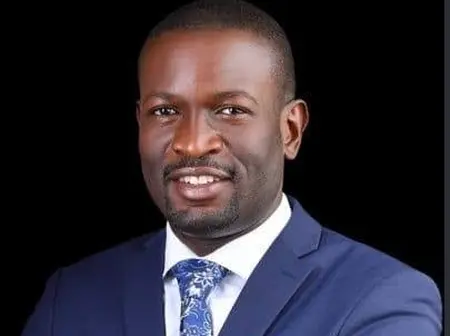
Speaking candidly about his diminishing visibility in recent party affairs, the former Ndaragwa Member of Parliament lamented that he has been systematically sidelined from planning Matiang’i’s high-level political engagements despite being the key architect who introduced the former Interior Cabinet Secretary to opposition circles.
Kioni recalled the grueling battles he fought as Secretary General to salvage Jubilee from hostile takeovers following the 2022 elections, noting that he had envisioned a seamless partnership where he would strengthen grassroots structures while Matiang’i focused on popularizing his 2027 presidential bid.
Instead, after being dropped from the Secretary General post during a sweeping January leadership shake-up and feeling sidelined from top decision-making, Kioni revealed that he deliberately chose to step back rather than spark internal confrontations that could derail Matiang’i’s ambitions.
Drawing a pointed biblical parallel to Abraham and Lot parting ways over grazing land, the veteran politician declared that the time has come to separate peacefully and seek an alternative political vehicle capable of fulfilling his ambitions.
Kioni further sounded an alarm over Jubilee’s dwindling grassroots traction in the crucial Mount Kenya voting bloc, warning that aspirants seeking elective seats on the party ticket in August 2027 face a steep uphill battle.
While insisting there is no open warfare between him, Uhuru, and Matiang’i, Kioni confirmed he is actively exploring fresh political platforms and will soon unveil his next major move.
As rival factions scramble to consolidate central Kenya ahead of next year’s high-stakes ballot, Kioni’s looming departure threatens to fracture Jubilee’s organizational backbone at a critical juncture.
The 2027 presidential election is slowly taking shape, with Nairobi Senator Edwin Sifuna emerging as a potential challenger to President William Ruto in what could become one of Kenya's most closely watched political contests.
Sifuna's growing popularity has sparked fresh debate about whether he has what it takes to unseat Ruto and become Kenya's next president. The debate gained momentum following a recent opinion poll by Trends and Insight for Africa (TIFA), which placed Sifuna and Ruto at 31 per cent each as Kenyans' preferred presidential candidates.
Ruto, on the other hand, has also improved his standing, moving from 24 per cent in June to 31 per cent in the latest survey. The figures suggest that Sifuna is becoming a serious political force, particularly among Kenyans looking for an alternative to the current administration. However, defeating Ruto will not be an easy task.
The President has the advantage of incumbency, an established political network and a party with a nationwide presence. He also has access to a strong campaign machinery that could prove difficult for a new presidential challenger to overcome.
For Sifuna, one of the biggest challenges will be building a strong national coalition capable of attracting voters beyond his traditional political support base. He will also need to convince experienced opposition leaders to support his presidential ambitions rather than compete for the same position.
Interestingly, the TIFA survey placed Wiper leader Kalonzo Musyoka at nine per cent, former Interior Cabinet Secretary Fred Matiang'i at five per cent and former Deputy President Rigathi Gachagua at four per cent.
With 15 per cent of respondents still undecided, the political landscape remains open to significant changes.
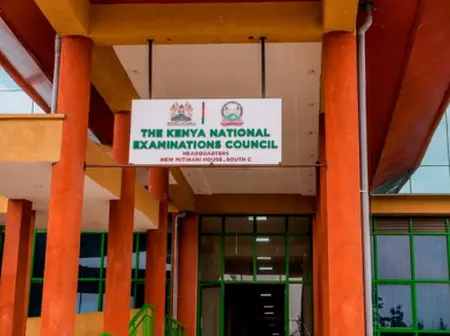
Entering the final week of the national assessment, Form Four candidates across the country are being tested in Business Studies during the morning session before returning to examination rooms in the afternoon for Agriculture.
According to the daily schedule published by KNEC on its official communication platforms on Tuesday morning, the first session commenced at 8:00 am with Business Studies Paper 1 (565/1), running for two hours until 10:00 am for standard and large-print candidates.
Following the morning test, examinees are granted a three-and-a-half-hour midday recess between 10:30 am and 2:00 pm to rest and prepare before the second session begins at 2:00 pm with Agriculture Paper 1 (443/1), which concludes at 4:00 pm.
To uphold inclusivity and equal access during the national exercise, candidates utilizing Braille versions of the examinations have been allotted an additional 30 minutes per paper, extending their Business Studies session to 10:30 am and their Agriculture sitting to 4:30 pm.
Tuesday’s dual sitting marks a critical milestone for the historic cohort of 1,048,355 candidates registered for the 2026 KCSE cycle—the first time national candidature has surpassed the one-million mark.
Having opened the main written theory phase on November 2, the examinations are now in their final four days, with Geography Paper 2 and Physics Paper 2 scheduled for Wednesday, Agriculture Paper 2 and Business Studies Paper 2 set for Thursday, and the entire examination period concluding on Friday, November 20, with Physics Practical.
What are your thoughts about this article? Share your reactions in the comment section and don't forget to share and follow for more updates.
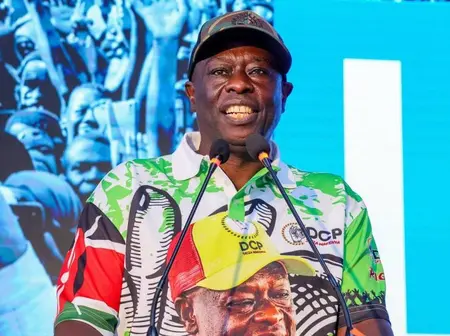
Speaking at the newly unveiled DCP Nairobi County headquarters in Kasarani on Monday, November 16, 2026, Gachagua accused Sonko and Muthama of acting as political brokers attempting to lure Kalonzo into President William Ruto’s camp ahead of the August 2027 General Election.
The fierce warning follows viral remarks by Sonko—who recently held consultations with Muthama and Labour Cabinet Secretary Alfred Mutua—urging Kalonzo to abandon an uncertain opposition ticket and instead negotiate a "Plan B" deal to become Ruto’s Deputy President or Prime Minister.
In his signature combative style, Gachagua brushed off those overtures by invoking family ties, bluntly declaring that Kalonzo is his cousin and asserting that he alone serves as the family’s legitimate spokesman.
Gachagua praised the Wiper leader for publicly distancing himself from Sonko’s unauthorized proposals, insisting that a seasoned statesman of Kalonzo’s stature is fully capable of communicating his own political direction without self-appointed intermediaries.
The former Deputy President argued that efforts to push side deals with State House are deliberate schemes aimed at sowing confusion and fracturing the united opposition before principals agree on a single presidential flagbearer.
With rival camps aggressively courting the crucial Ukambani voting bloc, Gachagua’s forceful intervention underscores how fiercely opposition principals are guarding their alliance against external poaching ahead of next year’s high-stakes ballot.
Kenyan entertainer Wizzo Tano Nane has warned local rappers, including Toxic Lyrikali and Buruklyn Boyz, against glorifying street life, crime and violence in their music, saying their messages could negatively influence young people.
Wizzo is concerned that some of the music being produced by upcoming Kenyan rappers is sending the wrong message to teenagers, particularly students in high schools who look up to popular musicians.
He believes that artists have a responsibility to consider the impact of their lyrics on their audiences instead of focusing only on entertainment and popularity.
The entertainer also warned that musicians who promote criminal activities through their songs should not assume that they will remain beyond the reach of the law.
He cautioned that the judicial system would eventually catch up with those who engage in or encourage unlawful activities.
His remarks come amid growing debate about the influence of drill music and street-themed songs among Kenyan youth.
Toxic Lyrikali and Buruklyn Boyz have recently attracted attention following their highly publicised musical rivalry, which involved several diss tracks and exchanges on social media.
The disagreement between the Kayole-based rapper and the Buruburu duo attracted widespread attention after their musical competition reportedly spilled into the streets.
On February 16, 2026, supporters believed to be associated with the rival camps were reportedly involved in a confrontation in Donholm. The incident raised concerns about the possibility of music rivalries turning into physical fights.
The situation attracted reactions from different personalities, including veteran gospel rapper Eko Dydda, who urged the musicians to stop promoting violence and focus on creating music that encourages young people.
Eko Dydda argued that hip-hop should promote creativity and positive messages rather than encourage crime, drug use and street conflicts.
Geoffrey Mosiria also called on the artists to settle their differences through music instead of physical confrontations.
The growing debate has raised questions about the responsibility of musicians whose songs attract large teenage audiences.
As Kenyan drill music continues gaining popularity, calls are growing for artists to balance creative freedom with messages that encourage young people to pursue better opportunities.
In a ruling delivered on Monday, November 16, 2026, US District Judge Dennis Saylor declared the proposed restrictions unlawful, describing the policy as arbitrary, capricious and an abuse of government discretion.
The decision followed a legal challenge filed by a coalition of organisations representing universities, educators, international students and journalists. The groups had challenged the Department of Homeland Security (DHS) over changes that would have replaced the longstanding Duration of Status policy with fixed periods of admission and additional visa extension requirements.
Under the proposed regulations, international students would have been allowed to stay in the United States for a maximum of four years before applying for an extension. The changes would have affected students pursuing lengthy academic programmes, particularly those enrolled in doctoral studies that often take more than four years to complete.
Foreign journalists would also have faced tighter restrictions, with their permitted stay reduced to 240 days, equivalent to approximately eight months. They would, however, have been allowed to apply for extensions of similar duration.
Journalists from China would have faced even shorter admission periods of 90 days, with the possibility of applying for additional 90-day extensions.
In his ruling, Judge Saylor expressed concern that the policy would undermine opportunities for international students seeking higher education in the United States.
He argued that the Department of Homeland Security was discouraging the very educational opportunities that Congress had intended to support.
The judge also noted that the restrictions could interfere with students' academic plans by making it difficult for them to pursue extended programmes, obtain joint degrees or change their academic concentrations.
The proposed rules had raised concerns among universities and education organisations, which argued that fixed admission periods would create unnecessary uncertainty for international students and institutions.
The case was brought against the Department of Homeland Security by a coalition that included the Association of International Educators, the Presidents' Alliance on Higher Education and Immigration, the American Federation of Teachers and The NewsGuild-CWA, which represents journalists and other media workers.
The organisations argued that the government had failed to adequately justify the restrictions and consider their potential consequences.
The court ultimately set aside the rule in its entirety, preserving the longstanding Duration of Status framework. This means the new fixed admission periods and additional extension requirements will not take effect under the struck-down policy.
The decision also addressed restrictions that would have affected students seeking to transfer institutions or pursue additional academic programmes.
The ruling is significant for the United States, which remains a major destination for international education. Official figures show that the country hosted more than 1.1 million international students during the 2023–2024 academic year.
The policy formed part of the wider immigration crackdown pursued by the Trump administration, which has included stricter immigration enforcement and changes to legal pathways for foreign nationals seeking to live, study or work in the country.
For international students, researchers and journalists, the court's decision offers relief from the proposed restrictions and preserves greater flexibility over the duration of their authorised studies or professional assignments.
However, the ruling does not remove other existing immigration and visa requirements. Foreign nationals must still comply with the conditions attached to their respective visa categories.
The decision marks a setback for the administration's attempt to introduce stricter limits on the length of stay for certain foreign nationals, while highlighting the role of the courts in reviewing government immigration policies.
Kenyan entertainer Wizzo Tano has issued a warning to local rappers, including Toxic Lyrikali and Buruklyn Boyz, accusing them of promoting street life and violence through their music.
Wizzo Tano expressed concern that some of the messages contained in popular rap songs could negatively influence young people, particularly high school students who look up to musicians as role models.
He argued that artistes should understand the responsibility that comes with having a large following, especially among teenagers who may copy the lifestyles presented in their songs and music videos.
The entertainer warned that glorifying crime, street gangs and violence could encourage young people to adopt dangerous behaviour instead of concentrating on their education and future ambitions.
He also cautioned the musicians that the judicial system would eventually catch up with them if their activities crossed the law.
His remarks come at a time when Kenyan drill and street rap music have gained popularity among young audiences, with artistes increasingly using their music to tell stories about life in Nairobi's informal settlements.
Toxic Lyrikali and Buruklyn Boyz are among the musicians who have attracted attention through their street-inspired music.
However, their rivalry has also raised concerns about the relationship between music competition and real-life violence.
In February 2026, tensions between Toxic Lyrikali and Buruklyn Boyz attracted national attention after their musical rivalry reportedly spilled into the streets of Donholm, where supporters linked to the two camps were involved in a confrontation.
The incident attracted calls from fellow entertainers and other public figures for the musicians to settle their differences through music rather than physical confrontations.
Veteran rapper Eko Dydda was among those who cautioned the artistes against promoting violence, arguing that music should bring people together instead of encouraging hatred and division.
Wizzo Tano's warning adds to the growing debate about the responsibility of musicians in shaping the behaviour of young people.
While artistes have the freedom to express themselves through music, the debate continues over whether entertainment should promote dangerous lifestyles or encourage positive change in society.
The challenge for Kenyan rappers is to maintain their creativity and originality without encouraging violence among their young fans.
Police officers in Mombasa are searching for a man who allegedly stabbed his friend to death using a pair of scissors following a disagreement in Old Town.
Mvita Sub-County Police Commander Nicholas Chalulot confirmed the killing, noting that the suspect escaped shortly after the attack.
According to eyewitness accounts, the two were close friends who had been spending time together before a disagreement broke out. What started as an ordinary gathering allegedly escalated into a heated confrontation that ended in tragedy.
During the altercation, the suspect is accused of using a pair of scissors to stab his companion, inflicting injuries that eventually claimed his life.
The suspect reportedly disappeared after the incident, forcing police to begin a search for him as investigations into the killing continue.
Initial reports indicate that the man sought by authorities lives in Kisauni but frequently travelled to Old Town, where he would meet the deceased.
Police are yet to establish what sparked the disagreement or whether the two friends had experienced previous conflicts before the fatal encounter.
The motive behind the attack also remains unclear, with investigators expected to piece together the events leading to the stabbing through witness statements and other available evidence. Authorities have not publicly identified the suspect or announced any arrests in connection with the killing.
The incident has once again drawn attention to how disagreements between people known to each other can escalate into deadly confrontations. Police are continuing their investigations while pursuing the suspect, who remains at large as of the latest report.
A United States federal judge has struck down a controversial Trump administration policy that sought to impose stricter limits on how long foreign students, academics and journalists could remain in the country, delivering a major victory to universities, education organisations and media unions.
District Judge F. Dennis Saylor IV issued the ruling on November 16, describing the policy as arbitrary, an abuse of discretion and inconsistent with the law. The decision followed a legal challenge filed by a coalition of organisations representing universities, educators, students and journalists against the Department of Homeland Security (DHS).
The regulation, introduced in July 2026, proposed limiting international students and academic exchange visitors to a maximum stay of four years. Those wishing to remain longer would have been required to apply for extensions.
Foreign journalists holding I visas would have faced an even shorter limit of 240 days, approximately eight months. Journalists from China would have been restricted to 90-day stays, with the possibility of applying for extensions.
Previously, international students were generally permitted to remain in the United States for the duration of their academic programmes, while foreign journalists could stay for up to five years.
In his ruling, Saylor warned that the restrictions could disrupt higher education and prevent international students from completing lengthy academic programmes, particularly doctoral degrees. He also highlighted the potential difficulties for students pursuing joint degrees or changing their fields of study.
The judge argued that the government's policy undermined Congress's intention to encourage educational opportunities for international students in the United States.
The lawsuit was supported by higher education associations and labour unions, including organisations representing journalists.
The ruling comes amid President Donald Trump's broader immigration crackdown, which has introduced tighter restrictions across several visa categories.
The United States hosted more than 1.1 million international students during the 2023-2024 academic year, highlighting the importance of foreign students to its education sector.
The decision represents a significant setback for the administration's efforts to tighten immigration controls.
Police have shot dead two suspected gang members following a dramatic chase involving security officers in Bamburi, Mombasa County. The incident left another suspect injured, while a fourth was arrested and a fifth managed to escape.
The suspects are said to have been pursuing their alleged criminal activities when a distress call alerted officers at a nearby Kenya Navy camp, prompting a security response.
Police officers, working alongside Kenya Navy personnel, pursued the suspects before the chase ended in Bamburi, where two of them were fatally shot.
Coast Regional Police Commander Ali Nuno said officers opened fire after one of the suspects allegedly attempted to disarm a police officer and attacked him with a machete.
The confrontation reportedly escalated when the suspect turned against the officer, forcing the security team to respond with gunfire.
The incident attracted the attention of residents in the neighbourhood, who said they were caught off guard by the sudden exchange of gunshots.
One Bamburi resident, Isaac Kirangu, recalled hearing several gunshots and wondering what was happening.
"Tumesikia milio ya risasi pale chini tukashangaa ni nini," he said, describing the moment residents heard the gunfire.
Following the confrontation, one suspect sustained injuries and was rushed to Coast General Teaching and Referral Hospital, where he is receiving medical attention.
Meanwhile, Kenya Navy officers managed to arrest another suspect who was allegedly part of the group. The fifth suspect, however, escaped during the operation and remains at large.
During the operation, security officers recovered several items believed to be connected to the suspects. These included machetes, mobile phones and other belongings found inside a vehicle allegedly used by the group.
Police are continuing with investigations as officers intensify efforts to trace and arrest the suspect who escaped.
The incident comes amid continued security concerns over criminal activities involving gangs armed with crude weapons in parts of Mombasa County.
Authorities have urged residents to remain vigilant and report suspicious activities to security agencies to help prevent crime and improve safety within their neighbourhoods.
Investigations into the incident are expected to establish the full circumstances surrounding the alleged attack and the events that led to the fatal confrontation.