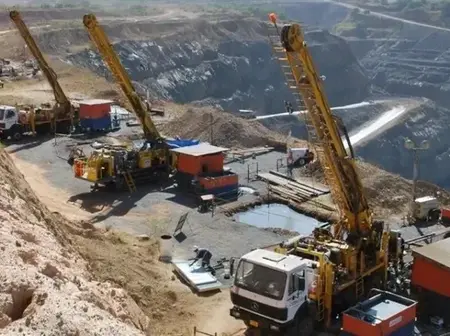
An Australian mining company has announced plans to challenge the Kenyan government's decision to award the proposed Mrima Hill mining project in Kwale County to a US-led consortium, setting the stage for a possible legal battle over one of Kenya's most strategic mineral ventures.
RareX Limited, which partnered with fellow Australian miner Iluka Resources, argues that the selected consortium did not meet the requirements set out in the competitive tender process.
The dispute follows an announcement by Mining Cabinet Secretary Hassan Ali Joho that Frontier Minerals Consortium had been identified as the preferred bidder for the mineral-rich Mrima Hill project.
In a statement released on Thursday, November 19, RareX confirmed that it had received official communication from the Ministry of Mining notifying it of the government's intention to award the project to the American-led consortium.
Having finished second among the three shortlisted bidders, RareX says it intends to file a formal procurement complaint before December 10, 2026.
RareX claims that Frontier Minerals failed to submit its Expression of Interest within the deadline established by the Ministry of Mining.
According to the Australian company, the US-led consortium was allowed to participate in the tender process despite allegedly submitting its application after the deadline, raising concerns about whether it met the mandatory requirements.
RareX maintains that if the claims are proven, Frontier Minerals should have been disqualified from the bidding process. The company is therefore expected to ask the government to review its decision and consider awarding the project to the highest-scoring eligible bidder.
In a joint statement, RareX Managing Director James Durrant and Chairman Jeremy Robinson said their consortium fully complied with all tender requirements.
The two executives emphasized that while they respect Kenya's competitive procurement process, all bidders should be treated fairly and equally.
RareX has also requested a detailed explanation of how its proposal was evaluated. The company expects to receive the debriefing by November 26 as it prepares its complaint with the assistance of Kenyan legal advisers.
Located in Kwale County, Mrima Hill is regarded as one of Kenya's most promising sources of rare earth elements and niobium, minerals that are increasingly in demand across the world.
These critical minerals are used in a wide range of modern technologies, including electric vehicle motors, electronics, wind turbines, advanced batteries, and aerospace manufacturing.
The project has attracted considerable international attention because countries are increasingly seeking reliable alternatives to existing global suppliers of critical minerals, particularly amid growing demand from clean energy and technology industries.
Preliminary assessments suggest the deposits could be worth billions of dollars, making the project strategically important to Kenya's mining sector and economic future.
Despite being selected as the preferred bidder, Frontier Minerals cannot immediately begin commercial mining operations.
The current award relates only to a prospecting license, which would permit the company to carry out geological surveys, mapping, surface sampling, and limited exploration activities aimed at determining the size and quality of the mineral deposits.
Any future mining operations would require separate approvals from the government, environmental impact assessments, and agreements with affected communities before commercial extraction can begin.
The proposed project has also generated significant public interest because Mrima Hill is home to a sacred forest that holds deep cultural and historical significance for members of the local Digo community.
Residents and community leaders have previously expressed concerns about land rights, environmental conservation, and the potential impact of mining activities on local livelihoods and cultural heritage.
As RareX prepares its legal challenge, the proposed award faces fresh uncertainty. The outcome of the procurement dispute could ultimately determine which consortium gains the right to advance one of Kenya's most valuable and closely watched mining projects.
Leave a Reply