Tag: Hassan Joho

  • Mrima Hill mining deal: Who benefits from Kenya’s Ksh7.8T minerals?

    Mrima Hill mining deal: Who benefits from Kenya’s Ksh7.8T minerals?

    Mrima Hill mining deal: Who benefits from Kenya’s Ksh7.8T minerals?

    Kenya’s selection of a US-led consortium for the mineral-rich Mrima Hill project raises questions over who controls the resources, how much the country will earn and whether local communities will benefit.

    Kenya’s potentially Ksh7.8 trillion mineral opportunity at Mrima Hill in Kwale County has attracted international investors, but the selection of an American consortium raises a bigger question: who will ultimately benefit from the country’s mineral wealth?

    On Thursday, November 19, 2026, the government named Frontier Minerals Consortium the preferred bidder for the Mrima Hill niobium and rare earth minerals project, beating seven other bidders, including companies from China and Australia.

    The reported US$60 billion value of the deposits translates to approximately Ksh7.8 trillion at an indicative exchange rate of Ksh130.09 per dollar.

    However, this represents estimated underground mineral wealth, not confirmed commercial reserves, government revenue or money Kenya is guaranteed to receive.

    The actual economic returns will depend on recoverable mineral quantities, extraction costs, international prices, taxation, royalties and agreements negotiated with investors.

    Frontier Minerals brings together three American companies: Bunker Hill Mining Corp, American Resources Corporation and ReElement Technologies Corporation.

    The consortium proposes establishing mineral processing and refining facilities in Kenya, potentially allowing the country to capture more value instead of exporting raw minerals.

    Brad Barnett of Frontier Minerals said the consortium wanted Kenya to retain greater economic benefits through domestic processing and refining.

    “We intend to create lasting opportunities for Kenyan workers, businesses and the wider economy through capacity-building and targeted investment, while prioritising environmental management and performance,” Barnett said.

    However, important financial details remain unclear, including proposed royalty payments, taxation arrangements, Kenyan participation and ownership of the processing infrastructure.

    Who will control the refined minerals, negotiate international sales and determine where the final products are exported?

    Building processing facilities locally does not automatically mean Kenya will control the resulting supply chain.

    The government must demonstrate how the investment will translate into public revenue, technology transfer, local businesses and skilled employment.

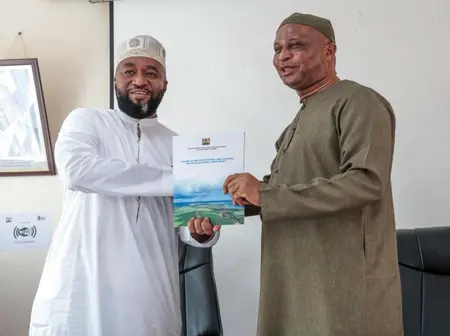
    CS Hassan Joho gestures as he delivers a speech during Raila's funeral on Sunday, October 19, 2025. PHOTO/@HassanAliJoho/X

    The Mrima Hill project comes as Washington intensifies efforts to reduce dependence on China for critical minerals.

    China dominates the processing of several important minerals, making alternative supply chains increasingly important to American manufacturing, electric vehicle and defence industries.

    The selection of Frontier Minerals therefore represents more than a mining investment. It also allows American-linked companies to participate in developing a strategically important mineral deposit.

    While domestic refining could strengthen Kenya’s industrial capacity, there is a risk that foreign investors could retain control over financing, technology, intellectual property and international marketing.

    Kenya could consequently move from exporting raw minerals to processing them locally without necessarily controlling the most profitable parts of the supply chain.

    The government must negotiate arrangements that guarantee technology transfer, local participation and meaningful economic returns while preserving its ability to engage investors from different international markets.

    Beyond the financial and geopolitical stakes, the project faces concerns over the protection of Mrima Hill’s forest and cultural heritage.

    The 390-acre forest in Kwale County has deep ancestral and spiritual significance to the local Digo community. Residents have raised concerns about potential environmental damage, loss of livelihoods and whether surrounding communities will benefit from mining.

    Mrima Hill has been recognised as a national monument since 1992, adding to the heritage and environmental considerations surrounding development.

    The government and consortium must demonstrate how exploration and eventual mining can respect community rights and comply with environmental protections.

    Residents also need clarity on compensation, employment, land access and potential environmental damage.

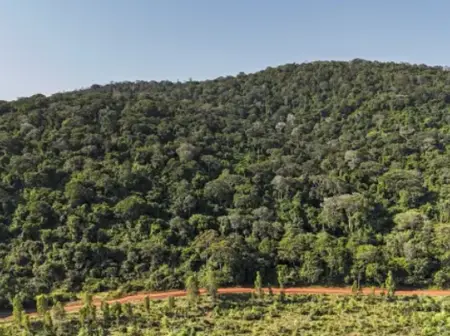
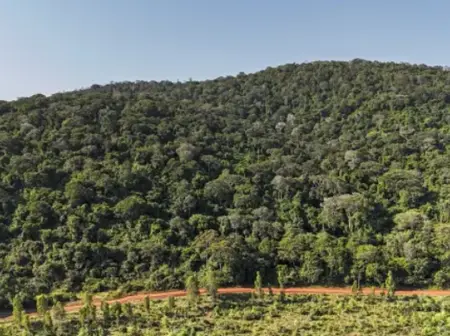
    Mrima Hill. PHOTO/@infosNation/X

    The tender has attracted objections from unsuccessful bidders, including Australia’s RareX, whose consortium with Iluka Resources reportedly ranked second.

    RareX claims that Frontier Minerals failed to submit its expression of interest within the prescribed deadline and intends to challenge the proposed award.

    The company argues that its consortium should have been selected as the highest-scoring eligible bidder.

    These allegations have not been independently established. Kenya’s government maintains that the procurement process was open and transparent.

    The dispute raises questions about the evaluation criteria and whether all bidders were subjected to the same submission requirements.

    Meanwhile, Kenya’s mining ministry considers the sector an important part of its strategy to diversify the economy beyond tourism, agriculture and financial services.

    However, Frontier’s selection does not mean commercial mining can begin immediately. The consortium must still obtain the necessary prospecting licence and satisfy regulatory, technical, environmental and community engagement requirements.

    For Kenya, the opportunity is significant, but success will depend on enforceable agreements that guarantee fair public revenue, local participation, technology transfer and environmental accountability.

    The real measure of success will not be the Ksh7.8 trillion estimated value underground, but how much wealth Kenya retains and whether communities closest to the resource benefit from its development.
  • Kenya picks US consortium for Sh8 trillion Mrima Hill project

    Kenya picks US consortium for Sh8 trillion Mrima Hill project

    thumbnail

    Kenya has selected a consortium of American companies to develop the Mrima Hill mineral deposits in Kwale County. The deposits contain niobium, rare earth elements and other minerals, with an estimated value of Sh8 trillion.Mining Cabinet Secretary Hassan Joho confirmed the decision in a statement issued on Thursday, November 19, 2026.

  • Australian Firm Challenges Award of Kenya’s Mrima Hill Mining Project to US-Led Consortium

    Australian Firm Challenges Award of Kenya’s Mrima Hill Mining Project to US-Led Consortium

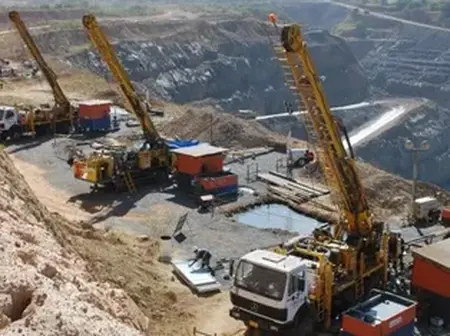
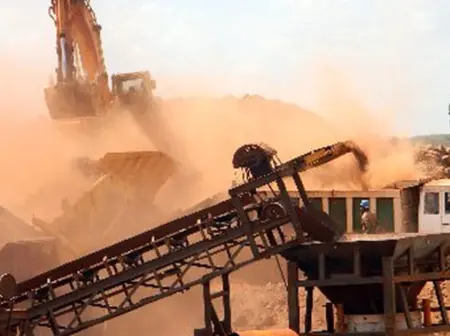
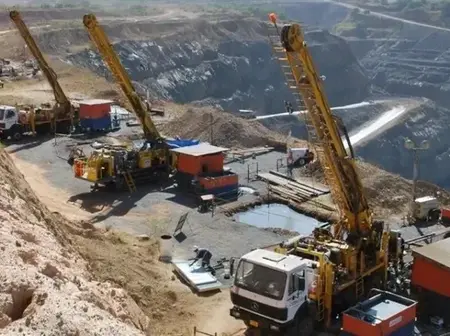
    A photo showing several trucks in a mining site in Kenya . Photo/ File

    An Australian mining company has announced plans to challenge the Kenyan government's decision to award the proposed Mrima Hill mining project in Kwale County to a US-led consortium, setting the stage for a possible legal battle over one of Kenya's most strategic mineral ventures.

    RareX Limited, which partnered with fellow Australian miner Iluka Resources, argues that the selected consortium did not meet the requirements set out in the competitive tender process.

    The dispute follows an announcement by Mining Cabinet Secretary Hassan Ali Joho that Frontier Minerals Consortium had been identified as the preferred bidder for the mineral-rich Mrima Hill project.

    In a statement released on Thursday, November 19, RareX confirmed that it had received official communication from the Ministry of Mining notifying it of the government's intention to award the project to the American-led consortium.

    Having finished second among the three shortlisted bidders, RareX says it intends to file a formal procurement complaint before December 10, 2026.

    RareX claims that Frontier Minerals failed to submit its Expression of Interest within the deadline established by the Ministry of Mining.

    According to the Australian company, the US-led consortium was allowed to participate in the tender process despite allegedly submitting its application after the deadline, raising concerns about whether it met the mandatory requirements.

    RareX maintains that if the claims are proven, Frontier Minerals should have been disqualified from the bidding process. The company is therefore expected to ask the government to review its decision and consider awarding the project to the highest-scoring eligible bidder.

    In a joint statement, RareX Managing Director James Durrant and Chairman Jeremy Robinson said their consortium fully complied with all tender requirements.

    The two executives emphasized that while they respect Kenya's competitive procurement process, all bidders should be treated fairly and equally.

    RareX has also requested a detailed explanation of how its proposal was evaluated. The company expects to receive the debriefing by November 26 as it prepares its complaint with the assistance of Kenyan legal advisers.

    Located in Kwale County, Mrima Hill is regarded as one of Kenya's most promising sources of rare earth elements and niobium, minerals that are increasingly in demand across the world.

    These critical minerals are used in a wide range of modern technologies, including electric vehicle motors, electronics, wind turbines, advanced batteries, and aerospace manufacturing.

    The project has attracted considerable international attention because countries are increasingly seeking reliable alternatives to existing global suppliers of critical minerals, particularly amid growing demand from clean energy and technology industries.

    Preliminary assessments suggest the deposits could be worth billions of dollars, making the project strategically important to Kenya's mining sector and economic future.

    Despite being selected as the preferred bidder, Frontier Minerals cannot immediately begin commercial mining operations.

    The current award relates only to a prospecting license, which would permit the company to carry out geological surveys, mapping, surface sampling, and limited exploration activities aimed at determining the size and quality of the mineral deposits.

    Any future mining operations would require separate approvals from the government, environmental impact assessments, and agreements with affected communities before commercial extraction can begin.

    The proposed project has also generated significant public interest because Mrima Hill is home to a sacred forest that holds deep cultural and historical significance for members of the local Digo community.

    Residents and community leaders have previously expressed concerns about land rights, environmental conservation, and the potential impact of mining activities on local livelihoods and cultural heritage.

    As RareX prepares its legal challenge, the proposed award faces fresh uncertainty. The outcome of the procurement dispute could ultimately determine which consortium gains the right to advance one of Kenya's most valuable and closely watched mining projects.

  • Company awarded Ksh8T Kwale’s Mrima Hill rare minerals project breaks silence after deal

    Company awarded Ksh8T Kwale’s Mrima Hill rare minerals project breaks silence after deal

    Company awarded Ksh8T Kwale’s Mrima Hill rare minerals project breaks silence after deal

    The US-led consortium selected to develop Kenya’s multi-trillion-shilling Mrima Hill rare earth and niobium deposits has broken its silence, outlining plans to establish mineral processing and refining facilities in the country while creating employment opportunities for Kenyans.

    Frontier Minerals Consortium, which was named the preferred bidder by the Ministry of Mining on Thursday, November 19, 2026, said it was honoured by the government’s decision, noting that the project presented an opportunity to strengthen Kenya’s position in the global critical minerals industry.

    In a statement published through EIN Presswire on Thursday, November 19, 2026, the consortium’s Managing Member, Brad Barnett, said the company recognised the responsibility that came with developing a mineral resource of national and international significance.

    “We are honoured to have been selected by the Government of Kenya and recognise the responsibility that comes with developing a resource of such importance to Kenyans and global significance,” Barnett said.

    The consortium said its proposal would prioritise local value addition by establishing processing and refining capacity in Kenya instead of exporting minerals in their raw form.

    The Mrima Hill deposits, located in Kwale County, are estimated to contain more than 105 million tonnes of mineral resources, with their potential value estimated at between Ksh5.4 trillion and Ksh8.18 trillion.

    The figure represents the estimated value of the mineral resources and not the amount the consortium will pay the government or the investment value of the project.

    Barnett said the consortium intended to create long-term opportunities for Kenyan workers, businesses and the wider economy through targeted investments and technical capacity-building.

    He added that the company would work with government agencies and local communities to identify environmentally responsible methods of extracting, processing and refining the minerals.

    The proposed development will also involve resource drilling, metallurgical testing, pilot-scale processing and the construction of supporting infrastructure.

    According to the company, a comprehensive feasibility study will establish the most appropriate mining and processing methods, taking into consideration environmental, social, technical, commercial and legal requirements.

    The study will also determine the costs of developing the project and its potential commercial viability.

    CS Hassan Joho gestures as he delivers a speech during Raila's funeral on Sunday, October 19, 2025. PHOTO/@HassanAliJoho/X

    Frontier Minerals Consortium brings together four entities with expertise in mining, mineral development and advanced processing technologies.

    The consortium comprises Frontier Minerals LLC, Bunker Hill Mining Corporation, American Resources Corporation and ReElement Technologies Corporation.

    Bunker Hill Mining will contribute mining and processing experience, while American Resources brings expertise in critical minerals sourcing and industrial processing.

    ReElement Technologies specialises in separating and purifying rare earth elements and other critical minerals using its refining technology.

    Frontier Minerals LLC serves as the project’s development vehicle.

    The consortium said the combined expertise of the companies would support its ambition to establish a mine-to-material supply chain in Kenya, allowing the country to retain more economic value from its mineral resources.

    Despite securing the preferred bidder position, Frontier Minerals cannot immediately commence commercial mining operations at Mrima Hill.

    The company’s selection was only the beginning of the next phase, which involves obtaining the necessary regulatory approvals.

    These include applying for a prospecting licence from the Ministry of Mining, obtaining the required community consents, undertaking an Environmental and Social Impact Assessment and securing approval from the National Environment Management Authority (NEMA).

    The company will also conduct exploration activities and a comprehensive feasibility study before applying for a mining licence.

    Frontier Minerals further acknowledged the environmental, cultural and social importance of Mrima Hill, pledging to involve local communities throughout the development process.

    The consortium said environmental safeguards would form a central part of its proposed operations, with assessments conducted to identify potential impacts and establish mitigation measures.

    Its selection comes amid growing international competition for critical minerals, particularly rare earth elements used in electric vehicles, renewable energy technologies, electronics and defence equipment.

    For Kenya, the proposed development presents an opportunity to expand its mining industry through local processing, industrial investment and participation in international critical mineral supply chains.

  • US Consortium Wins Sh8 Trillion Mrima Hill Rare Earths Mining Tender

    US Consortium Wins Sh8 Trillion Mrima Hill Rare Earths Mining Tender

    thumbnail

    A United States led consortium has won the competitive tender to develop Kenya's strategic Mrima Hill niobium and rare earth mineral deposits in Kwale County, estimated to be worth more than Sh8 trillion.Mining, Blue Economy and Maritime Affairs Cabinet Secretary Hassan Ali Joho announced that Frontier Minerals Consortium emerged victorious after defeating seven rival international bidders from China, Australia, and other jurisdictions.

  • Australian Firm Moves to Challenge Ruto Government Over Ksh8 Trillion Mining Deal

    Australian Firm Moves to Challenge Ruto Government Over Ksh8 Trillion Mining Deal

    In a statement released on Thursday, November 19, the Australian firm claimed the winning consortium submitted its Expression of Interest after the deadline set by the Ministry of Mining, making it legally ineligible to receive the proposed award.

    The company argued that despite missing the submission deadline, the US-led consortium was still allowed to participate in the competitive tender process. It has now threatened legal action to challenge the government's decision.

    Ranked second among three shortlisted bidders, the Australian firm intends to file a procurement-related complaint before December 10, 2026, seeking to overturn the proposed award and have its consortium considered.

    The company maintains that its consortium should receive the opportunity because it emerged as the highest-scoring eligible bidder that satisfied the tender requirements. It has also requested a formal debriefing from the ministry by November 26.

    The dispute follows a notification issued by the State Department for Mining on November 19, triggering a standstill period during which unsuccessful bidders can challenge the proposed award before the process proceeds.

    The proposed exploration licence covers niobium, rare earth elements and other minerals at Mrima Hill in Kwale County. However, it does not permit actual mining, which would require separate licences, environmental approvals and community consultations.

    The latest dispute comes hours after Mining Cabinet Secretary Ali Hassan Joho announced that two other mineral projects, Lali Hills manganese in Tana River and Kiritiri coltan in Embu, had failed to attract qualifying bids.

    Joho also announced proposed awards for Kang’ura chromite in Samburu and Kamacabi copper in Tharaka Nithi, subject to local consents. The Mrima Hill dispute now threatens to complicate the government's efforts to advance its mineral exploration programme.

  • Joho Announces Setback for Manganese and Coltan Projects

    Joho Announces Setback for Manganese and Coltan Projects

    source:https://www.facebook.com/share/v/1VUQPKRTaX/

  • Ministry of Mining Grants Preliminary Approvals for Multi-County Mineral Development

    Ministry of Mining Grants Preliminary Approvals for Multi-County Mineral Development

    Joho unveils 3 firms to develop strategic mineral deposits in 3 counties

    Following the conclusion of a competitive procurement process conducted under the Mining Act and Public Procurement regulations, the ministry issued Notices of Intention to Award to the highest-scoring bidders targeting critical reserves of niobium, rare earth elements, chromite, and copper.

    The announcement marks a crucial step in the government's broader initiative to commercialize key national mineral assets and drive domestic value addition.

    Under the awarded tenders, the American-led Frontier Minerals Consortium—comprising Frontier Minerals LLC, Bunker Hill Mining Corp, ReElement Technologies, and American Resources Corporation—was selected to develop the Mrima Hill Niobium, Rare Earth Elements, and Other Minerals Project in Kwale County.

    Concurrently, a joint venture between Chinese firms Fangda Special Steel Technology Co. Ltd and Sinohydro Corporation secured awards for both the Kang'ura Chromite Development Project in Samburu County and the Kamacabi Copper Development Project in Tharaka Nithi County.

    However, tenders for the Lali Hills Manganese Project in Tana River and the Kiritiri Coltan Project in Embu failed to yield qualifying bids and will be handled separately in accordance with statutory procedures.

    Addressing stakeholders in Nairobi, CS Joho emphasized that the selected investors underwent a rigorous three-stage technical, legal, and financial evaluation to guarantee world-class engineering capability and environmental stewardship. Joho underscored that winning the tender does not grant immediate prospecting rights.

    Successful bidders must first secure formal community consent, engage local landowners and county leadership, and obtain statutory environmental licenses prior to launching ground operations.

    The ministry maintains that strict social licensing will remain mandatory to ensure surrounding host communities benefit directly through local employment, capacity building, and equitable resource sharing.

    What are your thoughts about this article? Share your reactions in the comment section and don't forget to share and follow for more updates.

    https://peopledaily.digital/news/joho-unveils-3-firms-to-develop-strategic-mineral-deposits-in-3-counties

  • Joho unveils 3 firms to develop strategic mineral deposits in 3 counties

    Joho unveils 3 firms to develop strategic mineral deposits in 3 counties

    Joho unveils 3 firms to develop strategic mineral deposits in 3 counties

    Mining Cabinet Secretary Hassan Joho has named three companies selected to develop strategic mineral deposits in Kwale, Samburu and Tharaka Nithi counties following the conclusion of a competitive tendering process.

    The announcement marks a major step towards commercialising the country’s strategic mineral deposits, although the successful bidders must first obtain community consent and prospecting licences before undertaking exploration activities.

    In a statement issued on Thursday, November 19, 2026, Joho said the evaluation process was designed to identify investors with the technical expertise and financial capacity to develop the deposits while supporting local communities.

    “Our commitment from the outset was to ensure that Kenya attracts only world class, technically capable, and financially sound partners who share our vision for in-country value addition, environmental stewardship, and shared prosperity,” Joho said.

    Statement by Mining Cabinet Secretary Hassan Joho announcing the outcome of the competitive tendering process for Kenya’s strategic mineral deposits on Thursday, November 19, 2026. PHOTO/@HassanAliJoho/X

    The consortium comprises Frontier Minerals LLC, Bunker Hill Mining Corp, ReElement Technologies and American Resources Corporation.

    In Samburu County, Fangda Special Steel Technology Co. Ltd and Sinohydro Corporation Joint Venture emerged as the successful bidders for the Kang’ura Chromite Development Project.

    The same joint venture was selected for the Kamacabi Copper Development Project in Tharaka Nithi County.

    However, the tendering process did not produce qualifying bids for the Lali Hills Manganese Project in Tana River County and the Kiritiri Coltan Project in Embu County.

    Joho said the two projects would be addressed separately in accordance with the law.

    Statement by Mining Cabinet Secretary Hassan Joho announcing the outcome of the competitive tendering process for Kenya’s strategic mineral deposits on Thursday, November 19, 2026. PHOTO/@HassanAliJoho/X

    Despite being selected through the tendering process, the three successful bidders cannot immediately begin prospecting.

    Joho said the government deliberately identified technically and financially capable investors before initiating formal community engagement, arguing that residents should know the companies seeking to operate in their areas and their capacity to meet environmental and development commitments.

    “Host communities deserve to know exactly who is coming to their locality, what their technical track record looks like, and whether they possess the real financial muscle to honor commitments on environmental safety, cultural heritage, local jobs, and community development,” he said.

    Statement by Mining Cabinet Secretary Hassan Joho announcing the outcome of the competitive tendering process for Kenya’s strategic mineral deposits on Thursday, November 19, 2026. PHOTO/@HassanAliJoho/X

    The firms must now engage host communities, landowners, county leadership and other local stakeholders and obtain the requisite statutory consents.

    Joho said no prospecting could begin before the required community approvals and legal procedures were completed.

    “No prospecting operation can proceed without the social licence and formal consents of the people on the ground,” he stated.

    The companies will subsequently be required to submit applications for prospecting licences through the Ministry’s Online Mining Cadastre portal, accompanied by the necessary documentation and prescribed fees.

    The applications will then be reviewed by the Mineral Rights Board, which will make recommendations before the Cabinet Secretary can grant the licences.

    Joho emphasised that selection through the tendering process does not amount to authorisation to begin prospecting.

    “An award at the end of a tender process is not a licence to immediately break ground; rather, it is the gateway to meaningful local partnership and strict regulatory compliance,” he said.

    The government says the commercialisation programme is intended to promote local employment, in-country mineral processing, environmental protection and economic benefits for communities hosting the deposits.

    The next stage will therefore determine how the selected investors engage local residents and meet the legal requirements before prospecting can begin.

  • American consortium wins the Sh8 trillion Mrima Hills project

    American consortium wins the Sh8 trillion Mrima Hills project

    A consortium of four American firms has won the long-awaited, fiercely contested tender to develop high-grade mineral and niobium deposits at Mrima Hill in Kwale County used in defence and electronics sector.

    Mining Cabinet Secretary Hassan Joho announced Frontier Minerals Consortium as the successful bidder for the multi-billion project, in a closely watched contest that gives the US a strategic foothold in Kenya’s critical minerals sector amid its rivalry with China.