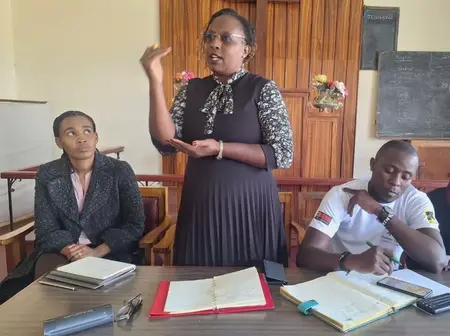
The World Bank is supporting a Uasin Gishu county initiative to equip young people from informal settlements in Eldoret with practical skills to turn solid waste management into a source of employment and entrepreneurship.
The initiative is part of the Kenya Informal Settlements Improvement Programme (KISIP), funded by the World Bank to upgrade roads and social infrastructure in informal settlements across the city.
Hundreds of young people from informal settlements, including Mwanzo and Shauri, have been mobilised for a 20-day capacity-building programme focusing on opportunities across the solid waste management value chain.
The training seeks to change perceptions of waste from an environmental burden into an economic resource.
It encourages participants to embrace recycling, waste sorting, resource recovery and other opportunities within the circular economy.
Governor Jonathan Bii said Eldoret's growing population and expanding urban landscape had increased the volume of solid waste generated.
This presented both an environmental challenge and an opportunity for innovative waste management enterprises.
Through the programme, he said, the county government hoped to position young people as key players in sustainable waste management.
They would be equipped to identify opportunities in waste collection, transportation, sorting, recycling, processing and responsible disposal.
Participants will also explore ways of converting organic and inorganic waste into valuable products, including organic fertiliser and animal feeds, particularly poultry feeds. This will create opportunities for self-employment and income generation.
Speaking during the training, County Director of Housing Beatrice Menjo said it was important to prepare young people to take advantage of emerging opportunities as Eldoret continued to expand and strengthen its status as a city.
She said the programme went beyond imparting basic waste management skills. It focused on competencies that could translate into meaningful employment and business opportunities.
Menjo said certificates awarded upon completion of the training would enhance participants' prospects of securing opportunities in the growing waste management and environmental services sector.
She challenged the youth to look beyond conventional employment and consider solid waste management as a viable business venture, particularly as urbanisation increased demand for sustainable waste management solutions.
“This is not just another training. We are looking at the bigger picture of building a sustainable system that supports our ambition of becoming an industrialised county. Waste must be viewed as a resource that can create wealth, employment, and innovation,” she said.
Ann Kioko of the KISIP National Project Coordination Team said the programme had been designed around the actual experiences and needs of young people living in informal settlements.
She said the training included a needs assessment to establish how participants interacted with solid waste in their respective communities. This would ensure the skills imparted addressed the challenges and opportunities they encountered daily.
The assessment would help identify existing gaps and determine training priorities across the solid waste management cycle, from waste generation and collection to sorting, transportation, recycling, processing and final disposal.
Kioko said KISIP was keen to help young people identify practical business opportunities in the sector while becoming active participants in improving the cleanliness and environmental sustainability of their neighbourhoods.
Leave a Reply