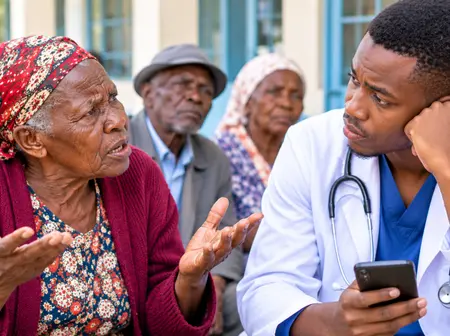
Senior citizens in Kenya have raised concerns over receiving medical treatment from young doctors and healthcare workers, citing fears of inexperience, communication barriers and cultural expectations that make some uncomfortable discussing personal health issues with younger professionals.
For many elderly Kenyans, visiting a hospital and finding a doctor young enough to be their child or grandchild can create uncertainty, particularly when seeking treatment for complicated or sensitive medical conditions.
Some senior citizens believe that doctors who have spent many years in medical practice are better positioned to understand their conditions, having handled numerous cases and gained practical experience.
Florence, one of the patients interviewed by a local TV station, expressed concern about how younger healthcare workers communicate with elderly patients, suggesting that some may not give them the attention they expect during consultations.
David, another patient, said he was uncomfortable being treated by young doctors, particularly when they appeared distracted by their mobile phones during consultations.
“I’m not very comfortable with young doctors. Because you go to the hospital, you explain yourself and how you feel. But in the process, these guys are on the phone. You don’t know whether he’s attending to you, listening to what you are telling him or her, or he’s just Googling,” he said.
Alfred Chemutan also questioned whether newly graduated doctors had sufficient practical experience to handle the medical needs of older patients.
He said he would feel more confident receiving treatment from a doctor who had performed numerous surgeries and treated many patients over the years.
Beyond concerns about experience, cultural expectations have also contributed to the discomfort.
In many Kenyan communities, senior citizens command considerable respect, making it difficult for some elderly patients to discuss private medical matters with healthcare workers young enough to be their children or grandchildren.
The challenge is particularly evident when men seek treatment for reproductive and urinary health conditions.
A healthcare professional explained that some older men find it uncomfortable to disclose such problems to young female doctors and nurses because they view them as their daughters.
Similar concerns arise during sensitive procedures such as cervical cancer screening, where older women may feel uncomfortable being examined by very young male healthcare professionals.
However, healthcare practitioners maintain that professional training and medical ethics require them to provide quality care regardless of their age, while respecting patients’ dignity and privacy.
The concerns come against the backdrop of a shortage of specialists trained to address the medical needs of senior citizens.
Kenya has fewer than 10 specialist geriatricians serving an estimated 3.2 million people aged 60 and above, highlighting the challenges facing specialised healthcare for the ageing population.
Experts have also raised concerns about the limited emphasis placed on geriatric medicine in medical training, arguing that more attention should be given to conditions associated with ageing.
One expert observed that although social gerontology is taught in some training programmes, geriatric medicine remains underemphasised.
The shortage means many senior citizens depend on general healthcare providers who may not have specialised training in managing age-related medical conditions.
Nevertheless, not all elderly Kenyans share concerns about receiving treatment from younger professionals.
Some believe that age should not determine the quality of medical care, arguing that competence, professionalism and a good relationship between patients and doctors matter more.
One patient said they had no problem being treated by a young doctor as long as there was mutual understanding and a good rapport during consultations.
According to data cited in the BMJ journal, approximately 67.5 per cent of public-sector healthcare professionals in Kenya are aged between 25 and 44 years.
The figures highlight the significant role played by younger professionals in Kenya’s healthcare system, even as concerns persist over generational differences and how they influence patients’ confidence in medical services.
Leave a Reply