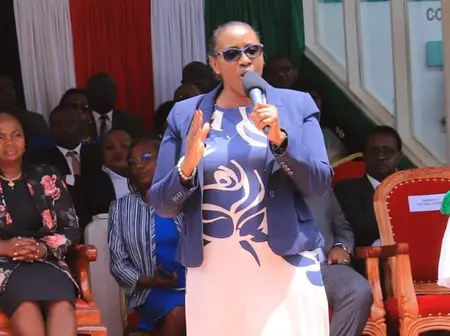
By attributing the persistent failure to resolve women’s constitutional representation in Parliament to a lack of political goodwill rather than mere legislative technicalities, Elachi places the burden squarely on party leaders and state institutions.
Her intervention also puts direct pressure on the Independent Electoral and Boundaries Commission (IEBC) to enforce constitutional gender requirements when vetting and approving political party candidate lists before the next election cycle.
Crucially, this critique lands at a moment when female leaders across the political spectrum are sounding alarms over structural barriers facing women aspirants.
Recent warnings from figures such as Kirinyaga Woman Representative Njeri Maina over the neglect of women’s issues and Kisumu Woman Representative Ruth Odinga over political intimidation highlight how hostile campaign environments and weak party backing continue to deter women from contesting elective seats.
Invoke Raila Odinga’s legacy as a benchmark for inclusion also carries strategic weight in a shifting opposition landscape where rival formations—including the Linda Mwananchi circuit, the Nyoro–Matiang’i–Karua bloc, and the Kalonzo–Muturi alignment—are competing to claim reformist and inclusive credentials.
Yet declarations about past champions alone will not translate into parliamentary or county seats if party nomination lists, campaign financing, and security conditions remain stacked against female candidates.
As Kenya moves closer to August 2027, whether party chiefs and the IEBC convert gender-parity pledges into enforceable nomination rules will determine if women gain substantive ground or face another cycle of unmet promises.
https://peopledaily.digital/inside-politics/beatrice-elachi-only-raila-believed-in-women
Leave a Reply