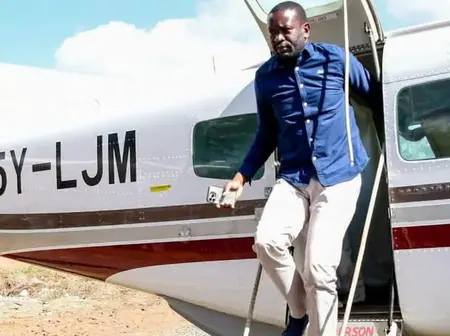
Several politicians eyeing the presidency in the 2027 General Election have stepped up their visits to the United States, with experts explaining the possible reasons behind the growing interest in the diaspora community.
President William Ruto, his former deputy Rigathi Gachagua, retired Chief Justice David Maraga, Wiper leader Kalonzo Musyoka and Nairobi Senator Edwin Sifuna are among the prominent political figures who have travelled to the US as the race to succeed Ruto gathers momentum.
Although the visits are partly aimed at reaching Kenyans living abroad, international relations experts argue that the politicians could also be pursuing financial support and influential connections ahead of the expensive election campaigns.
Speaking during a televised analysis, historian and international relations expert Professor Macharia Munene observed that the diaspora trips were not necessarily about securing votes.
Munene explained that politicians could be seeking financial resources and influence from Kenyans abroad, including individuals with established connections in influential circles.
He also questioned the significance of the diaspora vote, noting that its numbers remain relatively small compared to the total number of voters in Kenya.
According to Independent Electoral and Boundaries Commission (IEBC) data cited in the report, the diaspora vote stands at approximately 200,000.
The expert's remarks come as presidential aspirants increasingly use international platforms to communicate their political positions and criticise their opponents.
Meanwhile, the growing political interest in international audiences has raised questions about the role of Western governments in Kenya's electoral politics.
Munene recalled the 2013 General Election, when Western officials expressed concerns about the election of Uhuru Kenyatta and William Ruto because of their cases at the International Criminal Court (ICC) over the 2007–2008 post-election violence.
The remarks by former US Assistant Secretary of State for African Affairs Johnny Carson warning about the possible international and economic consequences of their election generated controversy.
According to Munene, the Western powers' perceived hostility towards the Uhuru-Ruto ticket helped the two candidates turn the election into a campaign against foreign interference.
He argued that the experience offered a lesson on the consequences of appearing to favour particular political candidates.
SOURCE.
Leave a Reply