Assented to at State House, Nairobi, on Thursday, November 26, 2026, alongside five other National Assembly Bills, the legislation closes a long-standing constitutional loophole in how Kenya finances its obligations to the regional development lender.
Previously, Section 2 of the East African Development Bank Act granted the Cabinet Secretary for the National Treasury unilateral authority to authorize payments and disburse taxpayer money from the Consolidated Fund to the bank without seeking parliamentary consent.
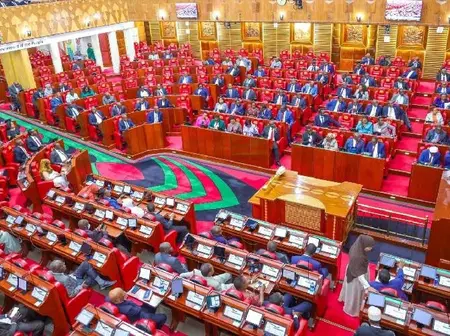
Sponsored by Leader of the Majority Party Kimani Ichung’wah, the amended Act strips the Treasury Cabinet Secretary of that unchecked discretion and restores legislative oversight over all regional capital subscriptions and financial transfers.
Under the new legal framework, any funds intended for the EADB must now be formally provided for through an Appropriation Act passed by the National Assembly and subsequently cleared by the Controller of Budget before a single shilling leaves the exchequer.
"The East African Bank Bill now aligns with the Constitution, specifically the provision that all resources from the Consolidated Fund must be appropriated by Parliament and approved by the Controller of Budget to ensure accountability," Ruto stated.
The legislative overhaul directly responds to a landmark 2025 High Court ruling in Nsuva versus the National Assembly and six others, which declared earlier provisions of the EADB Act unconstitutional for bypassing lawmakers and the Controller of Budget.
Beyond restricting direct cash releases, the new law introduces tight parliamentary controls over borrowing undertaken to finance Kenya's obligations to the regional institution.
Whenever the Treasury intends to raise loans or issue financial securities on behalf of the EADB, it must first seek approval from the National Assembly, with the relevant House committee given 30 days to scrutinize the request.
Additionally, the Treasury Cabinet Secretary is now legally obligated to submit a comprehensive annual report to Parliament within three months after the end of every financial year, detailing every payment made from the Consolidated Fund to the bank.
By subjecting regional financial commitments to full legislative scrutiny and regular reporting, the law ensures taxpayers' money is tracked openly from appropriation to final disbursement.
SOURCE
Leave a Reply