Tag: Aden Duale

  • Govt sets December 23 for Kenya’s Ebola-free declaration after last patient’s discharge

    Govt sets December 23 for Kenya’s Ebola-free declaration after last patient’s discharge

    Govt sets December 23 for Kenya’s Ebola-free declaration after last patient’s discharge

    Health Cabinet Secretary Aden Duale has announced December 23, 2026, as the anticipated date for Kenya to be declared Ebola-free, following the discharge of the country’s last patient and the release of the final contacts from monitoring.

    The country begins a mandatory 42-day countdown on Thursday, November 12, which will determine whether the outbreak can officially be declared over, provided no new infection is reported.

    In a statement posted on X on Wednesday, November 11, 2026, Duale said Kenya had recorded nine confirmed cases since detecting its first imported infection on October 6, 2026.

    “Since confirming the first imported case on 6th October 2026, Kenya has recorded nine confirmed cases, all contained within a single cluster, with no community transmission,” he stated.

    The CS said the final 11 contacts had completed their 21-day monitoring period in good health, marking another milestone in the country’s response.

    “Through effective surveillance and contact tracing, all 135 contacts linked to the index case were successfully traced and monitored,” Duale said.

    The 42-day countdown is required before health authorities can declare the outbreak over. The anticipated December 23 date is therefore dependent on Kenya recording no new cases throughout the period.

    Duale attributed the progress to coordination between national and county governments, health facilities, development partners and the public.

    “The response was strengthened by the declaration of Ebola as a formidable epidemic disease and the gazettement of the Public Health (Ebola Disease) Rules, which provided the necessary legal framework for containment efforts,” he stated.

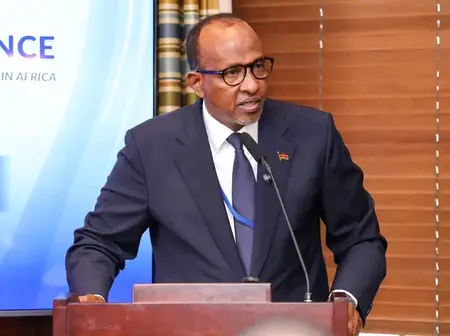
    Health Cabinet Secretary Aden Duale was speaking at Afya House in Nairobi on Tuesday, October 6, 2026, where he confirmed Kenya’s first imported Ebola case and announced that the patient had died. PHOTO//https://www.facebook.com/adenduale

    The CS named the World Health Organisation, Africa CDC, IGAD and the governments of the United States and India among the partners who supported the response.

    Despite the discharge of the final patient, Duale said surveillance and screening would continue across the country during the countdown.

    “As we enter the countdown, surveillance, screening at all points of entry, rapid response and prompt investigation of suspected cases will continue across the country,” he said.

    He added that response teams would remain on alert, while follow-up care and support for survivors would be sustained.

    The Health CS also addressed travel and visa restrictions imposed on Kenya by some jurisdictions following the Ebola outbreak.

    He maintained that the country remained open to international movement and economic activities, with no restrictions on travel, tourism, trade or public gatherings.

    “Kenya remains open for business, tourism, trade and travel, with no restrictions on movement or public gatherings,” Duale stated.

    He said the government had called on jurisdictions that imposed travel and visa restrictions on Kenya to review and lift the measures, arguing that the country’s transparent reporting and compliance with international health regulations should not be penalised.

    Duale further clarified that Kenya would not act as a quarantine centre for travellers who meet the entry requirements of other countries.

    He also said the Ministry of Health would not issue quarantine or Ebola-free certificates for travel purposes where such documents were not required under the International Health Regulations.

    He directed members of the public to use the toll-free 719 line for assistance.

    The CS also committed the government to accounting publicly for resources received during the outbreak response.

    “Finally, we reaffirmed our commitment to transparency and accountability, including the public disclosure and accounting of all resources and support received from the Government and development partners throughout the response,” he stated.

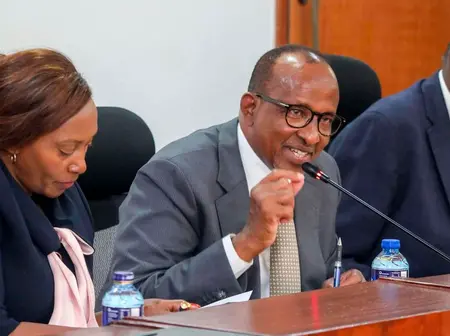
    Health Cabinet Secretary Aden Duale chairs a joint consultative meeting with the Kenya Union of Post Primary Education Teachers (KUPPET) and the Social Health Authority (SHA) on Thursday, September 17, 2026. PHOTO/@HonAdenDuale/X

    Duale made the remarks following a media briefing attended by senior Ministry of Health officials, representatives of international health organisations and development partners.

    The December 23 date remains conditional on the country completing the full 42-day countdown without recording another confirmed Ebola case.

  • Duale: Kenya will not serve as a quarantine destination for other jurisdictions

    Duale: Kenya will not serve as a quarantine destination for other jurisdictions

    Duale: Kenya will not serve as a quarantine destination for other jurisdictions

    Health Cabinet Secretary Aden Duale has said Kenya will not detain travellers to fulfil quarantine requirements imposed by their destination countries, insisting that the country will not become a holding ground for international travel restrictions.

    In a press briefing on Wednesday, November 11, 2026, Duale announced that Kenya would begin its 42-day countdown towards an Ebola-free declaration on Thursday, November 12, following the discharge of the last patient receiving treatment for Bundibugyo Ebola Virus Disease.

    The declaration is expected on or about December 23, provided no new infections are reported during the monitoring period.

    “Kenya will not serve as a quarantine destination for other jurisdictions,” Duale said.

    He clarified that travellers would not be detained in Kenya to satisfy entry requirements imposed by other countries, adding that the Ministry of Health would not issue quarantine or Ebola-free certificates for travel purposes.

    “Such requirements have no basis in the International Health Regulations,” he said.

    Health workers in protective gear provide care at an Ebola treatment center.

    On October 30, Saudi Arabia suspended travel by its citizens to Kenya, stopped issuing visas to people arriving from the country and barred entry to travellers coming directly from Kenya.

    The restrictions also cover travellers transiting through other countries if they had stayed in Kenya or another country experiencing an active Ebola outbreak within the preceding 21 days.

    The measures have raised concerns over the movement of Kenyan workers, business travellers and other passengers seeking to travel to the Gulf country.

    Kenya subsequently criticised Saudi Arabia’s decision, arguing that the restrictions were disproportionate to the country’s epidemiological situation.

    The Africa Centres for Disease Control and Prevention (Africa CDC) has also called on Saudi Arabia to review its decision, saying countries should not be punished for detecting and transparently reporting disease outbreaks.

    The World Health Organization (WHO), in its November 6 update, similarly advised against travel and trade restrictions on countries responding to the outbreak.

    Duale urged jurisdictions that had imposed restrictions on Kenya to reconsider their decisions, maintaining that the country had demonstrated transparency and complied with international public health requirements.

    “Kenya remains open for business, tourism, trade and travel, with no restrictions on movement or public gatherings,” he said.

    Health Cabinet Secretary Aden Duale was speaking at Afya House in Nairobi on Tuesday, October 6, 2026, where he confirmed Kenya’s first imported Ebola case and announced that the patient had died. PHOTO//https://www.facebook.com/adenduale

    Kenya’s progress towards ending the outbreak comes 37 days after it confirmed its first imported case on October 6, 2026.

    The country recorded nine confirmed cases, all linked to a single transmission cluster originating from the imported index case. Two people died, while the remaining seven recovered.

    The Ministry said all 135 contacts linked to the index case had been successfully traced and monitored.

    The final 11 contacts completed their mandatory 21-day monitoring period and were released in good health, clearing the remaining group under surveillance.

    No community transmission was recorded, with all confirmed infections remaining within the original transmission cluster.

    The Government also declared Ebola a formidable epidemic disease and gazetted the Public Health (Ebola Disease) Rules to provide a legal framework for containment and response measures.

    Health workers in protective gear provide care at an Ebola treatment center

    Despite the progress, the Ministry warned that Kenya would maintain heightened surveillance and emergency preparedness throughout the countdown period.

    Rapid Response Teams will remain on standby across counties, supported by active surveillance in health facilities and communities, investigations of suspected infections and continued screening at points of entry.

    The Government will also maintain follow-up care and support for Ebola survivors.

    Duale urged Kenyans to remain vigilant, seek medical attention early if they develop symptoms associated with Ebola, particularly after travelling to affected areas, and report suspected cases through the toll-free 719 hotline.

    He also acknowledged the contribution of national and county governments, health facilities, WHO, Africa CDC, IGAD, and the governments of the United States and India in containing the outbreak.

    On accountability, the CS pledged that the Government would publicly disclose support received from development partners and account for resources mobilised towards the Ebola response.

    The 42-day countdown will provide an additional observation period to establish whether any new infections emerge following the last patient’s recovery.

    If no new cases are detected by the end of the period, Kenya will be eligible for an official declaration that the Bundibugyo Ebola outbreak has ended.

  • Kenya Declared Ebola-Free as Duale Announces Discharge of Last Patient

    Kenya Declared Ebola-Free as Duale Announces Discharge of Last Patient

    thumbnail

    Health Cabinet Secretary Aden Duale has announced that all seven patients who tested positive for Ebola in Kenya have recovered and been discharged from hospital, marking a major milestone in the country’s efforts to contain the outbreak.Duale announced on Wednesday, November 11, confirming that the last patient had been released from the hospital and all individuals who came into contact with infected persons had completed their medical monitoring.

  • Duale Sounds Alarm Over Malaria Fight as He Urges African Leaders to Take Action

    Duale Sounds Alarm Over Malaria Fight as He Urges African Leaders to Take Action

    Duale said African countries must stop depending heavily on external donors and take greater responsibility for protecting their populations against malaria. He stressed that political promises alone would not be enough without proper financial investment and practical action.

    The CS called on governments across the continent to direct more resources towards malaria prevention, testing and treatment. According to him, strengthening these areas would help reduce infections, prevent unnecessary deaths and protect vulnerable communities.

    He warned that declining support from international funding partners was creating fresh challenges for malaria control programmes. Many countries rely on external assistance to provide essential medicines, diagnostic equipment, mosquito nets and other preventive services.

    Duale maintained that the situation required African leaders to reconsider their priorities and make the fight against malaria a major public health responsibility. He noted that continued investment was necessary to protect the achievements already made and prevent the disease from claiming more lives.

    His remarks also highlighted the importance of strengthening healthcare systems so that people can access reliable testing and treatment without facing unnecessary difficulties.

    The Health CS further encouraged African nations to work together, share knowledge and develop sustainable approaches that would reduce the continent's dependence on outside assistance.

    Malaria remains a major health challenge in many African countries, particularly among children and pregnant women. The disease continues to place pressure on families and healthcare facilities, making prevention and early treatment essential.

    Duale's message comes at a time when African governments face growing pressure to increase domestic funding and demonstrate stronger leadership in the campaign to eliminate malaria.

  • Kang’ata, Duale Clash Over Murang’as Afya.ke Health System

    Kang’ata, Duale Clash Over Murang’as Afya.ke Health System

    Murang'a Governor Irungu Kang'ata has accused the national government of pushing county governments onto a privately owned health system, after the county's Afya.ke platform was disrupted. He spoke on Citizen TV's JK Live, where he explained the Murang'a health model.

    Kang'ata said his administration revamped Afya.ke and rolled it out successfully in Murang'a. He claimed the national government later developed its own privately owned system and is now compelling counties to adopt it.

    The row began in mid-October. The county dates the start of the switch-off to October 13, and the governor went public the next day.

    He said the system had managed electronic medical records and supported healthcare delivery in the county since 2023.

    He also argued that Afya.ke was provided to the county free of charge and raised concerns about the cost of moving to the national platform.

    Kang'ata further claimed that Health Cabinet Secretary Aden Duale had promised him the system would be connected to the Social Health Authority (SHA) platform and not shut down.

    The Ministry of Health rejects the accusation. It said it neither owns, controls nor manages Afya.ke, does not hold its source code and has not switched it off. Duale described the platform as a private arrangement between the Murang'a County Government and its developers.

    He added that neither the developers nor the county have applied for certification. The ministry also said services under the national health insurance framework remain unaffected.

    Kang'ata has countered by questioning how the platform could be private. He pointed out that all go.ke domains are registered under Treasury nameservers and that Afya.ke is listed by the Digital Health Authority.

    The dispute raises wider questions about who controls health data in a devolved sector. Health is a county function, but standards, certification and insurance payments sit largely with the national government. Residents who rely on county hospitals are the ones most affected while the two sides trade claims.

    Link; https://x.com/citizentvkenya/status/2118064908957024515?a=jaA6crE84CPgDftoEkE&s=19

  • Kenya sets December 2026 deadline for drug manufacturers to adopt digital tracking system

    Kenya sets December 2026 deadline for drug manufacturers to adopt digital tracking system

    Kenya sets December 2026 deadline for drug manufacturers to adopt digital tracking system

    Pharmaceutical manufacturers in Kenya have been given until December 31, 2026, to comply with global standards that will introduce stricter tracking of medicines and help combat counterfeit and substandard medical products in the country.

    The deadline was announced by Principal Secretary for Medical Services Dr Ouma Oluga during the Health Products and Technologies Stakeholder Meeting in Nairobi, where he represented Health Cabinet Secretary Aden Duale.

    Oluga said manufacturers must align their operations with GS1 global standards as the government moves to strengthen the safety, accountability and transparency of the pharmaceutical supply chain.

    The standards will support the implementation of a digital Track and Trace system designed to monitor health products from the point of manufacture to the final consumer.

    Principal Secretary for Medical Services Dr Ouma Oluga during the Health Products and Technologies Stakeholder Meeting in Nairobi, where he represented Health Cabinet Secretary Aden Duale. PHOTO/@ppbkenya/X

    The initiative is expected to make it easier for regulators to establish the origin, movement and distribution of medicines, particularly when concerns arise over the quality or safety of particular products.

    The Pharmacy and Poisons Board (PPB) said strengthening medicine traceability was critical in protecting the public from falsified and substandard medicines.

    “Strengthening medicine traceability is essential to protecting Kenyans from falsified and substandard medicines and ensuring access to safe, effective and quality-assured health products,” the board said.

    The board was represented at the stakeholder meeting by its Director of Pharmacy Practice, Dr Wilfred Ochieng. Under the proposed system, pharmaceutical products will have improved digital identification and tracking, allowing authorities to follow their movement through different stages of the supply chain.

    This is expected to address challenges associated with tracing medicines when counterfeit, compromised or unsafe products enter the market.

    The digital Track and Trace system is also expected to strengthen the government’s ability to respond to medicine safety concerns.

    Through improved visibility, regulators will be better placed to identify affected batches and facilitate timely recalls of products found to be unsafe.

    The system will also strengthen accountability among manufacturers, distributors, suppliers and other players involved in the movement of pharmaceutical products.

    This could reduce gaps in the supply chain that make it difficult to establish where particular medicines originated and how they reached patients.

    Beyond medicine safety, the government expects the adoption of GS1 standards to improve procurement processes and support the growth of local pharmaceutical manufacturing.

    The digital system is expected to provide better information on the availability and movement of health products, helping institutions make more informed procurement decisions.

    Improved traceability could also strengthen confidence in locally manufactured pharmaceutical products by making it easier to verify their movement and authenticity.

    Manufacturers now have until December 31, 2026, to comply with the global standards as Kenya moves towards a more transparent and digitally monitored pharmaceutical supply chain.

    The implementation will be an important step in strengthening medicine regulation and ensuring patients receive products that meet the required safety and quality standards.

  • Kenya has Successfully Contained Ebola – CS Duale

    Kenya has Successfully Contained Ebola – CS Duale

    thumbnail

    Health Cabinet Secretary Aden Duale has announced that Kenya has successfully traced all 135 people who came into contact with the country’s first Ebola patient, as the government intensifies efforts to contain the outbreak and secure the lifting of travel restrictions imposed by Saudi Arabia.Speaking before the National Assembly’s Committee on Delegated Legislation on Tuesday, November 3, 2026, Duale said the Ministry of Health had achieved 100 per cent contact tracing, describing the development as a major milestone in the country’s Ebola response.

  • Kenya fights restrictions as Ebola turns into nightmare for travellers

    Kenya fights restrictions as Ebola turns into nightmare for travellers

    thumbnail

    Kenya says it has been treated unfairly by other countries over the Ebola outbreak and is demanding that the travel bans imposed on its travellers be reversed.A day after Kenya formally protested to Saudi Arabia over its ban on arrivals and transits from Kenya, Health Cabinet Secretary Aden Duale said the country had already achieved 100 percent contact tracing, preventing the disease from spreading to the community.

  • Kenya nears end of Ebola outbreak monitoring as 52 contacts await clearance

    Kenya nears end of Ebola outbreak monitoring as 52 contacts await clearance

    thumbnail

    Kenya is preparing to conclude its Ebola monitoring exercise this week, with 52 people still under quarantine expected to be released after completing the required observation period.Health Cabinet Secretary Aden Duale said the country has not recorded any new confirmed infections since October 19.The Ministry of Health said the outbreak resulted in nine confirmed cases and two deaths, with all infections traced to a single cluster linked to a patient who had travelled from the Democratic Republic of Congo (DRC).

  • Duale names Dennis Miskellah to National Ebola Taskforce

    Duale names Dennis Miskellah to National Ebola Taskforce

    thumbnail

    Health Cabinet Secretary Aden Duale has appointed Dr Dennis Miskellah, Deputy Secretary General of the Kenya Medical Practitioners, Pharmacists and Dentists Union (KMPDU), to the National Ebola Disease Taskforce. The appointment brings frontline doctors directly into the team leading the country’s response to the outbreak.