Tag: Aden Duale

  • Relief for Kericho Families as MP Pays Sh7.2 Million for SHA Cover

    Relief for Kericho Families as MP Pays Sh7.2 Million for SHA Cover

    Area MP Joseph Cherorot paid Sh7.2 million for their Social Health Authority (SHA) medical cover.

    The money came from the National Government Constituencies Development Fund (NG-CDF) to help elderly and needy locals.

    Cherorot launched the project at Londiani Stadium in Kedowa/Kimugul Ward.

    "We want to protect our elderly parents and struggling families from financial hardship," said Cherorot.

    "They can now get treated without worrying about immediate cash," he added.

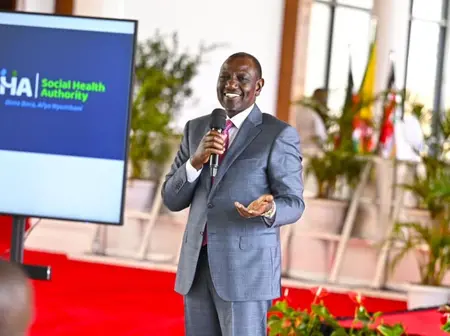
    SHA Chief Executive Officer Dr. Mercy Mwangangi led the event on behalf of Health Cabinet Secretary Aden Duale.

    She said SHA registration in Kericho County is at 74 per cent, while Mombasa County leads at 87 per cent.

    "I urge all residents who have not registered with SHA to do so without delay," said Dr. Mwangangi.

    "No Kenyan should miss out on medical services simply because they have not enrolled," she added.

    She said registered locals can visit dispensaries and health centres for free primary care.

    Patients will not even pay for hospital registration books.

    For serious illnesses, SHA pays up to Sh300,000 at Level Four and Level Five hospitals.

    Cancer patients also get up to Sh800,000 each year for tests, chemotherapy, and radiotherapy.

    Dr. Mwangangi urged locals to go for early breast, cervical, prostate, and throat cancer screening.

    Mental health patients get Sh67,000 for hospital admission lasting up to 60 days.

    Accident victims and critical patients are also covered during the first 24 hours of an emergency.

    Dr. Mwangangi asked locals to call the emergency line 922 for quick medical help.

    She noted that a team of 40 medics and responders is always ready to handle emergencies.

    At the end of the event, SHA inducted MP Cherorot into its Hall of Fame.

    He also received a Certificate of Appreciation for supporting healthcare in Kipkelion East.

    Source
  • Inside Caroli Omondi’s Explosive Exposé on the Ksh104 Billion Healthcare Scandal

    Inside Caroli Omondi’s Explosive Exposé on the Ksh104 Billion Healthcare Scandal

    Caroli Omondi: SHA was birthed in corruption and it is still not working

    Speaking forcefully on Thursday, November 19, 2026, the vocal legislator pointed to widespread public complaints across the country as undeniable proof that the government's flagship medical insurance programme is failing ordinary citizens at their moment of greatest need.

    Omondi zeroed in on the controversial Ksh104 billion information management software procured for the Social Health Authority, starkly contrasting that astronomical figure with the Ksh800 million that the defunct National Health Insurance Fund had previously required to upgrade its digital systems.

    The outspoken lawmaker further exposed a glaring financial crisis crippling the authority's operations, revealing that out of the 33 million Kenyans registered under the scheme, a meager 4.5 million members are actively paying their contributions.

    He argued that this massive compliance deficit, compounded by severe underfunding and opaque procurement deals, has left public and private healthcare facilities struggling with unpaid claims while desperate patients face endless delays and denied medical services.

    Omondi’s fiery indictment injects fresh political ammunition into the escalating national debate over healthcare governance, accountability, and the management of public funds ahead of the high-stakes August 2027 General Election.

    Previously, the Suba South legislator also warned Kenyan teachers against trusting government assurances on the scheme, revealing a staggering Ksh75 billion funding deficit against an allocation of just Ksh6 billion.

    Despite the Social Health Authority launching a month-long nationwide verification and registration drive from November 16 to December 15, 2026, critics argue that cosmetic administrative fixes cannot rescue an initiative weighed down by structural insolvency.

    Meanwhile, Health Cabinet Secretary Aden Duale has repeatedly threatened contracted medical facilities with immediate suspension for demanding illegal co-payments from patients, yet hospitals continue to cite chronic reimbursement delays as the root cause of service disruptions.

    As the cost of living squeezes household budgets across the nation, the inability to guarantee reliable and affordable medical coverage threatens to become one of the ruling administration's most damaging political vulnerabilities.

    Opposition leaders are already seizing upon these mounting healthcare failures to rally disillusioned voters, framing the troubled rollout of the Social Health Authority as a textbook example of executive mismanagement and misplaced priorities.

    With less than a year remaining before Kenyans head to the ballot box, the fierce battle over healthcare accountability is rapidly emerging as a decisive front in the looming 2027 electoral showdown.

  • Nairobi Health Facilities Revenue Rises to KSh2.6 Billion – Sakaja Johnson

    Nairobi Health Facilities Revenue Rises to KSh2.6 Billion – Sakaja Johnson

    Speaking during the Third Annual Nairobi Health Scientific Conference, which brought together Health Cabinet Secretary Aden Duale and other healthcare stakeholders, Sakaja outlined his administration's achievements and priorities in strengthening healthcare delivery across the capital.

    According to the governor, Nairobi County is targeting KSh4 billion in revenue from its health facilities during the current financial year. The increased revenue is expected to support the improvement of public hospitals and strengthen their capacity to provide essential medical services to residents.

    Sakaja also revealed that more than three million Nairobi residents have been enrolled under the Social Health Authority (SHA), reflecting the county's efforts to expand access to healthcare financing. Additionally, 99 per cent of Nairobi's health facilities have been digitised, a move aimed at improving service delivery and making healthcare management more efficient.

    The governor further highlighted the role of community-based healthcare, noting that Nairobi has strengthened its network through 782 Community Health Units and 7,820 Community Health Promoters. These structures are expected to improve access to basic healthcare services, particularly at the household and neighbourhood levels.

    During the conference, CS Aden Duale reportedly commended Nairobi's progress in healthcare delivery. He specifically recognised the Nairobi County Cancer Centre and the county government's investment in Community Health Promoters as important developments in strengthening the healthcare system.

    The discussions at the conference also focused on building resilient, equitable and climate-smart health systems capable of responding to the changing healthcare needs of the population.

    As Nairobi continues implementing its healthcare reforms, residents will be watching closely to see whether the announced improvements translate into better services and more affordable treatment.

    What is your opinion on Governor Sakaja's healthcare reforms and the progress reported in Nairobi's public hospitals? Share your remarks, views and comments in the comment section below.

  • Ruto Announces 33.7 Million Kenyans Registered Under SHA, Up From 8 Million Under NHIF in 2022

    Ruto Announces 33.7 Million Kenyans Registered Under SHA, Up From 8 Million Under NHIF in 2022

    Speaking during his 2026 State of the Nation Address at Parliament Buildings in Nairobi on Wednesday, November 18, Ruto presented the figures as evidence of progress made in transforming the country's healthcare system.

    "Today, 33.7 million Kenyans are registered with SHA, compared with approximately 8 million registered under NHIF in 2022," the President stated.

    The announcement comes about two years after SHA replaced NHIF in October 2024 as part of the government's plan to achieve Universal Health Coverage.

    Under the new system, Kenyans are expected to access healthcare through different funds, including the Primary Healthcare Fund, the Social Health Insurance Fund and the Emergency, Chronic and Critical Illness Fund.

    The government says the reforms are designed to ensure that more citizens can receive medical services without facing overwhelming financial pressure.

    However, the transition has also attracted criticism from patients and healthcare providers over registration challenges, delayed payments, system failures and difficulties accessing certain medical services.

    Health Cabinet Secretary Aden Duale has previously acknowledged some of the challenges and said the ministry was working to improve the system.

    The latest registration figures come at a time when healthcare remains one of the major issues affecting households across the country.

    Many Kenyans are keen to understand how the expanded coverage will translate into affordable treatment, reliable hospital services and timely access to medicines.

    Ruto's announcement was part of his wider address, during which he highlighted achievements in different sectors and defended his administration's development agenda.

    As the 2027 General Election approaches, the implementation of SHA is likely to remain an important issue in assessing the government's performance.

    Ultimately, Kenyans will be looking beyond registration numbers to see whether the system delivers quality healthcare when they need it.

  • SHA CEO Mercy Mwangangi Announces Sh800,000 Cancer Cover as She Urges Kericho Residents to Register

    SHA CEO Mercy Mwangangi Announces Sh800,000 Cancer Cover as She Urges Kericho Residents to Register

    SHA Chief Executive Officer Dr Mercy Mwangangi made the appeal on Wednesday, November 18, 2026, during a healthcare sponsorship programme in Kipkelion East Constituency.

    Mwangangi, who represented Health Cabinet Secretary Aden Duale, said Kericho had achieved 74 per cent SHA registration but still had many residents who needed to enrol to access the available medical benefits.

    She encouraged those who had not registered to take advantage of the government programme, explaining that registration would help families access healthcare without facing the full financial burden of treatment.

    The package caters for several services, including cancer diagnosis, chemotherapy, radiotherapy and other specialised oncology treatments.

    Mwangangi noted that cancer remains a major health concern in the country, highlighting breast, cervical, prostate and throat cancers as conditions requiring greater public awareness, early screening and timely medical attention.

    Under the enhanced SHA benefits introduced in May 2026, the annual cancer coverage increased from Sh550,000 to Sh800,000, offering additional financial support to patients undergoing treatment.

    The CEO also explained that registered residents could access covered primary healthcare services at participating dispensaries and health centres without paying out of pocket.

    The initiative, funded through the constituency's National Government Constituencies Development Fund (NG-CDF), seeks to support elderly and financially disadvantaged residents.

    Area MP Joseph Cherorot said the programme was intended to ensure vulnerable families could seek medical attention without worrying about immediate healthcare expenses.

    The latest appeal comes as the government intensifies efforts to increase SHA registration and expand access to affordable healthcare across the country.

    Sources:https://x.com/ntvkenya/status/2123004363891421445?a=HHx7iSftglSsM6vxPyM&s=19

  • Good News for SHA Patients as Govt Launches Medicine Tracking Messages

    Good News for SHA Patients as Govt Launches Medicine Tracking Messages

    Patients using the Social Health Authority (SHA) have received good news after the government introduced a new messaging system to track whether they receive their prescribed medicine.

    Health Cabinet Secretary Aden Duale announced that the new system will help end the common complaint of "hakuna dawa" in public hospitals.

    Speaking on Tuesday, Duale said that from last week, every Kenyan who visits a hospital and gets a prescription will receive a message asking whether they were given the medicine.

    The message will ask: "Have you received your prescribed medicine?" Patients will be expected to reply with 1 for Yes or 2 for No.

    The government says the move will help it know in real time which hospitals are failing to give patients medicine, and take action against facilities that deny patients drugs yet claim money from SHA.

    The new system is also expected to expose hospitals that have been giving patients prescriptions to buy medicine outside, even after receiving funds from the government.

    Kenyans have welcomed the move, saying it will improve accountability and ensure patients get value for their SHA contributions.

    Duale urged Kenyans to always respond to the messages, saying their feedback will help the government fix the gaps in the health sector.

    The Ministry of Health says more reforms are coming to make SHA work better for all Kenyans.

    Have you received the SHA message after visiting a hospital? Share your experience in the comments.

  • Duale Reveals What Other Ministers Are Seeking from Kenya’s SHA

    Duale Reveals What Other Ministers Are Seeking from Kenya’s SHA

    Health Cabinet Secretary Aden Duale has claimed that ministers from other countries are approaching him to learn how Kenya has implemented the Social Health Authority (SHA).

    Duale made the remarks while defending the government's progress in rolling out the new healthcare system, which replaced the National Health Insurance Fund (NHIF) under President William Ruto's administration.

    According to the Health CS, Kenya's experience with SHA has attracted interest from other government officials who want to understand how the system is being managed and implemented.

    He suggested that the country's healthcare reforms have provided valuable lessons for other governments seeking to improve access to affordable medical services.

    SHA was introduced as part of the government's plan to achieve universal health coverage by ensuring more Kenyans can access medical services without suffering financial hardship.

    However, its implementation has faced criticism from sections of the public, healthcare workers and medical facilities.

    Some Kenyans have raised concerns about registration, contribution requirements and difficulties accessing medical services. Healthcare providers have also questioned delays in payments and other challenges associated with the transition from NHIF to SHA.

    Despite the concerns, the government has maintained that the new system will improve healthcare financing, expand coverage and make medical services more accessible to ordinary citizens.

    Duale's remarks are likely to spark fresh debate over the performance of SHA, particularly as Kenyans continue to assess whether the new arrangement has improved their access to healthcare.

    The Health CS's comments also come at a time when the government faces pressure to address complaints surrounding the implementation of the programme.

  • Economist Hesbon Omollo Urges Ruto Government to Pay SHA Contributions for Poor Kenyans

    Economist Hesbon Omollo Urges Ruto Government to Pay SHA Contributions for Poor Kenyans

    He also emphasised the importance of supporting primary healthcare, saying it serves some of the country's most vulnerable populations and provides access to affordable medical services.

    "Primary healthcare also requires support because it serves some of the most vulnerable Kenyans who need access to affordable healthcare," Omollo said.

    His remarks highlight continuing discussions about how Kenya can finance universal healthcare while ensuring that low-income households are not excluded because of their inability to make regular contributions.

    Kenya's healthcare financing system operates through different funding arrangements, including the Primary Healthcare Fund, the Social Health Insurance Fund and the Emergency, Chronic and Critical Illness Fund.

    According to the Ministry of Health, primary healthcare services are fully tax-funded, while the Social Health Insurance Fund relies on contributions from members. The government has also committed to supporting vulnerable households that cannot afford contributions.

    The funding question remains important as the country continues implementing universal health coverage reforms.

    In an interview published by The Standard in November 2026, Health Cabinet Secretary Aden Duale said the government was sponsoring 590,986 vulnerable households under its main programme, with additional sponsorship commitments involving counties and other partners.

    The government has also faced questions about the number of registered SHA members who are actively contributing and the adequacy of funding for healthcare services.

    Omollo's proposal adds to the debate on how public resources can protect financially disadvantaged households while strengthening access to essential medical services.

    Verification note: The specific remarks attributed to economist Hesbon Omollo have not been independently located in a reputable published report. The policy background is verified, but the quotation should be checked against its original recording or publication before being presented as independently confirmed.

    Sources: Ministry of Health, The Standard and official SHA policy documents.

  • Billions Unlocked: Turkana Among 45 Counties Set to Receive First Tranche of World Bank Health Cash

    Billions Unlocked: Turkana Among 45 Counties Set to Receive First Tranche of World Bank Health Cash

    The milestone positions Turkana to tap into early disbursements under the joint Kenya–World Bank health financing framework, specifically anchored around the Building Resilient and Responsive Health Systems (BREHS) programme.

    Designed to strengthen primary healthcare, upgrade Level 2 and Level 3 facilities, and bolster community health services, the funding targets grassroots clinics that serve as the first point of care for thousands of residents.

    In addition to general county allocations, Turkana stands to benefit from specialized refugee-host community health support—a critical lifeline given the vast medical needs around Kakuma and Kalobeyei.

    Qualification for the inaugural tranche required county governments to sign Implementation Partner Agreements and meet strict fiduciary, procurement, and operational readiness benchmarks set by the Ministry of Health and the World Bank.

    While 45 counties successfully met the compliance threshold to unlock the first wave of disbursements, two counties missed out on the initial rollout due to pending administrative and reporting requirements.

    For Governor Jeremiah Lomorukai’s administration, securing a spot in the first batch marks a significant win in efforts to bridge long-standing healthcare gaps across one of Kenya’s largest and most remote counties.

    The incoming funds are expected to help ease persistent shortages of essential medicines, improve maternal and newborn care, and equip community health promoters operating across Turkana’s six sub-counties.

    Speaking during recent high-level review engagements with World Bank officials, Health Cabinet Secretary Aden Duale emphasized that the funds come with tight accountability guardrails.

    Counties receiving the cash must maintain transparent financial management, timely procurement reporting, and strict ring-fencing of resources to ensure every shilling translates into tangible medical services for citizens.

    With the first batch of funds now unlocked, attention turns to county health executives to swiftly deploy the resources and deliver visible improvements across Turkana’s dispensaries and sub-county hospitals.

    SOURCE

  • Kenya On High Alert As Western Allies Warn Of 99% Ebola Outbreak Risk In South Sudan

    Kenya On High Alert As Western Allies Warn Of 99% Ebola Outbreak Risk In South Sudan

    Kenya has stepped up cross-border health surveillance following a joint warning from six foreign governments—including the United States and the United Kingdom—over the acute threat of an Ebola outbreak in neighboring South Sudan.

    In a joint statement issued on Thursday, November 12, 2026, the embassies of Germany, Japan, the Netherlands, Norway, the United Kingdom, and the United States expressed grave concern over potential spillover into South Sudan. Although Juba has not yet confirmed a case of the Bundibugyo Ebola virus, the World Health Organization (WHO) estimates a 99 percent risk of virus importation due to active transmission across its 813-kilometer border with the Democratic Republic of the Congo (DRC), where confirmed cases surpassed 10,900 as of November 9.

    “These risks give even greater urgency to the need for South Sudan’s leaders to start using South Sudan’s public revenue to fund the health sector, including the salaries of public health workers. It also gives greater urgency to our calls for South Sudan’s leaders to support full access throughout the country for organisations providing assistance to South Sudanese people in need,” the embassies stated.

    Health authorities in South Sudan have been actively investigating suspected viral alerts, including a fatal haemorrhagic fever case in Morobo County—which twice tested negative for Ebola before being confirmed as yellow fever on November 10, 2026—alongside another pending alert in Yei.

    The heightened alert directly impacts Kenya, as South Sudan serves as a major regional trade partner with between 800 and 1,500 people crossing the shared border daily.

    The warning coincides with Kenya beginning its mandatory 42-day monitoring countdown toward being declared Ebola-free. In October 2026, Kenya recorded its first imported case of Ebola, followed by eight secondary cases; two patients succumbed to the virus while the remaining patients recovered and were discharged from quarantine.

    “Forty-two days is twice the longest incubation period of the virus. If no new case is recorded in that period, Kenya will be declared free of Ebola on 23 December 2026,” Health Cabinet Secretary Aden Duale announced on Wednesday.

    Despite the countdown, the WHO has urged Kenyan health authorities to maintain strict disease surveillance, screen patients at health facilities, and bolster laboratory capacity and frontline worker preparedness. Meanwhile, South Sudan remains among regional nations facing international travel restrictions from countries including the U.S., Canada, Saudi Arabia, and the United Arab Emirates.