The Council of Governors (CoG) has directed county health facility managers to disregard a directive by Medical Services Principal Secretary Ouma Oluga requiring the removal of Paybill numbers from county health facilities. The council argues that the directive undermines the constitutional autonomy of county governments and threatens the financial sustainability of public hospitals. Cog chairperson and Tharaka Nithi Governor Muthomi Njuki said counties must retain lawful mechanisms for collecting payments for services that fall outside the Social Health Authority (SHA) benefits package.
Njuki clarified that governors support the principle that patients should not be charged for services fully covered by SHA. However, he noted that some patients are not registered under the scheme, while others require medical services that are not included in the approved benefits package. He also raised concerns over delayed, rejected and inadequate reimbursements from SHA, saying the challenges have placed additional financial pressure on county health facilities.
According to the council, direct payments remain an important source of revenue for hospitals struggling to meet operational expenses and maintain essential services. “The pursuit of Universal Health Coverage must protect patients while safeguarding the sustainability of public health facilities and respecting the constitutional framework of devolution,” Njuki said.
Counties Raise Concerns Over SHA Payments
The dispute comes amid growing tensions between the national and county governments over the financing and management of public health services. Health services are a devolved function under the 2010 Constitution, giving county governments responsibility for managing county health facilities. However, the national government's push to centralize payments through SHA has raised concerns among governors about the financial independence of county hospitals.
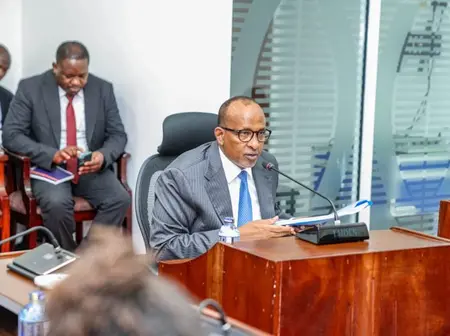
Health Cabinet Secretary Aden Duale recently told a parliamentary committee that SHA makes payments directly to health facilities on the 14th of every month, bypassing county treasuries. The arrangement is intended to ensure that healthcare facilities receive reimbursements directly rather than having funds channeled through county governments. Counties, however, maintain that delays and disputes over claims have left some hospitals struggling to purchase medical supplies and meet the costs of essential services.
Dispute Puts Universal Health Coverage Under Spotlight
The disagreement highlights the challenge of balancing affordable healthcare for patients with the need to ensure public hospitals have sufficient resources to operate. While governors insist that patients should not pay out of pocket for services covered by SHA, they argue that facilities must be allowed to collect payments for services outside the scheme's benefits package.
Kenya has started a new two-year term on the Africa Centres for Disease Control and Prevention Governing Board. Health Cabinet Secretary Aden Duale says the country will push for local production of medical supplies, stronger health security across borders and better access to primary healthcare.
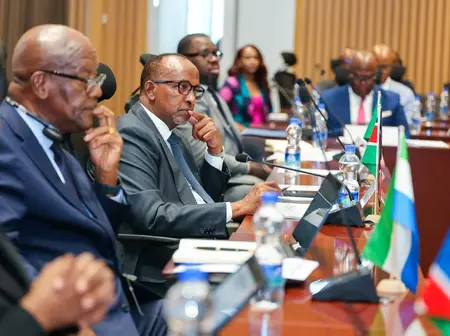
Duale announced the news after the 16th Ordinary Meeting of the board. It took place at the agency's headquarters in Addis Ababa, Ethiopia, on November 22, 2026. Director-General Dr Jean Kaseya led the meeting.
Eight health ministers attended. They came from Cameroon, Gabon, The Gambia, Kenya, Namibia, Sierra Leone, Uganda and Zimbabwe. Together they reviewed the agency's priorities and chose new leaders for the next two years.
Uganda's Health Minister Dr Chris Baryomunsi was elected Chair of the board without any opposition. Namibia's Health Minister Dr Esperance Luvindao will serve as Vice-Chair. The new leaders also received a report from the outgoing board covering 2024 to 2026. It listed past achievements and the priorities that still need attention.
Duale said Kenya would use its place on the board to drive real change. He said the country would promote local production of medical and pharmaceutical supplies. It would also strengthen health security across borders and push for fair access to quality primary healthcare.
Local manufacturing matters because many African countries still depend on imported medicines, vaccines and diagnostics. The COVID-19 pandemic exposed this weakness badly. Several countries struggled to get vaccines and protective equipment when they needed them most.
Health security across borders is just as urgent. Diseases move easily with people and trade. African countries must therefore share information and track outbreaks together. They must also respond to emergencies in a coordinated way.
The Governing Board guides the work of Africa CDC and approves its yearly budgets. It also sets public health priorities and helps member states strengthen their own health systems. Kenya now has a strong chance to shape that agenda.
Nairobi Senator Edwin Sifuna has challenged Kenyans living in the diaspora to help identify qualified professionals who could serve in government, questioning whether the country lacks a health expert capable of performing better than the current Health Cabinet Secretary, Aden Duale.
Speaking during an engagement with Kenyans in the United States on Sunday, November 23, 2026, Sifuna said Kenya had skilled professionals abroad whose expertise could help transform public institutions if the country restored meritocracy.
The senator argued that political appointments should be based on qualifications and competence rather than other considerations, saying the country needed to create opportunities for capable Kenyans to serve at home.
“Where are you going to get your cabinet? Where are you going to get your cabinet?” Sifuna posed, before challenging the audience to consider the talent available among Kenyans.
Sifuna questioned whether the diaspora community could identify a Kenyan capable of serving as Health Cabinet Secretary and outperforming Duale.
“Can you tell me, in this room, that we cannot find a Health Minister better than Duale?” he asked, challenging Kenyans abroad to contribute their expertise towards building a government that serves the public.
He said the country should tap into the skills of professionals who have built careers abroad but may not have received similar opportunities in Kenya.
Sifuna cited an example of a Kenyan, James Wafula, whom he said had designed and built a boardwalk in East London, South Africa, arguing that qualified Kenyans were making contributions overseas while their expertise remained underutilised at home.
The senator attributed the situation to what he described as the erosion of meritocracy, arguing that professionals often find it easier to secure opportunities abroad based on their qualifications than in Kenya.
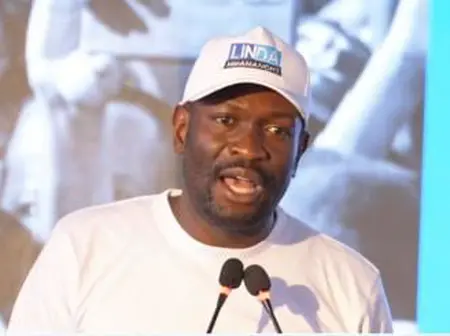
He pledged that a government led by the Linda Mwananchi movement would seek to restore merit-based appointments and encourage skilled Kenyans abroad to return and contribute to national development.
Sifuna said the diaspora should be involved in shaping government and implementing policies rather than being left to seek assistance from leaders after they assume office.
The remarks come amid Sifuna’s wider criticism of President William Ruto’s administration and his calls for accountable leadership.
On November 19, 2026, the senator accused Ruto of failing to uphold the Constitution after assuming office, arguing that the presidency carries an obligation to respect, uphold and defend the country’s supreme law.
Sifuna said constitutional accountability and competent leadership should guide the running of government, maintaining that public office must be exercised in line with the responsibilities attached to it.
Duale assumed the role during the 16th Ordinary Meeting of the Africa CDC Governing Board, which brought together health ministers from eight nations under Director-General Dr. Jean Kaseya. During the session, Uganda's Dr. Chris Baryomunsi and Namibia's Dr. Esperance Luvindao were elected as Chairperson and Vice-Chairperson, respectively.
As a two-year voting member, Duale will help shape continental health priorities, direct public health strategies, and approve the agency's budgets. Kenya’s focus on the board centers on three core pillars:
Nominated by the African Union Commission in November 2026, Kenya's representation highlights the country's ongoing health system and digitization reforms, while ensuring national healthcare priorities closely align with continental funding over the next two years.
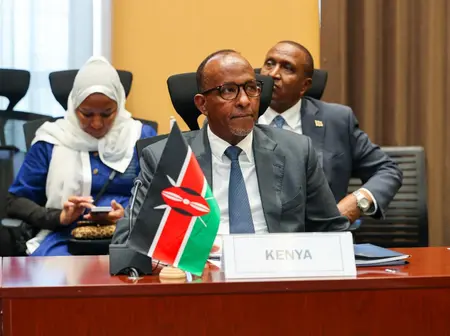
Health Cabinet Secretary Aden Duale has attended the 16th Ordinary Meeting of the Africa Centres for Disease Control and Prevention (Africa CDC) Governing Board at the agency's headquarters in Addis Ababa, Ethiopia.
The meeting marked the beginning of a new two-year leadership term and brought together eight health ministers from Cameroon, Gabon, The Gambia, Kenya, Namibia, Sierra Leone, Uganda and Zimbabwe.
During the meeting, Uganda's Health Minister, Dr Chris Baryomunsi, was unanimously elected Governing Board Chair, while Namibia's Dr Esperance Luvindao was elected Vice-Chair.
The incoming leadership also received the outgoing board's 2024–2026 report, outlining achievements made during the previous term and outstanding priorities that require attention.
Speaking after the meeting, Duale said Kenya would use its position on the board to push for increased local production of medical and pharmaceutical supplies, stronger cross-border health security and equitable access to quality primary healthcare across Africa.
The Africa CDC Governing Board provides strategic direction and oversight to the agency, including approving annual budgets and setting continent-wide public health priorities.
Duale was accompanied by Kenya's Ambassador to Ethiopia and Permanent Representative to the African Union and United Nations Economic Commission for Africa, Ambassador Galma Boru.
Other ministers attending the meeting included Dr Manaouda Mombeshora of Cameroon, Prof. Elsa Joséphine N'kana of Gabon, Dr Ahmadou Lamin Samateh of The Gambia, Dr Esperance Luvindao of Namibia, Dr Austin Demby of Sierra Leone, Dr Chris Baryomunsi of Uganda and Dr Douglas Mombeshora of Zimbabwe.
In a communication issued on Sunday, November 22, 2026, the Kenyan Embassy in Riyadh confirmed that the restrictions were still in force, with no official date announced for the resumption of travel from Kenya.
The embassy explained that discussions between Nairobi and Riyadh were ongoing as both governments sought to address the situation. It indicated that Kenyans would be informed through official channels once an agreement had been reached on reviewing and lifting the restrictions.
The mission also urged Kenyan nationals to exercise caution when encountering information about a possible reopening, warning that unverified dates circulating online should not be treated as official announcements.
The uncertainty has been particularly concerning for Kenyans seeking employment opportunities in the Gulf nation, where many work in private households, hotels and other service-related industries.
The restrictions followed a decision announced by Saudi Arabia on October 30, 2026, amid concerns surrounding the Ebola situation in Kenya.
The measures affected visa issuance and international movement, including travellers who had visited Kenya or other countries considered affected by the outbreak within 21 days before arriving in Saudi Arabia.
The restrictions also covered passengers attempting to enter the Kingdom through connecting flights after travelling to affected destinations.
Saudi authorities said the measures were part of efforts to minimise the possibility of importing infections and protect residents, citizens and visitors.
The decision created uncertainty for Kenyan recruitment agencies, workers awaiting deployment and families depending on income earned by relatives working in Saudi Arabia.
The travel restrictions came as Kenya continued implementing measures to contain the Ebola outbreak.
The country discharged its final patient on November 11, 2026, after the recovery of the seventh person infected with the Bundibugyo strain. The remaining 11 individuals who had been under quarantine were also released.
Kenya subsequently began a 42-day monitoring period on November 12, during which health authorities continued surveillance to establish whether any new infections would emerge.
If no additional cases are detected throughout the monitoring period, the country is expected to be declared Ebola-free on December 23, 2026.
Health Cabinet Secretary Aden Duale has maintained that there are no active Ebola patients, individuals under quarantine or evidence of ongoing community transmission.
He has also called on foreign governments that introduced restrictions against Kenya to reconsider their decisions, arguing that such measures should reflect the country's latest public health situation and international health regulations.
Despite the progress reported by Kenyan health authorities, the latest communication from the embassy indicates that travellers cannot yet rely on an immediate reopening.
For Kenyans planning to take up jobs in Saudi Arabia, the next major development will depend on the outcome of diplomatic discussions between the two governments and an official announcement on the future of the restrictions.
Cancer treatment in Kenya has long carried a double burden for patients: the devastating toll of the disease and the financial and systemic hurdles that stand between them and timely medical care.
The Ministry of Health has unveiled the National Cancer Treatment Guidelines 2026, marking the first major revision of the country’s cancer treatment protocols since 2019.
The new guidelines seek to standardise cancer care across the country, strengthen patient protection and improve access to specialised treatment, with nearly 45,000 Kenyans diagnosed with cancer annually.
The reforms also introduce stricter timelines for diagnosis and treatment while linking cancer care directly to the Social Health Authority’s (SHA) digital oncology module to improve accountability in the management of the Ksh800,000 oncology benefit.
Health Cabinet Secretary Aden Duale said the digital system would establish a unified patient record accessible across healthcare facilities, addressing fragmented care and duplication of medical records.
“The cancer patient will have one unified oncology record across all facilities. For the benefit of the cancer patient in our country, we’ll eliminate duplicate records and we’ll eliminate fragmented care. We will have better coordination. There will be better management of even the Ksh800,000 oncology benefit. Because they must get safer treatment, specialist supervision and better patient outcomes,” Duale said.
The Ksh800,000 oncology benefit has been a major point of concern among cancer patients, some of whom have complained of exhausting their insurance allocation before completing treatment.
Patients have raised concerns over inflated hospital bills, unnecessary procedures and delays in the approval of treatment, forcing some to seek additional funds out of pocket.
One cancer patient described the frustration of waiting for treatment only to discover that SHA had not approved the required services.
“Mgonjwa anangoja. Amefika hospitali. Aambiwe ya kwamba sasa SHA imekata ku-approve tangu asubuhi hadi masaa ya jioni. Mtu umeketi tu hapo ukiwa na matumaini na mwisho unapata ya kwamba umekuwa frustrated,” the patient said.
The Ministry of Health and SHA have consequently warned contracted healthcare facilities against practices that unnecessarily deplete patients’ allocated benefits.
Officials say some hospitals have been accused of consuming patients’ allocations through unnecessary services before asking them to make additional payments despite having an active oncology benefit.
The government says the new digital oncology module will help monitor treatment, improve accountability and ensure patients receive services covered under their benefits.
Officials have also challenged healthcare facilities to justify their charges and ensure patients are not subjected to unnecessary medical procedures.
SHA Chairman Abdi Mohamed said the authority had received complaints from patients concerning questionable billing practices, including charges for services that were allegedly never provided.
“Patients are writing to us through me, but when you look at people who plead on behalf of daughters, consultation where there is not even a doctor and there was no consultation,” he said.
He called for accountability in the healthcare system, urging stakeholders to establish clear alternatives when disagreements arise over the cost of treatment and approved charges.
Beyond financing, the 2026 guidelines introduce strict timelines intended to reduce delays in cancer diagnosis and treatment.
Under the new protocols:
The timelines are intended to ensure patients move through the healthcare system faster, reducing the risk of advanced disease caused by prolonged waiting periods.
The 2026 guidelines also incorporate medical advances that were not widely embedded in the inaugural 2019 protocols.
The updated manual provides for modern cancer treatment approaches, including molecular profiling, targeted therapies and immunotherapies.
These interventions are intended to improve the accuracy of diagnosis and enable specialists to select treatments based on the characteristics of individual cancers.
The guidelines also expand paediatric cancer treatment protocols, providing dedicated pathways for the nearly 2,300 children and adolescents diagnosed annually.
Under the new framework, children diagnosed with cancer must be referred to specialised centres of excellence within 14 days to facilitate access to appropriate treatment.
The revised protocols also introduce guidance on managing oncological emergencies, including life-threatening complications such as sepsis and spinal cord compression.
They establish mandatory safety standards for administering chemotherapy drugs, which require careful handling and specialist supervision because of their toxicity.
Another major change is the integration of palliative care and pain management from the point of diagnosis rather than waiting until the final stages of the disease.
The guidelines further introduce structured survivorship plans to support patients after completing treatment, addressing their long-term health and recovery needs.
Kenya records more than 44,000 new cancer cases annually, with the disease remaining the country’s third-leading cause of death.
The 2026 guidelines seek to address longstanding inequalities in cancer care by ensuring patients receive standardised treatment regardless of their geographical location or financial circumstances.
However, their success will depend on implementation, including the availability of specialists, diagnostic equipment, medicines and functional referral systems across the country.
For thousands of Kenyan families confronting a cancer diagnosis, the real measure of the new guidelines will be whether they translate into faster diagnosis, transparent hospital bills and uninterrupted access to treatment.
Health Cabinet Secretary Aden Duale announced the expanded coverage during the ninth Kenya International Cancer Conference held in Mombasa, saying the move was part of efforts to improve access to specialised healthcare under the Universal Health Coverage programme.
The allocation was raised from Ksh550,000 to Ksh800,000, with the new limit taking effect on December 1, 2025. The government has also disbursed Ksh11.6 billion to healthcare facilities to settle oncology-related claims.
Beyond insurance support, the government has negotiated lower prices for several cancer medicines through partnerships with pharmaceutical manufacturers.
According to Duale, nine innovative cancer drugs supplied through a partnership with Pfizer have recorded price reductions of between 70 and 90 per cent.
The cost of Herceptin, used by eligible breast cancer patients, has also fallen from Ksh120,000 to Ksh40,000 per treatment session following an agreement with Roche.
Duale disclosed that 33.7 million Kenyans had registered with SHA, while 53,465 cancer patients had accessed treatment through the scheme.
The government is also expanding facilities offering specialised cancer services. Six comprehensive cancer care centres have been established, while oncology programmes are operational in at least 13 counties.
More than 107,000 Community Health Promoters are supporting household-level screening and early detection. Additionally, over four million girls have received the HPV vaccine, which helps protect against cervical cancer.
The latest interventions come amid a significant cancer burden, with Kenya recording an estimated 35,867 new cases and 22,888 related deaths annually.
In a separate healthcare investment, Cabinet approved an Ksh8 billion programme in October to establish specialised head and neck surgical units at Kenyatta National Hospital, Moi Teaching and Referral Hospital and the University of Nairobi Dental Hospital.
The initiative, being implemented in partnership with France, will also support the training of 5,000 community health workers.
The government has introduced a patient verification system that allows Kenyans to report hospitals that fail to provide prescribed medicines, exposing the facilities to deductions from their Social Health Authority (SHA) reimbursement claims.Health Cabinet Secretary Aden Duale said the mechanism requires patients to confirm through text messages whether they received medicines prescribed during their hospital visits.
The latest graduation brings the university’s total alumni population to 4,658, highlighting its growing role in expanding access to higher education in the North Eastern region and beyond.
In his address, Duale described the achievement as evidence of education’s ability to overcome adversity. He recalled that student enrolment had risen from fewer than 400 in 2016 to more than 7,800, reflecting the institution’s growth over the years.
The Cabinet Secretary also drew lessons from his personal journey, saying he had moved from herding camels in Urgaad village to serving in national leadership. He encouraged graduates not to view their backgrounds as limitations, but as foundations for greater achievement. He also reminded them to honour the sacrifices made by parents and guardians by using their education to transform lives and communities.
He commended the university’s leadership and staff for sustaining its growth and reaffirmed the government's commitment to supporting infrastructure expansion, including nursing and agriculture laboratories.
The ceremony brought together national and county leaders, university officials, legislators and other guests. Duale urged the graduates to turn their knowledge into practical solutions and contribute to the development of Garissa, the North Eastern region and Kenya.
As the graduates begin the next stage of their lives, how can universities and government help them translate their qualifications into meaningful opportunities? Share your views and comments in the comment section.