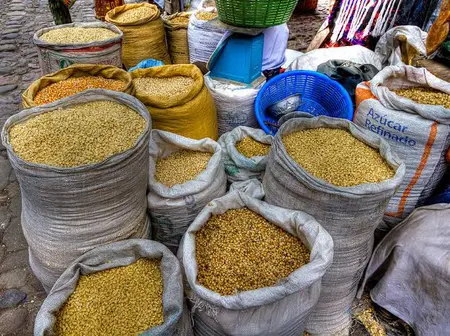
First, dry grain off the bare ground. Spreading maize, beans, or sorghum directly on soil transfers hidden dampness and fungal spores into the harvest. Farmers should shell cleanly and dry grain on raised tarpaulins, canvas sheets, or ventilated cribs until moisture drops to 13.5 percent or lower. Where electronic moisture meters are unavailable, a dry glass bottle mixed with table salt offers a reliable field check: if salt clings to the glass walls after shaking, the grain still requires sun-drying.
Second, sort before bagging. Even a handful of cracked, insect-bored, or discolored kernels acts as an entry point for mold and larger grain borers. Separating damaged grain for immediate livestock feed protects the healthy batch from rapid spoilage.
Fourth, clean and seal the store. Before bringing in new stock, farmers must sweep out old grain dust, plaster wall cracks, and block roof leaks and rodent entry points.
Finally, elevate and ventilate every sack. Stacking bags on wooden pallets at least 15 centimeters off the floor and away from walls prevents condensation. By safeguarding quality at home, farmers avoid panic-selling at harvest lows and capture stronger market prices months later.
source:https://nation.africa/kenya/business/seeds-of-gold/how-farmers-can-protect-their-grains-post-harvest-5687042#story
Leave a Reply