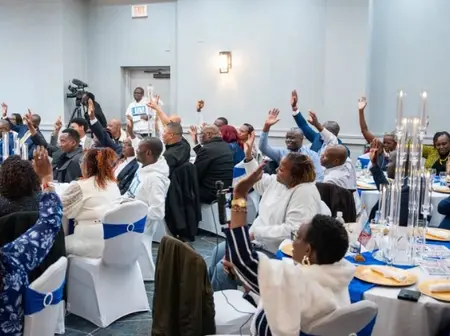
Sifuna said his supporters expected tangible improvements in the country's leadership and would quickly turn against a new administration if it failed to deliver visible results.
Speaking to Kenyans living in Maryland, United States, at the Spark Hotel in Germantown on November 24, the Nairobi senator explained why he was reluctant to make promises that could prove difficult to fulfil once in government.
He argued that politicians seeking the country's top leadership position must understand the expectations of voters and make commitments they can realistically implement.
According to Sifuna, the movement has an impatient support base that would expect changes almost immediately after a new administration is sworn into office.
He warned that three months without recognisable improvements could trigger public demonstrations against the very leaders supporters had helped elect.
"If in three months they don't see any recognisable change in the way the affairs of the country are being run, they will be back in the streets singing 'Sifuna must go'," he said.
Sifuna is currently leading the Linda Mwananchi Movement on a 17-day tour of the United States, where he is engaging Kenyans in the diaspora and seeking support for his political ambitions.
His activities come as opposition leaders continue positioning themselves for the 2027 elections, with several senior figures interested in challenging President William Ruto.
The opposition has yet to settle on its presidential candidate. DCP leader Rigathi Gachagua recently indicated that the coalition expected to have a clearer picture of its preferred candidate by December.
Amid the negotiations, Sifuna has continued presenting himself as a potential contender for the opposition ticket, insisting that his political campaign must be based on realistic commitments rather than attractive promises designed to win votes.
The senator also questioned the motivations of some opposition politicians seeking the presidency, suggesting that leadership should not be treated as an opportunity to reward individuals who feel they have been excluded from government for too long.
Without mentioning anyone directly, he joked about a politician who allegedly complained about being out in the cold for an extended period.
"There are people in the opposition who are saying they have been out in the cold for too long. I asked one, 'This warmth you're looking for, shouldn't we give you a duvet?'" he remarked.
Sifuna further argued that Kenyans were looking for meaningful economic and governance reforms rather than simply changing the people occupying government offices.
He said economic hardships and limited opportunities had pushed some talented Kenyans to seek better lives abroad.
"This thing we call meritocracy, many of you have run away from Kenya because you know it doesn't matter how brilliant you feel if you have no chance," he told the diaspora audience.
The Nairobi senator acknowledged that leading a country required expertise beyond his professional background as a lawyer.
He disclosed that the Linda Mwananchi Movement had brought in professionals to help develop its manifesto and policy proposals ahead of the next election.
Sifuna said the involvement of experts was intended to ensure that the movement presented Kenyans with commitments that could be implemented if it secured power.
"We want to go into this election with a promise that we can keep so that we do not appear like hypocrites," he stated.
Beyond discussing his political agenda, Sifuna appealed to Kenyans living in the United States to support the movement through financial contributions, professional expertise and attendance at its political gatherings.
He said some critics had questioned whether he had the financial capacity to run a serious presidential campaign, but contributions from supporters had helped build the movement's campaign resources.
According to the senator, the money being raised would mainly support logistical requirements, including travelling across all 47 counties, buying fuel for vehicles and providing meals for people attending rallies.
He maintained that the movement was not paying people to attend its political meetings, claiming that supporters were voluntarily turning up to demonstrate their commitment.
Sifuna also said supporters had reduced campaign expenses by taking responsibility for producing branded merchandise instead of relying entirely on the movement's finances.
As an example, he revealed that the T-shirt he wore during the Maryland engagement had been given to him by Kenyans living abroad.
He identified campaign merchandise and the recruitment of polling agents as two major expenses that presidential candidates must prepare for.
However, he claimed that supporters were already helping address these costs by producing their own campaign materials and volunteering to monitor elections and the tallying process.
In a humorous conclusion, Sifuna suggested that his movement hoped to mount an ambitious State House campaign without spending the enormous amounts of money associated with presidential elections.
His remarks add another dimension to the emerging opposition campaigns ahead of the 2027 General Election, particularly as political leaders face the challenge of agreeing on a common presidential candidate while convincing Kenyans that their proposed alternatives can deliver meaningful change.
Source
Leave a Reply