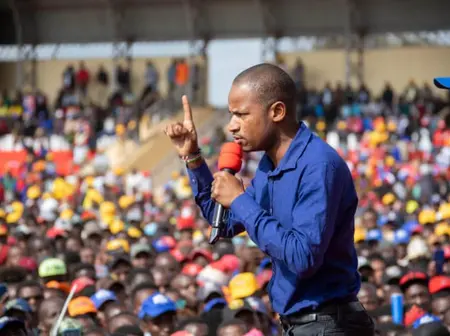
At the center of the dispute is an alleged private power-sharing agreement struck during the formation of The Equitable Party which rebranded into the Linda Mwananchi Movement under which Sifuna was to serve as the presidential flagbearer while Babu Owino took the position of party leader.
Babu has maintained that witnesses were present when the pact was agreed upon before terms shifted without explanation, prompting him to pursue his own platform under The Mwananchi Party while declaring that politics is driven by interests rather than trust.
The rift has widened beyond the two Nairobi leaders, triggering high-profile departures that have weakened efforts to consolidate a single opposition front.
Siaya Governor James Orengo distanced himself from Sifuna’s camp and aligned with the Liberal Democratic Party following internal disagreements over presidential ambitions, while Saboti MP Caleb Amisi broke away to establish the People’s Renaissance Movement.
As rival camps trade accusations of betrayal and point fingers over party control, opposition commentators and supporters have increasingly raised suspicions that pro-government operatives and internal moles are exploiting personal rivalries to splinter the anti-Ruto coalition from within.
For President William Ruto’s camp, division among prominent opposition voices offers a clear strategic advantage eight months before Kenyans go to the polls.
Whenever opposition leaders split into separate political vehicles such as Linda Mwananchi, The Mwananchi Party, the Liberal Democratic Party, and the People’s Renaissance Movement they risk dividing the very voter blocs needed to mount a unified national challenge.
Ultimately, the standoff between Sifuna and Babu highlights how fragile unwritten political covenants can be when individual ambitions collide with shifting coalition math.
Crowds and personal popularity give both leaders strong visibility, yet neither can easily reshape national outcomes if opposition votes remain fragmented across competing parties.
How opposition principals manage trust, resolve leadership disputes, and rebuild unity over the coming months will determine whether they enter August 2027 as a cohesive force or a divided field.
Source: https://www.the-star.co.ke/news/2026-11-22-babu-owino-sifuna-and-the-politics-of-betrayal
Leave a Reply