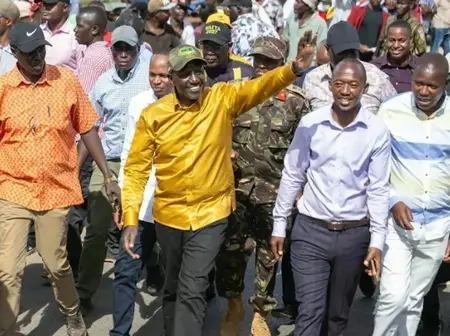
With the 2027 General Election approaching, growing political ambitions, disagreements over regional representation and rivalry within the broad-based government are emerging as potential challenges to Ruto's re-election strategy.
The president's political camp, which previously appeared united behind his leadership, is increasingly experiencing competing interests as different leaders seek greater influence and recognition within the government.
One of the biggest sources of tension is the race for the 2027 presidential running mate position. Several influential politicians have been mentioned in succession discussions, with each potential choice carrying significant political implications.
Kirinyaga Governor Anne Waiguru, Deputy President Kithure Kindiki, former Mombasa Governor Hassan Joho and former Deputy Prime Minister Wycliffe Oparanya are among the leaders featuring in the political calculations surrounding the coveted position.
National Assembly Speaker Moses Wetang'ula and Prime Cabinet Secretary Musalia Mudavadi are also reportedly seeking influential roles within the political arrangement as competition for influence in the Mulembe region intensifies.
The growing influence of Nairobi Senator Edwin Sifuna has also become part of the wider political calculations, particularly as leaders seek to strengthen their political standing in Western Kenya.
However, deciding on a running mate could prove difficult for Ruto because supporting one candidate could leave other influential allies disappointed, potentially creating divisions within his political formation.
Although the president has avoided publicly committing himself to a preferred running mate, his allies have continued making statements that reveal the growing competition surrounding the position.
Nandi Senator Samson Cherargei recently maintained that the running mate question had already been settled, insisting that the position was not available for negotiation with the Orange Democratic Movement (ODM).
Cherargei suggested that ODM could negotiate for other political positions but should not expect to influence the choice of Ruto's running mate.
Behind the scenes, Ruto's political team is reportedly assessing different possible combinations through opinion polling to establish which arrangement could give him the strongest advantage in the 2027 presidential contest.
Beyond the immediate running mate contest, the possibility of succeeding Ruto in 2032 is also emerging as an important factor in managing competing ambitions within his political camp.
Several senior government figures have openly discussed their presidential ambitions, suggesting that the succession contest could begin taking shape even before the next General Election.
Cabinet Secretary John Mbadi and former Mombasa Governor Hassan Joho are among the leaders who have spoken about the possibility of succeeding Ruto.
Joho has also mentioned Simba Arati, Kimani Ichung'wah and Gladys Wanga among potential presidential contenders within the broad-based political arrangement.
The prospect of receiving political backing in 2032 could help keep ambitious leaders aligned with Ruto's immediate re-election plans while allowing them to maintain their long-term presidential ambitions.
This arrangement, however, presents a major political test for the president. He must convince his allies to support his 2027 ambitions while managing their expectations about the powerful positions and political opportunities that could follow.
For now, his biggest political task is keeping influential allies together, managing the running mate debate and preventing individual ambitions from undermining his campaign for a second presidential term.
Source
Leave a Reply