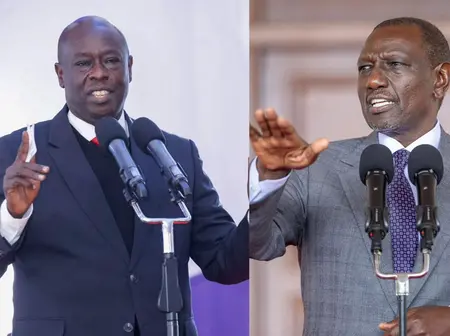
President William Ruto has found another way to challenge rivals, but his growing use of nicknames is attracting mixed reactions.
Former Deputy President Rigathi Gachagua, Edwin Sifuna and Kalonzo Musyoka have all found themselves at the centre of this debate.
The latest exchanges have brought fresh attention to how political leaders communicate with Kenyans ahead of the 2027 General Election.
Ruto has reportedly used different labels to question the records, influence and public positions of several prominent opposition figures.
Gachagua has been called Mr Texas, while Nairobi Senator Edwin Sifuna has received the label Mr Empty during political disagreements.
Kalonzo Musyoka has also been referred to as Mr 40, highlighting his long career in public service.
Former President Uhuru Kenyatta has previously been called Sponsor, a label associated with claims about his alleged influence over opposition politics.
However, these political descriptions have not gone unanswered, with some targeted leaders and their allies turning the labels into jokes.
Uhuru previously embraced the Sponsor nickname publicly, while Gachagua's supporters responded to Mr Texas by calling Ruto Mr Taxes.
Such responses demonstrate how political messaging can sometimes produce an unexpected reaction among supporters and ordinary Kenyans.
According to political commentators cited by Citizen Digital, nicknames imposed by politicians do not always become popular expressions among voters.
They argue that phrases spreading naturally through social media often gain more public acceptance than slogans introduced during political rallies.
The comparison with Kasongo is particularly interesting because the nickname gained popularity through online creativity rather than an organised political campaign.
Ruto's supporters, however, may view his approach differently, seeing the labels as simple ways of challenging opponents and communicating political disagreements.
Critics argue that repeated name-calling risks lowering the dignity expected from the presidency and distracting attention from important national issues.
For many Kenyans, the bigger concern is whether political exchanges will produce meaningful discussions about employment, taxes, development and living costs.
With the 2027 election approaching, political communication is likely to remain an important part of the contest.
But should Kenyan leaders focus on nicknames and political exchanges, or should voters demand stronger debates about policies and everyday challenges?
Leave a Reply