Other than the policy of devolution, there is no provision of the 2010 constitution which seems to be more popular with the Kenyan public than that of “public participation”.
It has such an enlightened ring to it: this idea that before any substantial public funds are to be spent; or fundamental new policies initiated; or sensitive decisions settled; the public must be allowed to have a say.
All in all, the constitutional requirement for public participation would seem to be a means of ensuring accountability insofar as whatever is ultimately implemented will have the stamp of approval of those it is supposed to benefit.
But there is an underlying weakness in this assumption. And this is the fact that the public does not really have any intrinsic capacity to render valid judgements on the things which matter most to them, such as roads, education system restructuring, water supply and sanitation systems, and so on.
And above all, how to combine the provision of such public infrastructure and services in order to promote job creation.
Most such things require professional planners. Men and women who have studied the needs of communities and nations and have a clear idea of how to best provide for the public.
Take, for example, the fact that the principal limiting factor in our national dream of industrialisation is the cost of electricity: do you imagine an ordinary Kenyan could possibly come up with any long-term solutions to this problem?
Would this not be a national challenge best left to the many Kenyan engineers and economists who are qualified to offer realistic proposals on this subject?
And I would add to the long list of things in which public participation would be a hindrance rather than a useful contribution, such priorities as the creation of Special Economic Zones; the continued expansion of the Mombasa port as well as the Lamu port; any greenfield (ie completely new) international airport; etc.
All of these are projects that would take years to finalise; and even then, the benefits to the public would only be revealed long after the election cycle in which they were initiated. So, they would hardly be the kind of things which a public ‘baraza’ could productively debate.
Public participation, in projects of this type, would be more a meaningless formality than any attempt to get any serious input that could be incorporated into policy or implementation plans.
But it gets weirder.
There are smaller development projects that on the surface might seem well suited for such public participation. And yet the outcomes of taking on board the public’s sentiments have not been quite what was expected.
My favourite example in this context comes from the early days of the Constituency Development Fund (CDF) back during the early days of the Mwai Kibaki presidency.
Worthy of note is that the roughly Sh10 million annually that was allocated to each constituency was a windfall which even the top political fundraising champions of the day could not raise in any previous calendar year.
All over the country, ordinary Kenyans rushed to “participate” in instructing their MPs on the local priorities that should be funded with “their money”.
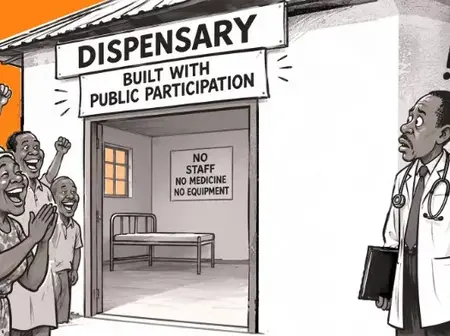
It turned out that what the public – especially in rural areas – wanted more than anything else was government-run medical facilities a little closer to their villages than the existing ones, which were frequently no less than 10 kilometres away.
As such, new “clinics” and “dispensaries” were soon built all over the country.
Next thing we knew, Charity Ngilu, who was the Minister for Health during President Kibaki’s first term in office, complained of being constantly besieged by MPs who wanted to see the empty rooms that had been built in their constituencies and labelled “dispensary” or “clinic” provided with equipment, staff and medicines.
She was at pains to persuade those many MPs that her ministry’s budget could not possibly meet even a fraction of this demand for fully staffed and equipped “clinics” and “dispensaries” – reportedly up to 1,000 of them – which the CDF had abruptly brought into existence, all over the republic.
Leave a Reply