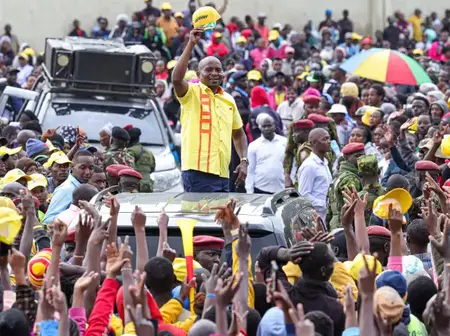
Deputy President Kithure Kindiki is increasingly attracting political support to retain his position as President William Ruto's running mate in the 2027 General Election, as competition for the influential seat gathers momentum. The emerging contest is exposing competing political interests, regional bargaining and questions of loyalty within the broad-based government, with several leaders arguing that maintaining the current leadership arrangement would provide continuity at the highest levels of government.
Kindiki's growing support has received a boost from political leaders in Nakuru and other parts of the country, who have publicly defended his position and called for the continuation of his partnership with President Ruto. Among those backing him are Nakuru Governor Susan Kihika and Nakuru Town East MP David Gikaria, who have dismissed growing demands from some political leaders seeking changes to the current arrangement. Their endorsements have added to the debate over whether Ruto should retain his current deputy or consider another political figure as he prepares for the next presidential election.
TIFA Poll Adds to Kindiki's Political Momentum
Kindiki's growing political support is also reflected in recent opinion polling. A survey by Trends and Insights for Africa (TIFA) Research released on November 12, 2026, identified him as the most preferred running mate among supporters of President Ruto. According to the findings, 55 per cent of Ruto's supporters preferred Kindiki to retain the position in the 2027 General Election.Homa Bay Governor Gladys Wanga emerged second with 12 per cent, followed by Mining and Blue Economy Cabinet Secretary Hassan Joho at nine per cent.
Other personalities mentioned included Prime Cabinet Secretary Musalia Mudavadi, National Assembly Speaker Moses Wetang'ula and ODM leader Oburu Oginga, who each received four per cent. The survey involved 2,036 respondents drawn from nine regions across the country. However, the findings reflect the preferences of Ruto's supporters and should not be interpreted as a nationwide endorsement or a final decision on the presidential ticket.
Mt Kenya Politics Complicates the Running Mate Debate
Despite the endorsements, the Deputy President faces an increasingly competitive political environment, particularly within the wider Mt Kenya region. Leaders from Mt Kenya West have been advancing arguments for greater representation in the country's second-highest executive office, with Kirinyaga Governor Anne Waiguru, Laikipia East MP Mwangi Kiunjuri and Ndia MP George Kariuki among politicians whose names have featured in discussions. Some leaders from the region argue that its significant voter population should give it a stronger voice in negotiations over the 2027 presidential ticket.
However, supporters of Kindiki, particularly from Mt Kenya East, maintain that replacing him would undermine the political understanding that brought the region into the Kenya Kwanza government. They argue that Meru, Embu and Tharaka Nithi should continue enjoying representation at the highest level of government. The competing positions have exposed differences within the wider Mt Kenya political bloc, raising questions about how regional interests will influence the next presidential election.
Ruto's Working Relationship with Kindiki Under Scrutiny
Another major factor shaping the debate is the working relationship between President Ruto and his deputy. Kindiki assumed office on November 1, 2024, following the impeachment of former Deputy President Rigathi Gachagua.Since his appointment, he has maintained a visible presence in government activities, frequently accompanying the President during official engagements and defending the administration's development agenda.
Supporters argue that the relationship between the two leaders has created an established working arrangement that should be maintained as the country approaches another election cycle. They also point to Kindiki's political loyalty and his involvement in government programmes as reasons for retaining him on the presidential ticket. However, the final decision will involve more than personal relationships, with regional representation, coalition negotiations and the interests of political partners likely to feature prominently.
Competing Political Interests Could Shape Ruto's Decision
The growing debate also comes against the backdrop of negotiations within the broad-based government, where different political formations are seeking recognition and influential positions ahead of 2027.Leaders associated with ODM and other political formations have featured in discussions about possible changes to the presidential ticket, reflecting the importance of coalition arrangements in the next electoral contest. The challenge for Ruto will be navigating these competing interests while maintaining political relationships across different regions. For Kindiki, the public endorsements and favorable polling provide additional backing in the ongoing debate, although they do not guarantee his automatic retention.
2027 Decision Remains in Ruto's Hands
As political realignments continue to take shape, the question of who will deputies Ruto in 2027 is expected to remain a major subject of discussion within government and political circles. While Kindiki's supporters are pushing for continuity, other leaders are positioning themselves and their regions for a possible role in the next administration. Ultimately, the choice of running mate will depend on political negotiations, coalition arrangements and the President's decision as the election approaches.
Leave a Reply