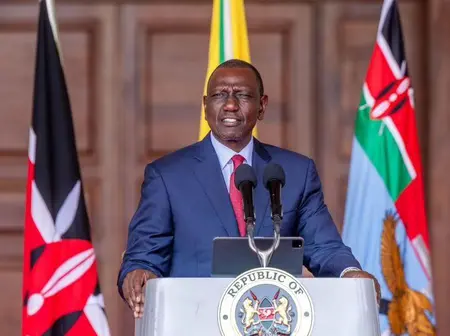
The President has repeatedly argued that the government’s economic policies have restored confidence following the financial pressures Kenya faced when he assumed office in 2022. According to the President’s official platform, the shilling has moved from about KSh162 against the US dollar in 2022 to around KSh129, while inflation has declined substantially from its 9.6 per cent level in October 2022.
Inflation, however, has not followed a continuously downward trend. Official data show that annual inflation rose to 6.8 per cent in September 2026, although it remained within the Central Bank of Kenya’s target range. The increase was linked partly to higher fuel and other costs.
Commercial lending rates have also fallen. The National Treasury reported that average commercial bank lending rates declined to 14.4 per cent in September 2026 from 15.1 per cent a year earlier. The Central Bank of Kenya has attributed the decline partly to monetary-policy easing, with the Central Bank Rate reduced to 8.75 per cent.
The broader economy has also shown resilience. The World Bank reported that Kenya’s economy grew by 5.2 per cent in the first half of 2026, although it projected full-year growth at 4.6 per cent. At the same time, the institution warned that fiscal pressures and high public debt remain significant challenges.
Overall, available data indicate improved currency stability and lower lending rates, while inflation remains a continuing concern. Ruto’s assessment therefore reflects genuine improvements in several economic indicators, alongside challenges that remain unresolved.
Leave a Reply