
As graduation approaches, thousands of university students across Kenya are preparing to graduate. Excitement fills the ceremonies as they receive hard-earned certificates after years of academic struggle and commitment, and families celebrate their achievements. For many, however, the next chapter presents a different challenge: entering a competitive job market that demands more than academic qualifications.
Blog
-

UASU calls for full implementation of collective bargaining agreement, warns of fresh lecturers’ strike
Universities Academic Staff Union (UASU) Secretary-General Constantine Wasonga has urged the government to fully implement the return-to-work agreement signed with university lecturers, warning that unresolved salary and collective bargaining issues could undermine efforts to stabilise public universities.
Appearing before parliamentary committees on labour and education on Wednesday, November 4, 2026, Wasonga said lecturers suspended their strike to allow negotiations to resolve outstanding salary issues, following the government’s payment of Ksh20 billion in staff arrears.
He said the unions expected the government to honour the agreement in full rather than prolonging negotiations or delaying the agreed payments.
The UASU secretary-general said the dispute extended beyond the conclusion of one round of collective bargaining, touching on government funding obligations, workers’ rights and the sustainability of public higher education.
In his address, Wasonga argued that public universities require adequate and predictable government financing to deliver their teaching, research and other national responsibilities.
“The issues before this committee go beyond the conclusion of a single round of collective bargaining. They concern the constitutional and statutory responsibility of the government to provide adequate and predictable financing for public universities,” he said.
Wasonga also challenged the reliance on student numbers, fee collection and student loans to finance staff salaries and negotiated collective bargaining agreements.
“Not should the payment of employee salaries and implementation of duly negotiated CBS depend on student numbers, fees collection, student loans, and other market-based sources,” he said.
Wasonga acknowledged progress made through the return-to-work formula dated Friday, October 30, 2026, saying the unions remained committed to constructive engagement and concluding outstanding negotiations.
However, he insisted that the agreement must be honoured, with the Ksh20 billion released according to the agreed payment schedule.
“The agreed 20 billion must be released in accordance with the stipulated tranches and the outstanding CB items must be concluded within the agreed timeline,” he said.
His remarks place pressure on the government to complete the outstanding commitments as negotiations continue, with university staff seeking certainty over their employment entitlements and the financing of public institutions.
-

Uhuru, Koome lead mourners at modest burial of former AG Paul Kihara Kariuki
Listen to articleKariuki served as President of the Court of Appeal from 2013 to 2018 before his appointment as Attorney General in 2018, a position he held until 2022.Former Attorney General Paul Kihara Kariuki was buried at Lang'ata Cemetery in Nairobi on Wednesday following a ceremony attended by former President Uhuru Kenyatta, Chief Justice Martha Koome and former Chief Justices Willy Mutunga and David Maraga.
-

Uhuru, Koome lead mourners at burial of Paul Kihara Kariuki at Lang’ata Cemetery
Listen to articleKariuki served as President of the Court of Appeal from 2013 to 2018 before his appointment as Attorney General in 2018, a position he held until 2022.Former Attorney General Paul Kihara Kariuki was buried at Lang'ata Cemetery in Nairobi on Wednesday following a ceremony attended by former President Uhuru Kenyatta, Chief Justice Martha Koome and former Chief Justices Willy Mutunga and David Maraga.
-
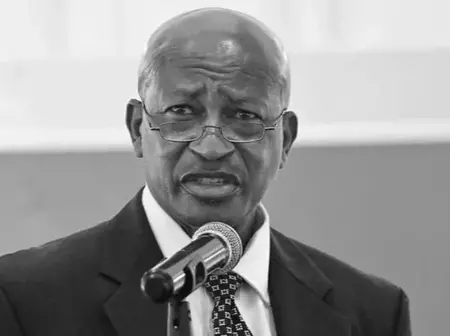
Paul Kihara’s final wish: Former AG cremated at Kariokor Crematorium
Former Attorney General Paul Kihara Kariuki, who died on Tuesday aged 72, has been cremated in Nairobi in accordance with his final wishes.
Kariuki was cremated at Kariokor Crematorium on Wednesday, November 4, in a ceremony attended by prominent political and judicial figures, including former President Uhuru Kenyatta.
Others present were Chief Justice Martha Koome, former Chief Justices Willy Mutunga and David Maraga, former Attorneys General Justin Muturi, Githu Muigai and Amos Wako, as well as Wiper Party leader Kalonzo Musyoka.
His family had confirmed that the former top government lawyer would be cremated, respecting his personal wishes.
Kariuki's death marked the end of a distinguished career spanning nearly five decades, during which he served in private legal practice, educational leadership, senior judicial administration and public service.
His cremation places him among a growing list of prominent Kenyans who have chosen the practice, often departing from conventional burial traditions.
Among notable Kenyans who have been cremated is Nobel Peace Prize laureate and environmentalist Wangari Maathai, who died in 2011.
Maathai chose cremation because she did not want trees felled to provide timber for her coffin. Her remains were cremated at Kariokor Crematorium.
Veteran politician Kenneth Matiba, a leading figure in Kenya's struggle for multi-party democracy, was cremated at Lang'ata Crematorium in 2018 in accordance with his wishes.
Former Safaricom chief executive Bob Collymore was also cremated in a private ceremony in July 2019 following his death after battling cancer.
Others include Charles Njonjo, Kenya's first post-independence Attorney General, former Head of Public Service Jeremiah Kiereini and former Kibera MP Ken Okoth.
The list also features Jane Kiano, the former Maendeleo ya Wanawake Organisation leader, and former Anglican Archbishop of Kenya Manasses Kuria, whose cremation in 2005 generated debate within church circles.
Celebrated author and journalist Binyavanga Wainaina, who died in 2019, and actor and filmmaker Charles Ouda, who died in 2024, also opted for cremation.
The choices reflect changing attitudes towards funeral arrangements in Kenya, where cremation, though still less common than traditional burial, has increasingly become an option for individuals seeking to have their final wishes respected.
-

See Kenya’s top brands and how consumer trust determines purchasing decisions
Kenyan consumers are looking beyond price and promotional offers when choosing products and services, placing greater importance on quality, reliability and brands they can trust, a new research has revealed.This is putting businesses under pressure to demonstrate consistent value and build reputations that influence purchasing decisions.
-

Informal workers lose up to 20 per cent of daily earnings to bribes, World Bank says
Informal workers in Kenya lose up to 20 per cent of their daily earnings to bribes demanded by frontline public officials, including traffic police, inspection services and municipal agencies, a new World Bank report shows.
The November 2026 Kenya Economic Update identifies bribery as one of the challenges affecting workers in the informal sector, warning that unofficial payments reduce incomes and limit opportunities for business growth.
The report estimates that informal workers account for 83.8 per cent of Kenya’s workforce, making them particularly vulnerable to corruption involving public officials.
Under a section examining governance constraints affecting earnings and opportunities in the informal sector, the World Bank notes that workers frequently encounter demands for payments when dealing with frontline institutions.
“Informal workers face demands for bribes from frontline institutions such as traffic police, inspection services, and municipal agencies. Reports put the share of bribe fees paid by riders at 5–20 percent of daily earnings (KSh 50–100 daily, plus occasional larger bribe demands),” the report states.
The payments add to the financial pressures facing self-employed people and small-scale operators who depend on daily earnings to meet household expenses and sustain their businesses.
The report further estimates that informal workers can lose up to 20 per cent of their daily earnings to demands from frontline officials.
It states that “Informal workers face frequent demands for bribes from frontline institutions such as traffic police and municipal inspectors—it is estimated that informal workers can lose up to 20 percent of their daily earnings to these kinds of bribes.”
The findings point to the financial impact of corruption on workers who already operate with limited resources and have to meet expenses such as transport, supplies, taxes and business operating costs.
A survey conducted in Kisumu County found that nearly 47 per cent of boda boda drivers had experienced police harassment, mainly through threats of arrest or fines.
Of those who faced threats, almost 79 per cent reported paying bribes to avoid further action.
Data from Transparency International’s bribery index also show that self-employed people are particularly exposed, with nearly half of those surveyed in recent rounds reporting payments after interacting with authorities.
The World Bank report also draws attention to the disproportionate burden of bribery on poorer Kenyans.
Afrobarometer data show that people experiencing higher levels of lived poverty are more likely to pay police bribes to avoid problems.
Their probability of making such payments is between 10 and 14 percentage points higher than that of people in lower poverty quartiles.
The findings suggest that unofficial payments further reduce the resources available to low-income households, leaving less money for essential needs and investment in income-generating activities.
With informal employment accounting for the largest share of Kenya’s workforce, the report warns that corruption at the frontline can undermine productivity and restrict opportunities for businesses to expand.
The economic implications extend beyond individual workers, with the World Bank linking corruption to lower investment, productivity and economic growth.
Its modelling suggests that moderate anti-corruption reforms could expand Kenya’s Gross Domestic Product (GDP) by nearly 9 per cent by 2035 compared with the status quo.
Stronger reforms could increase GDP by more than 22 per cent and generate millions of additional better jobs. Household consumption could also rise by up to 27 per cent.
To address bribery involving frontline officials, the report recommends introducing clearer rules, rotating staff at checkpoints and reducing the criminalisation of minor traffic offences.
It also calls for action against wider institutional and political incentives that allow corruption to persist.
The proposed measures are intended to reduce opportunities for officials to demand unofficial payments and protect the earnings of workers operating in the informal sector.
-
Nearly half of Kenya’s medium-sized businesses face pressure to give bribes, World Bank finds
Nearly half of Kenya’s medium-sized businesses face pressure to offer gifts to public officials to obtain government services, permits and other processes, according to a new World Bank report.
The findings raise fresh questions about the real cost of doing business in Kenya, where companies trying to grow may face an additional burden before they can expand, innovate or create jobs.
The World Bank’s November 2026 Kenya Economic Update found that 48.2 per cent of medium-sized firms, employing between 20 and 99 workers, reported being expected to give gifts to public officials “to get things done”.
The figure is more than twice the average of 19 per cent recorded among medium-sized firms across Sub-Saharan Africa and four times the 11.9 per cent reported across all economies covered by the comparison.
The report’s findings suggest that businesses in the critical growth stage between small enterprises and large corporations may be particularly exposed to corruption-related pressure.
The World Bank says medium-sized businesses appear to face especially strong pressure because their expansion brings them into more frequent contact with public institutions.
As companies grow, they require more permits, licences and access to land. Those interactions can create opportunities for officials to demand unofficial payments, the report explains.
“Growing firms will need more permits, licenses, and access to land compared to smaller firms,” the report states.
It adds that expanding businesses can become attractive targets for officials who see them as having more resources to pay bribes, but less protection and direct access to senior decision-makers than larger companies.
The figures show that the pressure is not limited to medium-sized enterprises. Some 35.7 per cent of small firms, employing five to 19 people, also reported being expected to give gifts.
Among large firms with at least 100 employees, the figure stood at 30.7 per cent.
However, the gap between Kenya and its regional peers is particularly striking for medium-sized businesses. In Sub-Saharan Africa, 19 per cent of firms in this category reported the same expectation, compared with Kenya’s 48.2 per cent.
Beyond the money businesses may lose through unofficial payments, the World Bank warns that corruption can undermine their ability to grow, train workers and introduce new products.
Analysis of the 2025 Kenya Enterprise Survey found that firms expected to give gifts or that had experienced bribery requests were less likely to provide formal employee training, introduce product or process innovations, or invest in research and development.
The report says firms that experienced at least one bribery request were between five and 10 percentage points less likely to provide formal training or introduce a new product.
They were also five percentage points less likely to introduce a new production process.
The consequences extend to business performance. Firms reporting bribery requests or informal payments recorded lower growth in labour productivity and sales, with the report estimating differences of between two and four percentage points.
The World Bank describes the impact as substantial, warning that corruption can undermine the transition towards formal businesses and the creation of new formal jobs.
That matters in an economy where growing firms are expected to expand employment opportunities.
The report argues that stronger governance and control of corruption could reduce the costs and uncertainty facing businesses.
For entrepreneurs in Nairobi, Mombasa, Kisumu and other commercial centres, the findings raise a practical question: how much harder is it for a business to grow when accessing public services comes with expectations of unofficial payments?
The World Bank says improvements in governance can generate economic gains by reducing the costs and uncertainties faced by firms.
But the findings also point to the need for accountability beyond policy promises.
Business owners, particularly those running medium-sized enterprises, can help establish how these demands occur, which public processes are most affected and whether unofficial payments delay investment or recruitment.
The report does not establish that every firm pays a bribe, nor does it identify every institution responsible. Its findings measure firms’ reported expectations and experiences.
Still, the central warning is difficult to ignore: when nearly half of medium-sized businesses say they are expected to give gifts to get things done, corruption is not simply an ethical concern. It is a potential obstacle to business growth, productivity and job creation.
-

11 Nations to Converge in Kenya for 2026 Rugby Africa Women’s Sevens Championship
CompetitionKenya is set to host 11 nations for the 2026 Rugby Africa Women’s Sevens Championship scheduled for November 7 and 8 at the RFUEA Grounds in NairobiKenya is set to host 11 nations for the 2026 Rugby Africa Women’s Sevens Championship scheduled for November 7 and 8 at the RFUEA Grounds in Nairobi, placing the HSBC SVNS 3 competition up for grabs.
-
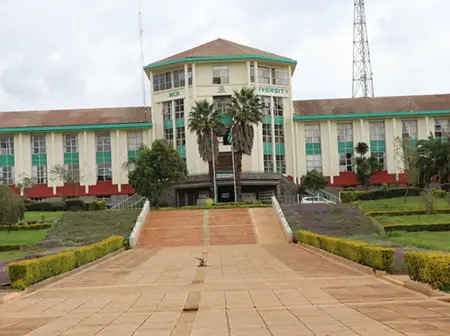
Moi University tops MDAs in gender mainstreaming performance
Moi University has emerged as Kenya's top-performing institution in the performance Evaluation on Gender Mainstreaming, ranking first among Ministries, Departments and Agencies (MDAs) in the 2025/2026 Financial Year report.The gender mainstreaming in MDAs was evaluated on specific indicators, including gender mainstreaming and gender based violence (GBV) actions in annual work plans, allocating a dedicated budget for gender mainstreaming, GBV prevention or response and workplace inclusion and establishing a formal gender mainstreaming committee or disability mainstreaming unit.