
Combining AI capabilities with human judgement, insight and wisdom will create a sustainable and competitive advantage for asset management boutiques, says the Group of Boutique Asset Managers (GBAM).Speaking at their annual international conference in Florence on Friday, members of GBAM agreed that while data quality and organisational readiness were critical success factors in the adoption of artificial intelligence, AI alone would not deliver competitive advantage.
Blog
-
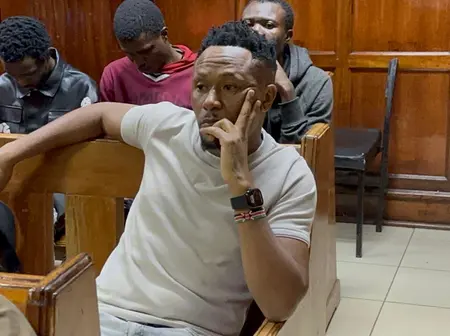
DJ Mo arraigned in court over traffic offences following an incident along Thika Road
Popular gospel DJ and media personality Samuel Muraya, popularly known as DJ Mo, has been arraigned in court over multiple traffic offences following an incident along Thika Road in Nairobi.DJ Mo is facing three counts, including driving a motor vehicle without valid third-party insurance, failing to display a valid insurance certificate and disobeying verbal directives issued by a police officer in uniform.
-
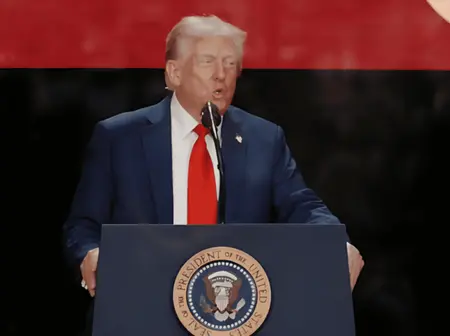
US elections: Trump faces Democratic Congress as immigration crackdown and executive power face pressure
The United States (US) President Donald Trump is facing a major political setback after Democrats captured control of both chambers of Congress in the November 3 midterm elections, threatening his immigration crackdown, legislative priorities, and influence over Washington during the final two years of his presidency.
The Democratic victory marks a dramatic reversal of political fortunes for Republicans, who entered the elections controlling both the House of Representatives and the Senate.
With opposition lawmakers preparing to take control in January 2027, Trump’s administration faces increased congressional scrutiny, potential investigations and a more difficult path for advancing legislation.
The outcome also raises fresh questions about the political sustainability of Trump’s aggressive immigration enforcement programme, trade tariffs, federal spending priorities and use of presidential executive authority.
“Tonight, the American people sent a clear message — they want a politics that brings people together rather than divides them, and leaders who offer concrete solutions to the challenges they face,” former US President Barack Obama wrote on X
“These results were only possible because outstanding candidates stepped forward in every region of the country — including in areas once considered long shots. They came from different backgrounds and represented a range of political perspectives, but were united by shared values, a belief in public service, and a commitment to putting the people of their districts and states first.”
Democrats secured victories in traditionally Republican states, including Kansas, South Carolina and Texas, demonstrating the scale of the political shift.
The results represent more than a conventional midterm setback. They threaten to transform Congress into a powerful institutional counterweight to a president who has enjoyed considerable Republican support on Capitol Hill.
The Democrats’ victory in the House and Senate represents a significant political breakthrough.
The House of Representatives has 435 voting seats, requiring 218 for an outright majority. Democrats crossed that threshold, while Republicans suffered losses in districts that had supported Trump in the 2024 presidential election.
Democrats won all 20 closely watched competitive House contests decided by election night.
In the Senate, Democrats secured at least seven Republican-held seats, including victories in Kansas, Iowa, Texas, Ohio, Maine, North Carolina and South Carolina, according to Associated Press reporting.
Kansas delivered a particularly historic result, electing its first Democratic senator in nearly a century.
In South Carolina, Democrats defeated Trump’s preferred Republican candidate in a state he had carried by almost 18 percentage points in 2024.
Texas also produced a major political upset, with Democrat James Talarico defeating Republican Ken Paxton in the Senate contest.
The Democratic gains were accompanied by a wider rejection of Republican leadership, as 50 per cent of voters viewed the midterm elections as an opportunity to rebuke Trump, while 75 per cent said they were angry or dissatisfied with the direction of the country.
Significantly, 70 per cent wanted Congress to exercise stronger checks and balances on the president, according to exit polls conducted by SSRS.
These figures suggest that voters were concerned not only about individual policies but also about the administration’s broader approach to governing.
Senate Democratic leader Chuck Schumer acknowledged the responsibility accompanying the victory.
“There is now a generational remake of the Senate map that is going to change America,” he said. “Americans voted for change, and now Democrats must deliver.”
Immigration is expected to become one of the most contentious issues between the White House and the incoming Democratic congressional leadership.
Since returning to office in January 2025, Trump has pursued an aggressive immigration agenda involving expanded deportations, increased detention, tougher border enforcement and restrictions on several immigration pathways.
His administration argues that these measures are necessary to strengthen national security, enforce immigration laws and restore control over America’s borders.
However, the policies have generated legal challenges and criticism from immigration advocates, civil rights organisations and Democratic lawmakers.
With control of both chambers, Democrats will have greater opportunities to investigate immigration enforcement practices, scrutinise detention conditions and examine how federal agencies spend money on deportation operations.
Congressional committees could summon officials from the Department of Homeland Security and Immigration and Customs Enforcement (ICE) to explain enforcement decisions and respond to questions about the treatment of detainees.
Democrats could also attempt to restrict funding for particular enforcement activities or introduce legislation strengthening legal protections for immigrants.
However, taking control of Congress does not automatically cancel Trump’s immigration policies.
The president retains executive authority to enforce federal immigration laws, subject to constitutional protections, legislation and judicial review.
The administration could therefore continue deportation operations while facing increased political and legal challenges.
Trump has signalled that he is prepared to negotiate with Democrats on immigration, but his willingness to compromise remains uncertain.
After the election, he told Fox News he would work with Democrats on issues including immigration while threatening to veto legislation he considers “insane”.
Beyond immigration, the Democratic takeover gives opposition lawmakers substantial oversight powers.
Once the new Congress convenes in January, Democrats will control committee leadership, influence congressional investigations and use subpoena powers to demand documents and testimony from government officials.
Importantly, the Democrats are preparing investigations into administration policies, government personnel, the Trump family’s business dealings and the handling of the Jeffrey Epstein investigation.
Such investigations could generate sustained political pressure on the White House, particularly if they reveal evidence of misconduct or questionable government decisions.
The Senate majority will also have the power to reject or delay presidential nominations, including Cabinet appointments and federal judicial nominees.
That could become particularly important if a vacancy emerges on the US Supreme Court during Trump’s remaining time in office.
Nevertheless, Trump retains significant constitutional powers.
He can veto legislation passed by Congress, and Democrats would need a two-thirds majority in both chambers to override a presidential veto.
The president also retains control of the executive branch and can continue implementing lawful executive policies.
Consequently, the new political arrangement is likely to produce negotiations, confrontation and potential government funding disputes rather than an immediate end to Trump’s agenda.
The election results also exposed growing voter dissatisfaction with Trump’s economic policies, with approximately two-thirds of voters believing Trump’s policies had worsened economic conditions, while roughly three in ten believed they had improved them.
“We also owe a debt of gratitude to the thousands of election officials and volunteers from both parties who helped ensure a smooth election and carried out one of the most essential functions of our democracy. While this administration has another two years in office, our job now is to roll up our sleeves, make changes wherever we have the power to do so, prevent further damage, and lay the groundwork for the future,” Obama wrote.
Similarly, around two-thirds said his tariff policies had hurt the national or local economy.
Democrats capitalised on concerns about living costs, tariffs and the economic consequences of the Iran war, turning affordability into a central campaign issue.
Trump, however, rejected suggestions that the election was a personal repudiation.
“I don’t view it as a hit on me,” he said while praising Democratic campaign efforts and blaming Republican candidates for their defeats.
The political implications extend beyond the immediate congressional transition.
Democrats must now demonstrate that their majority can produce practical results on household costs, healthcare, employment and government accountability.
For Trump, the challenge is equally significant: maintaining Republican support, defending his immigration programme and negotiating with an opposition that now controls Congress.
The 2026 midterm elections have not removed Trump from office, nor have they automatically overturned his administration’s policies.
But they have fundamentally changed the balance of political power in Washington.
With Democrats preparing to exercise control over both congressional chambers, Trump’s final two years in office could become a prolonged struggle over immigration, executive authority, government accountability and the future direction of American politics.
-
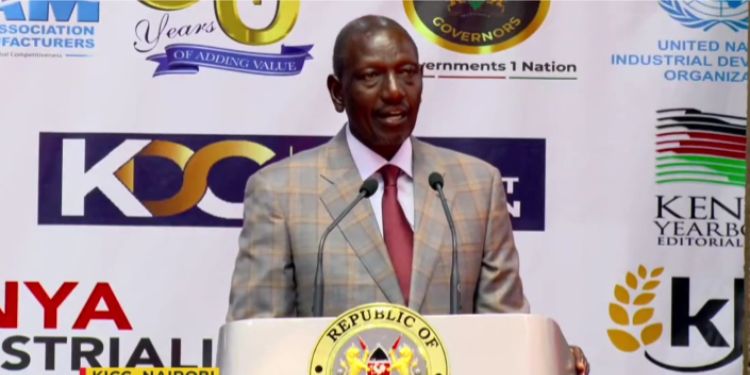
Ruto Declares Kenya Free From 25-Year Sugar Restrictions
President William Ruto has announced that Kenya is no longer on the commercial safeguards list for sugar, ending a 25-year period under the restrictions.Speaking at the Kenya International Convention Centre (KICC) in Nairobi on November 4, Ruto attributed the development to increased local sugar production, saying the country now produces enough sugar and no longer needs the safeguards.
-

Survey: Kenya halves share of people with no schooling in 20 years, but Northern counties lag
Kenya has cut the share of people with no formal schooling by about half in 20 years, the 2025–26 Kenya Mini Demographic and Health Survey (KMDHS) shows. Only 12 per cent of women and 8 per cent of men now report never having attended school.The Kenya National Bureau of Statistics (KNBS) and the Ministry of Health (MoH) released the report on November 3, 2026.
-
Suspect fraud in your SACCO? SASRA urges members to speak up, promises confidentiality
SACCO members and the public can now report suspected fraud, theft, bribery and misuse of funds in regulated savings and credit cooperatives anonymously, as the regulator steps up efforts to protect members’ savings.
The Sacco Societies Regulatory Authority (SASRA) is urging members, employees, board members, suppliers and other stakeholders to report suspected wrongdoing, saying they do not need to prove allegations before making a disclosure.
In a whistleblower awareness campaign, the authority said information from insiders and members of the public could help uncover financial irregularities, strengthen accountability and prevent losses in SACCOs.
“Your information can help protect members’ savings and strengthen accountability,” SASRA said in its public awareness message.
The regulator said reports should be based on reasonable belief and provide as much detail as possible to help it assess the concerns and determine whether further action is necessary.
Among the issues members are encouraged to report are suspected theft or misuse of SACCO funds and assets, falsification of financial statements, bribery, demands for kickbacks, abuse of office and conflicts of interest in decision-making.
Other reportable offences include irregular procurement, questionable payments, unauthorised disposal of SACCO property and disclosure of confidential information belonging to members or the institution.
SASRA is also seeking information on deliberate destruction, removal or alteration of records to conceal wrongdoing, as well as attempts to cover up misconduct or failure to act on reported violations.
The authority said its Whistle Blower Policy allows individuals to submit information without revealing their identities.
“ You do not have to prove the allegation before reporting. Report what you reasonably believe to be true,” the regulator said.
It also pledged to handle disclosures confidentially and protect the identities of those who come forward.
However, SASRA cautioned that investigations or court proceedings could sometimes reveal the source of information or require a witness to provide a statement. Where a whistleblower is identifiable, the authority said it would discuss the implications and offer support through the process.
The regulator further assured people reporting in good faith that they would be protected even if their allegations were later found to be inaccurate or could not be substantiated.
It warned against intimidation or victimisation of whistleblowers, urging anyone subjected to retaliation because of a disclosure to report the matter.
SASRA said concerns can be submitted through telephone, WhatsApp, email, post or an arranged meeting with the authority.
To facilitate investigations, whistleblowers are encouraged to provide the name of the SACCO involved, individuals suspected of wrongdoing, details of what happened, the location and time of the incident, and any supporting documents or information available.
Those comfortable sharing their contact details may also provide them to allow investigators to seek clarification or additional information.
The authority has distinguished whistleblower reports involving suspected fraud and corruption from ordinary complaints about SACCO products, services or customer care.
Members with service-related grievances are expected to first use their SACCO's complaints management process, while allegations involving fraud, corruption or concealment of wrongdoing should be clearly identified when reporting to the regulator.
SASRA said individuals who feel their concerns have not been adequately addressed, or fear victimisation, may escalate the matter to the relevant government agency.
The campaign comes as the regulator seeks to strengthen oversight and protect savings held by millions of Kenyans through the SACCO movement.
“Your voice matters. Report early. Help secure SACCO funds,” SASRA said.
-
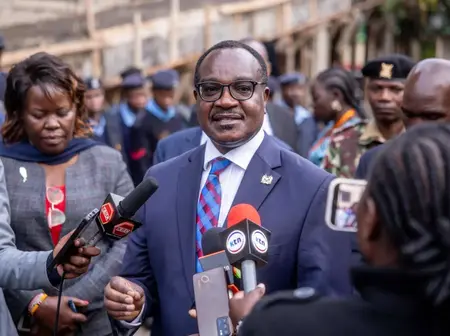
‘Big Brother is watching’: Ogamba warns KCSE exam leakers
Education Cabinet Secretary Julius Ogamba has warned candidates and examination officials against photographing and sharing Kenya Certificate of Secondary Education (KCSE) examination papers, saying hidden security features embedded in the scripts make it possible to trace leaked images to their source.
Ogamba said the Kenya National Examinations Council (KNEC) had introduced serialisation and anonymised indicators on examination papers, enabling investigators to identify the candidate, examination room and centre from which a photographed script originated.
He warned that examination officials found to have facilitated the malpractice, including allowing candidates to access mobile phones inside examination rooms, would face legal consequences.
The CS spoke on Wednesday while addressing the media and security officers overseeing the examinations during a monitoring tour of State House Girls Senior School in Nairobi.
"Because of the anonymous indicators in the script, we are able to tell almost immediately that it was this student in this room in this centre. And so because somebody must have dropped the ball, it means the whole team in that room might end up facing the law. That's why we are encouraging us not to allow any such activity to take place," he said.
Ogamba said the security measures had made it difficult for anyone involved in photographing and circulating examination papers to conceal the source of the images.
"It's now not possible to say this didn't come from this place because the script is serialised and is anonymised so even the students themselves get to be known who they are because now, we can be able to pick you almost immediately," he said.
He further disclosed that the Directorate of Criminal Investigations had assigned officers to work with KNEC, enabling authorities to move swiftly against suspected offenders.
"We've been given our own DCI team that's allocated to KNEC and they're able to come and pick you almost immediately if you are involved. So, pass the message that it's no longer the way it used to be that you can hide behind somebody or something," he warned.
The CS also questioned how candidates could gain access to mobile phones inside examination rooms whereas examination officials are required to frisk them before they enter.
"You'll have to explain why, for example, a student had a phone inside the classroom because when you are supposed to frisk them before they pass through, so how come that was not done? It means there's somebody who was involved," he said.
Ogamba added that no one is above the law as regards obedience of the KNEC rules and regulations, which are aimed at safeguarding the integrity of the examinations.
"Even us, we keep our phones as examinations are going on as required by KNEC," Ogamba said, concluding his statement with a warning to anyone contemplating examination malpractice.
"We are watching, big brother is watching."
His warning comes against the backdrop of growing efforts to prevent examination malpractice during this year's national examinations, following the arrest of a student in Bungoma county over allegations of sharing examination papers online.
The arrest highlighted the risks of circulating examination materials on social media amid heightened surveillence and authorities' determination to pursue those involved in compromising the integrity of the national examinations.
-

How to Register for NYOTA AGPO Digital Training
Interested applicants can enrol by dialling the zero-rated USSD short code *254# and selecting the NYOTA AGPO option.Applicants will then be required to complete the registration process before receiving an SMS containing a link to the digital training platform.The government, in partnership with Safaricom, is also arranging a subsidised data bundle to help successful applicants access the online training.
-
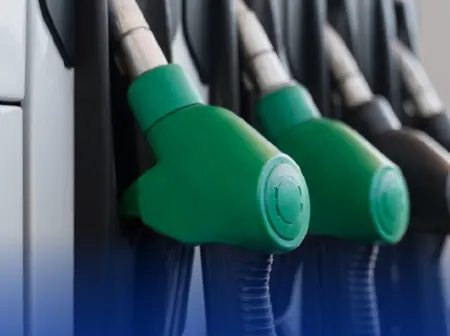
World Bank warns of fuel price surge as Mbadi promises EPRA’s pump relief for Kenyans
Kenyan motorists could get relief from soaring fuel prices, but a fresh warning from the World Bank suggests the country’s cost-of-living crisis could face another major test as global energy prices are projected to rise by 32 per cent in 2026.
Treasury Cabinet Secretary John Mbadi has indicated that the government plans to use the fuel stabilisation fund during the November pricing review to cushion consumers against rising petroleum costs, potentially reversing some of the increases experienced by motorists.
His announcement comes against a difficult international economic backdrop, with the World Bank projecting that overall commodity prices will increase by 23 per cent this year as the conflict in the Middle East disrupts oil supplies and pushes energy costs higher.
In its October 2026 Commodity Markets Outlook, released on October 28, 2026, the World Bank warned that energy prices were heading towards a four-year high, reversing three consecutive years of declines.
The institution projected that Brent crude oil would average $91 per barrel in 2026, compared with $69 in 2025, before declining to $79 in 2027.
For Kenya, which relies on imported petroleum products, sustained increases in international oil prices could put additional pressure on fuel import costs, transport charges, food distribution and household budgets.
The warning raises questions about how much relief the government can deliver through the stabilisation fund if international petroleum prices continue climbing.
Speaking during an interview on a local vernacular TV station on Tuesday, November 3, 2026, Mbadi explained that the government deliberately avoided spending money from the stabilisation fund during the October fuel price review to preserve resources for the next adjustment.
“When we saw the stabilisation fund going down, in fact, during the recent fuel price review, we did not use the stabilisation fund because European countries and the West are entering winter, which means energy demand is going up,” Mbadi stated.
The Treasury CS said the government had anticipated that international fuel prices could increase in November as European countries prepare for winter, when demand for energy products traditionally rises.
He explained that retaining the available funds would allow the government to intervene if the anticipated increase materialised.
“So we projected that fuel prices in November might go up, so we did not use the funds last month so that we can use them this month to reduce the prices of fuel. It is a balancing act,” he said.
Mbadi’s remarks offer hope to motorists who have been hit by successive increases in the cost of petroleum products. However, he did not disclose the amount of money currently available in the stabilisation fund or specify how much pump prices could fall.
The government’s intervention will therefore depend on the resources available and the actual costs of importing petroleum products when EPRA conducts its next review.
The World Bank’s projections highlight the growing pressure facing countries that depend on imported energy, particularly developing economies where higher fuel costs can quickly feed into the prices of essential goods and services.
According to the report, global oil supply is expected to decline by 5.2 per cent in 2026, representing the largest contraction in more than four decades outside the 2020 global recession.
Oil consumption is also forecast to fall by 2.5 per cent, as elevated prices force households and businesses to reduce their energy use.
Despite the anticipated decline in consumption, production is expected to remain below demand, forcing countries to withdraw more oil from their inventories.
This is particularly concerning because depleted reserves leave the international market more exposed to fresh supply disruptions.
Ayhan Kose, the World Bank’s Deputy Chief Economist and Director of the Prospects Group, warned that the simultaneous shocks were threatening economies across the world.
“Commodity markets are being hit by several major shocks at once,” Kose said.
“Higher energy costs and trade disruptions are driving up prices across a broad range of commodities, threatening to worsen inflation, food insecurity, and economic growth.”
He added that protecting vulnerable populations and supporting developing economies struggling with heavy debt burdens should be a priority.
For Kenya, the implications extend beyond the cost of filling a vehicle’s tank. Higher petroleum prices can increase the cost of transporting agricultural produce, distributing manufactured goods and operating businesses that depend on fuel.
Public transport operators may also face higher operating expenses, creating pressure to increase fares if fuel costs continue rising.
The World Bank’s warning is particularly significant because it projects that food commodity prices will increase by approximately 10 per cent in 2026 and another 7 per cent in 2027.
The cumulative increase of about 18 per cent over the two years is expected to be driven by disruptions to grain shipments, El Niño-related threats to agricultural harvests and higher fuel and fertiliser costs.
Fertiliser prices alone are forecast to rise by 14 per cent in 2026, adding pressure to agricultural production expenses.
These developments could create another challenge for Kenyan households, which are already sensitive to increases in the prices of maize flour, cooking oil, vegetables and other essential commodities.
When fuel becomes more expensive, transporters and distributors face higher costs of moving goods from farms and manufacturing centres to markets and retail outlets.
Farmers also face the possibility of paying more for fertiliser and other energy-dependent agricultural inputs.
If these costs are passed down the supply chain, consumers could ultimately bear the burden through higher retail prices.
The World Bank warned that the situation could become significantly worse if the Middle East conflict escalates, attacks on Black Sea grain shipments intensify and an unusually strong El Niño damages agricultural production.
Under this adverse scenario, Brent crude could average $105 per barrel in 2027, while food commodity prices could be 12% higher than the institution’s baseline forecast, surpassing their 2022 levels.
Such an outcome would threaten to push more people into extreme poverty, particularly in countries already struggling with food affordability and economic pressures.
The international developments come as Kenyan motorists contend with the latest increase in domestic pump prices announced by the Energy and Petroleum Regulatory Authority.
In its October 14 review, EPRA increased Super Petrol by Ksh12.93 per litre, diesel by Ksh9.90 and kerosene by Ksh28.49.
Consequently, motorists in Nairobi are currently paying a maximum of Ksh226.96 per litre for Super Petrol, Ksh227.76 for diesel and Ksh219.87 for kerosene.
The prices took effect on October 15 and remain applicable until November 14, 2026.
The increases have intensified concerns over the cost of public transport, goods distribution and household energy expenses, particularly for low-income families that spend a significant portion of their earnings on essential commodities.
Mbadi has maintained that the government uses subsidies to prevent international price increases from being transferred entirely to consumers.
“We do not want fuel prices to increase significantly. Besides the VAT, there is a certain amount of money that we use to stabilise the prices. It is called a subsidy that we pay those who sell us fuel so that they do not increase the prices of fuel,” he explained.
The intervention is intended to compensate oil marketers for part of the additional costs, allowing consumers to benefit from more stable pump prices.
However, the stabilisation mechanism also depends on the availability of public funds, raising questions about how long the government can sustain subsidies if global petroleum prices remain elevated.
Even as the government considers using public funds to cushion motorists, Mbadi has defended the various levies imposed on petroleum products, arguing that removing them would create financing gaps elsewhere in the economy.
He specifically cited the Road Maintenance Levy, which helps finance the construction and maintenance of roads.
The CS argued that lowering fuel prices by eliminating such charges would not necessarily reduce the overall cost of transport if the government failed to maintain the road network.
“Something like the Road Maintenance Levy, we must ensure that our roads are constructed. Now we have better roads. Remember that even if fuel prices go down, but the roads are bad, you will still spend more on fuel,” Mbadi stated.
-

e-Crime Bureau and Smart Africa Partner to Fuel Digital Growth
A cybersecurity company, e-Crime Bureau and the Smart Africa Secretariat, a continental digital alliance body, have signed a deal that will scale up cybersecurity resilience, innovation, and capacity across the continent.Move follows the e-Crime Bureau’s recent corporate restructuring into a global cybersecurity consulting firm, a move greenlit by its Board under a 2026 Transition and Growth Strategy.