Blog

  • Mikel Arteta’s post-match interview after Arsenal beat Slavia Prague has everyone worried

    Mikel Arteta’s post-match interview after Arsenal beat Slavia Prague has everyone worried

    Mikel Arteta's post-match interview after Arsenal beat Slavia Prague has everyone worried

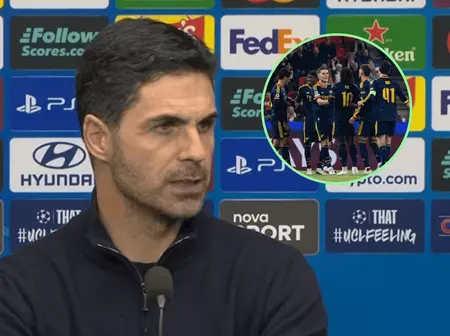
    Arsenal extended their unbeaten record in this season's Champions League by defeating Slavia Prague 2-1 in the Czech capital – but head coach Mikel Arteta wasn't particularly pleased in his post-match interview.

    Noni Madueke gave the Gunners the lead during the first half by rolling the ball into the bottom corner of the net, before Viktor Gyokeres made it two before the half-time interval with a finish from a tight angle.

    But Arsenal couldn't put the game completely beyond the hosts, who had 17 shots on goal in the second half, and Slavia made it 2-1 in the 90th minute through Wiktor Novak. And while the Gunners managed to hold on in Prague for a vital three points, Arteta's reaction to the victory spoke volumes – and indirectly sent a message to the rest of the Premier League in the process.

    During his post-match interview with TNT Sports reporter Danny Jamieson, Arteta acknowledged Arsenal's busy fixture schedule – this was their third away game in all competitions over the last seven days, though they fielded a much-changed team for last Wednesday's Carabao Cup defeat to Fleetwood Town – but said that standards had to be 'higher'.

    "I mean, I value what the team has done. It is 11 away games now, and we are in very early November," Arteta said. "It is the third away game that we played in the last seven days. I understand that. But our standards should be higher."

    He expanded further on those comments in his post-match media conference: "First of all, you have to value the fact that it is very difficult to win away from home. We've done it against a really tough opponent, as we expected.

    "Two different halves. The first one, we played at a really high level, in terms of tempo, intensity, quality and clarity. We were very efficient, scored two goals. It should have been three, four, five. At half-time the message was clear – there is still a lot to do in this game.

    "Right from the beginning, we were extremely far from our standards. Everything that we have to do, in basics, in every concept, and in everything that we discussed to avoid, [that was] the game that we played in the second half. So very far from the standards which we expect from each other, but in the end we found a way to hold on to the result and win the game.

    "That is a huge learning. To learn from the first half, and what we are capable of doing. And learn from the second half."

    One of Arteta's main points surrounding the Slavia Prague win was the sheer amount of times that Arsenal have played away from home so far this season.

    The Gunners have indeed had plenty of travel to do – three of their four Champions League group matches so far this term have been away fixtures. Both of their Carabao Cup matches, including the defeat to Fleetwood, were both on the road.

    But the situation eases somewhat over the next month. Six of Arsenal's next nine fixtures, including matches against Borussia Dortmund, Manchester City, Manchester United and Real Madrid, will all be played at the Emirates Stadium. They also take on Bournemouth and Hull in the Premier League in front of their own fans in north London.

  • Ruto challenges Kenyan universities to teach real-world problems as 150K seek 50K internships

    Ruto challenges Kenyan universities to teach real-world problems as 150K seek 50K internships

    Ruto challenges Kenyan universities to teach real-world problems as 150K seek 50K internships

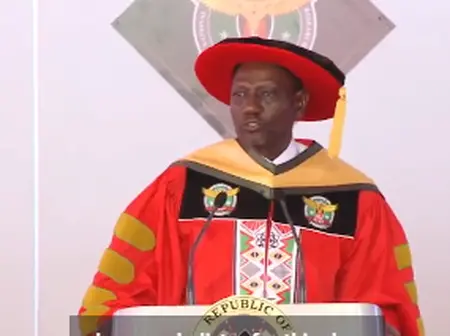
    President William Ruto has challenged universities in Kenya to redesign their teaching around real-world problems and strengthen partnerships with employers, saying graduates need practical workplace experience before completing their studies.

    The president outlined four commitments he wants universities to adopt, beginning with teaching through practical challenges rather than relying primarily on classroom instruction.

    “I therefore challenge International Leadership University and every university in Kenya to make four commitments. First, teach through real challenges and problems,” Ruto said.

    He proposed that counties provide students with urban planning challenges, hospitals share service delivery problems, while cooperatives present post-harvest losses for students to investigate and develop solutions.

    “Let students apply their knowledge and give us results,” he added.

    Ruto pointed to the response to the Government’s internship programme as evidence of the demand among young people for opportunities to gain practical experience.

    He announced that the government had opened applications for 50,000 internship opportunities through a digital platform, with 150,000 applications received within 24 hours.

    “Yesterday, we did announce, as Government of Kenya in internship opportunities for 50,000 students. The application will be on a digital platform. I am informed that by this morning we had 150,000 applicants within 24 hours,” he said.

    The President said the applications reflected a large pool of graduates from technical and vocational institutions, Kenya Medical Training Colleges and universities seeking opportunities to apply their skills in actual workplaces.

    “It tells you there is a big pool of graduates from our technical and vocational institutions, from our Kenya Medical Training Centres and from our universities who desire an opportunity to be in a workplace, to be in a real laboratory somewhere and to be in some real factory space to experience their engineering knowledge,” Ruto said.

    He asked universities to take a more active role in securing workplace opportunities for their students instead of leaving the responsibility entirely to graduates.

    The second commitment calls for employers to become more involved in university teaching and programme development.

    “Second, bring employers into the classroom. Design programmes with industry and expand practical attachments so that students encounter the realities of workplace before graduation,” Ruto said.

    He disclosed that he had met industry representatives, including the Kenya Private Sector Alliance (KEPSA) and the Kenya Association of Manufacturers, to discuss internship opportunities.

    Ruto also announced plans to convene a meeting with university vice-chancellors before the Christmas break to discuss how institutions can expand access to workplace experience.

    “And we are going to provide resources as government to pay for students,” he said, signalling plans for government support towards internship placements.

    While academic training provides theoretical foundations, workplace attachments and industry partnerships can expose students to the demands of professional environments before graduation.

    The challenge to ILU and other universities is therefore to demonstrate how students can use their knowledge to address actual problems in healthcare, agriculture, manufacturing and public service.

  • Pharmacy and Poisons Board cautions public against unapproved use of Cetirizine amid misleading health claims

    Pharmacy and Poisons Board cautions public against unapproved use of Cetirizine amid misleading health claims

    thumbnail

    The Pharmacy and Poisons Board (PPB) has warned Kenyans against misusing cetirizine following the circulation of misleading claims on social media suggesting that the allergy medication can be used to cause vaginal dryness or achieve vaginal tightening.The Board cautioned against inserting cetirizine tablets into the vagina, warning that the practice could expose users to health complications.

  • 7 Nairobi Estates Where Landlords Have Lowered Rent for Tenants

    7 Nairobi Estates Where Landlords Have Lowered Rent for Tenants

    thumbnail

    A new property report reveals a mixed rental market in Nairobi, with some established suburbs seeing rising rents while several estates and satellite towns saw declines.According to the HassConsult House Price Index Quarter Three Report 2026, suburban rental asking-price growth accelerated to 2.7% from 1.4% in the previous quarter, approaching a three-year high.

  • Man Arrested for Impersonating KCSE Candidate

    Man Arrested for Impersonating KCSE Candidate

    thumbnail

    Education officials are investigating an alleged case of examination impersonation at Rohi Boys High School, a private school in Nakuru North.Nakuru County Director of Education Victoria Mulili says a 31-year-old man is being held at Lanet Police Station after sitting the KCSE examinations on behalf of a candidate since Monday.

  • Chivayo’s ex-wife strikes deal with his sister to manage late tycoon’s estate

    Chivayo’s ex-wife strikes deal with his sister to manage late tycoon’s estate

    thumbnail

    The former wife of Zimbabwean businessman Wicknell Chivayo is set to take joint control of his estate alongside his sister, in a development that could reshape the handling of his multimillion-dollar fortune and an outstanding US$25 million (about Sh3.2 billion) matrimonial property dispute.Sonja Louise Madzikanda and Esther Chivayo reached an agreement to jointly manage the estate of the late businessman, who died in a helicopter crash alongside his wife, Lucy Muteke, in September.

  • Ruiru, Thika and Ruaka Lead Nairobi Satellite Towns in Land Price Growth

    Ruiru, Thika and Ruaka Lead Nairobi Satellite Towns in Land Price Growth

    thumbnail

    GrowthRuiru, Thika and Ruaka were among the leading Nairobi satellite towns in annual land price appreciation in the third quarter of 2026, with Ruiru recording the highest.Ruiru, Thika and Ruaka were among the leading Nairobi satellite towns in annual land price appreciation in the third quarter of 2026, with Ruiru recording the highest yearly increase at 11.5 per cent.

  • Hospital in Bungoma pledges transparency after three-year-old girl dies during surgery

    Hospital in Bungoma pledges transparency after three-year-old girl dies during surgery

    Bungoma Children's Hospital has expressed condolences to the family of three-year-old Leila Mutenyo, who died during an adenotonsillectomy procedure at the facility, pledging full cooperation with investigations into the incident.

    The hospital's director, Dr Dickens Lubanga, said the facility deeply regretted the loss and was committed to supporting the bereaved family as it seeks answers surrounding the child's death.

    Dr Lubanga said a post-mortem examination conducted in the presence of a pathologist appointed by the family established sudden cardiac arrest during the operation as the primary cause of death.

    He said the findings, together with the medical and procedural records, would inform a comprehensive internal review aimed at establishing the circumstances surrounding the incident.

    "We wish to express our deepest sympathy and sincere condolences to the family. The loss of a young child is a profound tragedy and our entire hospital community shares in their grief," Dr Lubanga said.

    He maintained that established clinical protocols were observed before and during the procedure, which was conducted by an experienced medical team comprising a senior ear, nose and throat (ENT) surgeon with more than 20 years of experience and an equally experienced anaesthesiologist from a national referral hospital.

    Dr Lubanga said the hospital would continue cooperating with relevant regulatory authorities and investigative agencies to ensure transparency and help the family understand what happened.

    "We stand unreservedly with the family during this difficult moment and remain committed to offering every possible assistance to help them find clarity, understanding and closure," he said.

    The hospital said it would uphold patient safety standards while reviewing the circumstances surrounding the incident.

    However, the child's father, Johnson Wafula, alleged that Leila had been taken to the facility for a medical check-up before she died during the procedure.

    Wafula said the family wanted to understand how the toddler died during the medical procedure.

  • Safaricom wants M-PESA to become a business management platform for Kenya’s small traders

    Safaricom wants M-PESA to become a business management platform for Kenya’s small traders

    Two Kenyan women entrepreneurs holding Pochi la Biashara merchant signs inside a small retail shop.

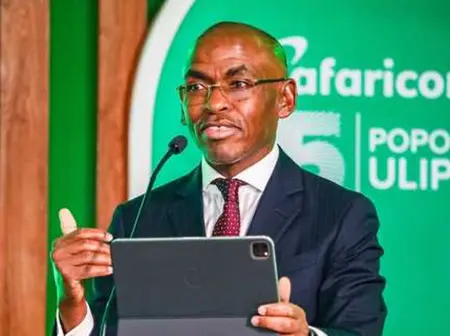
    Safaricom wants M-PESA to play a larger role in how businesses operate, with plans to extend its merchant services into credit, invoicing, reconciliation and business administration. The strategy builds on a reported merchant population of 4.5 million and reflects the company’s ambition to make its payments platform more useful to small traders and businesses beyond the point at which a customer pays for goods or services.

    Speaking during the company’s HY27 results briefing, CEO Peter Ndegwa said Safaricom was working to develop services that help merchants manage their businesses. He cited small operators such as boda boda riders and mama mboga traders, who may need tools to track payments, organise their transactions and access financial services. The company wants to combine its consumer and enterprise capabilities around the needs of people who use M-PESA both as customers and as business operators.

    The merchant network has grown substantially. Safaricom reported 4.5 million merchants during the six months ended September 2026, up 90.3%. Pochi la Biashara reached 3.2 million customers, an increase of 115.3%, while Lipa na M-PESA had 1.3 million merchants. Merchant transaction volumes increased 52.6% to 4.7 billion, generating KSh8.18 billion in revenue, up 34.6%.

    The company is now looking beyond the number of businesses accepting M-PESA payments. Ndegwa said merchant services would include financial products developed with partners, alongside tools that help businesses handle administrative tasks. These include reconciliation and invoicing, functions that can be difficult for small businesses to manage when transactions are spread across cash, mobile money and other payment channels.

    Credit is another part of the proposed expansion. Merchants often need working capital to purchase stock, pay suppliers or manage fluctuations in daily cash flow. Safaricom’s wider financial services business already includes credit products, and the company wants to use partnerships and its merchant relationships to extend relevant services to businesses on its platform.

    Chief Financial Officer Dilip Pal said merchant acquisition was only one part of the strategy, with engagement and retention also important. He described the reported active merchant base as reflecting the net effect of businesses joining and leaving the platform. This puts attention on whether merchants continue using M-PESA services after registering, rather than simply counting new payment acceptance points.

    The strategy also has a connection to the government’s efforts to expand electronic invoicing. TechTrendsKE previously reported discussions between the Kenya Revenue Authority and Safaricom over the potential use of M-PESA merchant information and payment infrastructure to support eTIMS and electronic tax invoicing. The development places digital payment platforms within a wider effort to improve record-keeping and tax compliance among small businesses.

    For merchants, the combination of payment acceptance, business records and financial products could make a mobile money account more useful in daily operations. A trader receiving payments through Pochi or a till could also use digital tools to reconcile sales, organise invoices and access services linked to the business. Safaricom’s merchant strategy is therefore built around a wider relationship with businesses, rather than the individual transaction alone.

    The expansion also creates a larger commercial opportunity for M-PESA. Merchant payments generated KSh8.18 billion in revenue during the half-year, while the wider financial services business recorded revenue growth of 55.3% to KSh7.1 billion. Safaricom is seeking to connect these activities through a platform that serves consumers, merchants and businesses with payments, financial products and operational tools.

  • Safaricom half-year profit up 72pc to Sh50 billion

    Safaricom half-year profit up 72pc to Sh50 billion

    Safaricom reported a 72.8 percent jump in half-year profit to September, driven by higher M-Pesa and mobile data revenues in Kenya, while losses from its Ethiopia business narrowed.

    First-half net profit rose to Sh50.3 billion from Sh29.1 billion, raising the telco’s dividends outlook.