Blog

  • Foreign applications approach three times their allocation

    Foreign applications approach three times their allocation

    Exterior view of a Quickmart supermarket store branch with prominent red signage, highlighting the Quickmart NSE IPO valuation.

    The foreign investor response comes as Kenya’s capital markets record a larger pool of investors and stronger trading activity. The Capital Markets Authority reported that the NSE investor base reached 2.36 million by September 2026, after adding 333,043 investors between January and September.

    The exchange’s market capitalisation also rose to KSh4.12 trillion in September, from KSh2.94 trillion at the end of 2025. Equity turnover reached KSh395 billion in the first nine months of 2026, compared with KSh145 billion for the whole of 2025, although a KSh204.3 billion Safaricom block trade accounted for a substantial portion of this year’s activity.

    Foreign investment figures provide another layer of context. TechTrendsKE reported that US investors’ Kenyan portfolio holdings increased by 45% in 2025 to KSh258 billion, from KSh178 billion in 2024. Their equity holdings nearly doubled to KSh27 billion, from KSh14 billion, while long-term debt securities accounted for the bulk of the portfolio.

    Quickmart’s foreign subscription figures therefore stand out as a direct measure of demand for a Kenyan consumer-facing business entering the public market. The offer has also attracted domestic retail investors, adding to the participation recorded across the local exchange.

    The IPO comprises two billion existing shares being sold by Sokoni Retail Kenya Ltd, representing 50% of Quickmart’s issued share capital. At KSh7.50 per share, the offer values the supermarket chain at approximately KSh30 billion.

    Because the shares are being sold by an existing shareholder, the proceeds from the offer go to the selling shareholder rather than directly to Quickmart for its expansion plans. Sokoni Retail Kenya’s ownership structure includes private equity firm Adenia Partners, which holds a 50.79% stake, alongside interests associated with the Kinuthia family, Tumaini’s founders and Peter Kang’iri.

    Adenia’s stake in Sokoni means the IPO provides an exit route for part of its investment in the retailer. The private equity firm was central to the consolidation of Quickmart and Tumaini Supermarkets, which helped build the business into one of Kenya’s largest supermarket chains.

    The offer gives public market investors exposure to a retailer with an established national footprint and a substantial position in Kenya’s organised grocery market. Quickmart ranks behind Naivas by store count and turnover, with an estimated 15% share of the supermarket market, according to figures cited in the IPO documentation.

    Quickmart reported revenue of KSh50.43 billion for the 2025 financial year, alongside adjusted profit after tax of approximately KSh1.7 billion and statutory net profit of about KSh1.51 billion. Its revenue grew at a compound annual growth rate of 18.4% between 2021 and 2025, reflecting the expansion of its store network and customer base.

    The KSh30 billion valuation represents approximately 19.9 times the retailer’s FY2025 statutory net profit, or 17.6 times its adjusted profit. These valuation measures give investors a basis for assessing the offer against the company’s earnings and its position in the supermarket sector.

    Quickmart has expanded from four stores to 72 outlets across 16 counties. The company has also outlined plans to add between 10 and 15 stores annually, extending its reach as it competes with Naivas, Carrefour and other retailers for customers in Kenya’s grocery market.

    Its customer activity extends beyond physical supermarket visits. Quickmart’s partnership with Bolt Food made more than 12,000 products available through the delivery platform across over 60 stores, covering groceries, household goods, beverages and wellness products. The retailer also operates its Q-Points loyalty programme, which had attracted 2.5 million members by the first half of 2026.

    The business reported revenue of KSh27.3 billion in the first half of 2026 and averaged approximately five million customer transactions a month during the period. Those figures provide a more recent view of its operating scale as investors prepare for the company’s market debut.

    Quickmart’s listing adds a major consumer retail business to the NSE at a time when the exchange has recorded several significant corporate market developments. Kenya Pipeline Company completed its IPO in March 2026, while Family Bank joined the exchange through a listing by introduction in June.

    The supermarket’s public listing will give investors another way to gain exposure to Kenya’s consumer economy through listed shares. Its performance will also offer the market a public company against which to assess the financial prospects of large-scale supermarket retailing.

    Quickmart’s dividend policy targets an annual payout of at least 80% of profit after tax, with distributions planned on a semiannual basis. The company expects the first dividend relating to the second half of 2026 to be paid in the first half of 2027, subject to financial performance, capital requirements and board approval.

    The IPO’s 122.7% subscription rate gives the retailer a strong demand profile going into its November 12 NSE listing. With foreign applications approaching three times their allocation and retail investors also exceeding their reserved portion, the offer has drawn interest across the investor groups participating in the sale.

  • MCA Leah Wambui reveals plan she has towards addressing water issue in Agricultural-rich Kabatini Ward

    MCA Leah Wambui reveals plan she has towards addressing water issue in Agricultural-rich Kabatini Ward

    thumbnail

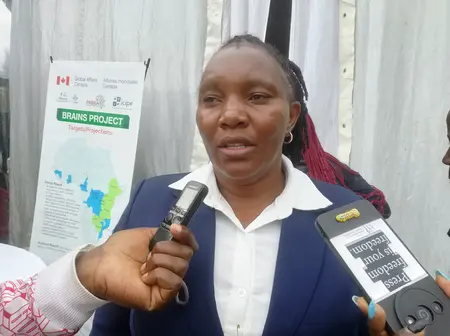
    Kabatini Ward is one of the Wards that feed Nakuru Town residents with the richness in agriculture.Area MCA Leah Wambui Ng’ang’a has revealed a plan she has to ensure enough water for farming activities.Speaking to this publication on Friday November 6, 2026 MCA Leah stated that inorder to help the many farmers who rely on water for farming, she will be engaging stakeholders to come up with a plan on sustainable water supply.

  • Kenya’s Richest Insurance Firms In 2026 And The Business Leaders Behind Them

    Kenya’s Richest Insurance Firms In 2026 And The Business Leaders Behind Them

    thumbnail

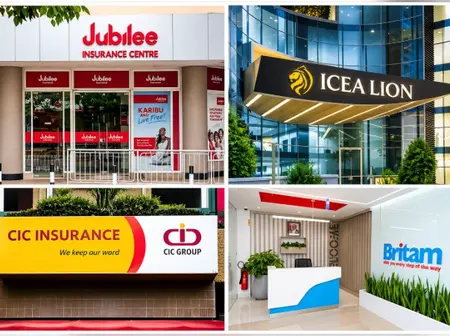
    Kenya has about 59 licensed insurance companies.According to the Insurance Regulatory Authority (IRA), Kenya’s insurance industry collected KSh 466.58 billion in premiums in 2025.This was a 16.5% increase from KSh 400.59 billion in 2024.In this article, WoK has compiled a list of Kenya’s richest insurance firms and their leaders.

  • NCBA shareholders take an 8.37% stake in Nedbank as the South African bank assumes control of the Kenyan lender

    NCBA shareholders take an 8.37% stake in Nedbank as the South African bank assumes control of the Kenyan lender

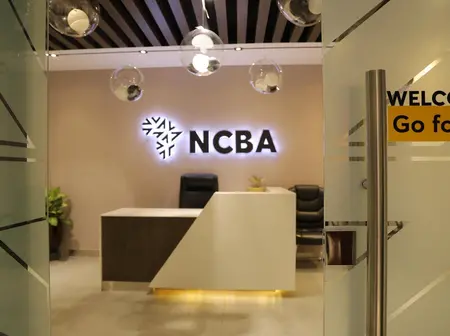
    NCBA Shareholders Eye Premium as Nedbank Offer Opens

    Nedbank’s acquisition of a controlling interest in NCBA has given former shareholders of the Kenyan lender an equity position in one of South Africa’s largest banking groups, while handing the acquirer control of a regional financial services business with established digital lending operations.

    Eligible NCBA investors received 43,631,052 newly issued Nedbank shares, representing approximately 8.37 percent of the enlarged South African bank. The transaction also delivered KSh23.2 billion in cash payments, completing a settlement structured around a combination of equity and cash consideration.

    The ownership change leaves Nedbank with 66 percent of NCBA, while the remaining 34 percent continues to trade on the Nairobi Securities Exchange. For Nedbank, the acquisition provides an operating platform across East and West Africa, including a digital banking business that has become a significant contributor to NCBA’s earnings.

    NCBA’s value to the South African group extends beyond its Kenyan operations. The lender operates in six African markets, has a substantial corporate banking business and has developed digital lending products with reach through mobile money and other distribution channels.

    NCBA’s 2025 financial results provide a measure of the business Nedbank has taken control of. The lender reported KSh23.4 billion in profit after tax, operating income of KSh73.3 billion, total assets of KSh716 billion and customer deposits of KSh532 billion. Its digital lending business generated KSh8.9 billion in profit during the year, demonstrating the contribution of technology-led credit to the group’s earnings.

    The bank disbursed KSh1.4 trillion in digital loans during 2025, according to its results coverage, with lending volumes increasing 33 percent. Its Fuliza partnership with Safaricom is a major part of that business, giving NCBA exposure to customers who access short-term credit through mobile money. The bank also operates ConnectPlus, a corporate banking platform offering payments, liquidity management, collections and trade finance services.

    These capabilities help explain why Nedbank’s interest in NCBA has centred on more than its physical banking network. The Kenyan lender has developed technology, customer distribution and lending systems that could support the South African group’s operations across other markets. Nedbank chief executive Jason Quinn has previously pointed to the opportunity to connect banking platforms across Southern and East Africa to support trade, investment and economic growth.

    NCBA’s regional operations also contribute to its earnings. Its businesses outside Kenya generated KSh3.6 billion in profit before tax in 2025, while the Kenyan banking subsidiary contributed KSh22.9 billion. The group operates in Kenya, Uganda, Tanzania, Rwanda, Ivory Coast and Ghana, giving Nedbank an established presence across several markets without having to build a comparable network from the ground up.

    NCBA had already outlined its own expansion priorities through its 2026–2030 Ubuntu strategy, which covers strengthening core banking, digital transformation, regional growth, wealth management, SME banking and insurance. The acquisition places those ambitions under a parent group with a larger balance sheet and an established Southern African footprint.

    The acquisition also reflects Nedbank’s approach to investments in other banking groups. Before pursuing NCBA, the South African lender held an approximately 22 percent stake in Ecobank Transnational. Quinn previously explained that the minority position limited Nedbank’s ability to influence the bank’s strategy and its capacity to extract dividends.

    Nedbank subsequently moved away from that investment, with the experience informing its preference for controlling interests in businesses where it intends to deploy capital and influence strategic decisions. The NCBA transaction gives it a 66 percent stake and the authority that comes with majority ownership.

    The acquisition was valued at approximately KSh116.3 billion in the regulatory approval coverage, equivalent to around 1.4 times NCBA’s book value. That valuation placed a premium on the Kenyan lender’s existing business, including its earnings, regional presence and digital banking capabilities.

    Nedbank has said it intends to use its larger balance sheet to help NCBA grow its corporate banking business and finance larger transactions. The opportunity is particularly relevant to companies operating across African markets, where trade finance, payments and cross-border banking services can require access to funding and infrastructure beyond what a single local institution can provide.

    NCBA’s digital lending operation is a major source of income, but the growth of that business also needs to be considered alongside the cost of managing credit risk. The lender’s 2025 results showed that credit-loss provisions rose 46.3 percent to KSh8 billion, while operating expenses increased 17 percent to KSh37.5 billion.

    The increase in provisions is relevant to the value Nedbank expects to extract from the acquisition. Digital credit can generate substantial transaction volumes and income, but the quality of the loan book and the cost of defaults influence how much of that income ultimately reaches the bottom line. NCBA’s lending partnerships and technology infrastructure therefore represent both an earnings opportunity and an area requiring continued risk management.

    Capital requirements will also shape the returns available to the new parent company. In September 2026, TechTrendsKE reported on proposed CBK capital rules linking dividend distributions to banks’ Common Equity Tier 1 capital ratios. The proposals included a requirement for banks below a specified capital threshold to retain all earnings, a consideration for any shareholder seeking to maximise distributions from a banking subsidiary.

    Nedbank’s control gives it influence over NCBA’s capital allocation and dividend policy, but those decisions remain subject to applicable regulatory requirements. The ability to direct earnings towards expansion, strengthen capital or distribute dividends will therefore depend on the bank’s financial position and the rules governing its operations.

    The transaction’s consideration was structured with 80 percent paid in Nedbank shares and 20 percent in cash. Under the conversion terms, eligible investors received 4.02994 Nedbank shares for every 100 NCBA shares, while the cash option was priced at up to KSh105 per NCBA share.

    Nedbank shares were valued at 250 rand, equivalent to KSh1,928.50 at the exchange rate used for the transaction. The new issuance increased Nedbank’s total shares in issue to 520,903,680. At a market price of 300 rand on Thursday, the newly issued shares had an indicative value of approximately 13.09 billion rand.

    The cash component amounted to KSh23.2 billion. Investors who received Nedbank shares can retain them to participate in the South African bank’s dividends and share-price performance or sell their holdings. Families linked to former Kenyan presidents Jomo Kenyatta and Philip Ndegwa were among the NCBA owners allotted Nedbank shares.

    The issuance has also changed the proportional holdings of Nedbank’s existing shareholders. As at January 30, 2026, the Public Investment Corporation held 14.8 percent of the bank, Allan Gray held 9.5 percent and BlackRock held 5.4 percent. The additional shares have diluted the percentage represented by those existing holdings in Nedbank’s enlarged share capital.

    The final allocation followed a takeover process in which shareholder participation exceeded the 66 percent stake Nedbank sought. By August, valid acceptances had reached approximately 79.9 percent of NCBA’s issued shares, after which excess acceptances were scaled back to meet the acquisition target. Earlier in the process, 15 major shareholders had provided irrevocable undertakings representing 77.54 percent of NCBA.

    Nedbank’s acquisition changes control of NCBA without removing the Kenyan lender from the local market. NCBA remains listed on the NSE, with public investors retaining a 34 percent interest, while its brand, Nairobi headquarters, local management, branches, products and digital channels remain in place.

    The governance arrangements outlined during the acquisition process provide for Nedbank to nominate at least two representatives to NCBA’s board, while NCBA shareholders were expected to receive representation on Nedbank’s board. The structure gives the new parent influence over the subsidiary while preserving a channel for the Kenyan shareholder base to participate in the wider group’s governance.

    Employment was another issue addressed during the acquisition process. Nedbank gave assurances that existing NCBA employees would retain their jobs and contractual and statutory rights under the offer arrangements. NCBA had 3,712 employees at the end of December 2024, according to the February 2026 TechTrendsKE coverage of the proposed transaction.

    NCBA chief executive John Gachora previously described the acquisition as an expansion of the bank’s capabilities, saying: “The name is the same, the people are the same, but the ambition and capabilities are tremendously magnified.”

    For Nedbank, the transaction provides a controlling interest in a profitable regional bank with established digital and corporate banking operations. For former NCBA shareholders, the settlement has converted part of their investment into an interest in the South African parent, while public investors continue to hold shares in the Kenyan subsidiary.

  • Kabatini MCA Leah Wambui joins leaders in demanding justice for family of late minor who was brutalized

    Kabatini MCA Leah Wambui joins leaders in demanding justice for family of late minor who was brutalized

    thumbnail

    Kabatini Ward MCA Leah Wambui has joined fellow leaders in calling for justice for the family of minor Elvis who lost his life after he was brutalized.The young Elvis Maina from Cedar Lodge, Kabatini, is said to have been assaulted by fellow youths after he returned from circumcision.

  • Equity Bank’s Sh1.49bn payroll fraud case exposes the challenge of tracing money across banks and crypto platforms

    Equity Bank’s Sh1.49bn payroll fraud case exposes the challenge of tracing money across banks and crypto platforms

    Kenyan Banks MSMEs lending

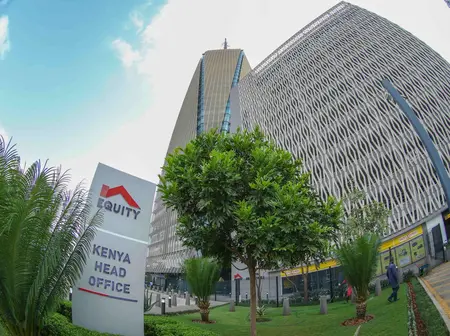
    The High Court has authorised Equity Bank to freeze accounts holding Sh303.2 million in connection with an alleged Sh1.49 billion salary-processing fraud, while ordering the conversion of cryptocurrency holdings linked to the dispute into ordinary currency. The Equity Bank salary fraud proceedings centre on transactions allegedly carried out between November 2023 and June 2024, involving the bank’s internal payroll operations, several recipient businesses and accounts held at other financial institutions.

    The orders extend across UBA, Absa, NCBA, Stanbic and Co-operative Bank. They also cover cryptocurrency holdings associated with three defendants on Binance or other digital asset platforms. The court directed that identifiable digital assets be converted within 10 days, with the proceeds placed in an account at a Central Bank of Kenya-licensed tier-one bank under the CBK’s appointment as escrow agent.

    The proceedings put the movement of money after the alleged transfers at the centre of Equity’s recovery effort. The bank says funds were routed through third-party accounts, with some subsequently converted into cryptocurrency. The preservation orders are intended to keep identifiable assets available while the court considers the lender’s claim against the individuals and businesses named in the case.

    The court’s restrictions cover accounts associated with six companies and the individual defendants. The largest listed amount is Sh156.2 million in accounts held by Axteron Technologies at UBA and Absa. Other restrictions include Sh30.8 million in a KT Owen Group account at NCBA and Sh14 million in Mac and Gray Trading accounts at Stanbic and Co-operative Bank.

    The orders also cover Sh32.8 million in a Blue Kenfresh account, Sh24.2 million in a Goodmans Fresh account and Sh8.7 million in a Muda Ventures account at UBA. A further Sh36 million is covered in accounts associated with Ruth Muthoni Kamau at NCBA and Co-operative Bank. The restrictions extend to the cryptocurrency holdings identified in the proceedings.

    The conversion order gives the digital assets a defined route into conventional banking. If the defendants do not facilitate conversion within 10 days, the relevant platform operators may identify and convert the holdings. The proceeds are then to be placed in the designated banking arrangement, with the CBK acting as escrow agent pending determination of the recovery suit.

    That arrangement matters because the bank is seeking to preserve value across different parts of the financial system. Funds held in commercial bank accounts can be restricted through the institutions maintaining those accounts, while cryptocurrency holdings require cooperation from the platforms where the assets are held. The court’s directions bring both categories within the preservation process.

    Equity traces the disputed transactions to its salary-processing general ledger, accusing its former Manager-Salary Processing, David Machiri Kimani, of using authorised access to move money to third-party accounts. The bank says the transfers were disguised as salary payments despite being unrelated to genuine payroll obligations.

    The transactions allegedly took place over eight months, from November 2023 to June 2024. In its case, Equity said Kimani used his assigned computer and user credentials to initiate the transfers, drawing money from the bank’s general ledger.

    The bank relied on SWIFT messages identifying Equity’s institutional code, EQBLKENAXXX, as the sender and the general ledger as the source of the payments. It presented the messages alongside transaction records linking the activity to Kimani’s assigned computer and user ID.

    Salary-processing operations involve payment instructions, employee details and employer funds moving through systems designed to handle large numbers of transactions. Equity alleges that the access available to the former manager was used to initiate transfers outside that purpose, with recipient accounts providing the next stage of the alleged movement.

    The bank also told the court that some of the money was converted into cryptocurrency after passing through third-party accounts. It argued that the movement of funds, relationships among the recipients and the possibility of further transfers justified urgent restrictions on the assets.

    The recovery proceedings name Kimani, Owen Karanja Kuguru and Ruth Muthoni Kamau alongside KT Owen Group Limited, Axteron Technologies Ltd, Mac and Gray Trading Ltd, Blue Kenfresh Ltd, Goodmans Fresh Ltd and Muda Ventures Limited.

    Equity accused the businesses of receiving or handling funds diverted through the salary-processing transactions. It argued that some companies were incorporated specifically to facilitate the scheme, while the links between the named recipients pointed to coordinated activity.

    The alleged use of commercial businesses is central to the bank’s account of how the money moved beyond its original ledger. The recipient companies are associated with different bank accounts, which is why the preservation orders extend across five financial institutions rather than remaining within Equity’s own banking network.

    The case also brings together conventional banking records and digital-asset holdings. Equity’s position is that the transaction trail can be followed from its general ledger through recipient accounts and into cryptocurrency. The court’s orders are intended to preserve assets identified along that trail as the parties contest the bank’s claims.

    The defendants have disputed the allegations and offered different explanations for the transactions and assets covered by the proceedings.

    Kuguru told the court that Axteron Technologies and Mac and Gray Trading provided trade-finance, import and shipping services. He maintained that the payments received by the companies arose from legitimate client transactions and that they were unaware the money allegedly originated from Equity. He also said the companies charged commissions of five per cent.

    Joseph Kimani Machiri, who described himself as the guardian of his son David Machiri Kimani, denied that the former manager owned cryptocurrency accounts or authorised the transactions. He also challenged the bank’s calculations of the alleged loss.

    Kamau, identified as the owner of Blue Kenfresh and Goodmans Fresh, challenged Equity’s use of confidential banking and personal information. She argued that the information had been obtained unlawfully and in breach of an earlier court order.

    The court dismissed her application after finding that her lawyer had sworn an affidavit addressing contested matters. The judge held that an advocate should not act as both counsel and witness and treated the affidavit as hearsay. The legality of the information itself was left for consideration at the full trial.

    The judge granted the preservation orders after finding that Equity had presented a sufficiently strong preliminary case to require an explanation or rebuttal from the defendants.

    “The plaintiff has demonstrated a right that strongly appears to have been infringed by the defendants so as to call for an explanation or rebuttal,” the judge said.

    The ruling also drew a boundary between preserving assets and determining responsibility for the alleged diversion. The judge said the preliminary assessment did not mean Equity would necessarily succeed when the full case was heard, stating: “I am not saying that the plaintiff will obviously succeed at the full trial.”

    The court declined to issue further tracing and accounting directions sought by the bank, reasoning that such measures risked presuming liability before the evidence had been fully considered. The current orders therefore preserve the identified assets while the defendants retain the opportunity to challenge the bank’s case.

    The proceedings follow an internal review by Equity that identified suspicious transactions through staff bank and mobile-money accounts. The bank initially dismissed about 195 employees after the review. The figure relates to that wider internal exercise and is separate from any finding of individual responsibility in the current recovery proceedings.

    The case comes against a difficult recovery environment for Kenyan banks. CBK figures reported by TechTrendsKE show that lenders lost Sh1.9 billion to fraud in 2025, a 19.4 per cent increase from the previous year. The amount exposed to fraudulent activity reached Sh2.03 billion, while banks recovered Sh127.43 million, representing approximately 6.25 per cent of the exposed funds.

    The figures cover the wider banking sector and a different reporting period from the transactions under dispute at Equity. They nevertheless illustrate why preserving assets early can matter when a bank is pursuing money that has passed through several accounts or been converted into digital holdings.

    A separate Assets Recovery Agency investigation reported by TechTrendsKE in July 2026 involved alleged money laundering through intermediary accounts, companies and Binance wallets. That case included cryptocurrency holdings and bank accounts subject to preservation measures, illustrating the practical demands of tracing funds across conventional financial institutions and digital-asset platforms.

    Kenya’s 2026 virtual-asset regulatory framework also provides a wider backdrop for the growing intersection between digital assets and financial services. The framework sets out licensing, governance, consumer protection, cybersecurity and anti-money-laundering requirements for virtual asset service providers, with supervisory roles assigned to the CBK and the Capital Markets Authority.

    For Equity, the immediate proceedings concern the preservation of funds it says were diverted through its salary-processing operations. The bank’s recovery claim will turn on the evidence connecting the original transactions, the recipient accounts and the assets now subject to court restrictions.

  • Boost to Nakuru farmers as County Government launches Agricultural Extension Policy

    Boost to Nakuru farmers as County Government launches Agricultural Extension Policy

    thumbnail

    Nakuru County Agricultural Extension Policy 2026 has been launchedThe Policy aims at strengthening extension services across the County.Speaking on Friday during the launch, Nakuru County CECM for Agriculture, Livestock and Fisheries Leonard Bor termed the establishment of the Policy a key move to the farmers.

  • The world has 6.3 billion internet users, but connectivity remains out of reach for two billion people

    The world has 6.3 billion internet users, but connectivity remains out of reach for two billion people

    Young woman holding a smartphone and coffee cup outdoors, symbolizing global mobile internet access and digital connectivity in 2026.

    An estimated two billion people remain offline globally despite internet adoption reaching 6.3 billion users in 2026, exposing persistent inequalities in connectivity, affordability and digital skills, according to the International Telecommunication Union (ITU).

    The figure represents 76% of the world’s population, up from 6.1 billion people, or 74%, in 2025. However, the latest edition of the ITU’s Facts and Figures report shows that access to the internet remains heavily influenced by income levels, geographical location, gender and the availability of suitable infrastructure.

    The differences are particularly pronounced between wealthy and poorer economies. Internet use stands at 93% in high-income countries, compared with 32% in low-income countries, while access to newer mobile networks remains heavily concentrated in wealthier markets.

    ITU Secretary-General Doreen Bogdan-Martin said expanding connectivity and making it meaningful for everyone was becoming more important as artificial intelligence creates opportunities in areas such as education and employment. The figures highlight the challenge facing countries seeking to extend the benefits of digital services to populations that remain underserved.

    The disparity in internet adoption is accompanied by substantial differences in mobile network coverage. Although 97% of the world’s population lives within reach of at least a 3G network, 5G coverage stands at 86% in high-income countries and just 4% in low-income countries.

    The difference matters as newer mobile networks support higher speeds and greater capacity for data-intensive applications, including cloud services, video communications and artificial intelligence tools. Countries with limited 5G availability face additional infrastructure challenges as businesses and public institutions expand their use of advanced digital services.

    The ITU’s findings also reveal differences in internet adoption across demographic groups. Globally, 79% of men use the internet, compared with 74% of women, while 86% of people aged 15 to 24 are online, against 74% among the rest of the population.

    Geographical inequalities remain significant despite progress in connecting rural communities. Internet use stands at 82% among urban residents and 63% among rural populations, demonstrating the continuing difficulty of extending meaningful connectivity beyond major population centres.

    The cost of devices and connectivity continues to influence who can participate in the digital economy. Mobile phone ownership among people aged 10 and above stands at 84% globally, but the figure ranges from more than 95% in high-income countries to just 57% in low-income economies.

    Differences in data consumption also illustrate the unequal nature of internet access. Average monthly mobile broadband traffic per subscription reaches 20GB in high-income countries, almost six times the 3.4GB recorded in low-income countries.

    The ITU’s affordability measurements show that the global median price of a data-only mobile broadband basket has fallen to 1.2% of gross national income per capita. Fixed broadband costs a median of 2.3%, although the cost burden remains substantially higher in poorer economies.

    Landlocked developing countries and small island developing states met the widely recognised target of keeping mobile broadband costs below 2% of GNI per capita for the first time in 2026. Least developed countries, however, recorded a median mobile broadband cost of 6.1% of GNI per capita.

    The ITU also found that three in 10 economies fail to meet the 2% affordability target for either fixed or mobile broadband. This leaves lower-income populations facing a greater financial burden when purchasing data, maintaining subscriptions and acquiring internet-enabled devices.

    Africa’s connectivity challenges illustrate the distinction between infrastructure availability and actual internet adoption. The GSMA’s 2026 research estimates that only 36% of the continent’s population used mobile internet in 2025, leaving more than 900 million people offline.

    The GSMA estimates that 63% of Africa’s population lives within mobile broadband coverage but does not use mobile internet, while 9% remains outside mobile broadband coverage. This makes the usage gap a major obstacle to expanding digital participation across the continent.

    Smartphone affordability is a central part of the problem. The GSMA’s research found that an entry-level internet-enabled handset cost the poorest 20% of people in Sub-Saharan Africa an amount equivalent to 76% of their average monthly income at the end of 2025.

    This creates a difficult situation for telecommunications operators and governments investing in network expansion. Even where mobile broadband coverage exists, households still need compatible devices and sufficient disposable income to purchase data and use online services regularly.

    The issue also extends to digital skills. People need the ability to navigate online platforms, access digital financial services, use productivity tools and understand emerging technologies if connectivity is to translate into economic opportunities.

    Kenya illustrates the complexity of expanding internet adoption in a market where telecommunications infrastructure and mobile subscriptions have grown substantially.

    Data from the Communications Authority of Kenya reported by TechTrendsKE shows that the country had 52.26 million connected smartphones and 27.42 million feature phones by June 2026. Mobile broadband subscriptions reached 54.93 million, while total mobile data subscriptions stood at 64.26 million.

    The country’s fixed internet market also recorded growth, with subscriptions reaching 2.84 million in June 2026, representing annual growth of 32.4%. Fibre accounted for approximately 1.57 million connections, reflecting the expanding role of fixed broadband alongside mobile internet.

    However, these market figures sit alongside significant geographical differences in internet adoption. ITU country data for 2024 showed that 56.6% of individuals in urban Kenya used the internet, compared with 25% in rural areas. Household internet access stood at 81.6% in urban areas and 26% in rural locations.

    The same ITU data placed individual internet usage at 37.8% among men and 32.2% among women. Kenya’s 4G population coverage stood at 97.3%, while 5G coverage reached 14% in the dataset.

    The figures highlight the challenge of translating network availability into widespread usage. In its earlier reporting on Kenya’s last-mile connectivity, TechTrendsKE examined how remote counties such as Marsabit and Mandera face additional barriers linked to population density, device affordability, electricity access and the economics of network deployment.

    Kenya’s satellite internet market also illustrates the different approaches being used to extend connectivity. Starlink had reached 27,616 subscriptions by June 2026, according to figures reported by TechTrendsKE, offering another option for customers in areas where conventional fixed broadband infrastructure is limited.

    The expansion of fibre, mobile broadband and satellite services provides additional routes to internet access, but affordability and the availability of suitable devices remain important to adoption.

    The ITU argues that expanding internet access must be accompanied by efforts to improve digital skills. Cosmas Luckyson Zavazava, director of the ITU’s Telecommunication Development Bureau, said people need the skills required to use online services and emerging technologies.

    Several initiatives covered by TechTrendsKE illustrate how organisations are addressing this challenge in Kenya. Intel, the Kenya National Library Service and the Mandela AI Hub Foundation have partnered on AI training through public libraries and mobile library units, providing learning opportunities for people without technical backgrounds.

    A separate digital skills programme in Garissa and Turkana enrolled more than 700 young people, targeting 1,700 participants from refugee and host communities. The programme covers areas including cloud computing, artificial intelligence, data analytics and professional certification.

    Google has also introduced its Skilling Africa platform, targeting three million people across the continent by 2030. The initiative incorporates data-light learning, downloadable lessons and offline course access to accommodate users facing connectivity and data-cost constraints.

    Electricity access is another consideration in the adoption of digital services. Kenya’s Commonwealth youth AI readiness assessment, reported by TechTrendsKE in November 2026, highlighted electricity access, internet reliability and digital infrastructure among the factors influencing the country’s ability to prepare young people for AI-related opportunities.

    The ITU’s latest findings place these challenges within a wider global picture. With 6.3 billion people already using the internet, the remaining two billion represent a substantial population that still faces barriers to digital participation, even as governments, telecommunications operators and technology companies expand connectivity infrastructure.

  • WayaWaya, Choice Bank launch AI-driven banking app

    WayaWaya, Choice Bank launch AI-driven banking app

    WayaWaya, Choice Bank launch AI-driven banking app

    Fintech firm WayaWaya has entered retail banking through a partnership with Choice Bank, betting on artificial intelligence to win customers in Kenya’s crowded digital banking market.

    The deal lets WayaWaya offer bank accounts, multi-currency wallets, local and international transfers, and utility payments under Choice Bank’s Central Bank of Kenya (CBK) licence.

    Choice Bank, a microfinance lender, will provide the regulated banking infrastructure. WayaWaya will build the app and manage customers.

    The product, called WayaWaya Banking, uses AI to analyse a user’s transactions and reorganise the app around how they earn, spend, save and invest.

    “Traditionally, banks build applications around products and expect customers to adapt to them. We believe the future should be the opposite: banking should adapt to the customer,” said Teddy Ogallo, WayaWaya’s Founder and Chief Executive.

    An entrepreneur collecting payments and paying suppliers would see cash flow and business expenses first. A salaried worker would get budgeting and savings tools up front, while an investor’s dashboard would highlight portfolio activity.

    The app is also designed to shift as a customer’s circumstances change. For example, a salaried user who starts a side business would begin to see tools for collecting payments and tracking expenses.

    “The idea is to move beyond customers having to search for financial services. Instead, the platform can increasingly anticipate their needs,” said Mr Ogallo.

    Choice Bank Chief Commercial Officer Patrick Russel said the lender’s role is to supply the banking rails, with WayaWaya controlling how services are presented to users.

    “WayaWaya can then tailor how those services are presented to a business owner managing daily collections or an individual setting money aside,” said Mr Russel.

    Regional ambitions

    WayaWaya was founded in 2016. It says the Kenyan launch is the first step towards building a pan-African neobank through partnerships with licensed banks in other markets.

    The firm plans to connect those partners through a single app, so that businesses operating across borders do not have to deal with a separate banking system, payment network and currency in each country.

    “A business expanding from Kenya into Nigeria or Uganda should not have to navigate an entirely disconnected financial experience in every market,” said Mr Ogallo.

    The deal adds to a growing list of banking-as-a-service arrangements in Kenya, where licensed lenders rent out their regulatory cover to fintechs that compete on product design.

  • Social media platforms face tougher child-protection rules under Kenya’s proposed Online Safety Bill

    Social media platforms face tougher child-protection rules under Kenya’s proposed Online Safety Bill

    TikTok U.S. Sale

    Social media companies operating in Kenya could face fines of up to KSh500 million or 10% of their annual global turnover for failing to meet proposed child-protection requirements. The penalty is part of the Kenya Online Safety Bill 2026, introduced by Embakasi West MP Mark Mwenje, which would require platforms to verify users’ ages and obtain parental consent before allowing children under 18 to access their services.

    The proposed financial penalties also extend to company leadership. Senior executives involved in non-compliance could face fines of up to KSh10 million, imprisonment for up to five years, or both. The Communications Authority of Kenya (CA) would oversee enforcement, with providers entitled to notification and a hearing before civil penalties are imposed.

    The Bill places Facebook, Instagram, WhatsApp, X and TikTok among the services covered by its proposed requirements. For these companies, compliance would involve establishing whether a user is below 18 and confirming that the person authorising access has parental responsibility.

    Providers would have to deploy highly effective age verification or age estimation systems to determine whether someone using their services is a child. The Bill also proposes several methods for confirming parental responsibility, including credit card verification, cross-referencing a parent’s identity and decentralised digital identity verification. The CA could approve other verification methods.

    This would make age assurance part of the process through which platforms grant access to accounts. A parent or guardian would be able to withdraw consent, after which the provider would have to restrict the child’s access within a prescribed period.

    The proposed requirements come against a record of existing platform enforcement activity in Kenya. TikTok reported removing 884,591 videos in the country during the first quarter of 2026, with 99.7% removed proactively before users reported them. The company also reported taking down 48,739 accounts suspected of belonging to users under 13 and interrupting 103,847 LIVE rooms.

    Those figures illustrate the scale of moderation and age-related enforcement activity reported by TikTok. The Online Safety Bill would add a distinct obligation by requiring platforms to obtain parental authorisation for users below 18, extending the proposed controls beyond the removal of accounts suspected of belonging to children under 13.

    The proposal follows parliamentary scrutiny of TikTok. In February 2026, Parliament’s Public Petitions Committee recommended stronger regulation of the platform rather than an outright ban, calling for measures that included age verification, periodic compliance reviews by the CA and engagement between platforms and the Office of the Data Protection Commissioner.

    In May 2026, ICT Cabinet Secretary William Kabogo also called on X to establish a local office in Kenya to support government engagement on harmful content and child protection. These developments have placed platform accountability and the ability of Kenyan authorities to engage technology companies within the country’s regulatory agenda.

    Another legislative proposal addresses wider platform obligations. The Kenya Information and Communications Amendment Bill 2026 proposes requirements covering platform registration, reporting unlawful activity and remedial action, and establishing complaint-handling mechanisms. The Online Safety Bill is separate, concentrating on children’s access to social media and the authorisation required from parents or guardians.

    A Kaspersky analysis covering the first eight months of 2026 identified YouTube, YouTube Kids and TikTok as prominent applications in children’s observed online activity in Kenya. The company’s figures put YouTube at 23.5% of observed application activity, while YouTube Kids and TikTok each accounted for 17%.

    Kaspersky also identified grooming, phishing, cyberbullying and the manipulation of children’s images and videos using generative AI among the risks facing young internet users. The Bill addresses some of the content-related concerns by identifying pornography, material encouraging suicide or deliberate self-harm, eating disorders, dangerous stunts and online challenges as harmful to children.

    Under the proposal, parents and guardians would be responsible for guiding children’s safe internet use and supervising their online activity according to age and maturity. They would also be expected to report suspected online abuse and exploitation to the relevant platform, the CA, the National Council for Children Services or the National Police Service.

    The Bill would not make parents liable merely because a child accessed harmful content or participated in harmful online activity. Its proposed responsibilities instead focus on supervision, guidance and reporting, while the platform obligations centre on access controls and age verification.

    The proposed Kenyan threshold is higher than the age limits cited in several European countries. France requires parental consent for children under 15, while Germany’s rules cover minors aged 13 to 16. Italy requires parental approval for children below 14.

    Kenya’s proposal would apply parental consent requirements to everyone under 18 using the covered services. The Bill therefore places the responsibility for establishing a child’s age and obtaining authorisation on social media providers, with the CA responsible for enforcement.

    The country’s earlier child-safety initiatives have also involved cooperation between regulators and industry. In 2021, the CA, Safaricom, Airtel, Telkom Kenya, Jamii Telecom and GSMA worked together on a portal providing online safety guidance for children. The proposed legislation would add statutory obligations for social media companies to that existing child-protection effort.

    For platforms covered by the Bill, the proposed compliance framework would bring together age assessment, parental identity verification, consent management and restrictions on access after consent is withdrawn. Companies that fail to meet those requirements could face financial penalties, while executives involved in non-compliance could also face personal legal consequences.