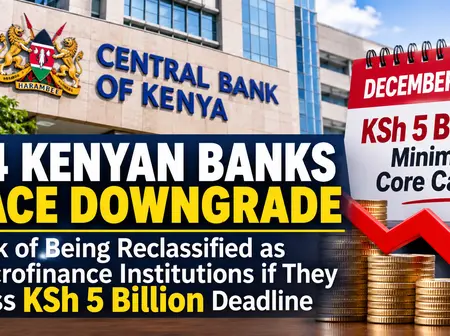
Fourteen commercial banks in Kenya are facing pressure to raise their minimum core capital to KSh 5 billion by December 31, 2026, or risk regulatory action, including possible reclassification as microfinance banks and restrictions on certain banking services.The warning comes as the Central Bank of Kenya (CBK) maintains its position that lenders must comply with the new capital requirements despite proposals by the National Treasury to extend the implementation deadline.
Blog
-
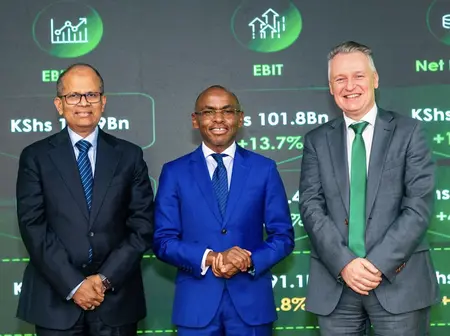
Safaricom Ethiopia’s Long Road To Profit: Losses shrink 96 per cent as it nears break-even
Four years after it switched on its network in Ethiopia, Safaricom is within touching distance of making money there.Safaricom Telecommunications Ethiopia cut its EBITDA loss by 96.5 per cent to Sh434.4 million in the six months to September 2026, down from Sh12.6 billion a year earlier.
-
Why Kenya’s AI ambitions now depend on new internet infrastructure
Why Kenya’s AI ambitions now depend on new internet infrastructure: A planned $2 billion (Sh258 billion) subsea cable linking Africa directly to Asia is meant to open a new route across the Indian Ocean and carry the high-capacity traffic that AI needs, which today’s cables cannot.
-
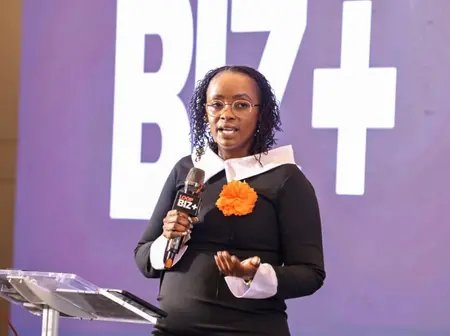
How LOOP BIZ+ plans to transform SME payments, inventory and access to credit
Kenyan merchants are increasingly embracing digital tools to manage their businesses, but fragmented systems for handling payments, tracking stock, accessing financing and reaching customers continue to limit their efficiency and growth.LOOP DFS is seeking to tackle these challenges with the new LOOP BIZ+, an upgraded business management platform that brings together payments, point-of-sale (POS) services, inventory management, credit and customer acquisition in one digital ecosystem.
-
Kenya Power opens 2027 industrial attachment for university and college students
Kenya Power has invited applications from continuing university, college, and technical institution students seeking industrial attachment opportunities for the January to March 2027 period.The three-month programme is intended to provide students with practical workplace exposure and equip them with relevant skills to enhance their employability after completing their studies.
-

TikTok removes 750,000 videos in Kenya in Q2 as regulation looms
TikTok removed 750,185 videos in Kenya for violating its community guidelines in the second quarter of 2026, according to its latest Community Guidelines Enforcement Report.
About 99.8% of the videos were removed proactively, before any user reported them, and 93.8% were taken down within 24 hours of being posted.
The figure is down from 884,591 videos removed in Kenya in the first quarter.
TikTok also removed more than 46,000 accounts in Kenya suspected of belonging to users under 13, and more than 26 million such accounts globally.
The platform interrupted 80,640 TikTok LIVE rooms in Kenya for breaching its guidelines during the quarter.
Globally, TikTok removed about 188.3 million of the more than 42.2 billion videos posted in the second quarter, about 0.4% of the total. Of these, 99.5% were removed before being reported and 92.7% within 24 hours. Around 6.3 million videos were reinstated after successful appeals.
Automated systems, including trend models and AI moderation, accounted for 97.4% of global video removals, the highest share TikTok has recorded. The company also took action, including warnings and demonetisation, on more than 47 million LIVE sessions and 26.8 million LIVE creators for breaching its monetisation guidelines.
AI-generated content
In Kenya, TikTok removed nearly 11,000 videos under its policy on edited media and AI-generated content (AIGC). The platform requires creators to label realistic AI-generated material, and it uses automated detection and C2PA Content Credentials technology to help users identify content created or significantly altered with AI.
TikTok has also launched an in-app AI Literacy Hub in Kenya, with guidance on spotting AI-generated content and using AI tools responsibly. Users can find it by searching AI-related terms on the platform.
The report comes as Kenya moves to tighten oversight of social media platforms. Proposed amendments to the Kenya Information and Communications Act would require platforms including TikTok, Meta and X to register with the Communications Authority of Kenya and report illegal activity such as sexual exploitation, cyberbullying and impersonation.
A separate draft Online Safety Bill 2026 proposes fines of up to KES500 million (about US$3.9 million) or 10% of global turnover for platforms that fail in their duty of care.
Earlier this year, Parliament rejected calls for an outright TikTok ban in Kenya, opting instead for stronger regulation and user safeguards.
-
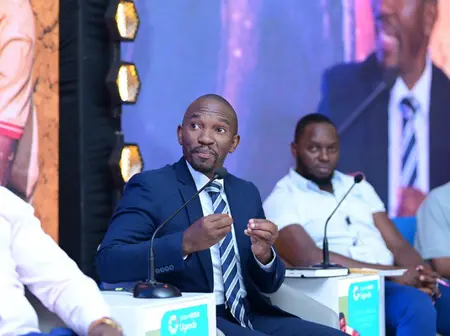
Lack of affordable financing slows Uganda’s efforts to eliminate mercury use in gold mining
Uganda’s efforts to eliminate mercury use in small-scale gold mining are facing a major financial challenge, with many miners unable to afford safer technologies and equipment needed to process gold without exposing themselves and the environment to toxic substances.The challenge was highlighted at the fourth annual planetGOLD Uganda Stakeholders Meeting in Kampala, which brought together government officials, development partners, financial institutions and representatives of the mining sector to discuss ways of promoting mercury-free gold mining.
-
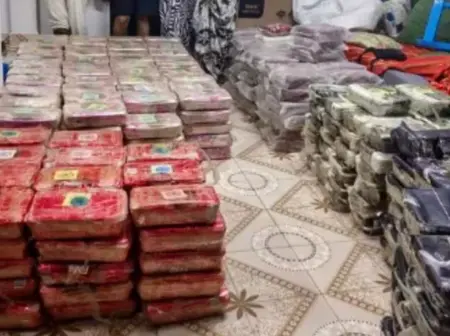
How Tanzanian Arrest Led Kenyan Police to Ksh3.6 Billion Drug Stash in Kwale
The crackdown relied on cross-border cooperation and intelligence-led policing. The operation began when Tanzanian authorities arrested a key suspect on November 5. Kenyan law enforcement officers met their Tanzanian counterparts at the Lunga Lunga–Horohoro border crossing to take custody of the suspect.
Subsequent investigations led officers to Shirazi village in Kingwede Shirazi location, Msambweni, where they identified the home of an alleged accomplice. Further interrogations directed teams to a second site in Ganja La Simba village, Kinondo location.
During the search at Ganja La Simba, officers uncovered the 454 kg stash of suspected narcotics, arrested another suspect, and impounded two motor vehicles alongside a motorcycle linked to the trafficking operation.
The National Police Service (NPS) noted that the joint exercise forms part of an intensified campaign directed by Inspector General of Police Douglas Kanja to eradicate narcotics, illicit alcohol, and transnational organized crime.
Commending the multi-agency teams and acknowledging Tanzanian authorities for their swift collaboration, the NPS reaffirmed its commitment to securing Kenya’s borders.
“We maintain a zero-tolerance policy against transnational organised crime and will ensure that Kenya is neither a destination nor a transit hub for illicit drugs,” the NPS stated.
With the operation still ongoing, police expect to release further updates as tracking continues. The NPS has urged members of the public to remain vigilant and report actionable information to assist in dismantling illicit drug networks.
-

Nairobi Water Announces 24-Hour Shutdown, Lists Areas to Go Without Water
The utility said the shutdown would begin at 8am on Monday, November 9, and end at 8am on Tuesday, November 10. The work involves installing new pipe connections to improve the reliability of water supply.
The interruption will affect Westlands, Riverside, Parklands, and nearby areas, as well as Kilimani, Kileleshwa, Lavington, Upper Hill, Lower Hill, Madaraka, and Uhuru Park. Public institutions on the list include Kenyatta National Hospital, Nairobi Hospital, Forces Memorial Hospital, KEMRI flats, Mbagathi Hospital, and DOD.
Residents in Dog Unit, Langata Women’s Prison, Kibera, Jamhuri, and surrounding areas will also lose water. The shutdown will extend to Amboseli, Hatheru, Chalbi, Kenya High, Woodley, and Ngong Road.
Nairobi Water urged customers to store water ahead of the shutdown and use their supplies sparingly during the maintenance period.
“Customers in the affected areas are advised to use the available water sparingly during this period,” the company said.
The utility apologized for the disruption and said the work would help improve service delivery and reliability.
The company asked residents, businesses, and institutions to conserve their supplies and prioritize essential needs until it restores normal service.
Meanwhile, residents in several parts of Kisumu may face low water pressure and temporary supply interruptions for seven days as Kisumu Water and Sanitation Company conducts a valve-throttling trial along the Kajulu Main Line.
The utility said the trial would begin at 9am on Tuesday, November 10, and end at 6pm on Tuesday, November 17. It is preparing for the installation of bulk meters to support water-supply management.
Kisumu Water warned that customers in the affected areas could experience reduced pressure or temporary interruptions throughout the exercise.
-

McDonald Mariga Ousted as FKF Vice-President in 65-1 Vote
Delegates voted 65 to one to remove Mariga at Saturday’s meeting, held on November 7 and chaired by FKF President Hussein Mohammed.
Also removed by votes of 65 to one were Robert Macharia, representing Central Kenya; Gabriel Mugendi, representing the Coast; and Dan Shikanda, representing Nairobi. Caleb Collins of Nyanza and Bernard Lagat of Lower Rift were removed by 64 votes to two. Women’s representative Violet Kirubo was removed by 64 votes to one.
Representatives of FIFA, the Confederation of African Football (CAF) and the Kenyan government attended the meeting. They had earlier held discussions with representatives of different factions in an effort to find a way forward after the meeting was delayed.
The SGM was due to begin at 9am but was disrupted by chaos at the Three Steers Hotel, its venue. Police deployed teargas and Rapid Deployment Unit officers after hundreds of youths reportedly arrived, with some entering the hotel’s rooms.
In a statement, FKF said the assembly—the federation’s supreme decision-making organ—had acted after considering allegations of serious and repeated breaches of the FKF Constitution and applicable FIFA regulations.
The federation cited a purported NEC resolution of April 24 seeking the removal of the FKF president and other officials, repeated failure to attend properly convened NEC meetings, and what it described as unauthorised communication on behalf of FKF. It also referred to actions it said were contrary to the federation’s constitution and football regulations.
“The resolution follows consideration of allegations of serious and repeated violations of the FKF Constitution and applicable FIFA regulations relating to the conduct of the seven officials and their actions within the federation,” FKF said.
The federation said the assembly had acted within its constitutional powers.
“The Assembly exercised its mandate under Articles 16 and 24 of the FKF Constitution, which provide for the expulsion of members and the dismissal of NEC officials,” it said, adding that it would provide further information on implementation and resulting administrative arrangements.
The decision could be challenged in court.
Mariga, a former Harambee Stars captain and Inter Milan midfielder, became FKF vice-president after Mohammed won the federation’s elections on December 7, 2024. The two ran on a joint ticket. Mohammed defeated Nick Mwendwa’s bid to retain the presidency, securing 67 votes in the second round.
Mariga’s removal comes less than two years into his term.