The Kenya Institute of Mass Communication (KIMC) held its graduation ceremony on Wednesday, bringing together graduands, families, industry leaders and other guests to celebrate the students' academic achievements.
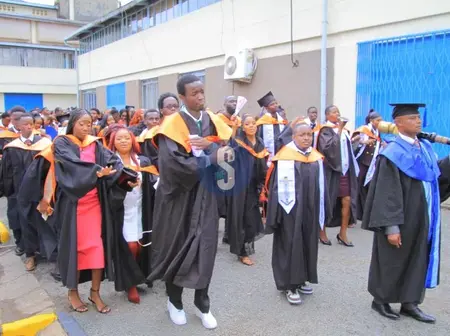
The ceremony began with graduands making their way to the graduation square, led by the Administration Police band.
Dressed in black graduation gowns adorned with colourful stoles, the graduands arrived in high spirits as they prepared to receive their certificates.
Among the guests who attended were ICT Authority Chief Executive Officer Jessy Kiveu, Radio Africa Group Editorial Director Paul Ilado and NTV News Editor Paul Nabiswa.
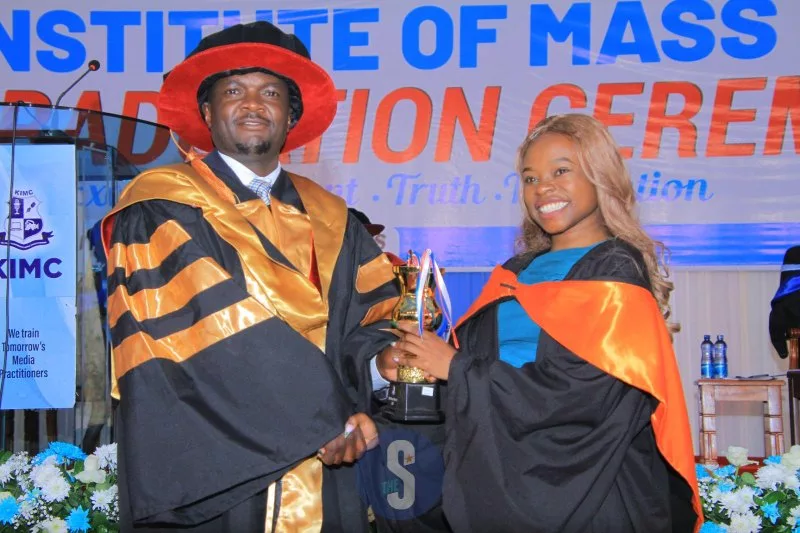
The ceremony also recognised outstanding student achievements, with Ann Adipo receiving the award for best scriptwriter and Jonathan Mwania named the most entrepreneurial student.
The event marked an important milestone for the graduands as they completed their studies and prepared to take the next steps in their careers.
The government has released Sh1.69 billion to 423,520 households caring for orphans and vulnerable children under the Inua Jamii social protection programme.
The latest disbursement, announced by the Ministry of Gender, Culture and Children Services on Wednesday, covers the September-October 2026 payment cycle, with each beneficiary household receiving Sh4,000.
Children Services Principal Secretary Carren Ageng'o said the payments would be made through the contracted payment service provider, with disbursement commencing on Wednesday.
The allocation amounts to Sh1,694,080,000 and is intended to support vulnerable households in meeting the needs of children under their care.
The Cash Transfer for Orphans and Vulnerable Children (CT-OVC) programme seeks to encourage families and communities to foster and retain orphans and vulnerable children rather than have them separated from their communities.
It also supports children's enrolment and transition in education, improves access to healthcare and nutrition, strengthens household food security and promotes child protection.
The latest payment follows a Sh850.696 million disbursement to 425,348 households in September, covering the July 2026 payment cycle. At the time, each household received Sh2,000.
The two payment announcements cover different periods, with the latest Sh4,000 allocation covering two months.
The CT-OVC programme is one of several components of Inua Jamii, which also supports older persons aged 70 and above and people with severe disabilities.
The programme was launched in 2004 in response to the effects of the HIV/AIDS epidemic, which left many children orphaned or vulnerable. It targets extremely poor households with at least one orphan or vulnerable child as a permanent member.
The wider social protection initiative provides a safety net for Kenyans facing poverty, old age, disability and other forms of vulnerability.
Its impact is reflected in the experiences of beneficiaries across the country.
In October, 81-year-old Peter Nzioka, a resident of Sofia slum in Athi River, Machakos County, said that the Sh2,000 monthly stipend he receives under the Older Persons Cash Transfer had helped him meet basic household needs.
Nzioka, who has eight children, 19 grandchildren and four great-grandchildren, said he used the money to buy food and household essentials.
"I use the money to buy basics like maize flour, sugar, cooking oil and soap. Inua Jamii is really helpful," he said.
Although Nzioka benefits from a different component of the programme, his experience illustrates how cash transfers help households facing financial difficulties meet basic needs.
The government has also introduced verification measures, including a biometric proof-of-life exercise, to ensure payments reach eligible beneficiaries and curb fraudulent claims.
Beneficiaries are required to undergo verification every six months to remain on the register. The exercise is intended to identify deceased or ineligible recipients and improve accountability in the management of public funds.
Payments under Inua Jamii were shifted from a bimonthly to a monthly schedule in July 2023, according to the State Department for Social Protection and Senior Citizen Affairs.
The government says the programme is designed to cushion vulnerable Kenyans against poverty and improve their access to essential services.
Crawford International will host a football clinic featuring former Arsenal players at its Tatu City campus on Saturday, November 14.
The clinic will give learners an opportunity to train with the former professionals, learn football skills and hear about their experiences playing at the highest level.
The sessions will also focus on teamwork, discipline, perseverance and confidence, lessons that extend beyond the football pitch.
Amanda Birkenstock, Executive Principal at Crawford International, said the school wanted learners to benefit from opportunities outside the classroom.
"At Crawford International, we believe that a premiere education is defined not only by what learners achieve academically, but also by the breadth and quality of experiences that shape their development. We are intentional about creating opportunities that expose our learners to accomplished individuals, challenge their perspectives, and allow them to discover and develop their individual strengths. Extracurricular activities, particularly sport, play an important role in this journey. They build confidence, leadership, resilience and the ability to work collaboratively. The idea and actualisation of bringing former Arsenal players to engage directly with our learners is an example of the kind of enriching experience we believe every young person should have access to as they explore their potential and prepare for the future."
Lloyd Musara, representing the visiting former Arsenal players, said football could help young people develop skills useful in other areas of life.
"Sport has an incredible ability to shape young people, not just as athletes but as individuals. The discipline required to improve, the ability to work with others and the confidence to keep pushing despite challenges are lessons that extend well beyond football. It is encouraging to see institutions such as Crawford International create opportunities for learners to experience the game at a different level and interact with people who have lived these experiences."
The clinic will combine practical coaching with discussions on the experiences of professional footballers. Learners will get an opportunity to interact with the visitors and learn about the demands of playing competitive football.
For aspiring players, the event will provide an opportunity to develop their skills while learning about the commitment and discipline required to progress in the sport.
The school said the clinic was part of its extracurricular programme, which includes activities intended to help learners explore their interests and talents alongside their academic studies.
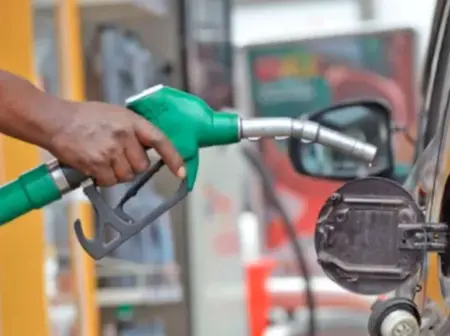
The government has extended by another six months the temporary adjustment of sulphur limits in petrol and diesel, citing continued geopolitical uncertainty in the Middle East and disruptions to global petroleum supply chains.
The decision allows fuel supplied in Kenya to contain a maximum of 50 milligrams of sulphur per kilogram (50mg/kg), extending a temporary measure introduced to widen the country's access to fuel supplies and guard against potential shortages.
In a notice, Investments, Trade and Industry Cabinet Secretary Lee Kinyanjui said the extension followed a request from the Ministry of Energy and Petroleum and a recommendation by the National Standards Council.
“The decision follows a technical assessment and monitoring of the continuing geopolitical uncertainty in the Middle East and related disruptions affecting global petroleum supply chains, including the Strait of Hormuz,” Kinyanjui said.
The adjustment applies to two fuel standards: KS EAS 177:2025, which governs automotive gas oil (diesel), and KS EAS 158:2025, covering automotive gasoline, commonly known as premium motor spirit (petrol).
Kinyanjui said the decision was informed by a technical assessment and continued monitoring of international petroleum markets, particularly disruptions linked to tensions in the Middle East.
The Strait of Hormuz, a critical global shipping route through which a significant share of the world's oil supplies passes, remains a major concern for energy-importing countries amid geopolitical uncertainty.
The government said the temporary adjustment would give Kenya access to a wider range of compliant fuel sources at a time when disruptions to international supply chains could affect availability.
"The decision follows a technical assessment and monitoring of the continuing geopolitical uncertainty in the Middle East and related disruptions affecting global petroleum supply chains, including the Strait of Hormuz," Kinyanjui said.
He added that the extension was intended to widen available sources of compliant fuel and safeguard the country against supply shortages.
The move comes as Kenya remains exposed to fluctuations in international oil prices and supply disruptions because it relies heavily on imported petroleum products to meet domestic demand.
Any prolonged disruption to shipments through major international shipping routes could affect the cost and availability of petroleum products, with possible consequences for transport, manufacturing, agriculture and the wider economy.
Fuel prices are particularly sensitive to international market movements because petroleum products account for a significant share of Kenya's import expenditure and influence the cost of transporting goods and delivering services.
The government said the adjustment was a temporary intervention aimed at maintaining uninterrupted fuel availability and protecting economic stability.
The extension will remain in force for six months, after which authorities will review the measure.
It may also be reconsidered earlier if international supply conditions improve.
The latest decision effectively gives fuel suppliers additional flexibility in sourcing petroleum products while maintaining the specified sulphur ceiling under the temporary arrangement.
Sulphur content is an important fuel quality parameter because burning sulphur-containing fuels releases sulphur dioxide, a pollutant associated with respiratory problems and environmental damage.
The temporary adjustment therefore raises the importance of balancing energy security and affordability with environmental and public health considerations.
The government has maintained that the measure is driven by exceptional international supply conditions rather than a permanent change to Kenya's fuel quality standards.
Kinyanjui said the six-month review period would allow authorities to assess developments in global petroleum markets and determine whether the temporary adjustment remains necessary.
Andreas Odhiambo turned Nyayo Stadium into a theatre of football magic as Kenya’s Emerging Stars landed a dramatic 2-1 knockout blow against Cote d’Ivoire in their 2027 U-23 Africa Cup of Nations second-round, first-leg qualifier on Wednesday.
Just when the Ivorians appeared to have weathered the Kenyan storm, Odhiambo produced a moment of breathtaking brilliance, dancing past defenders before burying the ball in the net in the 83rd minute to send the stadium into raptures.
The goal that lifted the roof off Nyayo and handed Anthony Kimani’s men a precious advantage ahead of Tuesday’s return leg in Abidjan, where the road to the continental finals will become even more treacherous.
The contest had been billed as a stern examination of Kenya’s credentials against an Ivorian outfit boasting an impressive collection of European-based talent. The visitors lived up to their billing, making the opening half a demanding exercise for the hosts.
Neither side found the goal in the first 45 minutes, with captain Kevin Wangaya helping keep Kenya’s midfield compact while goalkeeper Caleb Kramer remained alert.
Kimani was pleased with the character his players displayed against such formidable opposition. “I am proud of the boys because they never surrendered, even when Cote d’Ivoire put us under pressure. We knew this would be a difficult examination of our quality,” he said.
Substitute Henry Omollo finally shattered the deadlock in the 64th minute following a clinical finish. A clever delivery from Lawrence Okoth unlocked the Ivorian defence, allowing Omollo to put Kenya in front and ignite the home crowd.
But the visitors were not prepared to leave Nairobi empty-handed. Cote d’Ivoire turned up the pressure and drew level in the 76th minute with a thunderous volley that flew beyond Kramer’s reach.
The equaliser threatened to drain energy from the Kenyan ranks, but Kimani’s charges refused to let the occasion slip through their fingers.
Ivorian coach Sébastien Bannier felt his team had done enough to trouble Kenya but rued their failure to manage crucial moments. “We came here knowing Kenya were dangerous going forward. We had prepared for their pace, but we should have managed the moments after scoring better,” he said.
Kimani praised his bench for injecting fresh energy into the contest, particularly Omollo, whose intervention had briefly put Kenya in command.
“Henry came on and did exactly what we wanted from him. Lawrence also played an important role in that goal. These are the contributions we need from the entire squad,” he said.
Then came the decisive moment. With seven minutes remaining, Odhiambo seized the stage, embarking on a mesmerising solo run that left Ivorian defenders chasing shadows before slotting home for 2-1.
Nyayo erupted. Players raced towards the corner, supporters found their voices, and Kenya had snatched back the advantage in a contest that seemed destined for a stalemate. Bannier admitted his defence had been punished by a moment of individual brilliance.
“We cannot afford to switch off against a team with Kenya’s attacking ability. The second goal hurt us because we had worked hard to recover after conceding first,” he said.
The Frenchman, however, refused to throw in the towel, insisting they have what it takes to turn the result around in Abidjan. “We still have another 90 minutes in Abidjan. We have the quality to turn this around, but we must be more clinical and more careful defensively,” he said.
Kimani sounded a note of caution amid the celebrations, reminding his players that the job was only halfway done.
“We have won the first battle, not the war. Cote d’Ivoire will come at us strongly on their own turf, but we must carry this confidence into the return leg,” he said.
He challenged his charges to approach the return fixture with ambition rather than retreat into their defensive shell. “We want to go there and play football. We respect Cote d’Ivoire, but we also believe in our ability. If we remain brave and take our chances, we can finish this job,” he said.
Bannier urged his players to respond when the sides meet again at Stade Félix Houphouët-Boigny on Tuesday, November 17.
“We have 90 minutes to put things right. We must learn from the mistakes we made here and approach the return match with greater concentration,” he said.
The aggregate winner will advance to the final qualifying round against either Tunisia or Benin, with a place at the 2027 U-23 Afcon finals in Egypt awaiting the victor.
Edwin Sifuna, leader of Linda Mwananchi, is scheduled to embark on a two-week tour of the United States running from November 20 to December 4.
The tour schedule details a primary itinerary beginning with its first stop in Allentown, Pennsylvania. A key highlight of the visit will be a fundraising dinner scheduled for November 24.
Sifuna will be accompanied during the tour by Godfrey Osotsi and Richard Onyonka.
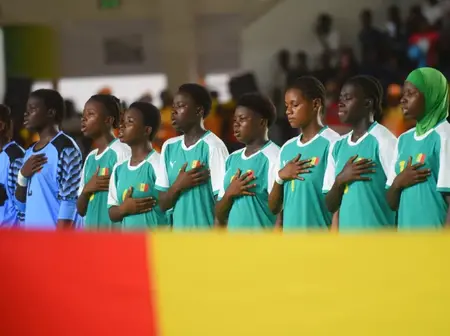
Football is the most popular sport in Africa, but the ongoing Youth Olympic Games in Dakar, Senegal, have turned the spotlight on one of the fastest-growing sports: futsal.
With the four finalists now confirmed in the futsal tournaments at the Dakar 2026 Youth Olympic Games (YOG), the sport's growth worldwide, particularly in Senegal, is opening up new opportunities.
As hosts of this second edition, Senegal has provided participating teams with a remarkable atmosphere and demonstrated, through the commitment of its supporters and football federation, the potential of futsal on the African continent.
Africa is represented by hosts Senegal and Cameroon in the women's category, while Morocco features in the men's competition. Kenya has a futsal team but did not send representatives to the junior games taking place in West Africa.
A clear rise in the level of play
The sporting assessment following the group stage has been very positive, as FIFA Futsal Technical Expert and former England futsal head coach Graeme Dell noted in his initial assessment of the competition.
“The Youth Olympic futsal tournaments 2026 in Dakar have, so far, exceeded my expectations. We have seen fantastic matches in the group stage, with excellent team performances. The level of play has visibly improved since the first edition in Buenos Aires in 2018, and I am very happy about that.
“This progress is no coincidence. Since 2016, FIFA has invested more than USD 100 million in futsal, through the FIFA Futsal World Cups and development via FIFA Forward, supporting more than 100 projects worldwide. These investments cover infrastructure and competitions as well as the training of coaches, referees and national teams.”
The FIFA Technical Study Group, which includes Dell and Rute Carvalho, Portugal's women's Under-15 futsal coach, shares this assessment.
Dell noted a general improvement since 2018, with more teams, particularly the leading sides, now playing according to clear game plans and demonstrating better control of tempo.
“In Buenos Aires in 2018, we had a lot of football teams competing rather than futsal teams,” he said.
Teams have favoured mid or low defensive blocks over high pressing. Carvalho pointed to the 3:1 system in the women's tournament and the 4:0 formation in the men's competition, stressing that collective organisation depends on individual technique.
Dell also said several women's matches would have ranked among the top 12 at the FIFA Futsal Women's World Cup in Manila. He added that some teams had made significant progress during the tournament.
“What is encouraging is how much some teams have grown during the tournament. Cameroon, in the women's competition, showed more each time they faced stronger opponents,” he said.
Packed venues and a fantastic atmosphere
On the pitch and in the stands, Dakar has lived up to its promise. Matches at the Iba Mar Diop Stadium were often sold out, while those at the Dakar Arena generated a fantastic atmosphere.
Backed by large and passionate crowds, the players competed in a setting worthy of the event.
Among the spectators supporting the Senegalese teams were influencer Khaby Lame, former national team coach Pape Thiaw and political figures, including Prime Minister Ahmadou Al Aminou Lo.
Senegal's potential recognised by FIFA
For Kasra Haghighi, FIFA Head of Olympics, Futsal and Beach Soccer, the enthusiasm generated by the competition demonstrates the growth potential of futsal in Senegal and across Africa.
“The Senegalese people have brought incredible heart and atmosphere to both the men's and women's tournaments so far. Their passion for futsal is clear to everyone, and they have been a wonderful support for all participating teams,” Haghighi said.
“The Senegalese Football Federation has been investing for several years in developing its futsal national teams in this age category. Seeing both teams win matches against some of the best sides in the world is a tremendous achievement and a reflection of that commitment.
“The futsal surface, funded with FIFA's support, will also leave a lasting legacy. It will be an important piece of infrastructure for the continued development of futsal and for the next generation of Senegalese talent. We hope this tournament will inspire even more young people to take up futsal and will contribute to the growth of the sport in Senegal in the years to come.”
Towards the finals
The final phases are being played this week at the Dakar Arena. In the women's competition, Venezuela and Ukraine will contest the gold medal, while the men's finalists have also been confirmed.
Beyond the sporting results, the growth of futsal worldwide, particularly in Senegal, signals new opportunities. Infrastructure, competitions, training and a new generation of talent are all key to ensuring the Dakar 2026 legacy becomes a springboard for African futsal.
Schedule for Wednesday, November 11
· Women's third-place playoff: Iran vs Italy.
· Women's gold medal match: Venezuela vs Ukraine.
Schedule for Thursday, November 12
· Men's third-place playoff: Afghanistan vs Morocco.
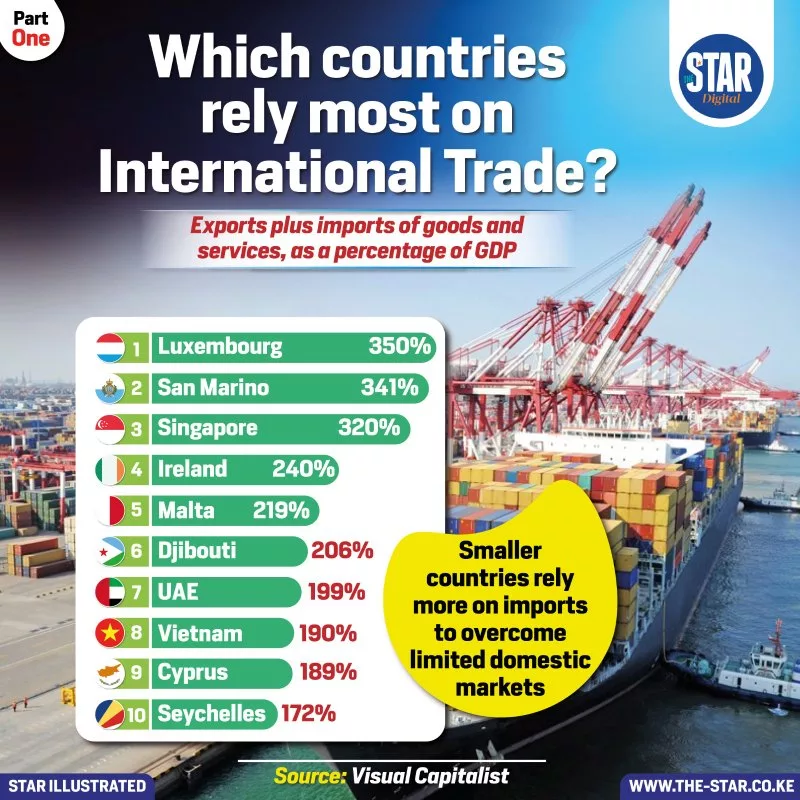
Global economic data measuring international trade—calculated as the sum of exports and imports of goods and services as a percentage of gross domestic product—reveals that smaller nations heavily rely on trade to overcome limited domestic markets.
Luxembourg leads the global rankings by a significant margin, recording a trade-to-GDP ratio of 350 percent.
San Marino follows closely behind in second place at 341 percent, while Singapore secures third place with 320 percent.
The rankings continue with Ireland registering 240 percent and Malta standing at 219 per cent. Djibouti records 206 per cent, closely followed by the United Arab Emirates at 199 per cent, Vietnam at 190 per cent, and Cyprus at 189 per cent.
Seychelles rounds out the top ten economies with a trade ratio of 172 percent.
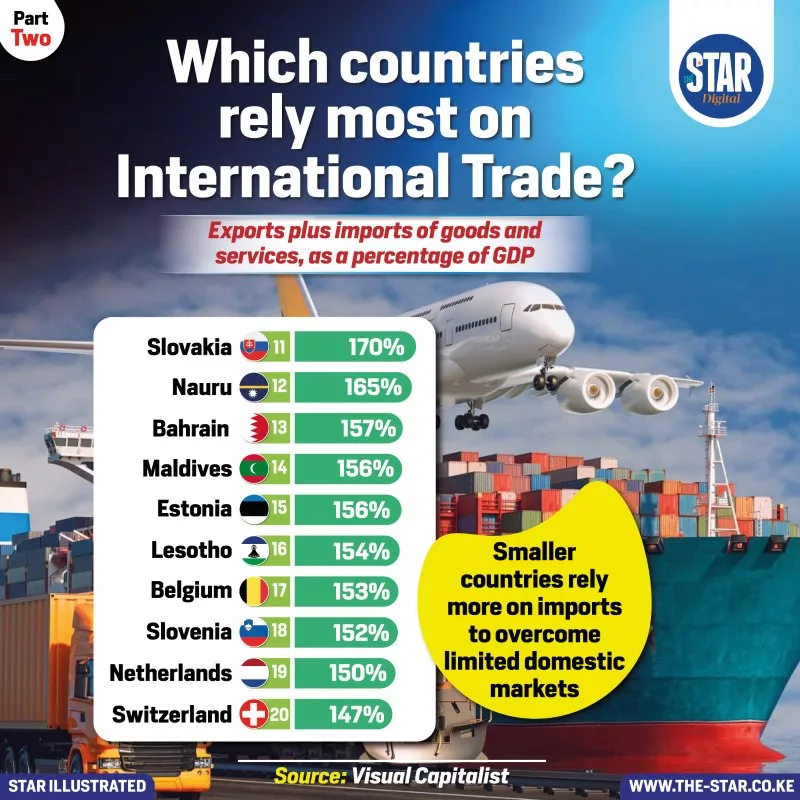
Moving further down the global index, Slovakia registers 170 per cent, Nauru follows at 165 per cent, and Bahrain stands at 157 per cent.
Both the Maldives and Estonia share a ratio of 156 percent, while Lesotho records 154 per cent and Belgium registers 153 per cent.
Slovenia follows at 152 percent, the Netherlands at 150 per cent, and Switzerland concludes the upper tier of the rankings at 147 per cent.
Across all these nations, extensive engagement in cross-border commerce serves as a vital economic driver, frequently exceeding the entire monetary value of their domestic economic output.
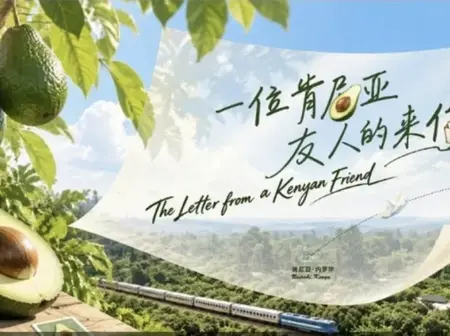
Kenyan avocado exporters are targeting a bigger share of the Chinese market after Beijing scrapped import tariffs for Kenya and 52 other African countries, creating fresh opportunities for agricultural trade.
The opportunity was highlighted at the ninth China International Import Expo (CIIE) in Shanghai, where Kenya showcased avocados, tea and fresh-cut flowers as it seeks to strengthen its presence in the Asian market.
China extended zero-tariff treatment to all 53 African countries with which it maintains diplomatic relations on May 1, 2026. The move brought another 20 countries, including Kenya, Ghana and South Africa, under the arrangement.
The expanded policy is expected to make African products more competitive in China by reducing the cost of accessing the market. For the newly covered countries, the arrangement is set to remain in place until April 2028.
According to the Chinese Embassy in Nairobi, 6.9 tonnes of fresh Kenyan avocados arrived at Guangzhou Port on May 1, while another 320 tonnes of Kenyan crude avocado oil docked at Dalian Port on May 9.
The shipments formed part of the inaugural exports flagged off on March 24 at the Standard Gauge Railway terminus in Nairobi by Chinese Vice President Han Zheng and Kenya’s Deputy President Kithure Kindiki.
China Ambassador to Kenya Guo Haiyan noted that the initiative is expected to deepen trade cooperation between the two countries while increasing earnings for Kenyan farmers and exporters.
The policy removes tariffs on selected products from African countries, making them more competitive in the Chinese market and encouraging higher exports.
China has also upgraded its green channel for African agricultural and food products, streamlining quarantine procedures to facilitate imports.
The benefits are already being felt by other African exporters. China Daily reported that tariffs on South African citrus imports had fallen from between 10 and 12 per cent to zero.
Chinese fruit importer Joy Wing Mau said its imports of South African citrus had increased by 50 per cent year-on-year since the policy took effect.
Beyond fresh produce, the expanded trade arrangement is opening opportunities for African businesses to explore new markets and develop partnerships with Chinese companies.
The ninth CIIE has provided a platform for exporters to showcase their products, meet potential buyers and pursue business partnerships. Kenya's pavilion features agricultural products, including avocados, tea and fresh-cut flowers.
The broader trade relationship is also expanding. China-Africa trade reached 312.11 billion US dollars in the first nine months of 2026, representing a 22.3 per cent increase year-on-year. China's imports from Africa rose by 18.5 per cent to 109.14 billion dollars over the same period.
For Kenyan exporters, the zero-tariff arrangement offers an opportunity to grow shipments, reach more consumers and strengthen the country's agricultural export market in China.
According to Beijing, the policy demonstrates China’s commitment to deepening economic cooperation with Africa and supporting the continent’s exports through easier market access.
This makes China the first major economy to voluntarily extend such broad tariff exemptions to African states.
For Kenya, the development is being viewed as a major boost for exporters who have been pushing for better access to the Chinese market to help narrow the long-standing trade imbalance between Nairobi and Beijing.
President William Ruto is among African leaders who have welcomed the initiative, seeing it as an opportunity for African products to become more competitive in China.
African Union Commission Chairperson Mahmoud Ali Youssouf also praised the move, describing it as ‘very timely’ and calling it a ‘brotherly gesture.’
Kenya’s avocado sector is expected to be among the immediate beneficiaries of the policy.
With tariffs now removed, Kenyan avocados could gain a stronger pricing advantage, potentially increasing demand among Chinese consumers.
Industry stakeholders say the policy could also create new export opportunities for Kenyan tea, macadamia nuts, coffee, flowers and seafood if producers meet China’s strict quality and phytosanitary requirements.
Chinese authorities say the zero-tariff policy is accompanied by other trade facilitation measures aimed at making it easier for African products to access Chinese markets.
These include upgraded ‘green lanes’ for African agricultural imports, with quarantine clearance procedures made simpler.
China has also committed to risk-based customs management systems intended to reduce delays at ports.
The measures are particularly important for the country’s fresh produce exporters whose products require fast clearance to maintain quality.
Faster customs processing and lower import costs are believed to improve profitability for Kenyan exporters while making African goods more attractive to Chinese buyers.
The initiative also comes as Kenya seeks to diversify export destinations and strengthen economic ties with Asian markets.
China remains one of Kenya’s biggest trading partners, although the country still heavily imports manufactured goods from China.
Kenya is being rallied to increase production capacity, improve value addition and strengthen logistics systems to fully benefit from the preferential access.
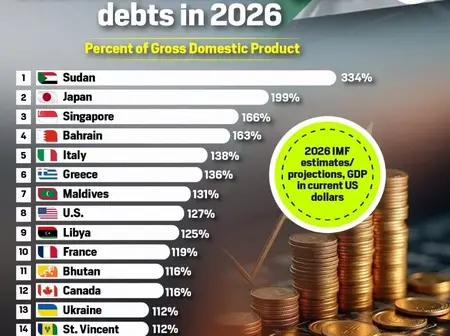
Recent IMF estimates and projections measuring debt as a percentage of gross domestic product in current US dollars reveal stark global fiscal pressures, with several nations carrying debt burdens exceeding the size of their entire economies.
At the top of the global ranking, Sudan records the highest debt-to-GDP ratio at a staggering 334 per cent. Japan follows significantly behind in second place at 199 per cent, while Singapore rounds out the top three nations with a debt ratio of 166 per cent.
The data highlights widespread sovereign debt challenges across multiple continents. Bahrain stands at 14th with 163 per cent, followed by European economies such as Italy at 138 per cent and Greece at 136 per cent.
Further down the list, the Maldives registers 131 percent, and the United States stands at 127 per cent. Libya follows closely at 125 per cent, while France records 119 per cent.
Bhutan and Canada share identical ratios at 116 percent, ahead of Ukraine and St. Vincent at 112 per cent, and Cabo Verde and Belgium at 110 per cent.
As the rankings progress into double-digit percentages of economic output, China registers 104 per cent and the United Kingdom records 102 per cent.
Both Bolivia and Dominica sit at 100 per cent, marking the threshold where national debt equals total economic output. Spain follows at 98 per cent, Brazil at 97 per cent, and Sri Lanka at 95 per cent.
Barbados records 94 per cent, while Mozambique and Finland tie at 91 per cent. Mauritius stands at 88 percent, Tunisia at 86 per cent, and Portugal and Suriname conclude the recorded rankings at 85 per cent.
These IMF figures underscore the heavy fiscal liabilities managed by governments worldwide as economic conditions evolve.