
The Real Madrid midfielder fronts the magazine’s December 2026 edition, opening up about football, fashion, family, fame and the pressures of global stardom.English football star Jude Bellingham is adding another fashion milestone to his growing cultural influence after landing his first-ever glossy magazine cover with British Vogue.
Blog
-
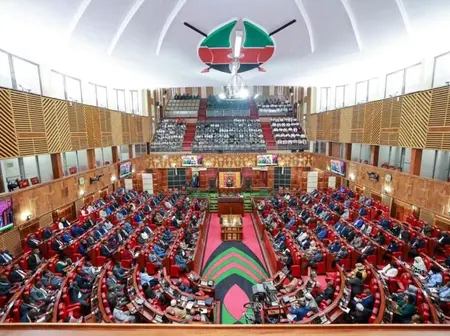
MPs propose KshM fine for hospitals charging patients before emergency treatment
Hospitals that demand upfront payments before attending to patients requiring emergency medical care could face fines of up to Ksh3 million under proposed changes to Kenya’s health laws.
The proposed penalty is contained in the Health (Amendment) Bill, 2024, which was approved by Members of the National Assembly during its third reading on Wednesday, November 11, 2026.
Sponsored by Kirinyaga Woman Representative Jane Njeri Maina, the Bill seeks to prevent public healthcare facilities from making advance payments a requirement before providing emergency medical services.
Under the proposed amendments, public healthcare facilities that demand payment before treating patients in emergencies would face fines of up to Ksh3 million.
The legislation also introduces penalties for healthcare officers involved in holding the bodies of deceased patients over outstanding hospital bills.
Public healthcare officers who authorise or facilitate the detention of bodies because families have not cleared medical expenses could face fines of up to Ksh2 million.
The proposed changes seek to address cases where patients are denied timely emergency treatment because they or their relatives cannot raise the required money immediately.
The Bill also seeks to protect grieving families from difficulties in accessing the bodies of deceased relatives for burial due to unpaid hospital bills.
Speaking after the parliamentary proceedings, Kitute Msaba Clive Ombane Gisairo welcomed the proposed reforms, saying they would strengthen the protection of patients and their families.
“The exploitation of vulnerable patients in both public and private hospitals will soon be a thing of the past under the proposed reforms in the health sector,” Gisairo stated.
He added that he had endorsed the Health (Amendment) Bill No. 56 of 2024, sponsored by Jane Maina, describing it as an important step towards safeguarding patients’ rights.
“Once enacted, this landmark legislation will guarantee access to emergency medical treatment and prohibit hospitals from detaining patients or withholding deceased persons over unpaid medical bills,” he said.
The Bill is expected to proceed to the Senate for consideration before being forwarded to President William Ruto for assent, subject to the completion of the legislative process.
If enacted, the proposed law would expose public healthcare facilities to fines of up to Ksh3 million for demanding upfront payments before emergency treatment, while officers involved in detaining deceased patients over unpaid bills could face penalties of up to Ksh2 million.
-
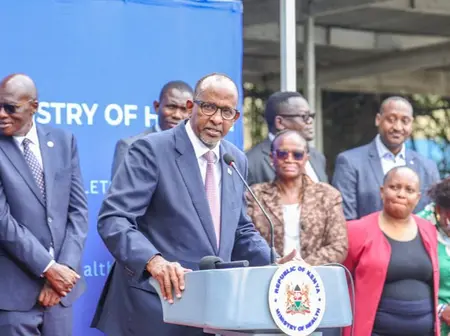
Govt sets December 23 for Kenya’s Ebola-free declaration after last patient’s discharge
Health Cabinet Secretary Aden Duale has announced December 23, 2026, as the anticipated date for Kenya to be declared Ebola-free, following the discharge of the country’s last patient and the release of the final contacts from monitoring.
The country begins a mandatory 42-day countdown on Thursday, November 12, which will determine whether the outbreak can officially be declared over, provided no new infection is reported.
In a statement posted on X on Wednesday, November 11, 2026, Duale said Kenya had recorded nine confirmed cases since detecting its first imported infection on October 6, 2026.
“Since confirming the first imported case on 6th October 2026, Kenya has recorded nine confirmed cases, all contained within a single cluster, with no community transmission,” he stated.
The CS said the final 11 contacts had completed their 21-day monitoring period in good health, marking another milestone in the country’s response.
“Through effective surveillance and contact tracing, all 135 contacts linked to the index case were successfully traced and monitored,” Duale said.
The 42-day countdown is required before health authorities can declare the outbreak over. The anticipated December 23 date is therefore dependent on Kenya recording no new cases throughout the period.
Duale attributed the progress to coordination between national and county governments, health facilities, development partners and the public.
“The response was strengthened by the declaration of Ebola as a formidable epidemic disease and the gazettement of the Public Health (Ebola Disease) Rules, which provided the necessary legal framework for containment efforts,” he stated.
The CS named the World Health Organisation, Africa CDC, IGAD and the governments of the United States and India among the partners who supported the response.
Despite the discharge of the final patient, Duale said surveillance and screening would continue across the country during the countdown.
“As we enter the countdown, surveillance, screening at all points of entry, rapid response and prompt investigation of suspected cases will continue across the country,” he said.
He added that response teams would remain on alert, while follow-up care and support for survivors would be sustained.
The Health CS also addressed travel and visa restrictions imposed on Kenya by some jurisdictions following the Ebola outbreak.
He maintained that the country remained open to international movement and economic activities, with no restrictions on travel, tourism, trade or public gatherings.
“Kenya remains open for business, tourism, trade and travel, with no restrictions on movement or public gatherings,” Duale stated.
He said the government had called on jurisdictions that imposed travel and visa restrictions on Kenya to review and lift the measures, arguing that the country’s transparent reporting and compliance with international health regulations should not be penalised.
Duale further clarified that Kenya would not act as a quarantine centre for travellers who meet the entry requirements of other countries.
He also said the Ministry of Health would not issue quarantine or Ebola-free certificates for travel purposes where such documents were not required under the International Health Regulations.
He directed members of the public to use the toll-free 719 line for assistance.
The CS also committed the government to accounting publicly for resources received during the outbreak response.
“Finally, we reaffirmed our commitment to transparency and accountability, including the public disclosure and accounting of all resources and support received from the Government and development partners throughout the response,” he stated.
Duale made the remarks following a media briefing attended by senior Ministry of Health officials, representatives of international health organisations and development partners.
The December 23 date remains conditional on the country completing the full 42-day countdown without recording another confirmed Ebola case.
-

UMC Hospital Entebbe introduces specialised mental health and rehabilitation services
UMC Hospital Entebbe has introduced specialised psychiatry and rehabilitation services to expand access to professional mental healthcare and support people dealing with mental health challenges.The new services will provide patients with access to psychiatric consultations, mental health assessments, diagnosis, counselling and rehabilitation support tailored to their individual needs.
-
A Weak Currency Can Turn a Full Warehouse into a Margin Emergency
The importer agrees on a selling price in shillings and pays the supplier in dollars. Between the quotation and settlement, the exchange rate moves. Nothing changes inside the warehouse, yet part of the expected profit disappears.Take an illustrative order costing $10,000. At KSh130 per dollar, its purchase cost is KSh1.3 million.
-
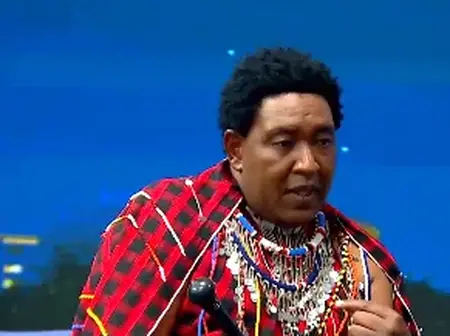
Mike Sonko Hints At Kalonzo Musyoka Working With Ruto Ahead Of 2027
Former Nairobi Governor Mike Sonko has suggested that Wiper Patriotic Front leader Kalonzo Musyoka could consider an alliance with President William Ruto ahead of the 2027 General Election, warning against miscalculations within the opposition camp.
Sonko, who leads the National Economic Development Party (NEDP), made the remarks on Tuesday, November 10, 2026, following a series of high-level meetings with prominent political figures from the Ukambani region.
The former governor held talks with former Machakos Senator Johnson Muthama before conferring with Labour Cabinet Secretary Dr. Alfred Mutua, a key ally of President Ruto in the region.
Taking to his official Facebook page, Sonko cautioned that certain advisors were giving the Wiper leader self-serving advice that ignores the shifting political landscape.
“Some bogus noise makers are misleading Kalonzo without understanding the political reality. Let them know that the one-term option is also on the table. We are carefully weighing both political options,” Sonko wrote.
Sonko emphasized that ongoing negotiations across political divides are focused on securing long-term benefits for the electorate rather than engaging in empty political rhetoric.
Strategic Realignment: The leader hinted that joining forces with the government remains a viable strategy under consideration by key regional leaders.
National Interest: “Our final decision when we all come to the table will be guided by the interests of our people, unity, and the future of our country. We stand for unity, not division, or empty political games,” he added.
The developments come amid intensifying political realignments as leaders from the Lower Eastern region evaluate coalition options ahead of the 2027 contest.
-

“No Homegrown MP”: Bahati Faults Outside Candidates For Slow Development In Mathare
Musician Kevin Bahati has declared that the Mathare constituency has suffered decades of slow development because it has never been led by an MP born and raised within the community.
Speaking during a live media interview on Wednesday, November 11, 2026, the artist detailed the drive behind his political ambitions, contrasting his roots in the informal settlement with what he termed “imposed” candidates.
“Mathare has never had an MP or rather a leader that is born, raised, schooled, bred in Mathare,” Bahati stated, emphasizing that high poverty levels require a leader with lived experience of the ground realities.
Bahati criticized the tradition of major political coalitions handing party tickets to outsiders simply to fulfill electoral quotas.
He argued that this habit leaves residents with representatives who have no genuine connection to their daily struggles:
Disconnected Leadership: “Because of political alignment, unakuja unaletwa unaambiwa there is a constituency hatuna candidate and that’s how we get our MPs,” Bahati explained.
Delayed Development: “After elections, huyu mtu anaanza kutafuta sasa nitaanzia wapi kwa hii slum. You don’t know the issues facing the youth, the issues facing the kids, women. That’s why development imekuwa very slow.”
Reflecting on his first parliamentary attempt in the 2022 General Election—where he finished third after securing 8,166 votes—Bahati admitted that while his decision was right, his political timing was flawed.
He revealed that performing on national campaign trails in 2017 while watching his former schoolmates struggle as hired campaign goons fueled his resolve to run.
“Unaletwa u-endorse mtu unajua huyu mtu hajasaidia mtaa. And that’s how I made a last minute decision in 2022,” Bahati disclosed. “I feel like it’s the best decision I made, but politically was a mistake because I came in so late.”
Bahati noted that entering the race late meant a significant portion of the electorate went to the polls unaware of his candidature, a mistake he aims to correct ahead of the 2027 General Election.
-

Kenya’s DJ Culture: The people behind the soundtrack of our social lives
It is well past midnight in a crowded lounge, and no one is looking at the clock. A DJ in the booth, one ear to the earphone, feels the room.In a heartbeat they decide what the next three minutes of everyone’s evening will feel like.
-

Mauricio Pochettino once banned Luke Shaw from doing one thing before he joined Man Utd
Mauricio Pochettino went to extraordinary lengths to ensure Luke Shaw ate the right food at Southampton, and his comments are even more fitting now that he's the strongest contender to replace Michael Carrick at Manchester United.
According to David Ornstein, United are finalising a deal to appoint Pochettino if they decide to sack Carrick. Sir Jim Ratcliffe will hold a meeting with chief executive Omar Berrada and sporting director Jason Wilcox in Monaco on Wednesday, where they will recommend parting ways with the 45-year-old.
Carrick is on the brink of being relieved of his duties at Old Trafford after recording their worst start to a Premier League campaign. They've collected just one victory and eight points from their opening 10 matches, needing a miracle to turn their season around and qualify for the Champions League.
On Tuesday, it emerged that United would have to pay a compensation fee worth $10 million (£7.5m) to buy Pochettino out of his four-year contract with the USMNT after he signed an extension in August.
The Argentine is said to be open to taking the role at Old Trafford if offered it and will not only bring his own coaching staff to the club, but also enforce some strict rules that his players must follow.
For example, during his 16-month spell in charge of Southampton from January 2013 to May 2014, Pochettino famously stopped Luke Shaw eating pizza – and even went to extreme measures to ensure the left-back wasn't.
The story was brought up on an episode of The Overlap, where Gary Neville asked: “Was it true that when you was at Southampton like with Luke Shaw, that you used to go round to his house because he was eating pizzas and you used to make the players eat the right foods all the time? Is that true about the Luke Shaw story or is that a myth?”
Pochettino confirmed the tale, saying: "Yes. It’s like another thing that makes us proud because OK, you asked two questions yes.”
Shaw cemented his place under the Argentine tactician as an 18-year-old at Southampton, making 35 Premier League appearances during the 2013/14 campaign before completing a £30million move to Manchester United in June 2014 – world record for a teenager at the time – a month after Pochettino joined Tottenham Hotspur on a five-year deal.
12 years after working with the Englishman at St Mary's, there is a huge chance he could reunite with the left-back at Old Trafford, and he will have to abide by some of his strict policies once more.
At his past clubs, Pochettino has generally preferred personal accountability and unique physical or social forfeits instead of traditional monetary fines.
During his spell as manager of Chelsea, after Nicolas Jackson picked up an accumulation of yellow cards for dissent and arguing with referees in 2023, he forced the striker to do a grueling, long-distance cross-country run in training.
The Argentine famously matched the discipline by buying dinner for the entire squad and staff because he couldn't run due to his own touchline ban.
Jackson was also involved in another telling-off from the manager. In their clash against Everton in 2024, Jackson and Noni Madueke aggressively pushed and shoved each other to take a penalty instead of deferring to designated penalty taker Cole Palmer.
He did not issue individual fines, instead slamming them for their actions in public and private, claiming he was "so upset" over the dispute after the Blues smashed Everton 6-0.
"I can't accept this kind of behaviour," said Pochettino. "I told them it's the last time I want to see this kind of behaviour."
"It is impossible to have this type of behaviour after this performance. If we want to be a great team, we need to change and think in a collective way."
Should he become Man United manager, expect the 54-year-old to use harsh punishments on his players for acting out of line.
-

KRA new tax deadline: How late filing could cost Kenyans Ksh2,000 or more
Kenyans who fail to submit their annual income tax returns by the revised April 30 deadline risk a minimum Ksh2,000 penalty, with those owing taxes facing additional charges and monthly interest as the Kenya Revenue Authority (KRA) tightens compliance requirements from 2027.
The change could catch taxpayers off guard, particularly those accustomed to submitting their returns before the traditional June 30 deadline.
Under the new arrangements introduced through the Finance Act 2026, individual taxpayers will have until April 30 to submit their annual income tax returns, replacing the previous June 30 deadline.
The revised timeline means individuals who fail to adjust their filing schedules could face financial penalties for submitting their returns late.
KRA’s penalty structure provides for a late filing fine of five per cent of the tax due or Ksh2,000, whichever is higher.
This means that taxpayers who owe no income tax can still face a Ksh2,000 penalty if they have an active Income Tax Obligation and fail to submit their required returns.
The amount charged depends on the taxpayer’s outstanding tax liability.
For individuals with no tax payable, the minimum late-filing penalty is Ksh2,000.
However, those with outstanding tax liabilities could pay considerably more because the penalty is calculated at five per cent of the tax due.
For instance, an individual with Ksh100,000 in tax due would face a Ksh5,000 late-filing penalty, while someone owing Ksh500,000 would face Ksh25,000.
The penalty is imposed for failing to submit returns within the statutory period, regardless of whether the taxpayer eventually files the declaration.
Apart from late filing penalties, taxpayers who fail to settle their tax bills on time face additional financial consequences.
KRA imposes a late-payment penalty of five per cent of the outstanding tax, alongside interest of one per cent per month until the amount is paid.
For example, a taxpayer with Ksh100,000 in unpaid tax could incur a Ksh5,000 late-payment penalty and Ksh1,000 in interest for every month the liability remains unpaid.
These charges are separate from the penalty for failing to file returns.
Consequently, taxpayers who both fail to file their returns and leave their tax liabilities unpaid could face multiple charges.
The revised tax arrangements also introduce a separate deadline for taxpayers submitting nil returns.
Under the announced changes, individuals required to file nil returns will have until January 31, 2027, to submit their declarations.
This is earlier than the April 30 deadline applicable to other individual taxpayers.
A nil return applies to individuals who have a filing obligation but report no taxable income for the relevant year.
Kenyans with active income tax obligations should therefore establish whether they are required to file a nil return rather than assume that having no salary or business income automatically removes their filing responsibility.
Meanwhile, taxpayers with outstanding historical tax liabilities have until December 31, 2026, to benefit from the ongoing tax amnesty programme.
The programme provides a 100 per cent waiver of qualifying penalties, interest and fines relating to tax liabilities accumulated up to December 31, 2025.
However, taxpayers with outstanding principal tax must settle the qualifying amount by the amnesty deadline to benefit.
Those with outstanding nil returns and no principal tax liability can also qualify for an automatic waiver of late-filing penalties after submitting all outstanding returns.
The programme allows taxpayers to regularise their tax records before the revised filing arrangements take effect.
KRA has encouraged taxpayers to familiarise themselves with the new filing schedule, check their outstanding obligations on iTax and submit their returns within the prescribed timelines to avoid additional costs.