
In SummaryNew APHRC report warns Africa risks losing control of its data and knowledge systems without sustainable investment.The Africa Evidence Outlook identifies gaps in digital infrastructure, funding, technical capacity and institutional ownership.Experts urge African governments to strengthen data sovereignty and invest in homegrown artificial intelligence.
Blog
-

The Privacy Policy That Helps Win the Contract
An enterprise buyer may like a startup’s product and still reject it because nobody can explain where customer data goes. Procurement can tolerate a young company. Unmanaged liability is harder to purchase.Privacy becomes a commercial advantage when the supplier can answer specific questions: what data is collected, why it is needed, who receives it, how long it stays and how incidents are handled.
-

Kenya Under 23 Pip Ivory Coast in AFCON Qualifiers
Kenya's national men's football under 23 Emerging Stars edged out Ivory Coast 2-1 in the first leg of their second-round 2027 Africa Cup of Nations (AFCON) qualifiers at Nyayo National Stadium on Wednesday, 11 November2026 .Second-half goals from Henry Omollo and Andreas Omondi handed Anthony Kimani's charges a crucial home victory, leaving them needing at least a draw in the return leg on Tuesday, November 17, at Stade Félix Houphouët-Boigny in Abidjan to advance to the final qualifying round.
-

What Njeri Maina’s Health Amendment Bill means for ordinary Kenyans
Kenyans who cannot raise hospital deposits during medical emergencies could soon receive treatment without first proving they can pay, while families struggling with medical debts may no longer have to fight to retrieve the bodies of deceased relatives from public health facilities.
These are among the proposed changes in the Health (Amendment) Bill, 2024, sponsored by Kirinyaga Woman Representative Jane Njeri Maina, which was passed by the National Assembly on Wednesday, November 11, 2026.
The Bill seeks to amend the Health Act to strengthen access to emergency medical treatment and prevent public healthcare facilities from detaining patients or bodies of deceased persons over unpaid medical bills.
For ordinary Kenyans, the proposed changes would affect what happens when a patient arrives at a public hospital in a critical condition without money, when a family cannot clear a medical bill, or when relatives need to collect a loved one’s body for burial.
One of the Bill’s key proposals is to stop public health facilities from demanding payment before providing emergency medical treatment.
This means a patient who arrives at a public hospital with a life-threatening condition should receive the necessary initial medical attention without first being required to produce cash, make a deposit or demonstrate their ability to pay.
The Bill also seeks to broaden the definition of emergency medical treatment to cover necessary care provided at the scene of an injury or illness, during transportation to a health facility and through emergency departments and early inpatient care.
The proposed change is intended to prevent financial requirements from delaying treatment when a patient’s condition requires immediate medical attention.
Public health facilities that demand prepayment before providing emergency treatment could face fines of up to Ksh3 million under the proposed amendments.
The legislation also targets the practice of detaining patients who have been medically discharged because they cannot settle outstanding hospital bills.
If enacted, public health facilities would no longer be allowed to keep a medically discharged patient in hospital solely because of unpaid charges.
It also seeks to make it an offence for public healthcare facilities and the officers responsible for them to detain the bodies of deceased persons as a way of forcing families to clear medical debts.
Public officers who authorise or facilitate the detention of bodies over unpaid bills could face fines of up to Ksh2 million.
For families, the proposed protection would mean that inability to clear a hospital bill should not prevent them from collecting a deceased relative’s body and proceeding with burial arrangements.
However, the Bill does not cancel medical debts. Hospitals would still be entitled to pursue payment through lawful means, but would not be permitted to use the detention of patients or bodies as a debt-recovery measure.
An important distinction in the Bill is its scope.
During the Second Reading on February 11, 2026, Maina told MPs that although the initial proposal sought to cover both public and private facilities, consultations with the Departmental Committee on Health resulted in the amendments applying to public facilities.
The legislator questioned the limitation, saying it did not fully address the need to protect all Kenyans equally.
This means the proposed protections should not be presented as a blanket prohibition covering every private hospital and mortuary. The scope agreed upon during parliamentary consideration is public healthcare facilities.
Maina’s push for the amendments was informed by her experience representing families unable to retrieve the bodies of relatives because of outstanding medical bills.
During the February 11 parliamentary debate, she cited the case of Kelvin, a former medical student who turned to boda boda work after struggling to find employment.
Kelvin died in a road accident, and his body was reportedly held at a funeral home for nearly a year over an outstanding hospital bill of Ksh1.42 million.
Maina told MPs that she represented the family on a pro bono basis and witnessed the pain of a mother who could not give her son a dignified burial.
“This Bill is not mere rhetoric or politics. It is a crucial step towards addressing the profound suffering faced by many Kenyans,” she said.
Dagoretti South MP John Kiarie also questioned the practice of demanding payment before attending to patients in emergency units.
“The emergency unit of any hospital should live up to its name. Today, instead of checking a patient’s vitals, we check their ability to pay,” Kiarie told the House.
The legislation now proceeds to the Senate for consideration before it can be presented to the President for assent.
If it completes the legislative process and becomes law, public healthcare facilities will be required to comply with the new provisions.
For Kenyans, the central question is whether a medical emergency will be treated as a matter of urgency rather than an opportunity to demand payment first, and whether families will be able to bury their loved ones without having to secure the release of their bodies by clearing hospital debts.
-
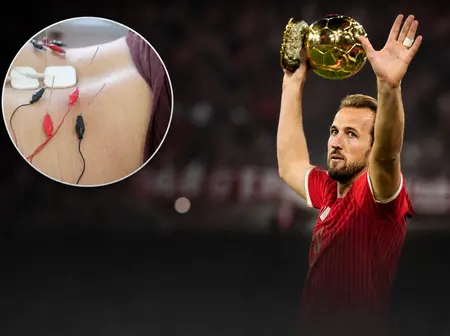
Inside Harry Kane’s five-hour treatment method that no other footballer uses
Harry Kane is in the form of his life and a certain type of treatment might just be the secret to the Ballon d'Or winner's success.
Kane beat both Kylian Mbappe and Lamine Yamal to win the Ballon d'Or for the first time after an incredible year for Bayern Munich and England.
The 33-year-old has been one of the very best strikers in the world football for a number of years now but he has soared to new levels in recent times, where he is unquestionably the best in the world.
The former Spurs star has scored 58 goals for club and country in 2026 and is the first Englishman to win the Ballon d'Or since Michael Owen in 2001.
Kane has always been a consummate professional and looks after his body, but a new report from The Guardian has shed light on some of the practices he is doing regularly in order to be fit and firing.
He has banned himself from eating sweets and is said to be obsessed with ice baths and infrared saunas as his post-match recovery routine, as well as his sleep.
But in the most interesting revelation, Kane has employed a private doctor who focuses on electrical neurofunctional acupuncture.
Alejandro Elorriaga Claraco lives in Canada but comes over to Munich every month to spend at least a week with him.
While he is with him, he treats him for four to five hours at a time through electroacupuncture – a treatment that follows traditional acupuncture but uses needles connected to a small electrical stimulation device.
The needles are inserted into acupuncture points, and the stimulation device sends a controlled electrical current to the small electrical clips attached.
The treatment, which can activate sensory nerves and bring about muscle contractions, also helps reduce muscle tension and improve chronic pain and discomfort in areas.
Traditional acupuncture has been common for footballers to use, but Kane is the only known player using the adapted version.
Former world number one golfer Justin Rose recommended Claraco's services.
Dr. Margie Navarro, a New York-based licensed doctor of acupuncture and researcher with over 15 years of clinical experience including professional athletes, explained the benefits of the treatment.
She told SPORTbible: "The endorphin stimulation and inflammation reduction actions of this treatment may be particularly beneficial for athletes in the midst of an intensive training or performance schedule.
endorphin release will help with acute muscle pain and inflammation. Different acupuncture techniques or other forms of physical therapy may be indicated for true ‘injuries’ depending on the specifics of the injury.
"The bulk of the research on electroacupuncture is for stroke recovery, where it has been found to be highly beneficial. However, there are also meta-analyses showing strong evidence across multiple studies for its efficacy in conditions that commonly affect athletes, including gouty arthritis and non-specific low back pain.
"Acupuncture generally can improve athletic performance by reducing muscular tension (or trigger points) that are causing muscles to fatigue or malfunction. It also can increase ROM by reducing tension throughout muscle and connective tissue. Electroacupuncture may be added as an additional technique in cases where acute pain and inflammation moderation may aid in the training or performance schedule."
According to Sage Journals, the use of electricity in relieving pain dates back to ancient times and was then pioneered by French practitioners before it was furthered in China.
Kane is already England's record goalscorer, and he will soon become the most-capped player. Kane is currently tied with Peter Shilton on 125 and is expected to break the record against Croatia at Wembley on Thursday.
He will receive an official presentation before the Nations League fixture.
-
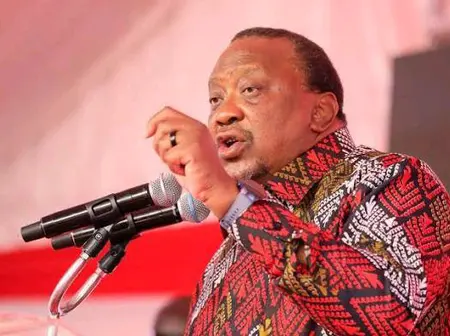
Uhuru: Kenyans have decided, Opposition must unite
Former President Uhuru Kenyatta has declared that Kenyans have already made up their minds to vote President William Ruto out of office in the 2027 General Election, challenging opposition leaders to set aside their individual presidential ambitions and rally behind a single candidate.Mr Kenyatta said the biggest obstacle facing the opposition was not a lack of public appetite for political change, but the inability of its leaders to agree on a common political direction, warning that competing ambitions could undermine their efforts to dislodge the Kenya Kwanza administration.
-
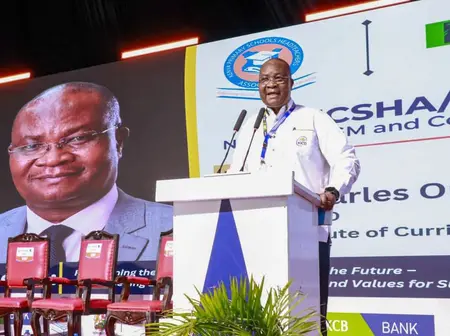
Over 24,000 primary schools to receive new CBE textbooks in January 2027
More than 24,000 public primary schools are set to receive fresh learning materials in January 2027 as the government moves to address shortages and deterioration of textbooks used by learners under the Competency-Based Education (CBE) system.The exercise will initially target learners in Grades One, Two and Three, with new textbooks in Mathematics, English and Kiswahili expected to improve access to essential classroom resources.
-

Co-op Bank Q3 Profit Soars 19.6% to Ksh35.9 Billion
The Group's subsidiaries continued to make a positive contribution to performance, reinforcing the strength of the universal banking model.Co-operative Bank of Kenya (Co-op Bank) has reported a strong Profit Before Tax of KSh35.9 billion for the nine months ended 30th September 2026, up from KSh30.0 billion recorded in the same period in 2025, representing a 19.6% growth.
-
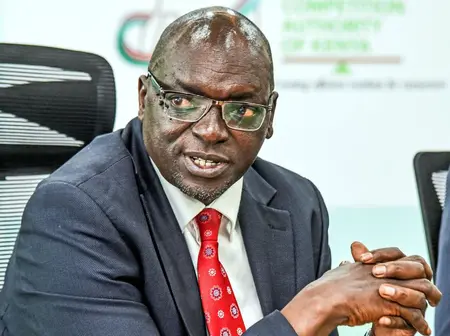
Top supermarkets face hefty fines as regulator probes supplier abuse
The competition watchdog has launched investigations into top supermarkets for abusing their ability to set terms for suppliers, exposing the retailers to multimillion-shilling fines.
The Competition Authority of Kenya (CAK) says that preliminary findings revealed that a number of top retailers are forcing suppliers to incur additional costs unfairly and endure extended payment periods, besides demanding rebates in the race for profits.
-

The Cheap Click Is Gone but the Expensive Customer Was Always There
An advertising dashboard can make customer acquisition look wonderfully precise. It records a click, attributes a sale, and produces a return figure. The business still has to ask whether the customer would have bought anyway and whether the order produced any profit.Privacy rules and changes in tracking complicate measurement, but they are not a complete explanation for rising acquisition costs.