The Kenya Meteorological Department has issued a fresh weather alert warning residents across more than 40 counties to prepare for rainfall, thunderstorms and strong winds over the next 24 hours.
In its latest daily weather forecast released on Tuesday, November 10, the department indicated that several parts of the country would experience varying levels of rainfall between 9pm on Tuesday and 9pm on Wednesday, November 11, 2026.
Nairobi, Kiambu, Nakuru, Machakos, Kisumu, Kakamega, Garissa, Wajir and Mandera are among the counties expected to experience wet weather conditions.
Other affected counties include Nyeri, Murang'a, Kirinyaga, Nyandarua, Meru, Embu, Kitui, Makueni, Turkana, Samburu, Trans Nzoia, Uasin Gishu, Nandi, Baringo, Laikipia, Narok, Kajiado, Kericho and Bomet.
The forecast also covers Busia, Siaya, Homa Bay, Migori, Kisii, Nyamira, Vihiga, Bungoma, Taita Taveta, Tana River, Marsabit, Isiolo, West Pokot and Tharaka-Nithi.
According to the meteorological department, Trans Nzoia is among the areas likely to experience some of the heaviest downpours, with heavy showers and thunderstorms expected in several locations during Wednesday afternoon.
Garissa and Wajir are also expected to receive moderate rainfall and thunderstorms during the night, while parts of Turkana could experience similar conditions on Wednesday morning.
Residents in Siaya, Kisumu, Homa Bay, Kisii, Nakuru, Narok, Kericho and Kitui should also prepare for moderate showers and thunderstorms in different locations.
In Nairobi, temperatures are expected to range between 15°C and 25°C.
Besides rainfall, the department has warned residents in parts of Marsabit, Samburu and Turkana about strong southerly to southeasterly winds exceeding 25 knots, equivalent to approximately 12.5 metres per second.
Meanwhile, Turkana is expected to record daytime temperatures of up to 37°C, while Garissa, Wajir and Mandera could experience temperatures reaching 36°C.
Residents have been advised to remain alert, particularly those living in areas vulnerable to flooding and those undertaking outdoor activities.
Motorists are also encouraged to exercise caution during heavy rainfall because of reduced visibility and potentially slippery roads.
Listen to articleThe National Codex Strategic Plan 2026–2031 seeks to strengthen food safety monitoring, prevent contamination in nuts and cereals and protect Kenya's agricultural exports.Kenya is stepping up its fight against deadly aflatoxin contamination in food, unveiling a five-year strategy to protect consumers, safeguard food security and boost the competitiveness of its agricultural exports.
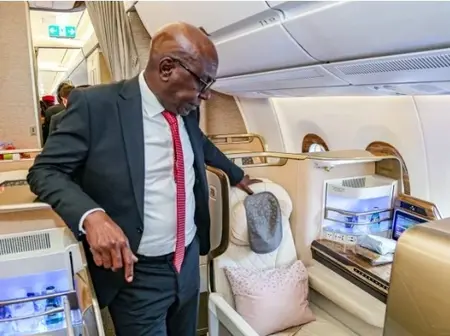
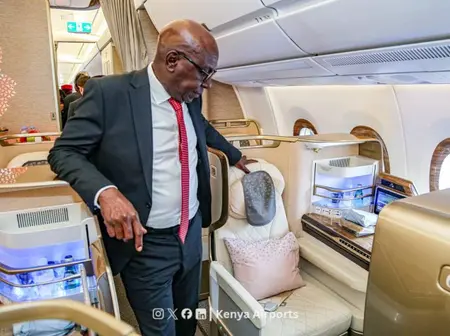
Emirates has introduced its modern Airbus A350 aircraft on the Dubai-Nairobi route, bringing a new level of comfort, technology and luxury to passengers travelling between Kenya and the United Arab Emirates.
The aircraft, which began operating on the route on October 25, 2026, makes Nairobi the 32nd destination in the airline's A350 network.
Its arrival also marks the first time Emirates has introduced its highly anticipated Premium Economy cabin to the Kenyan market.
The Airbus A350-900 has a capacity of 298 passengers distributed across Business Class, Premium Economy and Economy Class.
One of its biggest attractions is the Premium Economy cabin, which features spacious leather reclining seats, adjustable headrests, additional legroom and individual charging points.
Passengers also enjoy 13.3-inch entertainment screens and improved onboard services.
Business Class offers another impressive experience through its 1-2-1 seating arrangement, ensuring every passenger has direct access to the aisle.
The seats can transform into fully flat beds and include personal minibars and wireless charging facilities.
Economy Class has also received significant improvements, including redesigned seats, leather headrests and upgraded entertainment systems featuring 13.3-inch adjustable 4K screens.
Another notable feature is the aircraft's advanced entertainment platform, known as Emirates ICE.
It provides passengers with a wide selection of movies, television programmes, music and other entertainment throughout their journey.
The aircraft also incorporates improved onboard connectivity, Bluetooth headphone compatibility and modern USB-C charging facilities, allowing travellers to remain connected and charge their electronic devices.
Additionally, the A350 features larger overhead storage compartments, wider aisles and higher ceilings, creating a more spacious cabin environment.
Its advanced cabin lighting system is designed to improve passenger comfort, while enhanced noise-reduction technology helps create a quieter flying experience.
The aircraft also incorporates modern engineering designed to improve fuel efficiency and support long-distance operations.
The introduction of the A350 comes as Emirates continues expanding its Kenyan operations.
The airline increased its Dubai-Nairobi services to three daily flights in July, bringing the total to 21 weekly flights.
With the new aircraft, Kenyan travellers now have access to improved seating options, upgraded entertainment and greater comfort when flying through Dubai to international destinations.
The political temperature has risen sharply today, after former President Uhuru Kenyatta urged opposition leaders to set aside their differences and field one candidate against President William Ruto in next year's elections.
According to NTV Kenya's broadcasts and its social media posts, Kenyatta told the nation that Kenyans have already decided on the direction they want to take.
In his telling, voters have grown weary of the current administration and have begun yearning for fresh leadership.
He therefore called on opposition figures to close ranks, arguing that a divided field has historically handed incumbents an easy path to victory.
The former head of state also expressed confidence in the leaders he has addressed, saying they can deliver justice to Kenyans if they have the discipline to stand together.
His message carried a clear warning: without unity, the opposition has little chance of turning public discontent into votes.
The response from State House has not taken long to arrive. NTV Kenya has reported that Ruto, who has just wrapped up a four-day tour of Kisii and Nyamira counties, has used the final leg of his trip to hit back at his predecessor.
The president has dismissed the idea that Kenyatta has any say over his decisions, insisting that the former president has not told him anything he needs to hear.
He has gone further, accusing Kenyatta of neglecting the responsibilities that come with being a national elder and of pursuing politics mainly for personal benefit.
The exchange has underlined how quickly the 2027 contest has begun to take shape.
With the election countdown running at roughly 271 days, both camps have started sharpening their messages and testing the loyalty of their bases.
Kenyatta's call has placed pressure on opposition chiefs, who have often struggled to agree on who should carry the flag, while Ruto's rebuttal has shown that the government side has no intention of leaving such claims unanswered.
Analysts have yet to say whether the appeal will translate into a workable coalition.
For now, the opposition has been handed a challenge, the president has answered it, and the battle lines for the next election have become visibly clearer.
Billionaire Narendra Raval has dodged a Sh5.4 billion tax bill after securing court victories against the Kenya Revenue Authority (KRA), shining a spotlight on a botched deal he signed with the Jubilee administration to secure duty relief for three of his companies.
In the latest of the three triumphs, Mr Raval, the Devki Group founder and chairman, won a legal fight against the KRA over Sh1.44 billion in unpaid value-added tax (VAT) that the taxman demanded from his Maisha Mabati Mills.
Homa Bay Senator Moses Kajwang has taken a swipe at Nairobi Senator Edwin Sifuna over his previous remarks about Homa Bay claiming that the ODM Secretary General does not appreciate the developments witnessed in the region.
Speaking during a political engagement, Kajwang recalled Sifuna's visit to Homa Bay where he allegedly compared the area's appearance to Yemen.
The remarks have continued to attract political attention with Kajwang using the opportunity to defend the county's image and highlight what he described as development projects delivered under President William Ruto's administration.
According to Kajwang, Sifuna may not be impressed by the visible changes in Homa Bay but residents have a different perspective because they have received what he referred to as "shiny things" from the President.
"I know that Sifuna doesn't like SHINY things he came to Homa Bay and said it looks like Yemen but in Homa Bay we have received SHINY things from Ruto, he is our therapist!" Kajwang stated.
His remarks appeared to underline the political differences emerging among leaders within the broader opposition and the broad based political arrangement.
Kajwang's comments also highlighted the importance of development projects and government engagement in shaping political conversations in the region.
The senator's reference to Ruto as a "therapist" was particularly striking, adding a humorous dimension to his defence of the President's relationship with Homa Bay residents.
The exchange is likely to fuel further debate over Sifuna's earlier comments the development record in Homa Bay and the political positions taken by leaders as Kenya approaches the 2027 General Election.
An international dialogue at the 7th World Media Summit (WMS) explored some of the most pressing questions: who really shapes the news agenda? Why do people trust one source over another, and what impact will artificial intelligence (AI) have on journalism?“Newsrooms are no longer the only players deciding which stories reach the audience,” Guo Wei, the event’s moderator, said in her opening remarks for the event focusing on “influence, AI and trust” here Saturday.
Starting a business is one challenge. Keeping it profitable while finding room to grow is another.
For many young entrepreneurs, diversification sounds like opening another shop, launching a new product or venturing into an entirely different industry.
But expanding too quickly, without understanding the new market or managing the money properly, can create more problems than opportunities.
That was the focus of the Co-op Bank Youth Forum on Friday, November 6, where host Violetta Ngina was joined by entrepreneur Maureen Orango for a discussion titled Beyond One Hustle: The Art of Business Diversification.
Orango brings practical experience to the subject, having built a portfolio of seven businesses spanning event management, construction and renovation, and transport and logistics, among other ventures.
Her entrepreneurial journey began in high school, when she sold small perfume samples for Sh20.
She later moved into event management, which opened opportunities in construction and renovation through relationships developed along the way.
Her experience illustrates how one venture can create opportunities for another.
Start with what you already have
One of Orango’s central messages was that entrepreneurs do not always need substantial capital to identify their next business opportunity.
Skills, experience and personal networks can provide a starting point.
For example, someone already running a catering business may identify opportunities in event supplies, deliveries, or corporate catering through existing customers.
Orango encouraged young people to look at what they can already do, the people they know and the gaps they encounter while running their current businesses.
Her own experience reflects this approach.
Rather than treating each new venture as an unrelated startup, she described how opportunities and relationships from one business helped open doors to others.
Find a gap and add value
Diversification does not always require launching another business.
Sometimes, it starts with improving what an existing business offers.
Orango used the example of a food vendor who could provide serviettes or wipes alongside meals.
It is a small addition, but one that improves the customer’s experience and gives the business an opportunity to stand out.
For an entrepreneur, this means paying attention to what customers ask for, what competitors overlook and what additional service can be offered without significantly increasing operating costs.
The idea is to identify demand before committing money to expansion.
Partnerships can open new markets
Orango also encouraged entrepreneurs to consider partnerships instead of attempting to manage every aspect of a business independently.
Working with another business can provide access to customers, skills, equipment or expertise that an entrepreneur may not have. It can also reduce the cost of entering a new market.
However, partnerships require clear responsibilities, financial arrangements and accountability.
Sharing opportunities should not mean losing sight of who is responsible for what.
More businesses require better financial discipline
Having multiple income streams does not automatically translate into higher profits.
Orango cautioned against entering industries that the entrepreneur does not understand.
Poor pricing, inadequate knowledge of operating costs and failure to identify the right customers can quickly turn a promising venture into a financial burden.
She also advised entrepreneurs to master their operations and establish a reliable customer base before hiring employees.
Expansion should follow demonstrated demand rather than the assumption that a larger team automatically means a bigger business.
Financial discipline was another major lesson.
Orango recalled making Sh1 million in profit but subsequently losing control of the money through personal spending and loan repayments.
She urged business owners to separate personal and business finances, maintain accountability and treat money transferred from one business to another as a repayable loan.
Equally important is knowing when to stop.
A business that consistently makes losses should be reviewed before more capital is committed.
Continuing to fund an unsustainable venture can drain resources from businesses that are performing well.
Diversification must make business sense
The challenges facing Kenyan enterprises underline the importance of sustainable growth.
The 2016 Kenya National Bureau of Statistics MSME survey recorded 2.2 million business closures over the preceding five years, while identifying shortages of operating funds as the leading reason for closure among surveyed businesses, at 29.6%.
The 2023 FinAccess MSE Tracker Survey also found that only 73% of the businesses in its original 2021 operational sample remained active in June 2023.
Among businesses that had closed, lack of working capital and reduced customer demand were the leading reported challenges.
The lesson from the Co-op Bank Youth Forum was not that every entrepreneur should run seven businesses.
It was that growth opportunities can emerge from existing skills, customers and business relationships, provided the numbers and market conditions make sense.
Through its weekly Youth Forum webinars, Co-op Bank continues to bring entrepreneurs and industry professionals into practical conversations about building businesses, managing money and developing sustainable income opportunities.
For young business owners, the next opportunity may not require abandoning the hustle they already have.
Emirates has introduced its Airbus A350 on the Dubai–Nairobi route, bringing a new generation of aircraft technology, redesigned passenger cabins and its Premium Economy product to Kenya for the first time.
The aircraft, which operates flights EK717 and EK718 between Dubai and Jomo Kenyatta International Airport (JKIA), accommodates 298 passengers across Business Class, Premium Economy and Economy Class.
Its arrival marks an important addition to Emirates’ Kenyan operations, but what exactly makes the Airbus A350 different, and what can passengers expect when flying on the aircraft?
Here are 10 key features of the Emirates Airbus A350:
The Emirates A350 features three passenger cabins: Business Class, Premium Economy and Economy Class. Its 298-seat configuration provides travellers with different levels of comfort and service, including the introduction of Premium Economy on the Nairobi route.
One of the biggest highlights for Kenyan travellers is Premium Economy. The cabin features leather reclining seats, adjustable headrests, additional legroom, leg and footrests, in-seat charging and 13.3-inch entertainment screens.
Passengers also receive enhanced onboard amenities, including larger pillows and blankets and complimentary amenity kits on selected routes, including Nairobi.
Business Class with direct aisle access
Business Class is arranged in a 1-2-1 configuration, ensuring every passenger has direct access to the aisle. The seats convert into fully lie-flat beds and feature personal minibars and wireless charging facilities.
Economy Class features a redesigned interior with sky-blue, bronze and cream finishes. Passengers benefit from adjustable leather headrests, generous seat pitch and individual entertainment screens.
The aircraft features Emirates’ upgraded in-flight entertainment system. Economy passengers have 13.3-inch adjustable 4K screens, providing access to a wide selection of entertainment content.
Passengers can charge compatible electronic devices using 60-watt USB-C charging points available throughout all three cabin classes.
The entertainment system supports Bluetooth headphone pairing, allowing passengers to connect their personal wireless headphones.
The A350 features Emirates’ aerBlade electronic window blinds. Passengers can adjust the blinds at the touch of a button, with the Ghaf tree motif appearing when they are closed.
The onboard entertainment system includes five external aircraft camera views, allowing passengers to follow different perspectives of the aircraft during their journey.
The Airbus A350 uses advanced aerodynamics, lightweight materials and next-generation engines. The aircraft family is designed to deliver improved fuel efficiency and reduced emissions compared with previous-generation aircraft.
For Nairobi, the introduction of the A350 follows Emirates’ addition of a third daily Dubai flight in July, bringing its operations at JKIA to 21 flights per week.
The aircraft’s arrival was marked by an unveiling and tour attended by Kenya Airports Authority Managing Director Moses Wekesa, UAE Ambassador to Kenya Salim Al Naqbi, and Emirates representatives Rashid Alardha and Christophe Leloup.
With its combination of redesigned cabins, passenger technology and additional travel options, the Emirates A350 brings a new onboard experience to the Dubai–Nairobi route.
China is building the world’s largest single-phase integrated solar power and thermal storage project in Hami, Xinjiang, with a capacity of 1,500 MW.Combining solar power generation with molten salt heat storage, the project will provide more stable green electricity and cut CO2 emissions by about 2.26 million tonnes annually once fully operational.■ (Xinhua)