Blog

  • Mong’are Defends Tax Increases, Says Kenya Must End “I’mPolitics of Exclusion

    Mong’are Defends Tax Increases, Says Kenya Must End “I’mPolitics of Exclusion

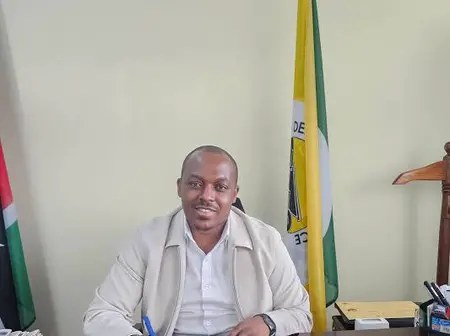
    Nathaniel Mong'are has defended the government's decision to raise taxes, saying the money is needed to finance national development and fund the country's ambitions.

    Speaking on Citizen TV's JK Live programme during a segment titled "Tomorrow's Voices Today in which youth leaders confronted the issues shaping their future, Mong'are said the country had for a long time made peace with mediocrity and that this had to change.

    He argued that raising taxes was a deliberate choice aimed at paying for development rather than settling for limited goals. By linking revenue collection to national ambitions, he presented the policy as an investment in the country's future rather than a burden on citizens.

    Mong'are also called for a shift in the country's political culture, saying the politics of exclusion must come to an end and be replaced by a policy of inclusion.

    He did not, in the remarks quoted specify which groups he believed had been shut out, but the call fits into a wider national conversation about representation, access to opportunities and the distribution of public resources.

    His comments are likely to draw mixed reactions. Taxation has been among the most contentious issues in recent years, with many Kenyans, particularly young people, voicing concern over the cost of living and the pressure of new levies on household and business incomes.

    Government supporters, on the other hand, maintain that higher revenue is necessary to reduce borrowing, service debt and pay for infrastructure, education and health programmes.

    The JK Live segment brought together young leaders to discuss the issues shaping the country's future, with taxation, jobs, technology and political participation featuring prominently in the conversation.

    Mong'are's remarks add to a series of statements from the panel in which he has defended the administration's record, including on the pace of digitisation.

    As the country moves towards the 2027 General Election, debate over how the government raises and spends public money is expected to remain central to political discourse

    Link; https://x.com/citizentvkenya/status/2120615458923487475?a=4JKM7GO_t5Epx1tB55M&s=19
  • “Kenyans Have Already Decided” Uhuru Breaks Down the Biggest Challenge Facing Kenya’s Opposition

    “Kenyans Have Already Decided” Uhuru Breaks Down the Biggest Challenge Facing Kenya’s Opposition

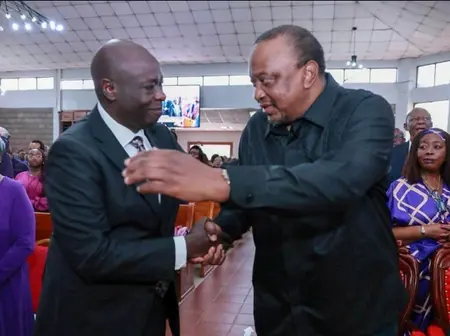
    Speaking on Wednesday, November 11, 2026, during the funeral gathering of his cousin Beatrice Wambui Muturi, Uhuru argued that opposition unity would be essential if the political group hopes to challenge President William Ruto.

    He told leaders present, including former Deputy President Rigathi Gachagua, Wiper leader Kalonzo Musyoka and Eugene Wamalwa, that the country can only have one president at a time.

    Uhuru urged the politicians to consult their supporters, organise their respective parties and reach an agreement on who should carry the opposition's presidential flag.

    He also called on them to unite behind their chosen candidate and work towards offering Kenyans what he described as peaceful, prosperous and fair leadership.

    The former president's remarks placed the spotlight on the challenge of balancing individual political ambitions with the need for a common opposition strategy.

    The gathering also featured a warm exchange between Uhuru and Gachagua, who leads the Democracy for the Citizens Party (DCP).

    Gachagua said he had maintained a close relationship with the Kenyatta family for more than 17 years. He suggested that past disagreements were attempts by outsiders to create divisions between them.

    The former Deputy President also joked that he had spent KSh1.5 million belonging to Uhuru during the 2017 repeat presidential campaign and had yet to refund the money.

    Uhuru responded humorously, saying he had not forgotten the debt and would visit Gachagua at his Wamunyoro home to collect it.

    Their exchange added a lighter moment to a gathering that also carried political significance.

    With the August 10, 2027 election approaching, Uhuru's message has renewed attention on the opposition's efforts to agree on a common presidential candidate.

  • Meet the Two Leaders Sifuna Has Picked to Join Him on His US Diaspora Tour Next Week

    Meet the Two Leaders Sifuna Has Picked to Join Him on His US Diaspora Tour Next Week

    According to The Star, the delegation will travel from November 20 to December 4, with Allentown, Pennsylvania, scheduled as the first stop.

    Sifuna has picked Godfrey Osotsi, identified as the party chairman, and Richard Onyonka, the movement's treasurer, to join him on the trip.

    The three leaders are expected to represent the movement during engagements with Kenyans in the diaspora, who have remained interested in political developments back home.

    One of the activities announced ahead of the visit is a fundraising dinner scheduled for November 24, four days after the delegation's arrival.

    Osotsi's inclusion brings the party's organisational leadership into the delegation, while Onyonka's presence comes as the group prepares for an event centred partly on fundraising.

    For Sifuna, the visit offers an opportunity to take the movement's message beyond Kenya and interact with citizens who continue to follow local political affairs from abroad.

    Kenyans living in the diaspora also play an important role in the country's economy through remittances, making them a significant audience for political leaders seeking to expand their networks.

    However, details of the delegation's other planned activities, including additional destinations and meetings, have not yet been provided.

    The tour comes as political groups continue organising and building support ahead of the 2027 General Election.

    https://www.facebook.com/100064776546036/posts/1619969650172238/?mibextid=rS40aB7S9Ucbxw6v

  • Simba Arati Sets Conditions for Leaders Seeking to Address Crowd During Ruto’s Kisii Visit

    Simba Arati Sets Conditions for Leaders Seeking to Address Crowd During Ruto’s Kisii Visit

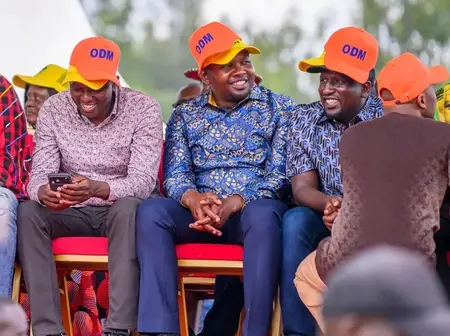
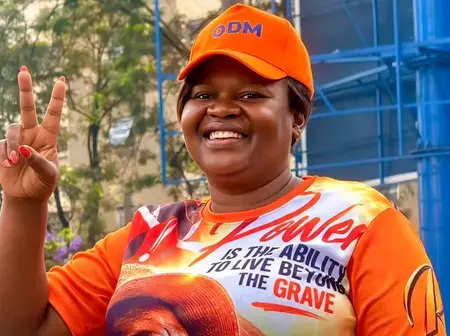
    Politicians and visiting dignitaries seeking an opportunity to speak at the Agricultural Training Centre (ATC) were required to wear Orange Democratic Movement (ODM) caps, placing the party’s colours at the centre of the event.

    The directive presented an unusual situation for leaders associated with the United Democratic Alliance (UDA), who had to find a way to comply while maintaining their party identity.

    National Assembly Majority Leader Kimani Ichung’wah and South Mugirango MP Silvanus Osoro were among those who followed the instruction.

    Both leaders addressed residents wearing ODM and UDA caps, creating a striking moment at the rally.

    Ichung’wah complied with the arrangement despite his association with the ruling UDA party. Osoro, who has previously had political disagreements with Arati, also wore both party-branded caps before speaking to the crowd.

    Arati is an ODM governor, while Ichung’wah and Osoro are associated with UDA. Their appearance in the two sets of caps offered a visible example of how visiting politicians navigated the event's dress-code requirement.

    Kisii County Woman Representative Dorice Aburi was notably absent from the function. Her absence was reported amid political differences with the governor, although the circumstances surrounding it were not detailed.

    The gathering came during Ruto’s development tour of Kisii and Nyamira counties, where leaders from the region had an opportunity to address residents.

    Arati’s directive became one of the memorable moments of the rally, drawing attention to ODM’s influence at a public event attended by the President and politicians from different parties.

    https://www.facebook.com/100063540348064/posts/1766429952151666/?mibextid=rS40aB7S9Ucbxw6v

  • Language Policy Unchanged as Court Turns Down Indigenous Languages Petition

    Language Policy Unchanged as Court Turns Down Indigenous Languages Petition

    A court has rejected a petition seeking to have indigenous languages used as the medium of instruction in schools dealing a setback to those pushing for greater use of mother tongues in the classroom.

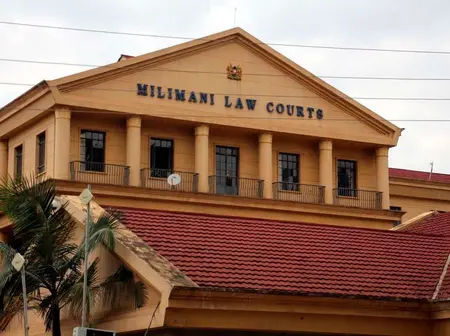
    The ruling was delivered at the Milimani Law Courts in Nairobi where the petition was heard. The case sought to have local languages adopted for teaching a proposal that has long divided education stakeholders, linguists and parents.

    Supporters of mother-tongue instruction argue that children learn faster and understand concepts better when taught in the language spoken at home, particularly in the early years of schooling.

    They also say the approach helps preserve indigenous languages and cultural identity at a time when many are under pressure from English and Kiswahili.

    Opponents however have raised concerns about the practical challenges of implementation including the shortage of teachers trained in local languages the lack of learning materials and the diversity of languages in urban and cosmopolitan schools.

    Some parents have also worried that heavy emphasis on local languages could disadvantage learners in national examinations which are mostly administered in English.

    The decision means the current language policy in schools remains unchanged with English and Kiswahili continuing as the main languages of instruction at most levels, while indigenous languages are typically taught as subjects or used in the early grades.

    The outcome is likely to reignite debate on how best to balance cultural heritage, learning outcomes and national unity within the education system.

    Education stakeholders are expected to continue engaging on the issue, even as the court's decision settles the matter for now.

    Link; https://x.com/citizentvkenya/status/2120615458923487475?a=o7V4q4_W54_xLjn5eBE&s=19

  • Stunning Images of Didmus Barasa’s Look Without His Red Hat and Glasses Leaves Kenyans Talking

    Stunning Images of Didmus Barasa’s Look Without His Red Hat and Glasses Leaves Kenyans Talking

    The legislator posted the clip on TikTok, where he appeared seated outdoors in casual clothes. His decision to leave out the red fez-style headgear, which has become a defining part of his public image, quickly caught viewers’ attention.

    Barasa is rarely seen at public events without the distinctive hat. Its absence has even attracted attention in Parliament, where fellow lawmakers have previously raised points of order when he appeared in the House without it.

    In the latest video, the MP is seated on a grassy outdoor spot, holding his phone as he interacts with someone nearby.

    He later lowers the device, picks up a pair of black-rimmed glasses and puts them on before continuing the conversation.

    A companion dressed in yellow is partly visible beside him, although the clip does not reveal much about their interaction.

    It was the missing red hat, rather than the casual setting, that became the main talking point among viewers.

    Several users responded with humorous comments, with some saying they had rarely seen the MP without the accessory.

    One commenter, mama neema, said it was the first time they had seen Barasa without his trademark hat.

    Abby Nasambu joked in Swahili that she had always thought the legislator was around her age, while Maweu Snr said they initially mistook him for another politician, Josphat Nanok.

    The reactions demonstrated how closely Barasa’s red headgear has become associated with his identity.

    Known for his outspoken political statements and distinctive dressing, the Kimilili MP has built a recognisable public image. However, his latest TikTok appearance showed that even a simple change in his usual style can attract considerable attention online.

    https://www.tuko.co.ke/entertainment/celebrities/646420-didmus-barasa-reactions-kenyans-spot-mp-signature-red-hat-glasses/?fbclid=IwZXh0bgNhZW0CMTEAcGRvZgRzcnRjBmFwcF9pZA80MDk5NjI2MjMwODU2MDkAAR9rqbaBJ9TyL-bmXlLI5f2pcy90oSB_OsZF_GR_Q_zP6vSbRSMfTauE-tGcIQ_aem_vmJm8FclX2o27tCcajNiPA

  • “Is This How You Treat a Governor?” Ndegwa Njiru Sends Simba Arati a Painful Message

    “Is This How You Treat a Governor?” Ndegwa Njiru Sends Simba Arati a Painful Message

    The governor reportedly faced an uncomfortable moment when Farouk Kibet intervened and asked him to leave the podium.

    The incident has sparked questions about Arati’s standing among the President’s allies and the respect he commands within the political camp he supports.

    In a pointed post on X, Njiru questioned why Arati would continue supporting President Ruto’s political camp despite what he viewed as the governor’s treatment at the event.

    He also drew attention to the contrast between the WANTAM and TUTAM political slogans, questioning how Arati could previously be associated with one side but now campaign for the other.

    “Waaah hii madharau imefika hapo na Mr. WANTAM anataka Wakisii wamvote TUTAM?” Njiru wrote.

    He went on to address the governor directly, claiming that Arati was being treated like “a little village errand boy” because, in his view, he had failed to take a firm political position.

    The remarks come at a time when political leaders are intensifying their efforts to secure support in the Gusii region ahead of the 2027 General Election.

    During his November 11 visit, Arati publicly declared his support for Ruto’s re-election bid, expressing confidence that Kisii would continue backing the broad-based government.

    Other political leaders, including Kirinyaga Governor Anne Waiguru, also used the occasion to rally support for the President’s second term.

    Njiru’s criticism has now placed Arati’s political loyalty and relationship with Ruto’s allies under fresh scrutiny.

    His remarks raise questions about whether the Kisii governor is getting the political recognition he expects from the camp he has chosen to support.

    With the 2027 elections approaching, Arati’s political decisions and his relationship with the President’s allies are likely to remain subjects of public debate.

    https://x.com/NjiruAdv/status/2120567263057285444?s=19

  • High Court Rejects Bid to Introduce Indigenous Languages as Teaching Languages in Kenyan Schools

    High Court Rejects Bid to Introduce Indigenous Languages as Teaching Languages in Kenyan Schools

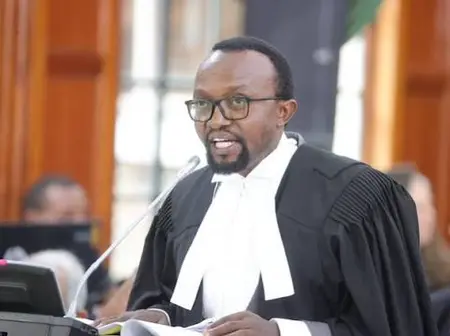
    In a judgment delivered on November 9, 2026, Justice Stephen Mbungi ruled that the Constitution does not require the government to make indigenous languages compulsory languages of instruction in all schools.

    The case was filed by education rights advocate Ernest Achesa Makhambala, who challenged the government's preference for English, arguing that the policy disadvantages children who struggle to understand the language, particularly those from rural communities.

    Makhambala argued that using English as the main language of instruction creates unnecessary barriers for learners whose first language is an indigenous language. He maintained that children would understand lessons better if they were taught in languages they were familiar with.

    He also accused the government and the Kenya Institute of Curriculum Development (KICD) of failing to give indigenous languages sufficient recognition in the education system.

    The petitioner wanted the court to compel the Ministry of Education and KICD to develop separate curriculum designs for at least 30 indigenous languages and dialects within 365 days.

    However, Justice Mbungi dismissed the arguments, explaining that although the Constitution encourages the promotion and development of indigenous languages, it does not make their use mandatory in every learning institution.

    The judge pointed out that Article 7 of the Constitution recognises Kiswahili as the national language and both Kiswahili and English as official languages.

    He further observed that Kenya's linguistic diversity makes it impractical to require every school to teach exclusively in the mother tongue of individual learners.

    The court also found that the petitioner had failed to demonstrate how the government's language policy violated children's constitutional right to free and compulsory basic education.

    Additionally, the judge clarified that the absence of approved textbooks in indigenous languages does not automatically mean that their use has been prohibited in early learning.

    Following the decision, Makhambala expressed disappointment and indicated that he intends to challenge the ruling at the Court of Appeal after reviewing the full judgment.

    He maintained that children should be taught in languages they understand while gradually developing proficiency in English and other languages.

    The ruling leaves the existing language policy in place, although the constitutional responsibility to promote and protect Kenya's indigenous languages remains.

    Source

  • The Entire Gusii Region Affirms Its Support for the Broad-Based Coalition-Gladys Wanga

    The Entire Gusii Region Affirms Its Support for the Broad-Based Coalition-Gladys Wanga

    According to a statement shared by Governor Gladys Wanga, the event brought together President William Ruto and other political leaders for what was described as a mega public rally. The gathering attracted large crowds, with supporters from different parts of the Gusii region turning up to witness the political meeting.

    In her message, Wanga said the spirit of unity extended across several parts of the region, mentioning areas from Keroka to Suneka and from Ikonge to Ogembo. She said residents were expressing support for the Broad-Based Coalition and embracing the message of working together.

    The Kisii rally is significant because the Gusii region remains an important political area whose leaders and voters can influence national conversations. Large public gatherings also provide political leaders with an opportunity to demonstrate support, communicate their agenda and strengthen connections with local communities.

    However, public rallies are only one part of the wider political picture. The real test for any broad-based political arrangement will be whether the cooperation translates into meaningful development, improved services and solutions to the concerns facing ordinary citizens.

    For many Kenyans, issues such as employment opportunities, the cost of living, infrastructure and access to quality public services remain more important than political slogans alone. Leaders participating in such alliances will therefore face pressure to demonstrate how their cooperation can produce practical results.

    The huge turnout in Kisii nevertheless sends a clear message about the continuing importance of the Gusii region in Kenya’s political landscape. As national political alliances continue to evolve, attention will remain on whether the unity displayed at public rallies can be sustained beyond the campaign platforms.

    What are your views on the political message and the huge turnout witnessed in Kisii? Please share your remarks and opinions in the comment section below.

  • Oga Obinna Reveals Progress of Rironi-Mau Summit Road in Fresh Video

    Oga Obinna Reveals Progress of Rironi-Mau Summit Road in Fresh Video

    Obinna posted a video on Wednesday, November 11, while travelling towards Kisumu. He showed sections of the busy highway where construction work is ongoing, repeatedly referring to it sarcastically as President William Ruto’s road.

    The content creator used the footage to respond to people who have questioned his recent posts highlighting infrastructure projects associated with the current administration.

    In the video, Obinna jokingly suggested that he would not show viewers the road or the bypass and overpass under construction because some critics did not consider such projects meaningful development.

    He maintained the sarcastic tone as he described the visible progress, saying he would keep quiet rather than invite criticism for showcasing the work.

    However, he eventually gave his assessment of the project's progress, putting completion at approximately 75 per cent.

    “About 75% done on Rironi-Mau Summit Road, but guys, worry not, I will not post since it is not development,” he said.

    The latest update follows another infrastructure tour in which Obinna visited the newly constructed Enziu Bridge in Mwingi Central, Kitui County.

    During that visit, he jokingly suggested that the bridge was generated using artificial intelligence before showing it to his audience. He also highlighted its importance to residents, particularly during rainy seasons when flooding has previously disrupted movement.

    Obinna has increasingly used his social media platforms to document government projects, often mixing infrastructure updates with humour directed at critics. His latest video continued that approach, drawing attention to the ongoing road works while mocking those who question his development-related posts.

    Barabara ya Ruto: Obinna shows off Rironi-Mau Summit road under construction