Blog

  • Ida Odinga Breaks Silence on ODM, Reveals Where Raila Left Her Politically

    Ida Odinga Breaks Silence on ODM, Reveals Where Raila Left Her Politically

    Ida Odinga, the widow of the late former Prime Minister Raila Odinga, has publicly declared for the first time that she remains firmly in the Orange Democratic Movement (ODM) and the broad-based government.

    Speaking in Homa Bay County on Tuesday during the launch of the Gembe Hills Participatory Management Plan in Suba North Subcounty alongside area MP Millie Mabona, Ida stated that Raila had left her positioned within ODM and the national administration, where she intends to stay.

    “When Baba left us, Hon. Raila Amollo Odinga, who was my husband, he left us suddenly. And he was gone. Some people reached (where he was), and some did not reach.”

    “Where he left me is where I am still standing,” Ida said.

    Addressing supporters and local leaders, Ida acknowledged that the sudden loss of the veteran opposition leader had left many of his followers and supporters confused. However, she urged them to hold their ground and remain committed to the path Raila laid out before his passing.

    “I know he left a lot of people. Where he left you is where you should stand. You don’t move,” she said.

    “For me, he left me in ODM. That is why there is where I still stand. He left me in broad-based. That is where I stand,” Ida added.

    Ida revealed that Raila explicitly instructed her to support the current administration under President William Ruto and remain an active player in the broad-based governance framework.

    “He told me President William Ruto led the country and that I should remain in the broad-based government,” she shared.

    President Ruto appointed Ida as Kenya’s Permanent Representative to the United Nations Environment Programme (UNEP) in 2026. The strategic diplomatic assignment followed efforts to foster national unity and consolidate political ties across traditional strongholds in the wake of Raila’s passing on October 15, 2025.

  • Uhuru Sends Message to Gachagua, Kalonzo and Other Opposition Leaders Over 2027

    Uhuru Sends Message to Gachagua, Kalonzo and Other Opposition Leaders Over 2027

    Former President Uhuru Kenyatta urged opposition leaders to set aside personal ambitions and unite their political efforts, saying Kenyans increasingly wanted them to offer a shared alternative direction for the country.

    “What happened in the past is in the past. What should concern Kenyans is where we are going,” he said.

    Addressing Rigathi Gachagua, Stephen Kalonzo Musyoka, Eugene Wamalwa, and other leaders, Kenyatta said political leadership required compromise because only one person could hold the presidency at a time.

    “As I keep telling my brothers here, Steve, Rigathi, Eugene, and others, unajua kiti inaweza kukaliwa na mtu mmoja. Pia mimi naskiza ground, sio ati masikio imefungwa,” he stated.

    Kenyatta said his conversations with ordinary Kenyans had shown him that many wanted opposition leaders to unite.

    “Ninapotembea ground kutafuta kauji, nasikia watu wakisema ni kama wameamua kwamba shida yao ni moja, na hiyo shida ni umoja wa hii watu,” he said.

    “Watu wanataka kuona hawa viongozi wetu wakishikana, lakini nahisi wameamua mahali wanaenda. Viongozi wetu, mjipange na muungane mtimize vile Wakenya wanataka.”

    He said he believed the leaders would respond to the public’s call while stressing that justice must guide any effort to unite the country.

    “And I am sure that is what you will deliver for us, with justice. There can be no peace without justice,” he added.

    Gachagua, meanwhile, used a story about a herder, a hyena, and missing sheep to describe his political experiences. Speaking in Kikuyu, the DCP leader said a trusted herder had allowed a hyena into a flock, after which two sheep disappeared.

    Gachagua said people initially ignored warnings about the danger, but the situation later worsened, and he was sent home. He then asked whether others would help him remove the hyena without harming the rest of the flock.

    “Uhuru has warned us about a hyena which would later eat the sheep. But I, Gachagua, objected,” Gachagua said.

    “The leopard started eating small ones one by one… later, the animal jumped on Gachagua and removed one eye and started limping, heading to Wamunyoro,” he added.

    He also praised Kenyatta’s recent political remarks, saying leaders should learn from past mistakes and heed the advice of experienced figures.

    “Baba Ngina warned us: to err is not a mistake, but to repeat. Shall we heed him?” Gachagua asked.

    “What is the moral of that story? Let us be listening and heeding to our leaders.”

    Kalonzo on his part defended Kenyatta’s continued participation in national debate, saying retirement from public office did not take away his right to comment on the country’s future.

    “We wanted Uhuru to stay out of this as we transform the country, but he is entitled to his opinion and still has the right to contribute to national discourse,” Kalonzo said.

    The Wiper Party leader also called for greater political unity, saying Kenyans shared responsibility for addressing the country’s challenges.

    “It is time for all of us to rescue the nation-state,” he said.

    Kalonzo defended young people’s right to express their political views and criticised calls to shoot protesters in the legs.

    “When somebody says, ‘Shoot Gen Z in the leg,’ that is a presidential fear. And this is why Kenyans are united in calling for one term,” he said.

    “Young Kenyans have the right to express their political opinions. Next year, they will go to the ballot and say, ‘You wanted to shoot us in the legs; we will shoot you at the ballot.’”

  • Duale Says No to Quarantine Centre for Foreign Ebola Patients as All 7 Patients Recover

    Duale Says No to Quarantine Centre for Foreign Ebola Patients as All 7 Patients Recover

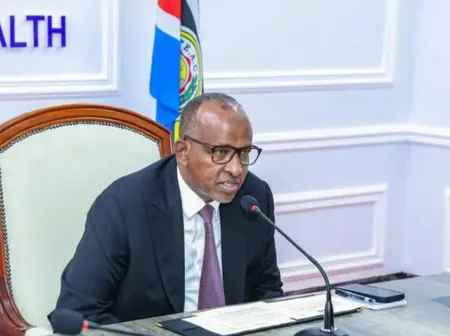
    Speaking at a news conference on Wednesday, November 11, 2026, Duale announced that all seven patients who tested positive for the virus have fully recovered and left the hospital. Every individual who had contact with the infected patients has also completed mandatory medical monitoring.

    “Today with the discharge of the last patient we can confirm and tell the world that 7 patients have recovered and all contacts have completed their follow-up monitoring,” Duale said.

    The discharges mark a major milestone in Kenya’s outbreak response since health officials first detected the virus on October 3. Overall, the country recorded nine infections and two deaths during the outbreak.

    Government agencies plan to maintain heightened surveillance across all regions to stop any further transmission. If no new cases arise during the required 42-day monitoring period, public health officials will officially declare Kenya Ebola-free on December 23, 2026.

    “The countdown is not the end of our response. During the 42 days, we will heighten vigilance and surveillance, and our teams will still continue doing what they did during the period,” Duale said.

    Health teams will keep screening travelers at all points of entry and investigate any suspected cases or alerts. Duale clarified that Kenya remains open for trade, business, and international tourism, despite travel restrictions that several foreign jurisdictions imposed following the initial outbreak. He criticized those travel bans, noting that certain nations treated Kenya unfairly despite its prompt data sharing and compliance with international health standards.

    “We published our figures, we shared our data, and we kept our borders open as international health regulations require,” he said. “Regrettably, some jurisdictions responded to that honesty, transparency, and accountability with blanket travel and visa restrictions on Kenya,” Duale added.

    He called on affected foreign governments to review and lift these barriers immediately, maintaining that zero active cases or community transmission exist to justify them.

    “Kenya has no patient under treatment, Kenya has no community transmission, and Kenya has no contact in quarantine. There is no basis for restrictions for Kenyan travellers. Transparency must be rewarded, not punished,” he said.

    Duale firmly rejected proposals to host or treat international Ebola patients inside Kenyan borders. However, he declined to comment on future operational plans for the Laikipia Ebola Isolation Centre in Nanyuki, citing active judicial proceedings.

    “The matter is before court, so we will not answer that question,” he stated.

    The Kenyan and United States governments originally established the specialized facility at Laikipia Air Base to monitor and isolate individuals arriving from regional outbreak zones, including Uganda and the Democratic Republic of Congo.

  • Parliament Passes Bill Barring Hospitals From Detaining Patients Over Unpaid Bills

    Parliament Passes Bill Barring Hospitals From Detaining Patients Over Unpaid Bills

    Sponsored by Kirinyaga Woman Representative Njeri Maina, the Bill seeks to seal legal loopholes that hospitals have long exploited to hold patients and human remains as financial security. Maina and supporting lawmakers noted that these practices force vulnerable families into severe emotional and financial distress when attempting to secure the release of loved ones.

    Under the proposed law, medical facilities can no longer detain individuals who have received official medical clearance but lack immediate funds to settle their treatment balances. The legislation protects patient freedom and ensures that bereaved families retain the right to collect and bury deceased relatives without financial conditions attached.

    While supporting the legislation, National Assembly Health Committee Chairperson James Nyikal pointed out that solving hospital debt cycles requires broader systemic reform. He urged Kenyans to maintain consistent contributions to the Social Health Authority (SHA) scheme to prevent financial crises at the point of care.

    According to Nyikal, routine SHA contributions will build a reliable fund that eases the burden on both health facilities and low-income households unable to pay out-of-pocket costs.

    The Bill now proceeds to the Senate for further consideration and approval. If the Senate passes the draft without major amendments, it will move to President William Ruto for executive assent. Once signed into law, the legislation will officially criminalize patient detention and body retention across all health facilities nationwide.

  • Kasuku Unveils New Brand Identity: Dream. Learn. Become

    Kasuku Unveils New Brand Identity: Dream. Learn. Become

    The relaunch marks a new chapter for the brand as it strengthens its connection to education and reaffirms its belief in every child’s potential.

    The new brand identity, unveiled at a relaunch event held at Mövenpick Hotel, Westlands, Nairobi, brought together members of the media, education stakeholders, partners and other key guests to mark the evolution of one of Kenya’s longstanding stationery brands.

    “For more than 60 years, Kasuku has been part of Kenyan students’ learning journeys, supporting everyday moments of writing, creativity and expression. The refreshed positioning builds on this heritage and broadens the brand’s story beyond stationery, placing children’s dreams, learning and future potential at its heart,” said Asitha Samaraweera, CEO Twiga Stationers & Printers Ltd.

    “Dream. Learn. Become. reflects the journey of a child: imagining what is possible, developing through learning, and growing into the person they aspire to be. Kasuku believes that every child deserves to dream boldly, create freely and shape a future they believe in.”

    He added: “Kasuku has been part of children’s learning journeys for generations. Now, we want to keep showing up with products they trust and a belief in all they can dream, learn and become.”

    While the brand’s look and visual identity have evolved, Kasuku’s commitment to quality and reliable stationery remains unchanged.

    The brand, Samarweera said, will continue to serve learners, parents and teachers while exploring meaningful ways to bring its purpose to life across its products, initiatives and relationships with the education community.

    “As part of this next chapter, Kasuku will soon introduce Share Your Dream, an initiative that will invite children to share their dreams and inspire one another. The initiative will be an early expression of Kasuku’s wider purpose and its belief that every child’s aspirations deserve to be heard and encouraged,” he said.

  • Kenyan Tea Set to Return to Sudan as 20-Month Trade Ban Lifted

    Kenyan Tea Set to Return to Sudan as 20-Month Trade Ban Lifted

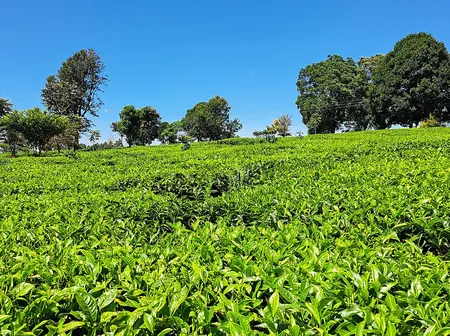
    Rows of tea bushes growing on a farm in Kenya

    Kenyan tea exporters are set to regain access to the Sudanese market after Sudan lifted a trade ban in place for 20 months, according to a report published on 12 November 2026.

    The restrictions had disrupted shipments and left billions of shillings worth of tea stranded, closing off one of Kenya’s key regional buyers.

    Sudan imposed the ban in March 2025, following diplomatic tensions after Kenya hosted the paramilitary RSF leader Mohammed Hamdan Dagalo and other Sudanese political groups in Nairobi.

    The reopening followed diplomatic engagements between President William Ruto and Sudanese Prime Minister Camille Idris on the sidelines of a COMESA Summit. The date and location of that summit were not specified.

    The impact on Kenya’s tea trade was significant. In 2023, Kenya exported 15.9 million kilogrammes of tea to Sudan, worth Ksh3.8 billion. By 2025, volumes had dropped to 6.8 million kilogrammes valued at Ksh1.5 billion.

    As of August 2026, more than 3.4 million kilogrammes of Kenyan tea, valued at over Ksh1.34 billion, remained in warehouses in Mombasa. The stocks proved difficult to redirect to other international markets.

    The ban also drew political attention. On Thursday, 6 August 2026, Wiper Party leader Kalonzo Musyoka visited the Embassy of the Republic of Sudan in Nairobi to present Kenya’s plea for the ban to be lifted. He warned of heavy losses, saying the ban had dealt a severe blow to Kenya’s tea industry.

    Musyoka said the products could not easily be redirected, resulting in mounting losses, lower auction prices and reduced earnings for farmers. He stated that restoring access to the Sudanese market would protect livelihoods, support farmers and preserve economic ties.

    The exact date the ban was lifted has not been specified. The government has not issued a statement on the development, and it remains unclear when shipments will resume.

  • Senator challenges KRA over proposed tax exemptions for persons with disabilities

    Senator challenges KRA over proposed tax exemptions for persons with disabilities

    Nominated Senator Crystal Asige

    Nominated Senator Crystal Asige has raised objections to several provisions within the draft Income Tax (Persons with Disabilities, Parents or Guardians Tax Exemptions) Regulations, 2026, concerning tax relief for individuals with disabilities in Kenya.

    The Senator focused her concerns on the structure of the proposed exemptions, specifically Regulation 10(2), which introduces varying levels of tax relief based on disability severity. Asige argued that this segmented approach could inadvertently create financial disadvantages for individuals classified with milder disabilities.

    Furthermore, she contested the introduction of a proposed Ksh1,000 processing fee for parents or guardians applying for tax exemptions for caring for persons with severe disabilities. This fee was questioned by the Nominated Senator on grounds that it appears to conflict with the stipulations of the Persons with Disabilities Act, 2025, which she contends repealed such assessment charges.

    The draft regulations also propose a mandatory reassessment for persons with permanent disabilities every five years. Asige countered this requirement by asserting that permanent conditions imply permanence, suggesting the five-year cycle is unsuitable for those with long-term physical impairments.

    KRA stated that the proposed regulations aim to formalise procedures for implementing tax exemptions already mandated under the Persons with Disabilities Act, 2025. These rules currently outline a provision for a tax exemption for one parent or guardian caring for a child with a certified severe disability who is unable to meet basic needs. However, Asige raised concerns about the proposal’s inability to accommodate families where both parents share caregiving responsibilities or those raising multiple children with disabilities.

    The Kenya Revenue Authority has opened a period for public and stakeholder feedback on these draft rules, setting the submission deadline for November 24, 2026. Following the review, Nominated Senator Asige indicated her intention to submit formal interventions challenging any provisions she deems inconsistent with the constitutional rights of persons with disabilities.

  • Kenya Extends Lower Sulphur Fuel Limits for Six Months Over Middle East Supply Risks

    Kenya Extends Lower Sulphur Fuel Limits for Six Months Over Middle East Supply Risks

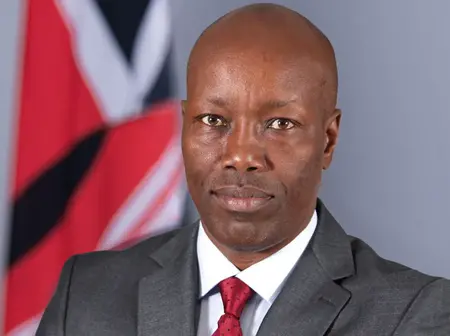
    Official portrait of Lee Kinyanjui

    Kenya will keep its relaxed sulphur limits for petrol and diesel for a further six months, the Ministry of Investments, Trade and Industry announced on 11 November 2026.

    The extension was approved after the Ministry of Energy and Petroleum made a request and the National Standards Council recommended it, according to a ministry press release. The measure is intended to broaden the range of fuel Kenya can import and reduce the risk of supply shortages.

    Trade Cabinet Secretary Lee Kinyanjui said the decision followed a technical assessment of strains on global petroleum supply chains, the geopolitical situation in the Middle East and tensions around the Strait of Hormuz.

    The current maximum allowable sulphur content in automotive gas oil and premium motor spirit is 50mg/kg. The applicable standards are KS EAS 177:2025 for automotive gas oil and KS EAS 158:2025 for premium motor spirit.

    The government described the adjustment as strictly temporary. It will be reviewed at the end of the six-month period, or sooner should global supply conditions stabilise. No permanent change to fuel quality standards is proposed, and the measure will lapse or be revisited once supply conditions allow a return to the standard limits.

    The ministry said the objective is to maintain uninterrupted fuel availability and protect economic stability.

    The announcement comes ahead of the Energy and Petroleum Regulatory Authority’s scheduled monthly fuel price review on 14 November 2026.

  • Ruto Directive Reshapes KRA Clearance of Imported Used Cars via NTSA

    Ruto Directive Reshapes KRA Clearance of Imported Used Cars via NTSA

    The operational shift follows an executive directive issued by President William Ruto through the National Transport and Safety Authority (NTSA), detailed in an internal circular from KRA’s Customs and Border Control Department.

    “The President issued a directive through NTSA that vehicles imported by licensed dealers be released upon payment of all applicable customs duties, taxes and levies pending completion of the vehicle registration process,” the circular stated.

    Under the revised framework, the clearance sequence follows a streamlined multi-stage path.

    First, licensed dealers lodge an import declaration through the Integrated Customs Management System (iCMS) upon a vehicle’s arrival. Dealers pay standard customs duties, taxes, and levies at this initial stage, while NTSA registration fees and associated administrative levies remain deferred until the unit sells.

    Following confirmation of payment, customs officers perform a physical inspection of the vehicle. A centralized release officer then evaluates the entry records and grants official authorization for release.

    Before moving any vehicle out of the customs precinct, dealers apply for a Kenya Dealer (KD) identifier via the NTSA digital platform. NTSA generates a unique identifier pairing the dealer’s KD number with the vehicle’s specific chassis number, which automatically synchronizes with KRA’s customs database.

    Finally, a border control officer verifies that the identifier logged in iCMS mirrors the physical details displayed on the vehicle.

    “If the details match, then the motor vehicle can be released to the dealer for onward transfer to the dealer’s yard,” KRA noted.

    Vehicles can now remain on display at dealer premises while businesses secure buyers. Once a transaction is completed, the dealer submits a formal registration application to NTSA and settles the outstanding registration fees via the eCitizen portal.

    KRA confirmed that the newly assigned registration number will transmit directly to the customs system through an application programming interface (API), ensuring real-time data reconciliation and comprehensive audit tracking.

  • Bill Would Cap County Revenue Projections at 15% Above Audited Collections

    Bill Would Cap County Revenue Projections at 15% Above Audited Collections

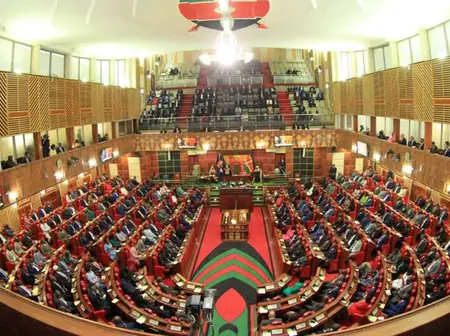
    Parliament of Kenya building in Nairobi, seen from above

    Counties would be barred from projecting own-source revenue more than 15 per cent above their last reported and audited collections under a bill now before the Senate Finance and Budget Committee.

    The Public Finance Management (Amendment) Bill, 2026 is sponsored by Kiambu Senator Karungo Thang’wa. It targets three provisions of the Public Finance Management Act: Section 107(2), Section 131 and Section 135, where it would insert a new subsection.

    The case for the ceiling rests on collection shortfalls. Counties raised Sh96.08 billion in own-source revenue last financial year against a target of Sh106.08 billion, leaving a gap of roughly Sh10 billion.

    The County Governments Budget Implementation Review Report for 2025-26 points to a wider pattern: 20 counties collected less than three-quarters of the revenue they had approved in their budgets.

    Under the proposal, county assemblies reviewing budget estimates from county executives would have to confirm that projected own-source revenue sits within the 15 per cent limit. Where a county collects more than it projected, it would be required to take a supplementary budget back to its assembly.

    The bill remains under consideration. It has not been passed, and the committee has not set out a timeline for its decision.