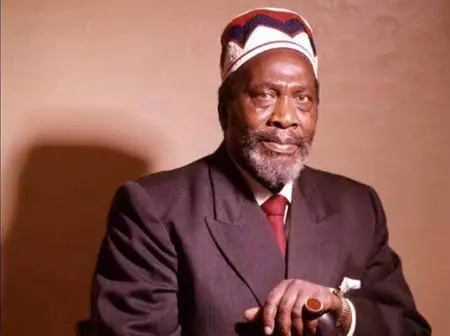
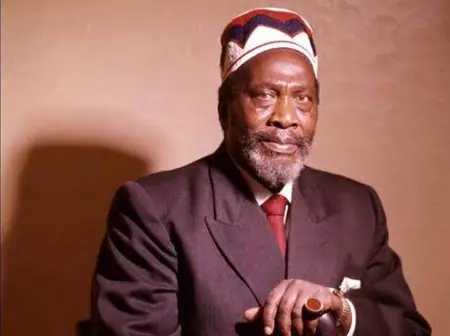
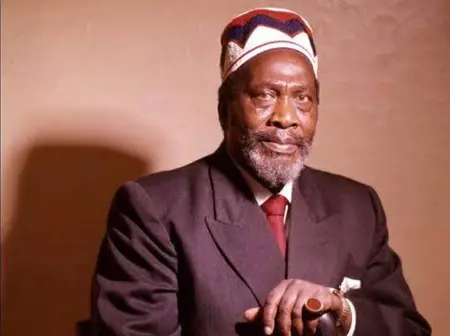
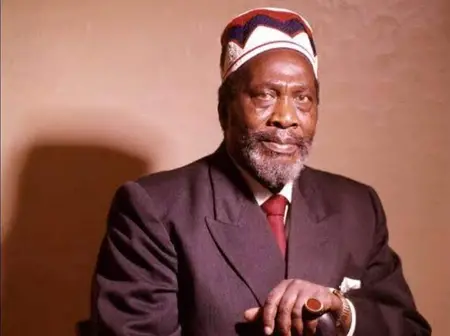
Kenyan billionaire and former Cabinet Minister Njenga Karume once found himself in an unexpected situation after being summoned to Jomo Kenyatta’s home in Gatundu, where he was subjected to a controversial loyalty oath.
In his autobiography, Beyond Expectations, Karume recounted that the incident happened in 1969 following the assassination of powerful minister Tom Mboya, which heightened political tensions in the country.
Karume explained that Kariuki Kimani wa Mbagi, a manager at Kenyatta's firm in Njiru, informed him that the president urgently wanted to see him in Gatundu.
After meeting in Ruiru, the two travelled to Gatundu together. However, instead of being taken to Kenyatta's main house, Karume was directed to the security quarters and ushered into a dark room.
To his surprise, he found his old friend Kaniu Kinyanjui and several other men holding pangas. He was then instructed to remove his clothes.
Karume realised that he had been brought for an oath-taking ceremony. He revealed that the ritual involved chewing a strange substance and pledging loyalty to Jomo Kenyatta, his government and Kikuyu leadership.
He later questioned why such an exercise had been conducted at the president's residence, adding that he suspected Kenyatta might not have known what was happening.
Media personality Janet Mbugua and gospel singer Mercy Masika have finally met face-to-face weeks after their public disagreement over the latter’s upcoming Becoming a Wife masterclass.
The two personalities shared a joint Instagram post featuring them seated together on what appeared to be a television studio set, suggesting they had recorded a conversation addressing the controversy surrounding the programme.
In their caption, Mbugua and Masika disclosed that they had taken time to discuss their differing views on marriage and ministry.
“Marriage ministry isn’t new,” they wrote.
The two added that the priority should be ensuring families reached through marriage initiatives feel safe and supported, rather than focusing on whether everyone agrees on every issue.
“Making sure every marriage it reaches is safe and supported is what matters now,” part of their message read.
They further observed that people could have different opinions while still sharing a common goal of supporting families.
However, they did not reveal where the conversation was recorded or when it would be made available to the public.
Their meeting comes weeks after Mbugua publicly questioned Masika’s decision to organise a marriage masterclass exclusively targeting women.
The media personality raised concerns about the timing and focus of the programme, arguing that religious institutions should also use their platforms to address pressing issues such as femicide, sexual abuse and gender-based violence.
She also questioned why women were repeatedly being taught how to become better wives while less attention was being directed towards men and their responsibilities as husbands.
Mbugua maintained that marriage involves two people and that women should not be expected to shoulder the responsibility of making relationships work on their own.
Her remarks attracted support from several public figures, including actress Kate Actress and YouTuber Raych Gitau.
Masika’s planned programme also received support from other personalities, including media figures Lillian Ng’ang’a and Lynn Ngugi, who argued that women should be free to seek marriage guidance if they wished.
Lady Bishop Kathy Kiuna also publicly encouraged the gospel singer to proceed with the initiative despite the criticism.
The seven-session Becoming a Wife masterclass is scheduled to run from November 21 to December 12, 2026.
When Uhuru Kenyatta married Margaret Kenyatta in 1989, his father, Kenya’s founding President Jomo Kenyatta, had already been dead for 11 years. However, another powerful member of the Kenyatta family was chosen to represent him during the memorable occasion.
The honour went to Dr Njoroge Mungai, a former Cabinet Minister who had become a father figure to Uhuru following the death of his father in 1978.
Mungai was not only a trusted family member but also Jomo Kenyatta’s first cousin. The two shared a grandfather known as Magana.
He was among the most influential figures in Jomo Kenyatta’s government, having served as the founding president’s personal physician and held senior Cabinet positions.
Uhuru maintained a close relationship with Mungai even after his father's death. When the former minister died in 2014, Uhuru mourned him as a father figure.
In a special tribute, Uhuru personally joined other pallbearers in carrying Mungai’s casket, becoming the first and only sitting Kenyan President to perform that role, according to the report.
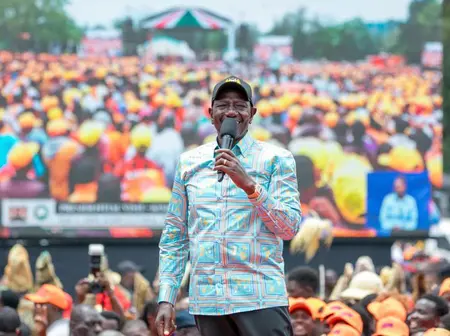
President William Ruto and Nairobi Senator Edwin Sifuna are tied as Kenyans’ preferred candidates to win the 2027 presidential election, each commanding 31 per cent support in a new TIFA Research survey released on Thursday, November 12, 2026.
Former Deputy President Rigathi Gachagua, Wiper leader Kalonzo Musyoka and former Interior Cabinet Secretary Fred Matiang’i trail the two leaders, receiving 4 per cent, 9 per cent and 5 per cent respectively.
According to TIFA, support for other opposition and possible presidential candidates combined stands at 19 per cent, a significant pool of support that could influence the contest if opposition leaders agree on a common candidate.
However, the research firm cautioned against assuming that the combined support would automatically shift to Sifuna or any other opposition hopeful.
“This survey finds President Ruto tied with Nairobi Senator Edwin Sifuna in terms of popularity regarding Kenyans’ preferred winner of next year’s presidential election (leaving aside the question of whether respondents expect/intend to vote). Whereas support for other Opposition/possible presidential candidates combined is substantial (19%) and enough to put Sifuna right up to the required vote-numbers to ‘win’ (50%), in reality no such assumption can be made, given thecompetition within the Opposition, and the inherent advantages of an incumbent. Still, if these popular figures/rankings persist, Sifuna’s status as the potential “single/united Opposition candidate – if there is one – will have to be acknowledged, ” TIFA stated.
TIFA observed that the senator’s growing popularity appears to have come at the expense of other opposition figures rather than Ruto.
“The results of TIFA’s previous three surveys as compared with the current one reveal how Sifuna’s rise has come at the expense of his Opposition colleagues, rather than of President Ruto,” the research firm noted.
The poll also described Sifuna’s emergence as particularly pronounced compared with previous pre-election surveys, although it cautioned that it was impossible to determine whether he and Ruto had reached their popularity peaks.
Regionally, Ruto leads in Central Rift with 59 per cent and Northern Kenya with 62 per cent, while Sifuna commands 55 per cent in Western, 39 per cent in Nairobi and 36 per cent at the Coast.
Kalonzo dominates Lower Eastern with 55 per cent, while Matiang’i records his strongest regional support in Nyanza at 12 per cent.
The survey found that preferred presidential candidates largely reflect respondents’ declared party affiliations.
UDA supporters favour Ruto, Linda Mwananchi supporters prefer Sifuna, Wiper supporters back Kalonzo, while Jubilee supporters lean towards Matiang’i, although his support within the party stands at 57 per cent.
TIFA also found that Sifuna is more popular than Gachagua among DCP supporters, receiving 34 per cent against Gachagua’s 25 per cent.
Among ODM supporters, Ruto attracts 42 per cent compared with Sifuna’s 33 per cent.
Among respondents who support Ruto’s re-election, Deputy President Kithure Kindiki is the preferred running mate, attracting 55 per cent.
Homa Bay Governor Gladys Wanga follows with 12 per cent, while approximately 9 per cent remain undecided about who should occupy the position.
The findings offer an early picture of the political calculations ahead of 2027, but TIFA cautioned that candidate preferences should not be confused with voting intentions.
The opposition’s ability to agree on a single candidate remains a major uncertainty, particularly given the number of politicians competing for support.
Wilson Kasiyimi, a former chauffeur to Kenya’s founding President Jomo Kenyatta, once saved the life of the powerful head of state during a political rally in Meru County. However, his life took a difficult turn after leaving the lucrative job.
Kasiyimi's journey began at the Kenya Broadcasting Corporation (KBC), formerly Voice of Kenya, where he drove journalists around the country. This gave him an opportunity to interact with Kenyatta, eventually leading to an unexpected appointment as his personal driver.
During a rally in Meru, Kasiyimi was conducting patrols with security officers while they attempted to fix a malfunctioning speaker when he spotted a man holding a rifle in a tree.
He immediately alerted a security officer, who dismissed his concerns, claiming the object was a monkey. Not satisfied, Kasiyimi informed another officer, who ordered the arrest of the suspected shooter.
Despite his service, Kasiyimi later faced disagreements with security officers and was eventually removed from the prestigious position after reporting alleged plans to eliminate him to his seniors.
Today, following retirement, the former presidential chauffeur lives in a mudhouse. His family reportedly does not even have a title deed for their piece of land.
Nairobi Senator Edwin Sifuna has registered a stronger preference than former Deputy President Rigathi Gachagua among supporters of Gachagua’s Democracy for the Citizens Party (DCP), according to a new TIFA Research survey examining potential winners of the 2027 presidential election.
The November 12 report puts Sifuna at 34 per cent against Gachagua’s 25 per cent among DCP supporters when respondents were asked who they would prefer to win the next presidential election.
The finding adds an interesting dimension to the emerging political relationship between the two leaders, who have moved from opposing political camps to exploring cooperation in the opposition’s efforts to challenge President William Ruto in 2027.
However, the figures should not be interpreted as proof that Sifuna is more popular than Gachagua across the entire Mt Kenya region. The 34 per cent and 25 per cent figures relate specifically to DCP supporters, not all voters in the region.
The survey identifies President Ruto and Sifuna as joint frontrunners nationally. Among supporters of the Linda Mwananchi Movement, Sifuna commands 90 per cent preference, while Ruto receives 85 per cent among UDA supporters.
TIFA also notes that Sifuna is “more popular than Gachagua among DCP supporters (34% vs. 25%).” The finding comes as the opposition grapples with the question of who should lead a possible joint presidential ticket.
Gachagua’s Mt Kenya test
The poll comes against the backdrop of Gachagua’s repeated insistence that Mt Kenya will not automatically support a presidential candidate without first examining what the region stands to gain.
Speaking during the Ngemi cia Watho Cultural Festival in Thika on November 7, Gachagua told Sifuna that the region had learnt lessons from its decision to support Ruto in the 2022 election.
“We gave Kasongo our votes without thinking or even talking. We simply handed them over. This time, before getting the votes of the mountain, there must be discussions,” Gachagua said, according to People Daily.
He further warned against rushing the region into endorsing a candidate, saying: “Never again shall we just give our votes to anybody just like that? We have to look and study, interrogate, consult, review and make an informed decision.”
Gachagua’s remarks underline the conditions he wants potential political partners to address before seeking Mt Kenya’s backing. He has cited honesty, integrity, respect for commitments and the ability to keep promises as considerations in future political negotiations.
The TIFA report offers another relevant measure of Gachagua’s regional standing. It found that 69 per cent of Kikuyu respondents identified a community leader named Gachagua. That finding measures recognition of a community leader, however, rather than preference for a presidential candidate.
Wamunyoro political signal
The relationship between the two politicians has taken a notable turn since their October 20 meeting at Gachagua’s Wamunyoro residence in Nyeri County.
Gachagua welcomed Sifuna and other Linda Mwananchi leaders, describing them as “my cousins from Linda Mwananchi” and adding: “When we come together great things must happen.”
The meeting brought together figures from different political backgrounds, including Trans Nzoia Governor George Natembeya, Vihiga Senator Godfrey Osotsi and Embakasi East MP Babu Owino. It was widely interpreted as a signal of possible cooperation ahead of the 2027 election.
Gachagua had also indicated during his United States tour that he was prepared to deputise Sifuna if the Nairobi senator emerged as the opposition’s preferred presidential candidate.
“I can deputise Sifuna,” he said, in remarks reported by the Nation, while discussing possible opposition ticket arrangements.
Sifuna, for his part, has defended the engagement, arguing that political cooperation should not be restricted by regional or ethnic boundaries.
“Yesterday, some people saw us somewhere with someone, and they now want to tell us that there is a region in this country where none of us is supposed to associate with,” he said after the meeting.
Ticket talks ahead
The TIFA findings place the Sifuna-Gachagua relationship within a wider opposition succession debate. While the two leaders have publicly signalled willingness to work together, the question of who should carry the presidential ticket remains unresolved.
The report cautions that opposition supporters are divided over when a joint presidential candidate should be named, noting that an early choice could help coordinate mobilisation but could also expose the selected candidate to attacks from the incumbent camp.
It also observes that the process of selecting a flag-bearer, and whether those left out accept the outcome, could be as important as the identity of the candidate.
For Gachagua, the challenge is to negotiate an arrangement that addresses Mt Kenya’s demands while maintaining a broader opposition coalition. For Sifuna, the DCP figures offer evidence of support among a section of Gachagua’s party base, but they do not settle the question of regional backing.
The survey therefore captures a political moment in which cooperation is being discussed publicly, even as the competing ambitions and expectations surrounding the 2027 presidential ticket remain unresolved.
Kenya’s first President, Jomo Kenyatta, once hired Raila Odinga to install a liquid petroleum gas (LPG) tank at his farm in Gatundu, in a business deal that helped shape the former Prime Minister’s entrepreneurial journey.
In the early 1970s, Raila had partnered with German engineer Franz Schineis to establish a company specialising in the repair and maintenance of boilers and pressure vessels.
At the time, Raila was also working at the University of Nairobi and had ventured into business to supplement his salary.
The company attracted Kenyatta’s attention, leading to a contract to install an LPG tank at his Gatundu farm.
During the installation work, Raila discovered that the LPG tanks being used were imported rather than manufactured locally. He identified an opportunity to produce them in Kenya.
This observation eventually contributed to the establishment of Spectre International, a company that manufactures gas cylinders locally.
The business relationship was particularly interesting given the political differences between Jomo Kenyatta and Raila’s father, Jaramogi Oginga Odinga, who had experienced detention under Kenyatta’s government.
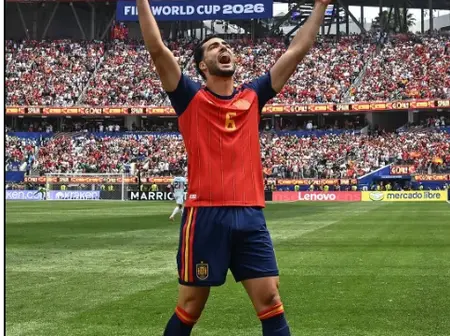
The 30-year-old made the remarks while speaking alongside Spain manager Luis de la Fuente ahead of the country's international fixture against the Czech Republic on Thursday, November 12, 2026.
Merino has developed a reputation for influencing important matches after being introduced as a substitute. His contributions during major competitions have made him a valuable option for Spain, particularly when the team needs fresh energy and a change in approach.
Speaking about his situation, the midfielder acknowledged that every footballer wants to be part of the starting eleven. However, he maintained that he respects the manager's decisions and feels valued within the national team.
He also explained that players coming on during the closing stages of matches have an important responsibility, noting that their contributions can determine the outcome of competitions.
His performances have demonstrated his ability to make an immediate contribution despite limited time on the pitch. The midfielder also discussed his limited playing time at Arsenal, where competition for places has made it difficult to secure regular starts.
Merino acknowledged that the North London club has a strong squad, making opportunities harder to come by. However, he described Arsenal as the best club in the world and expressed hope that his situation could change.
His experience with Spain has also highlighted the importance of squad depth, with players expected to make meaningful contributions whether they start matches or come on as substitutes.
Suba North MP Millie Odhiambo has confirmed another meeting with Mama Ida Odinga on Thursday, November 12, 2026, sharing details of their latest encounter on her Facebook page.
The meeting comes barely 48 hours after the two women appeared together in Suba North, Homa Bay County, during the launch of the Gembe Hills Participatory Management Plan.
Their repeated public interactions have attracted political interest, particularly at a time when the Orange Democratic Movement (ODM) is navigating an uncertain future following the death of its longtime leader, Raila Odinga.
Ida recently declared that she remains committed to ODM and the broad-based government arrangement with President William Ruto, insisting that she intends to stand where her late husband left her politically.
Millie, one of the prominent female voices in ODM, has maintained a longstanding association with the Odinga political establishment. Her latest meeting with Ida is therefore bound to attract attention among political observers.
Whether the encounters reflect personal friendship, political solidarity or a combination of both, the growing visibility of the two women together offers an interesting subplot in the evolving politics of ODM and the wider Odinga legacy.
A heartfelt video of late gospel singer Betty Bayo handing her daughter Sky Victor a Visa card to go shopping with during a visit to the UK has gone viral.
The sweet video went viral just days after her family celebrated the one year anniversary of her passing on November 10, 2026.
In the video posted on TikTok by @skyvictorclips, Bayo can be seen sitting next to her daughter during an interview where she discusses how the young influencer will use the Visa card.
"I can let her go in and buy whatever she likes but I have to approve her if she wants to buy anything expensive. If it looks like she is doing something odd then the bank might ask questions," Bayo explains in a fun way.
The clip has gained attention from fans who have taken to sharing videos of Betty Bayo. Video Goes Viral During Family Feud
The clip becoming viral comes at a time when there has been some public feuding between her family members.
Her ex-husband, Pastor Victor Kanyari has publicly criticised Tash for being involved with Sky since her passing.
The clip gives a look into the past of her family and her relationship with Sky. Sky Has Spoken Publicly About Earnings
During a TikTok live stream she defended Tash from accusations of being mean and careless with her money. Explaining that she handles her own money in her own bank account.
She also expressed that she was frustrated with people talking about her family in public causing unnecessary drama.
For many of her fans it is a reminder of how loving Betty Bayo was with her children.