Speaking on Wednesday, October 28, Gachagua said Raila Junior had a strong chance of winning a seat in Nairobi, but not if he ran on a ticket associated with Ruto.
“I have seen the son of late Raila Odinga, Raila Junior, wants to contest in Nairobi, and he stands a good chance.
“But I can tell you as sure as December 25 is Christmas, if he comes under William Ruto, he will not get that seat,” said Gachagua.
The former deputy president said Winnie could also win if she ran under DCP, Linda Mwananchi, or Wiper.
“Winnie stands a chance if she comes under DCP, Linda Mwananchi or Wiper. If she comes under Ruto and Oburu, she will go nowhere,” Gachagua stated.
Gachagua also claimed that an alliance between himself, Wiper leader Kalonzo Musyoka, and Embakasi East MP Babu Owino would sweep Nairobi’s seats in 2027.
“A combination of Kalonzo, Babu Owino and Gachagua, Nairobi City is gone. Out of the 2.7 million votes, comfortably we will get 2.5 million and all 17 seats. Nairobi City is one term,” he said.
Winnie Odinga has since announced that she will contest the Nairobi Senate seat in next year’s election. The EALA MP said political developments involving incumbent Nairobi Senator Edwin Sifuna had influenced her decision.
Raila Junior has also announced plans to run for the Kibra parliamentary seat in the 2027 General Election.
Kindiki announced the timeline during an event in Kiambu County. No specific date has been given for the launch.
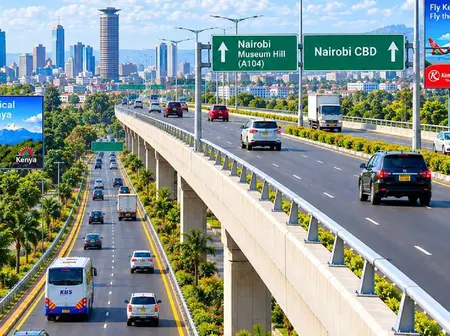
The project is designed as a 60-kilometre elevated road linking Thika town to Nairobi at Museum Hill. Its design has been compared to the Nairobi Expressway, which runs from Jomo Kenyatta International Airport to James Gichuru in Westlands.
Preliminary cost estimates place the construction at between KSh 150 billion and KSh 200 billion. The final cost has not been confirmed.
The government is expected to pursue a public-private partnership to finance the road. No funding partners or financing agreements have been named, and the arrangement is not yet finalised.
About a month before Kindiki’s announcement, the government commissioned a feasibility study for the project. The study was to examine possible alignments, engineering specifications and traffic capacity.
It was also to assess environmental and social impacts, along with the land acquisition requirements. The report’s notes do not make clear whether the study has been completed.
The announcement comes against the backdrop of the Thika Superhighway, which was built during former president Mwai Kibaki’s tenure. That road was expected to ease congestion between Thika and Nairobi, but rising vehicle numbers have since overwhelmed its capacity.
In a statement on Thursday, October 29, the movement’s head of communications, Pauline Njoroge, said the post did not represent its position.
“Please note that this is not our page, and its content does not represent the positions of the Linda Mwananchi Movement,” she wrote.
Njoroge said the movement’s official Facebook page is called Linda Mwananchi and has about 106,000 followers. She urged supporters to distinguish it from the account that published the boycott message.
“Our official page is Linda Mwananchi (the one with 106k followers). The fake page has the word LINDA in capital letters. We are working on verification,” she added.
The post, which presented itself as an announcement to Linda Mwananchi supporters, called for a boycott of Radio 47 and accused the station of biased coverage. It alleged that the station’s presenters, producers, and guests were unprofessional and disrespectful towards the opposition. It also claimed the station’s coverage undermined Nairobi Senator Edwin Sifuna and other opposition leaders.
The clarification comes a week after Njoroge defended Sifuna following his meeting with former Deputy President Rigathi Gachagua. In a statement on Wednesday, October 21, she criticized bloggers who had condemned the senator for meeting Gachagua, questioning their criticism of Sifuna while they continued to support President William Ruto.
Njoroge cited the 2024 Finance Bill protests as a turning point in Kenyan politics, arguing that Ruto’s and Gachagua’s positions during that period should inform how Kenyans assess their political records.
“I keep saying that the bell rang in 2024. That is where we drew the line. Wasn’t it Ruto who pushed the Finance Bill, while Gachagua opposed it? Who defended the brutality unleashed on our young people, and who spoke out against it?” she asked.
She also questioned whether Gachagua’s past remarks about the late former Prime Minister Raila Odinga could be compared with those made by Ruto and accused critics of applying different standards to political figures.
“Spare us the selective outrage. You cannot support Ruto, who continues to defy our Constitution, the very thing Baba stood for; you cannot continue to support Ruto, whose administration has overseen the killing, maiming, and abduction of Kenyans, while acting as though meeting Gachagua is an unforgivable offense,” she said.
Every quarter, Kenyan boards assess currency exposure, regulatory change, cybersecurity and other threats to enterprise value. Yet another consequential risk does not always receive the same scrutiny: the gap between the technology workforce capabilities an organisation has and those its strategy requires.This is often treated as a human resources or training issue.
A bird’s-eye view of Moyale town in Marsabit County.The town is now basking in robust trade. Joseph Kanyi | Nation Media GroupI have spent years thinking about the future of our people and the problems holding the Horn of Africa back. One thing I have learned is that we cannot build a better future while continuing to treat our neighbors as enemies.
Kenyan shoppers will have access to deals across electronics, household appliances, beauty products and sportswear from October 30 as Jumia launches its 2026 Black Friday campaign, with the sale reflecting the growing reach of online retail beyond Nairobi.The campaign comes as Jumia’s physical-goods Gross Merchandise Value (GMV) in Kenya grew 23 per cent year-on-year in the second quarter of 2026, highlighting rising demand for online shopping.
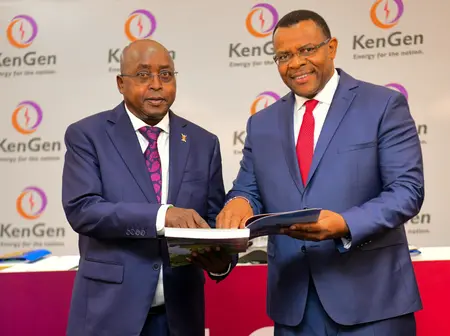
Kenya Electricity Generating Company (KenGen) invested Sh15.5 billion in capital expenditure in the year ended June 2026, as it moves to expand electricity generation, with a 63-megawatt (MW) geothermal plant at Olkaria awaiting commissioning.The investment rose 14.3 per cent from the previous financial year, reflecting the power producer’s push to increase capacity, improve plant efficiency and meet rising electricity demand while keeping generation costs in check.
For many Kenyans living abroad, leaving Kenya does not mean leaving their responsibilities behind. Family is still here. Investment opportunities are still here. Property, business interests and long-term plans may still be here too. But managing all of that from another country can become complicated very quickly.
Although many African countries established and sustained national airlines as emblems of sovereignty, national pride and independence, their role has since evolved beyond symbolism. Today, flag carriers are increasingly viewed as strategic instruments of economic development, regional integration and global connectivity. Five factors help to explain the renewed appetite for national airlines across the continent.
Jumia Kenya will launch its 2026 Black Friday campaign on 30 October, targeting consumers across the country as the e-commerce platform expands beyond Nairobi.
According to Jumia, its physical-goods gross merchandise value (GMV) in Kenya grew by 23% year-on-year in the second quarter of 2026. Kenya accounted for 15% of the company’s physical-goods GMV during the quarter.
The company said 67.6% of its active customers in Kenya are now based outside Nairobi. Data for the first half of 2026 shows Kiambu County accounts for 10.5% of active customers, followed by Mombasa at 5.9%, Nakuru at 5% and Kajiado at 4.2%.
“The bigger story is where Kenya’s online growth is coming from. Two in three of our active customers are now outside Nairobi, while physical-goods GMV grew 23% in the second quarter. That tells us e-commerce is becoming a more national retail channel,” said Vinod Goel, MD of Jumia East Africa.
“At the same time, the online basket is broadening from smartphones and televisions to household and everyday products. Black Friday brings these shifts into focus and gives Kenyan sellers, SMEs and brands an opportunity to reach consumers at scale.”
The figures point to opportunities for businesses, particularly small and medium-sized enterprises (SMEs), that want to use online marketplaces to reach customers beyond their immediate location.
Umesh Bhojwani, founder of Vision Plus Kenya, said partnering with Jumia had been a significant catalyst for the company. It has helped Vision Plus grow its market share without a large physical retail presence. He added that customer feedback through the platform helps the company understand demand and see where to improve its products.
During the campaign, customers will be able to shop across electronics, beauty, telecoms and sports. Participating brands include Xiaomi, L’Oréal, Nivea, Vision Plus, Itel, Oraimo, Haier, Hisense, Lyons, Electromate, Decathlon, Safaricom and Nairobi Sports House.
This year’s line-up also includes household appliances and livestock such as cows. Jumia said this reflects its aim to offer locally relevant products through the platform.
According to Jumia’s data, 82% of its audience is aged between 18 and 44, which shows the importance of younger, mobile-first consumers to Kenya’s online retail market.
To reach customers outside Nairobi, the company plans to use pick-up station activations, its agent network and regional radio.
Go to TECHTRENDSKE.co.ke for more tech and business news from the African continent and across the world.
Follow us on WhatsApp, Telegram, Twitter, and Facebook, or subscribe to our weekly newsletter to ensure you don’t miss out on any future updates. Send tips to info@techtrendsmedia.co.ke