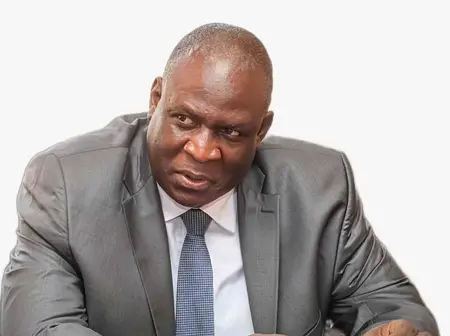
A fresh legal battle has emerged over Emuhaya MP Omboko Milemba’s parliamentary seat after a teacher petitioned the court, accusing him of holding multiple public positions while allegedly continuing to earn a salary from the Teachers Service Commission (TSC).The petitioner, Vivian Chepkemoi, wants the court to declare the constituency seat vacant, arguing that Milemba failed to resign from his teaching job before contesting in the 2022 General Election, despite constitutional requirements governing public officers seeking elective positions.
Blog
-
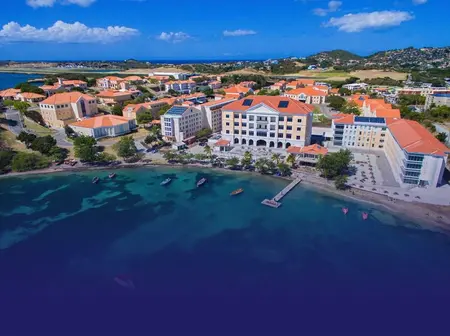
St. George’s University Introduces January 2027 Medical Pathway at Northumbria University with Expanded Scholarship Opportunities
St. George’s University (SGU) School of Medicine in Grenada, West Indies, has opened applications for its January 2027 intake, including the new 5-Year Doctor of Medicine (MD) track at Northumbria University (NU). The January start gives eligible students from Africa and worldwide the option to take a break after high school and begin their medical education at NU in January rather than waiting for the usual Fall intake.
-

Bayern, Ajax seek 5,000 tickets for fans travelling to Kenya for January 5 clash
At least 5,000 football supporters are expected to travel to Kenya for the Bayern Munich versus Ajax friendly after the two European clubs requested that tickets be reserved for their fans.
Sports Principal Secretary Elijah Mwangi revealed on Wednesday that the clubs had asked organisers to set aside 5,000 tickets, which they intend to purchase for their supporters ahead of the January 5, 2027 match at the Raila Odinga International Stadium in Nairobi.
He said the arrangement would bring a significant number of international visitors into the country, providing an opportunity for Kenya to earn from tourism, hospitality and other businesses.
“The team have requested that we reserve for them at least 5,000 tickets, and they are going to buy them. These are reserved for their fans,” Mwangi said.
“This means, therefore, at least 5,000 people will be coming to Kenya, so that they can participate and follow up on these games. What does that mean? It translates to economic benefits, tourism, marketing and investment,” he added.
The match is expected to attract global attention because of the profile of the two clubs, whose combined social media following exceeds 300 million.
Mwangi said the government hoped to use the international exposure to market Kenya beyond football, encouraging supporters and other audiences to explore the country's tourism attractions, culture and investment opportunities.
He said the clubs' global reach offered Kenya an opportunity to showcase its destinations to millions of potential visitors.
The expected arrival of thousands of supporters could also provide business opportunities for hotels, restaurants, transport operators, tour companies and other players in the hospitality sector.
The PS said some of the visitors could develop an interest in returning to Kenya for holidays or other engagements after experiencing what the country has to offer during the match.
“Some of them may be interested to come on a particular day or later alone,” he said, pointing to the possibility of the event generating tourism beyond the match itself.
The government is also banking on the fixture to expose Kenyan footballers to international scouts and create opportunities for local talent to be recruited by clubs abroad.
Mwangi said the match would provide a platform for local players to demonstrate their abilities before representatives of two established European football institutions.
The fixture is part of Kenya's wider efforts to build momentum ahead of the 2027 Africa Cup of Nations, which the country will co-host with Uganda and Tanzania.
The government hopes the event will help demonstrate Kenya's readiness to host international competitions while promoting the country as a destination for sports tourism.
Mwangi said any surplus generated from the match would be directed towards supporting Afcon preparations.
The 5,000-ticket allocation is expected to be an important component of the event's international appeal, although the PS did not disclose the ticket prices, the travel arrangements for supporters or the specific markets from which they are expected to come.
The January fixture will be staged at the newly developed Raila Odinga International Stadium at Talanta Sports City, which is expected to be a key venue in Kenya's preparations for the continental tournament.
-
Production of certified seeds in Kenya increases to 80 million kilos
Kenya's certified seed production has increased to 80 million kilogrammes from 65 million kilogrammes in 2025, as the government steps up efforts to improve farmers' access to quality planting materials and strengthen food security.
The increase comes amid renewed concerns over counterfeit seeds, regulatory challenges and the need to ensure that farmers across the country can access affordable and suitable varieties.
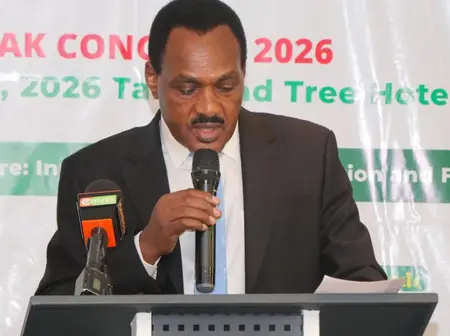
Speaking during the 15th Seed Traders Association of Kenya (STAK) Congress and Expo, Agriculture Cabinet Secretary Mutahi Kagwe said the country had made progress in expanding seed production and developing varieties suited to different agro-ecological zones.
In his speech, read by Agriculture Secretary James Wanjohi, Kagwe noted that 1,297 crop varieties had been released for use across the country's agro-ecological zones, averaging about 40 new varieties annually. Half of these are climate-smart varieties.
The congress was held under the theme, "Securing Kenya's Seed Future Through Innovation, Farmer Protection and Food Security".
Wanjohi said quality seed was the foundation of agricultural production, playing a critical role in improving productivity, strengthening resilience to climate change and supporting farmers to move from subsistence farming to commercially viable agriculture.
He, however, acknowledged that access, affordability, quality assurance and last-mile distribution remained major challenges, particularly for farmers in underserved areas.
"Poor seed limits the potential yield and reduces the productivity of the farmer's labour. High-quality seed is an assurance in achieving a good crop stand and rapid plant development, even under adverse conditions," he said.
He added that the government was prioritising the review of the National Seed Policy, 2010, and the Seeds and Plant Varieties Act, Cap 326, in collaboration with stakeholders, including STAK.
The proposed changes are expected to address emerging issues, including recognition of farmer-managed seed systems, quality assurance and the role of county governments in improving seed access.
The government is also developing the Plant Genetic Resources Bill 2026, which seeks to establish a Plant Genetic Resources Centre to oversee the conservation of plant genetic resources and facilitate access and benefit-sharing.
Wanjohi said harmonising seed regulations would also facilitate the movement of seed across borders, improve regional trade and strengthen the competitiveness of Kenya's seed industry.
Meanwhile, the Kenya Plant Health Inspectorate Service (KEPHIS) has announced plans to appeal a High Court ruling that declared some provisions of the Seeds and Plant Varieties Act and its implementing regulations unconstitutional.
Simon Maina, head of Seed Certification and Plant Variety Protection at KEPHIS, said the ruling had weakened some of the enforcement tools used to combat counterfeit and substandard seeds.
He said the agency was working with the Ministry of Agriculture and Livestock Development and the Office of the Attorney General to address the implications of the judgment.
"We have formally launched an appeal in the Court of Appeal to contest this judgment and restore the legal backing required for strict enforcement of seed quality," he said.
Maina warned that shortages of certified seed could create opportunities for unscrupulous dealers to exploit farmers by selling counterfeit products.
"One of the reasons why fake seed gets a place is the shortage of quality seed. When we saturate the market with quality seed, we have the opportunity to ward off these cases of counterfeit seed," he said.
He called for stronger collaboration between regulators and seed companies to ensure adequate supplies of certified seed and protect farmers from unscrupulous traders.
Maina said KEPHIS was also embracing new technologies to improve seed quality assurance, including molecular tools for disease diagnosis, digital surveillance, automated seed treatment and faster certification processes.
The agency is upgrading laboratory diagnostics, digitising its operations and retraining inspectors to improve efficiency in variety testing, seed testing and certification.
He cited the development of portable testing equipment that can detect bacterial diseases in potatoes in the field, reducing reliance on conventional laboratory testing.
KEPHIS is also reviewing its digital seed certification and plant variety protection system with support from Trademark Africa to address operational gaps and improve service delivery.
Maina said delays in seed certification could have serious consequences for farmers, noting that a delay of even one week could cost a farmer an entire planting season.
He further called for stronger regional cooperation, saying the proposed East African Seeds and Plant Varieties Bill was at an advanced stage and would harmonise seed regulations across the East African Community.
The regional framework is expected to facilitate the release and commercialisation of crop varieties and improve access to quality planting materials across member states.
Wanjohi urged farmers to buy certified seed from authorised suppliers and select varieties suited to their local agro-ecological conditions.
-
Oburu: Those who declared me dead only made me stronger
ODM party leader Oburu Oginga, has said that those who wished him dead only made him stronger and more determined to fight his illness, assuring supporters that he is steadily recovering and will soon return to active politics.
Recounting the difficult moments he endured while in hospital, following widespread fake reports on social media declaring him dead, Oburu said God had put the devil to shame by keeping him alive.
“Those who wrote me off while I was in hospital by declaring me dead only made me stronger and more determined to fight my sickness. Here I am, recovering and growing stronger by the day,” said the Siaya Senator.
He said his illness had slowed down his political activities but assured supporters that his return to the political arena was imminent.
“The sickness slowed my political activities. Very soon, I will be back, roaring in the best way I know how,” the Siaya Senator said.
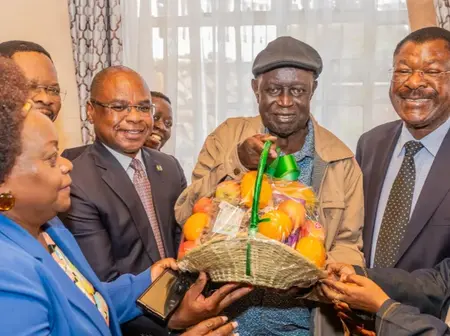
Oburu spoke at his Nairobi home when National Assembly Speaker Moses Wetang’ula and his Senate counterpart Amason Kingi led a delegation of Members of Parliament from both Houses in visiting him as he recuperates following his discharge from hospital.
Expressing gratitude for the visit, Oburu said he was deeply touched by the gesture from the two Speakers and fellow legislators.
“I have no words to explain my feelings after the Speakers of both Houses and fellow legislators created time to come and check on me,” he said.
He further expressed his longing to return to parliamentary debates and active political engagements, urging his supporters to continue praying for him and exercise patience as he completes his recovery.
“I miss being on the floor of the House debating and roaring in the political arena. I urge my supporters to pray for me and be patient because soon I will be back,” the Senator said.
Oburu kept his visiting colleagues entertained with his trademark humour and jokes, assuring them that he was determined to roar back into action, even as he acknowledged that his illness had temporarily slowed his political pace.
The two speakers condemned bloggers and social media users who circulated false reports about Dr. Oburu's death while he was receiving treatment at a Nairobi hospital.
Wetang’ula said they were encouraged by Oburu's remarkable progress since his discharge and wished him a speedy and full recovery.
He, however, urged him to prioritise his health and avoid rushing back into political engagements before making a full recovery.
“Prioritise your health and avoid rushing back into political engagements before making a full recovery,” Wetang’ula advised, as he commended Oburu's courage and determination in confronting his medical challenge.
Kingi, said the Senate fraternity missed Oburu's contributions to parliamentary proceedings, debates and national political discourse.
“As the Senate, we miss your contributions to proceedings and debates, as well as your guidance in national politics. We pray that you get better and resume your political duties as soon as possible,” he said.
Senators present included Chief Whip David Wakoli, Minority Leader Stewart Madzayo, William Kipsang and Daniel Maanzo.
Other Members of Parliament who accompanied Speaker Wetang’ula included Minority Whip Millie Odhiambo, Parliamentary Commissioner Mishi Mboko and Eve Obara.
-
No taxpayer money for Bayern-Ajax match, government says
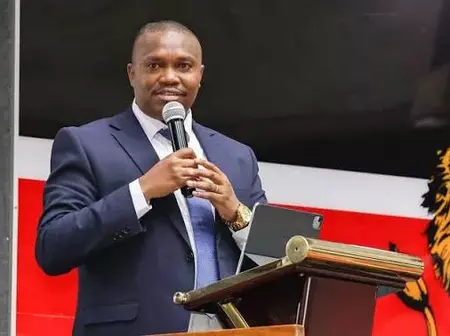
The government will not contribute public funds towards the highly anticipated Bayern Munich versus Ajax friendly match at the Raila Odinga International Stadium, Sports Principal Secretary Elijah Mwangi has said.
Mwangi said strategic partners had come on board to finance the event, with the government offering support in marketing Kenya as a sports and tourism destination.
He said the arrangement was expected to generate a surplus that would be channelled towards Kenya’s preparations for the 2027 Africa Cup of Nations (Afcon), which the country will co-host with Uganda and Tanzania.
“I want to assure Kenyans that the team that will be coming is the first team, is the main team, and the government of Kenya have not contributed towards this,” Mwangi said.
“We have strategic partners who have come on board, and we are supporting them to market Kenya. From our analysis, we shall be having surplus from this event, which shall go towards assisting in our preparations for Afcon,” he added.
The match, scheduled for January 5, 2027, at the Raila Odinga International Stadium in Nairobi, is expected to provide a major test of the country's capacity to host international sporting events ahead of Afcon.
Mwangi said the government viewed the fixture as more than a football spectacle, arguing that the presence of two prominent European clubs would expose Kenya to international audiences and create opportunities for investment and tourism.
He said Bayern Munich and Ajax have a combined social media following of more than 300 million, providing a significant platform through which Kenya could showcase its attractions, culture and sporting facilities.
“The impact, the benefits, is enormous. Number one, this team has follow-ups in excess of 300 million,” he said.
The PS said the government expected the clubs' global audiences to take an interest in what Kenya has to offer, with some supporters potentially visiting the country in future.
He said the event would also give local footballers an opportunity to demonstrate their abilities before international scouts and club representatives.
“Our team will be exposed, and we have an opportunity also to have our Kenyan players get an opportunity to be picked, so that they can also participate or be recruited to play at that international level,” Mwangi said.
The government has been positioning the match as part of wider preparations for Afcon 2027, which will be the first edition hosted jointly by three countries.
Kenya is expected to use the tournament to showcase its sporting infrastructure, hospitality industry and tourism attractions, while improving facilities and organisational capacity.
The Bayern-Ajax fixture is therefore being presented as an opportunity to test stadium operations, attract international visitors and build confidence in Kenya's ability to stage major sporting events.
Mwangi, however, did not disclose the identities of the strategic partners financing the friendly or provide a breakdown of the expected expenditure and projected surplus.
The government's position that it has not contributed towards the match is likely to draw attention to the financing arrangements, particularly as preparations for Afcon continue to require significant public investment.
-
The Trading Routine Nobody Sees: How 2 AM Market Checks Shaped Kojo Forex’s Discipline
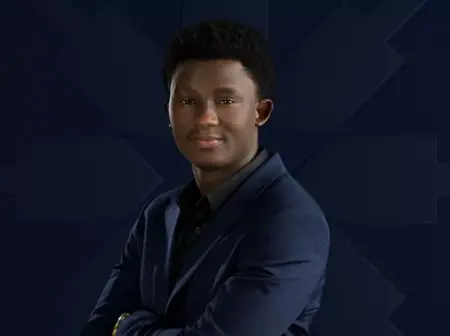
Most people only see a trade after the decision has already been made. They see the chart, the result, the lesson, or the lifestyle around it. What they don’t usually see is the routine behind the trade: the checks, the waiting, the no-trade days, and the discipline it takes to watch the market without forcing a position.
For me, that routine has often started with a 2 AM market check. Not because I’m sitting at the screen ready to trade at 2 AM, but because I trade from the one-hour timeframe, and every hourly close can be a source of information.
There were times when I’d set alarms from 2 AM through to 10 AM at one-hour intervals. I’d wake up, check what the market had done, and go back to sleep if nothing was happening. At 3 AM, I’d check again. At 4 AM, again. By 5 AM, around the London session, I’m usually more awake. If the market’s making sense, I’d come into the room, sit by the screen, and watch properly. If it’s quiet, I’d stay away and not force anything.
That’s the part people don’t always understand. The discipline isn’t only in waking up early. The discipline is in being awake, checking the market, and still being able to say, “There’s nothing to do.”
What makes a chart worth getting up for
Before I sit at the desk, I usually start with my phone. I check a few messages, open the charts, and scroll through the instruments I follow. I trade very few instruments now, fewer than three, so I know what I’m looking for. If price isn’t moving toward my key entry zones, I can relax. If it is, that’s when I get up and pay closer attention.
I also check what’s happening outside the chart. On X, I’m not just looking at random trends. I’ll check what’s happening in crypto, politics, stocks, and broader market conversations. If there’s unusual volatility in an instrument I trade, I don’t treat it as normal price action. I want to know what caused it before I continue with the day.
From ritual to routine
That kind of preparation has become more natural with experience. Earlier in my career, I treated trading like a ritual. I’d lock the door, put on music, turn off the lights, leave the screens on, and block out every distraction. I was extremely serious. I felt I had to put myself into the right mindset before I could trade.
These days, I’m more relaxed. I can listen to music casually. I don’t need to create the same atmosphere around trading because the routine is already part of me. The seriousness is still there, but it’s not as visible. It has become internal.
My screens are almost always on. The instruments I trade are usually open. If price action changes, I can quickly mark up my expectations. Even when I’m away from the desk, I’m still following from my phone or tablet. It has become part of my life, not something I switch on only when I want to place a trade.
The real work happens before the click
The moment before entry is different. That’s when I go deeper. Before I open a trade, I want to know how much I’m risking, where the stop loss should be, where the take profit could be, and whether I’ve mentally accepted the outcome. The market is unforgiving. Once a position is open, there’s no eraser. You can’t go back to clean the decision and write a new one.
That’s why preparation takes more time than monitoring an open trade. Once the trade is placed, the main decision has already been made. I don’t need to keep staring at the screen. I’ll manage the trade, but that’s different from anxiously monitoring it. I can set alerts around potential profit or potential loss. If the trade moves in my favor, I can decide whether to take partial profit or move the stop to break even. If it moves against me, I start accepting that outcome before it reaches the stop.
Why no trade is still work
Sometimes that work leads to no trade at all. I may wake up, check the hourly closes, wait for price to reach a zone, wait again for the kind of candle close I want, and still get nothing. That can take hours. It can reach 10 AM and still be a no-trade day.
For me, that’s still productive.
No trade means my capital is preserved. The market will always present another opportunity, but only if the capital is still there. I see capital almost like bullets. If you have a limited number of bullets and you keep firing at poor targets, the targets remain but your ammunition disappears. So I’d rather keep the capital and wait for a cleaner opportunity than spend it because I feel I need to be active.
Keeping the process organized
That mindset also affects how I use tools. For example, I use the Exness Terminal calendar to separate higher-volatility events from lower-impact ones. Interest rates, inflation, and unemployment data matter more to the way I prepare, especially when they connect to the instruments I’m watching. The platform doesn’t create the trade for me. It helps me keep the information organized before I decide whether the setup deserves attention.
Resetting away from the market
Outside the market, the gym helps me reset. It’s not a fixed morning ritual for trading, but it matters. After a difficult trading day, training helps ease the nerves. Losses still hurt, even with experience but the difference is how you manage that pain. For me, the drive to the gym, the training, and the drive back helps clear my head. I can return feeling like a new person.
My routine has changed over the years. It’s less ritualistic now, but in some ways more disciplined. I don’t need to look intense to be focused. I don’t need to force a mood before I trade. I just need to know what I’m waiting for, what I’m willing to risk, and when the market hasn’t given me enough.
That’s the routine people don’t see. Not just the early checks, but the restraint behind them. The willingness to wake up, watch, wait, and still do nothing if the market doesn’t meet the plan.
-
Ruto backs Ndii’s housing workers theory on supermarket milk shortages
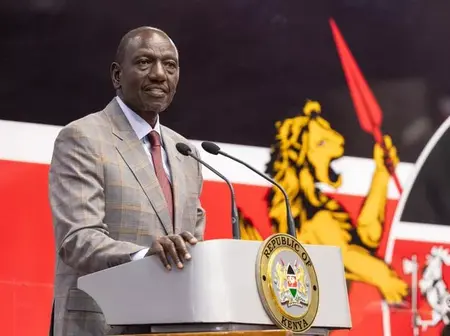
President William Ruto has backed an argument by his economic adviser David Ndii that milk shortages in supermarkets are being driven by increased demand from workers employed under the Affordable Housing Programme, saying rising employment and purchasing power have changed consumption patterns.
Speaking on Wednesday during the Industrialisation Summit at the Kenyatta International Convention Centre (KICC) in Nairobi, Ruto said Kenya’s annual milk production had increased from about 4.6 billion litres to 5.5 billion litres last year.
He also cited Kenya National Bureau of Statistics (KNBS) data showing a 36 per cent increase in milk processing capacity.
The President said the increase in production and processing had coincided with a rise in the number of Kenyans able to afford milk, including workers at affordable housing construction sites.
“People are asking, so why do we have a milk shortage? And I think a friend of mine answered very early yesterday,” Ruto said, referring to remarks by his economic adviser David Ndii.
Ndii had attributed the shortages to increased consumption, arguing that more Kenyans were earning incomes and could now afford basic commodities such as tea and milk.
Ruto said about two million additional Kenyans had moved into employment, including 1.1 million people working in the affordable housing sector.
“That is how things change,” he said, arguing that rising incomes were influencing demand for goods and services.
The President said similar changes in consumption and production were taking place in other sectors, including coffee and tea.
“Let me conclude by saying that the same story can be done in the coffee, in the tea sector. Our numbers have changed,” he said.
His remarks come amid reports of milk shortages in supermarkets and retail outlets, with some shops limiting purchases and consumers struggling to find certain brands.
Ndii had previously cited increased national production and processor intake to argue that the shortages were driven by demand rather than a decline in milk supply.
However, data on formal milk deliveries have shown fluctuations in recent months.
An October 19 report indicated that deliveries to processors declined from 88.89 million litres in May to 75 million litres in August 2026.
The Kenya Dairy Board attributed the decline largely to drought and pressure on animal feed, while also highlighting challenges in milk collection, processing and distribution.
The KNBS August 2026 Leading Economic Indicators dashboard recorded formal milk intake at 77.1 million litres, down from 81.3 million litres in July.
-
Ruto: I offer internships to 15 students at my farm
President William Ruto has said he provides internship opportunities to between 10 and 15 university students at his farm, urging businesses to offer similar placements to help young people gain practical work experience.
Ruto said the students receive stipends during their internships, allowing them to apply the knowledge acquired in college to real-life working environments.
The President called on businesses and employers to open up opportunities for young people in factories, industries, manufacturing facilities and trading enterprises.
“I am a farmer. I provide internships for between 10 and 15 young people from universities at my farm. We pay them a stipend, and I have interacted with them. They are very interesting young people because they have learnt so much in college, but they want to see it on the ground,” he said.
He said internships lasting six months or a year would expose young people to practical work experience while helping employers identify and develop potential future employees.
“It would give many of our young people an opportunity for a year or for six months to be able to be in a place where real work experience is happening,” Ruto said.
He added that businesses would also play a role in sharpening the skills of young people, mentoring them and preparing them for employment.
Ruto said such placements would help interns understand how industries operate and inspire them to pursue opportunities in different sectors.
The President reaffirmed his administration's commitment to strengthening Kenya's manufacturing sector, saying local enterprises have the potential to produce world-class goods and compete in regional and global markets.
Ruto said this after touring exhibition stands at the Industrialisation Summit and Changamka Festival at the Kenyatta International Convention Centre (KICC) in Nairobi, where local manufacturers are showcasing Kenyan-made products.
He said the quality and diversity of products on display demonstrated the country's manufacturing potential and the ingenuity of local entrepreneurs.
“From established industries to emerging enterprises, the products on show demonstrate our capacity to produce world-class goods, create value and compete in regional and global markets,” he said.
The President said the government would focus on creating an enabling environment to attract investment, encourage innovation and expand production.
He added that the administration was committed to sustaining the momentum by supporting Kenyan enterprises to manufacture, add value, grow and thrive.
-
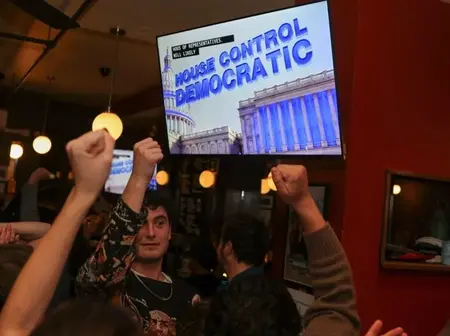
Everything you need to know from the US midterm elections
Democrats have won both the US Senate and House of Representatives, taking control of Congress for the rest of Donald Trump's presidency.
Projected results have provided the party with a number of things to celebrate – and rival Republicans some reasons to commiserate.
Here is everything you need to know about some of the big Democratic wins and some historic firsts.
Democrats toast victories in deep-red Trump country
Democrats have tallied up victories in states that were comfortably won by Trump two years ago in the presidential election.
With James Talarico winning a seat in the US Senate seat and Gina Hinojosa being elected state governor, Democrats scored two statewide victories in Texas – ending a string of defeats they have endured for almost two generations.
Talarico's supporters went beserk as the projected results arrived at an election-night party, wrote the BBC's Gary O'Donoghue. Attendees hugged, kissed and drank to a reality they dared not believe would come true.
Hinojosa became the first Latina to be elected governor of the state.
Among the other states where history was made by the Democrats were Kansas, where Adam Hamilton took a closely-fought Senate seat – giving the state its first Democratic senator for nearly a century.
Senior party figures who cheered the results included Hakeem Jeffries, the top Democrat in the House of Representatives, who is now poised to take over as the Speaker of the lower chamber of Congress.
"Today begins the great American comeback," he told a crowd of supporters.
If Jeffries' colleagues choose to keep him as the leader of their party's delegation in House, he will be the next Speaker, taking over from Republican Mike Johnson and becoming the first black person to fill that role.
Trump congratulates opposition and acknowledges Iran and fuel prices were issues
Trump spoke throughout the evening to a number of US media outlets, striking a conciliatory tone and conceding that the Democrats did a "good job".
He said he would accept the results and that he was looking forward to working with the opposition party – albeit he would still have the power, as president, to veto legislation that Democrats advance through Texas.
Trump distanced himself from some of the Republican candidates who contested the election, saying: "In some cases they didn't like the candidates, and in some cases those candidates were not my friend."
He acknowledged that the US-Israel war on Iran, which has impacted consumer prices in the US, had affected the vote. Trump argued that high fuel prices meant voters could not see how well his economy was doing "as much as they should have", adding: "The gasoline was caused by Iran."
El-Sayed wins US Senate race in Michigan after fellow Democrat turns on him
Abdul El-Sayed has become the first Muslim person elected to the US Senate – after claiming victory in Michigan in what was one of a handful of closely fought contests. His win means the seat stays in Democratic hands.
He defeated Republican opponent Mike Rogers, who received the surprise backing of El-Sayed's Democratic rival in the primary contest, Haley Stevens, who changed her endorsement at the eleventh hour.
The race was one of the bitterest of the midterms. Trump invoked 9/11 and even called El-Sayed a "jihadist" without citing any evidence, prompting a backlash and accusations of Islamophobia.
El-Sayed's supporters went wild when he took the stage to celebrate his claimed victory, wrote the BBC's Nada Tawfik. He said: "Up until right about now, you might have noticed I always say 'inshallah,' or 'God willing,' whenever the outcome of this race was mentioned."
He went on to say: "But today, tonight, we can turn that 'inshallah' into 'alhamdulillah'. For the right-wing ops, that just means 'praise be to God.'"
Republicans unable to win by distancing from Trump
The defeat of Susan Collins, who has served as the Republican senator for Maine for three decades, was one indicator of the scale of the Republican losses.
She was felled by Democratic candidate Troy Jackson, a logger who sought to point to his background to persuade blue-collar Mainers to vote for him.
In a statement reported by US media, Collins conceded defeat and said it had been the "honour of my life" to serve the state for 30 years.
The BBC's Helena Humphrey described a sombre atmosphere at Collins's watch party in the city of Maine – where the song Closing Time was played.
Collins entered the race as one of the most vulnerable incumbent Republicans seeking re-election, and found that her tactic to distance herself from Trump did not work.
Ashley Hinson suffered the same fate in Iowa, losing that closely-fought Senate seat to Josh Turek. Hinson had slightly distanced herself from the president, urging him to end the war with Iran and breaking with him on easing beef tariffs, while at the same time defending Trump's broader tariff policies as important.
History made by new black governors and first openly gay male senator
Among the other firsts of the night were in Florida, where Republican Byron Donalds has become the state's first black governor, following a hearty endorsement from Trump.
Donalds, who will take over the job from Ron DeSantis, said his state was the "envy of the nation", and that he would work to make the state more affordable.
The result was one of the few high points of an otherwise difficult evening for the Republicans.
In the neighbouring state of Georgia, Democrat Keisha Lance Bottoms, the former mayor of Atlanta, won the governor's race, becoming the first black governor and first woman to be elected to the state's highest office.
The BBC's Carl Nasman described ecstatic scenes as the race was projected blue. Bottoms defeated Republican Rick Jackson, a billionaire businessman and healthcare executive.
The state has also not had a Democratic governor for more than 20 years.
Elsewhere, Democrat Chris Pappas became the first openly gay man elected to the Senate. He celebrated on stage alongside his husband in New Hampshire.
Pappas defeated former Republican Senator John Sununu in the race, whom he thanked on Tuesday, saying: "We all owe John Sununu a big debt of gratitude for his public service for the people of New Hampshire."
The 46-year-old Pappas had represented New Hampshire in the House since 2019 but chose not to run for re-election so he could launch his campaign for the Senate.