Kenyans are in for sharp weather contrasts between November 24 and 30, 2026, as the Kenya Meteorological Service Authority (KMSA) warns of widespread rainfall alongside biting cold nights and extreme daytime heat across different regions.
Wet conditions are forecast across roughly 30 counties over the seven-day period, stretching across the western highlands, the Mount Kenya region, Nairobi, and large parts of the Coast. Commuters, farmers, and residents in rain-prone areas are advised to plan ahead for damp roads, shifting skies, and localized downpours as short-rains activity continues to shape conditions across much of the country.
While many counties brace for rain, highland areas are set for chilly after-dark conditions. Night-time temperatures are projected to drop below 10°C in parts of more than a dozen counties, with cooler highland zones such as Nakuru, Nyeri, and Nyandarua among those likely to feel the sharpest chill after sunset. Families and vulnerable groups in colder areas should prepare for brisk evenings and early mornings.
KMSA has urged members of the public to stay updated with official advisories and factor the weekly outlook into travel, farming, and daily routines. Whether packing an umbrella in Nairobi, reaching for a heavy sweater in Nyandarua, or staying hydrated in Turkana, this week’s forecast calls for flexibility from coast to highlands.
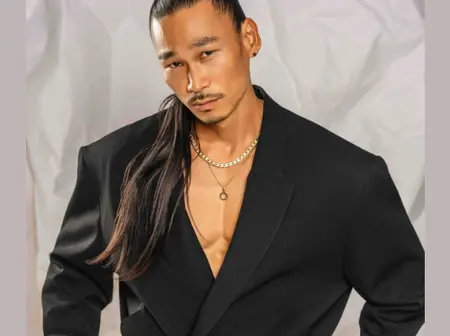
Japanese musician and music producer Goichi has opened up about his family’s connection to Kenya, revealing how his father’s experience living with the Maasai shaped his upbringing and relationship with the country.In a video shared on his social media pages on Tuesday, November 24, 2026, Goichi explained that although he is from Japan, he was raised in several countries, including Kenya, Sudan, Southeast London, Tennessee and Atlanta.
The appeals challenge a Court of Appeal judgment delivered on March 7, 2025, which upheld their convictions and sentences.
Appearing before a Supreme Court bench presided over by Justice Smokin Wanjala, the DPP argued that the convictions were supported by sufficient evidence, including circumstantial evidence linking the appellants to the murder.
On Sagaray’s claim of diplomatic immunity, the prosecution told the court that communication from Venezuelan authorities terminating his diplomatic mission and cancelling his diplomatic passport had brought his diplomatic functions to an end.
It further argued that any remaining immunity could not protect him from prosecution for actions performed outside his official diplomatic duties.
The prosecution also maintained that the case was not based solely on motive or association, but on the combined weight of evidence surrounding the dispute over control of the Venezuelan Embassy and events leading to Fonseca’s death.
Regarding Omido, the DPP rejected his arguments on common intention and the handling of his alibi, saying his testimony amounted to a denial of involvement rather than evidence placing him elsewhere when the murder occurred.
The prosecution asked the Supreme Court to find no constitutional violations, dismiss both appeals with costs and retain the sentences.
Fonseca was murdered at her Runda residence in Nairobi in July 2012. The Supreme Court is expected to deliver its judgment on notice.
Progress Plus Alliance party leader Arnold Maliba has made a striking declaration about his political ambitions, saying he would rather serve as a sweeper in the Linda Mwananchi movement than lead a political party elsewhere.
Maliba made the remarks during an interview on Citizen TV, where he discussed his party's plans ahead of the 2027 General Election and its relationship with the growing Linda Mwananchi movement.
The politician clarified that PPA was not being dissolved but was instead undergoing a political recalibration as he prepared to take up other responsibilities within the emerging political formation.
He explained that the party's activities could be put on hold as he focused on the broader political agenda associated with Linda Mwananchi.
According to Maliba, his decision was informed by his belief that the movement offered a bigger political opportunity than simply holding the position of party leader in a smaller political outfit.
His statement that being a sweeper in Linda Mwananchi was more important than leading another party attracted attention, highlighting his confidence in the movement's potential.
The declaration comes as Linda Mwananchi, associated with Nairobi Senator Edwin Sifuna, continues positioning itself as a significant political force ahead of the next General Election.
The movement has attracted politicians and supporters from different political backgrounds who are seeking a common platform to challenge the current political establishment.
Maliba's remarks also underline the political realignments taking place as leaders begin preparing for the 2027 elections.
He maintained that his decision should not be interpreted as abandoning PPA but rather as taking up different responsibilities as political preparations intensify.
His latest comments are likely to generate further discussion about the growing influence of Linda Mwananchi and the willingness of politicians to put aside individual party ambitions in pursuit of a broader political movement.
Huduma Kenya has issued an advisory explaining the circumstances under which a father's name can be removed from a child's birth certificate, following a public inquiry from a Kenyan seeking to have the details deleted.
The government agency responded to a social media query from a woman who wanted to know whether she could remove a man's name from her child's birth certificate.
In her inquiry, the woman explained that the father's name had not appeared on the initial birth notification but was included on the final birth certificate. She expressed dissatisfaction with the inclusion, stating that she did not want the name appearing on the document.
Responding to the inquiry, Huduma Kenya made its position clear, stating: "You cannot remove the father's name from the birth certificate."
The response highlighted the importance of following the proper legal and administrative procedures when seeking changes to information contained in official birth records.
Under the Births and Deaths Registration Act, Section 28 gives the Principal Registrar powers to correct errors or omissions in birth records. However, such corrections must follow the prescribed procedures, and the original entry is not simply erased.
According to the information outlined in TUKO's report, one circumstance that may warrant a correction is when a father's details were entered mistakenly or through fraud. In such cases, the matter may be presented to the Registrar of Births with supporting evidence.
A dispute over paternity may also require legal intervention. The court considers the evidence presented and the best interests of the child before making a determination.
A previous High Court decision illustrates that removal is possible in appropriate circumstances. In a ruling delivered on October 9, 2025, the court ordered the removal of a man's name from a child's birth certificate after evidence, including DNA test results, established that he was not the biological father. The court also considered the child's right to accurate information about their identity.
Huduma Kenya's advisory therefore serves as a reminder that parents cannot have a father's details removed simply by making a request at a Huduma Centre. Anyone seeking to correct information on a birth certificate must pursue the appropriate process and provide the necessary evidence.
Mwalimu Rachel has questioned the availability of yoghurt and mala in supermarkets amid a fresh milk shortage, asking why processed products remain accessible while fresh milk is difficult to find.On Tuesday, November 24, 2026, Rachel questioned the relationship between fresh milk supplies and dairy processing.
According to the Office of the President, Rachel Ruto is the founder of Mama Doing Good and a pioneer of JOYWO, an initiative that has focused on improving financial inclusion among women, particularly those in rural communities.
JOYWO operates through a table-banking model that allows members to form groups, contribute savings and borrow money to support businesses and other income-generating activities.
The organization has also expanded its activities to include skills development, market access, entrepreneurship training and agricultural initiatives.
According to a Kenya News Agency report published on September 9, 2026, JOYWO had grown its network to 44 counties, bringing together more than 250,000 women in over 17,000 groups.
The organization had also accumulated approximately KSh3.9 billion in revolving funds, which members use to access loans and strengthen their businesses.
The anniversary celebration follows the organization's 16th anniversary, which was held on November 27, 2025, at Kasarani Stadium in Nairobi.
During that event, President Ruto attended as the chief guest and encouraged women to take advantage of government economic empowerment programmers, including the Hustler Fund.
The President also acknowledged that JOYWO's table-banking model had influenced the development of the government's financial inclusion initiatives.
Rachel Ruto, meanwhile, has continued to champion women's empowerment through financial inclusion and grassroots economic programmed.
However, details of the November 24, 2026, State House celebration, including attendance figures, speeches and specific announcements, could not be independently confirmed through the available published reports.https://www.facebook.com/share/p/1JMnykoC6K/
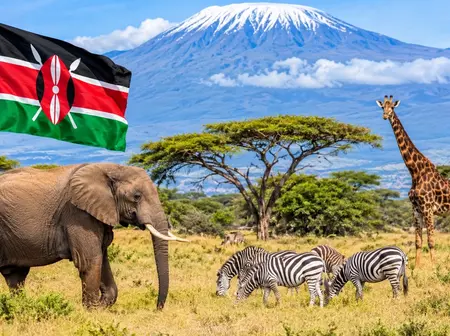
Kenya has received another major international recognition, strengthening its position as one of the world's leading destinations for wildlife tourism. The country has secured an impressive position in a global ranking that features some of the most popular nature and wildlife destinations.
According to the 2026 Wanderlust Reader Travel Awards, Kenya was ranked fourth among the world's most desirable destinations for nature and wildlife experiences.
The ranking places Kenya ahead of Rwanda, which finished fifth, Colombia in sixth position, Costa Rica in seventh, Tanzania in eighth, Canada in ninth and Indonesia in tenth.
South Africa took the top position, followed by Brazil in second place and Australia in third.
The awards attracted more than 251,000 readers who cast over 8.2 million votes across different categories, making the recognition an important indication of international travellers' preferences.
Kenya's position reflects the country's strong appeal to visitors interested in wildlife safaris, national parks, conservation areas and natural landscapes.
The annual wildebeest migration in the Maasai Mara is also one of Kenya's most recognised wildlife experiences. Thousands of visitors travel to the reserve to witness wildebeest and zebras moving between Kenya and Tanzania in search of fresh grazing.
The recognition also places East Africa firmly on the international wildlife tourism map, with Rwanda and Tanzania making it into the top ten.
Wanderlust's awards are based on votes from its readers rather than an independent assessment of wildlife populations or conservation standards. The results therefore reflect the destinations international travellers find most desirable.
Kenya's fourth-place finish provides an opportunity to strengthen its tourism industry by improving visitor facilities, protecting wildlife habitats and supporting conservation programmes.
The latest recognition is a positive development for Kenya's international tourism profile, although maintaining that reputation will require continued investment in wildlife protection and quality visitor experiences.
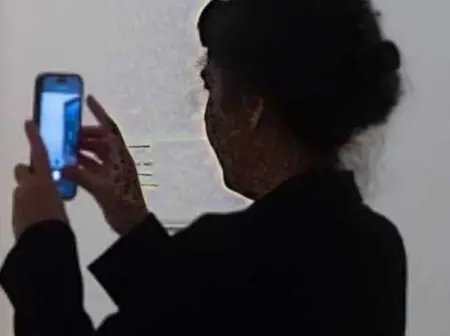
The guidance identifies four categories of locations that visitors should avoid photographing or recording without proper authorisation. The restrictions are intended to protect national security, sensitive installations and diplomatic activities.
According to the advisory, the prohibited categories include military installations, security facilities, diplomatic premises and certain public buildings.
Visitors are particularly warned against taking pictures or recording videos of military sites and other sensitive installations, as doing so could expose them to legal complications.
The four restricted categories are:
Military installations.
Security installations.
Diplomatic installations.
Some public buildings.
The warning also highlights the importance of respecting the privacy of other people while visiting the country.
Tourists and foreign residents are advised not to photograph or film individuals without first obtaining their permission. This applies to taking pictures as well as recording videos.
Kenyans travelling to the UAE for tourism, employment or business are therefore encouraged to familiarise themselves with local regulations before taking photographs, particularly when visiting areas close to government offices and security facilities.
The guidance comes amid broader reminders about the country's expectations regarding public conduct and respect for local laws.
In a separate advisory previously reported by TUKO.co.ke, the UAE highlighted six categories of public behaviour that could expose tourists and foreign residents to legal consequences.
The listed actions included kissing and hugging in public, causing excessive noise, using offensive language and making obscene gestures.
Authorities also warned against conduct considered disrespectful towards the UAE, its leadership or religion.
For Kenyans planning a trip to the UAE, understanding these restrictions could help prevent unnecessary confrontations with authorities and ensure a smoother stay.
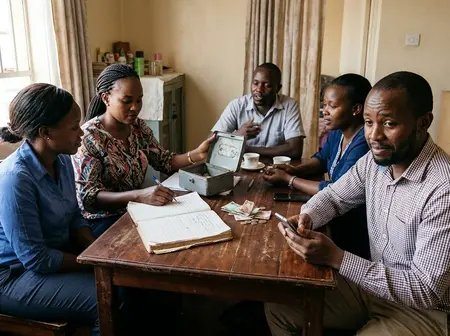
For decades, joining a chama was the most trusted way for Kenyans to pool money, support one another, and build savings discipline. From office merry-go-rounds in Upper Hill to neighbourhood savings groups in Ruiru, Thika, and Kisumu, chamas helped millions put aside cash they might otherwise have spent. Yet across the country, a growing number of savers are quietly stepping away from informal group savings and shifting their money into licensed Money Market Funds and regulated Saccos.
Financial analysts note that this shift is not about abandoning community values, but about protecting hard-earned cash from delays, disputes, and stagnant returns. Understanding why more Kenyans are rethinking traditional chamas can help you decide where your money works safest and hardest.
In a traditional rotating chama, waiting months for your turn to collect the pot creates a timing mismatch when an emergency strikes.
If school fees fall due or a family medical bill appears in month two while your payout is scheduled for month nine, your pooled savings cannot rescue you immediately. Regulated Money Market Funds overseen by the Capital Markets Authority generally allow investors to access funds within a few business days without waiting for a group cycle to rotate. Having direct control over your own withdrawal timeline gives you far greater flexibility during unexpected cash crunches.
Even the friendliest group of colleagues or relatives can run into financial strain when members lose income or fall behind on monthly contributions.
When two or three members skip payments, the remaining members often face reduced payouts, last-minute borrowing to cover shortfalls, or tense group meetings that strain personal relationships. Deposit-taking Saccos supervised by the Sacco Societies Regulatory Authority enforce structured member accounts, transparent statements, and formal lending rules rather than relying purely on social pressure. Shifting to structured financial institutions removes interpersonal friction from your savings plan.
Many informal chamas focus strictly on collecting and handing over cash without tracking yield, inflation, or real purchasing power.
When money sits idle or is lent out informally without clear return benchmarks, inflation gradually erodes what those shillings can buy. Licensed Money Market Funds invest in short-term money market instruments such as treasury bills and commercial paper issued within frameworks monitored by the Central Bank of Kenya, offering transparent daily accrued yields. Seeing steady, verifiable returns builds confidence that your savings are actually growing rather than merely being shuffled around.
Informal record-keeping in notebooks, personal M-Pesa statements, or scattered chat threads leaves many groups exposed to misunderstandings.
Without audited accounts, clear constitutions, or formal regulatory oversight, disputes over missing contributions or unapproved expenses can quickly divide members. Financial literacy guidance from the Capital Markets Authority emphasizes transparency, proper documentation, and regulated custody when managing investor funds. Moving personal savings into regulated Saccos or licensed unit trusts gives you official statements and clearer accountability.
Quitting a toxic or disorganized chama does not mean giving up accountability—it means upgrading the vehicle behind your discipline.
Many Kenyans now pair a small, trusted accountability check-in with automated monthly deposits into a licensed Money Market Fund or a regulated Sacco where their shares and deposits grow under their own name. Tax rules administered by the Kenya Revenue Authority also require proper compliance when earnings or structured investments cross relevant thresholds, making clean individual records essential over time. Keeping ownership in your own name ensures your hard work stays protected regardless of group dynamics.
Chamas played an important role in helping Kenyans start saving, but modern financial tools offer stronger protection, faster access, and clearer growth. When you move your core savings into regulated Saccos and licensed Money Market Funds while keeping your accountability habits strong, your money becomes both safer and more productive.
Have you stayed in a chama or moved your savings to an MMF or Sacco—and what made you decide? Share your thoughts in the comments below.