
CompetitionKenya is set to host 11 nations for the 2026 Rugby Africa Women’s Sevens Championship scheduled for November 7 and 8 at the RFUEA Grounds in NairobiKenya is set to host 11 nations for the 2026 Rugby Africa Women’s Sevens Championship scheduled for November 7 and 8 at the RFUEA Grounds in Nairobi, placing the HSBC SVNS 3 competition up for grabs.
Blog
-
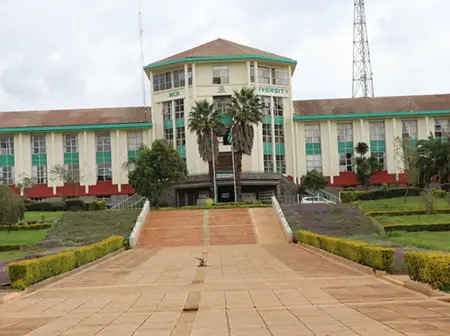
Moi University tops MDAs in gender mainstreaming performance
Moi University has emerged as Kenya's top-performing institution in the performance Evaluation on Gender Mainstreaming, ranking first among Ministries, Departments and Agencies (MDAs) in the 2025/2026 Financial Year report.The gender mainstreaming in MDAs was evaluated on specific indicators, including gender mainstreaming and gender based violence (GBV) actions in annual work plans, allocating a dedicated budget for gender mainstreaming, GBV prevention or response and workplace inclusion and establishing a formal gender mainstreaming committee or disability mainstreaming unit.
-
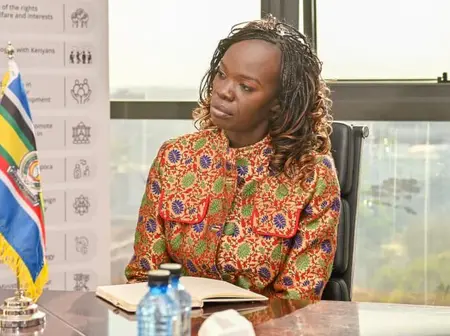
Huldah Momanyi re-elected to Minnesota House with huge margin: Lessons for Kenyan girls
I met her last year at Ogembo town. She had come to visit a children's home, Global Atlanta. No convoy. No noise. No bodyguards pushing people aside. She walked with simplicity. She talked with a down-to-earth accent, the kind that makes you forget she is a big person in America and remember she is a daughter of Nyamira.
-
Why your digital identity is as important as your physical identity
For generations, we have relied on physical identity to tell us apart. The way we dress, walk, speak or even laugh can make us recognisable. But today, much of our lives no longer happen in the physical world.
We open bank accounts online. We apply for credit from our phones. We make payments, shop, communicate and access services without necessarily meeting another person face-to-face. As our lives become increasingly digital, another form of identity has emerged alongside our physical one: our digital identity. And protecting it is becoming just as important.
Think of it as your digital fingerprint. A digital identity is information that confirms who you are whenever you use an online service. It can include identification details, phone number or any other information used to verify your digital identity.
It becomes particularly important as more financial service providers move online. Otherwise, the same technology that makes financial services easier to access can also create opportunities for fraudsters.
Today, identity can be misused without anyone physically taking your identification document. Someone may use your personal information to create an account, access a service or obtain credit in your name. This is why the account-creation stage matters.
The latest TransUnion data shows that approximately 4.5% of account-creation attempts in Kenya in 2025 were suspected of digital fraud. Account creation was therefore one of the points in the consumer journey where fraud risk was particularly evident. This is where eKYC comes in.
Electronic Know Your Customer, or eKYC, may sound technical. But the principle is simple: verifying that the person opening an account or accessing a financial service is genuinely who they claim to be. When you accurately complete your eKYC information, you help a provider establish your identity and distinguish you from someone attempting to impersonate you.
As a digital financial services provider, Tala uses KYC identity verification to confirm customer identities and help protect customers and the business from fraud and other financial crimes. Its verification process requires a valid government-issued ID and a live selfie directly through the Tala app.
Financial services providers have a responsibility to invest in strong identity verification, fraud detection and consumer protection systems. Consumers have a role too. We need to become more conscious of the information we share, where we share it and why it is requested. That means identity protection must become part of how we think about everyday digital financial safety. As more transactions move online, trust becomes one of the most valuable currencies in the digital economy. We would not casually hand our identification document to a stranger. We should apply the same level of care to the digital information that increasingly represents us online.
Kenya’s digital economy will continue to grow, with more services and transactions moving online. That future will require more than convenience. It will require confidence. And building that confidence starts with something fundamental: knowing who is on the other side of the screen.
Our physical fingerprints have always helped tell us apart. Our digital identity is now helping do the same. The responsibility is to make sure that the digital identity belongs to us and stays ours.
-
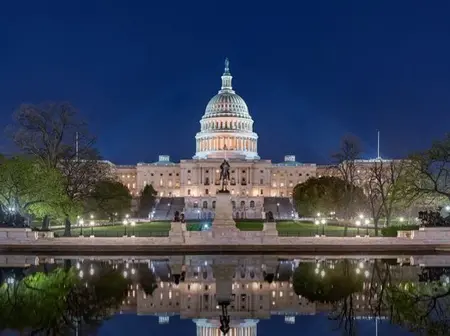
US midterm elections 2026: 5 African countries that could benefit from Democrats’ control of Congress
The 2026 United States (US) midterm elections could reshape America’s troubled diplomatic relations with Africa after Democrats won control of both chambers of Congress in a major political setback for President Donald Trump.
The Democratic victories in the House of Representatives and Senate allow the opposition party to scrutinise Trump’s foreign policy, challenge controversial executive decisions and demand greater accountability over America’s engagement with African countries.
Five countries stand out: South Africa, Rwanda, Somalia, Ghana and Nigeria. All have experienced significant tensions with the Trump administration over trade, immigration, security cooperation, development assistance or national sovereignty.
The election result does not automatically reverse Trump’s policies. The president retains substantial executive authority over foreign affairs, immigration and military operations. However, a Democratic-controlled Congress can investigate the administration, scrutinise spending, influence legislation and make it harder for the White House to pursue its agenda without political resistance.
For African governments, the central question is whether the new congressional majority will translate its electoral victory into a more accountable and predictable US foreign policy.
South Africa could find renewed support in Congress following Washington’s latest move against its trade relationship with Pretoria.
On November 2, 2026, US Trade Representative Jamieson Greer announced that President Trump had notified Congress and the South African government of his intention to terminate the country’s African Growth and Opportunity Act (AGOA) eligibility from 1 January 2027. Rwanda received the same notification.
The decision threatens preferential access to the American market for eligible exports, with potential consequences for South African businesses, manufacturing and employment.
A Democratic-controlled Congress could increase pressure on the administration to justify the decision, examine its economic consequences and pursue a more predictable approach to US-Africa trade. Congress also has an important role in AGOA’s legislative framework.
Rwanda faces an additional diplomatic challenge. On October 28, the US Treasury sanctioned Rwanda’s Ministry of Defence and Zigama Credit and Savings Society over claimed support for the M23 armed group in eastern Democratic Republic of Congo.
Washington accused Rwanda of supporting M23 through military equipment, logistics and training. Kigali has disputed allegations concerning its involvement in the conflict and maintains that regional security concerns must also be addressed.
Democratic lawmakers could push for stronger congressional oversight of sanctions and the Washington Accords peace process. However, concerns about instability and human rights abuses in eastern DRC are not exclusive to Republicans. Rwanda should therefore expect scrutiny to continue even under a different congressional leadership.
Somalia could benefit from renewed congressional scrutiny of Trump’s immigration restrictions.
The US State Department confirms that visa issuance to Somali nationals was suspended from 1 January 2026 across immigrant and non-immigrant categories, subject to specified exceptions.
The restrictions have implications for family reunification, education, business travel and the Somali diaspora.
Democrats could challenge the humanitarian consequences of the policy through hearings, legislative proposals and oversight of immigration enforcement. However, congressional opposition alone cannot automatically overturn a presidential entry restriction.
Ghana presents a different test of US-Africa relations: the sovereignty of African countries over their health systems and sensitive medical information.
Ghana rejected a proposed US health assistance compact worth approximately $109 million over five years after raising concerns about access to pathogen information, medical records, counterpart funding and the regulatory authority of its Food and Drugs Authority.
Speaking at the Council on Foreign Relations in September 2026, President John Mahama questioned the proposed access to Ghanaian medical information:
“I mean, who takes another country’s medical records?” The Democratic majority could increase scrutiny of the conditions attached to American development assistance, particularly health-data protection and the autonomy of recipient countries.
For Ghana, the issue goes beyond the value of the rejected agreement. It concerns whether development partnerships respect national institutions and public-interest safeguards.
Nigeria’s relationship with Washington could also come under increased congressional scrutiny, particularly over military cooperation, counterterrorism and religious freedom.
On December 25, 2025, US forces conducted airstrikes against Islamic State-linked targets in Sokoto State. However, Nigeria’s government confirmed that the operation was conducted in coordination with Nigerian authorities and with President Bola Tinubu’s approval.
The distinction matters because President Trump had previously framed US intervention in Nigeria around the alleged persecution of Christians, while Abuja has maintained that terrorism threatens Nigerians across religious communities.
A Democratic-controlled Congress could demand greater transparency about the intelligence behind military operations, civilian protection and the legal framework governing US involvement.
It could also question whether Washington’s approach strengthens Nigeria’s security institutions or creates further diplomatic tensions.
Nevertheless, counterterrorism cooperation is likely to retain bipartisan support. Nigeria should expect greater congressional oversight rather than an automatic end to American military assistance.
Beyond trade, immigration and military relations, the election raises broader questions about democracy, human rights and accountability.
The 2026 CIVICUS State of Civil Society Report offers an important framework for understanding these challenges. Covering developments during 2025 and early 2026, it warns that unaccountable power is on the offensive, with powerful states weakening international institutions and undermining human rights protections.
The CIVICUS Monitor’s current country ratings also reveal significant civic-space challenges across the five countries: South Africa and Ghana both score 60/100 and are classified as having obstructed civic space, while Rwanda scores 25/100, Somalia 28/100 and Nigeria 36/100, with all three classified as having repressed civic space.
These ratings measure the conditions in which civil society organisations, journalists, activists and citizens exercise fundamental freedoms. They are not assessments of US foreign policy or evidence that American pressure will necessarily improve civic space.
Nevertheless, they provide an important lens for evaluating Washington’s engagement with African governments.
A Democratic-controlled Congress could place greater emphasis on human rights reporting, democratic accountability, press freedom and protection of civil society organisations when scrutinising US assistance and diplomatic partnerships.
For African civil society organisations, this could create additional opportunities to engage American lawmakers and raise concerns about government accountability and restrictions on fundamental freedoms.
The Democratic victory in the 2026 US midterm elections presents an opportunity for African governments to reassess their diplomatic engagement with Washington.
South Africa and Rwanda could seek congressional intervention or greater scrutiny over their impending AGOA exclusions. Somalia could find political support for reviewing immigration restrictions, while Ghana may benefit from renewed debate about the conditions attached to American development assistance.
Nigeria, meanwhile, could use congressional oversight to reinforce the importance of sovereignty, transparency and accountable security cooperation.
However, African governments should avoid assuming that Democratic control means a return to the traditional US foreign policy approach. Competition with China, counterterrorism, critical minerals, migration control and American commercial interests are likely to remain central to Washington’s Africa strategy.
The real test will be whether the new Congress can turn electoral change into meaningful policy accountability. For the five countries facing diplomatic difficulties with Washington, the midterm elections offer a new political opening, but not a guaranteed diplomatic reset.
-
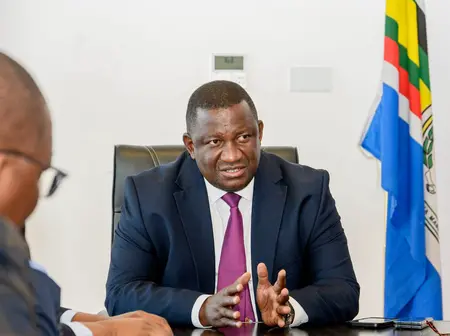
Kenya to Host 2026 Rugby Africa Women’s Sevens Tournament
Kenya will host the 2026 Rugby Africa Women’s Sevens Tournament on November 7 and 8 at the RFUEA Grounds in Nairobi, with 11 national teams set to compete for the continental title and a place in the HSBC SVNS 3.The tournament will bring together Kenya, Burkina Faso, Ghana, Madagascar, Mauritius, Rwanda, South Africa, Tunisia, Uganda, Zambia and Zimbabwe.
-
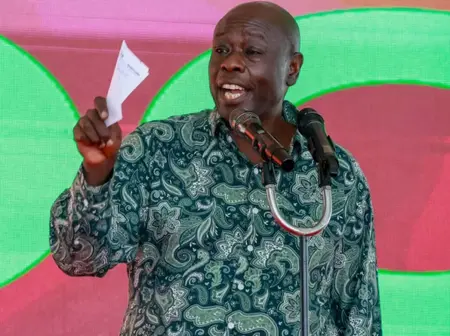
Gachagua to open another Wamunyoro in Nakuru and Meru
Former Deputy President Rigathi Gachagua has announced plans to establish two Wamunyoro annexes in Nakuru and Meru counties as he steps up efforts to consolidate his political support ahead of the 2027 General Election.
Gachagua said the two counties were strategically important to his political ambitions because of their large voter populations, adding that he intended to spend more time campaigning in areas with significant voting numbers.
Speaking on Wednesday at his Wamunyoro residence in Nyeri County while addressing a delegation from Gilgil Constituency in Nakuru, the Democracy for the Citizens Party (DCP) leader said he had identified Nakuru as a critical battleground in the next election.
“Currently, Nakuru County has 1.3 million votes. That figure might reach 1.5 million votes by the close of mass voter registration in January.”
“It is county number three in terms of votes. Number one is Nairobi, number two Kiambu, Nakuru number three. So, Nakuru is very important,” he said.
The former Deputy President said he would establish a Wamunyoro Annex in Nakuru to bring his political operations closer to the county's electorate, which he considers crucial to determining the outcome of the 2027 presidential contest.
“So, I am going to spend a lot of time in Nakuru. I have planned to open Wamunyoro Annex in Nakuru. Let me come near where the votes are. Let me stay near the 1.4 million votes.”
He also announced plans to establish a similar facility in Meru, signalling his intention to strengthen his political networks beyond his traditional Mt Kenya strongholds.
“I will open Wamunyoro Annex in Nakuru and in Meru. I don’t play around. Sometimes, some people look down upon me. I know politics. I am a political scientist. I have been involved in every succession since the transition from single-partyism to multi-partyism. Politics is a game of numbers. You go to where numbers are,” said Gachagua.
Gachagua expressed confidence in his political standing in several counties, claiming to enjoy considerable support in Nairobi, Kiambu, Nakuru and Meru.
“I am firmly in Nairobi. I have more than half of that city. Kiambu, 100 percent. Nakuru, 90 per cent; Meru 100 per cent. Kakamega: we shall join hands with Sifuna [Edwin] and [Eugene] Wamalwa, we agree.”
He said his strategy would focus on counties with substantial voter populations, arguing that successful political mobilisation required concentrating resources and time where electoral numbers were highest.
“We are in a very strong position. Therefore, I want to take a lot of time working on counties that have huge numbers, because that is politics. That is being strategic.”
The planned annexes would extend the political footprint of Wamunyoro, Gachagua's Nyeri base, which has become a focal point for opposition leaders, political delegations and supporters since his removal from office in October 2024.
-

Kenya Linked to Multi-Million-Dollar US Bank Fraud Case as Suspect Attempts to Flee
Kenya has been mentioned in a US$370 million bank fraud case involving 14 defendants accused of participating in a nationwide bank account takeover conspiracy targeting thousands of Americans.According to an indictment announced by the US Attorney’s Office for the Northern District of Texas on November 3, 2026, 35-year-old Muhamed Dieye of Dallas, Texas, allegedly led the scheme.
-
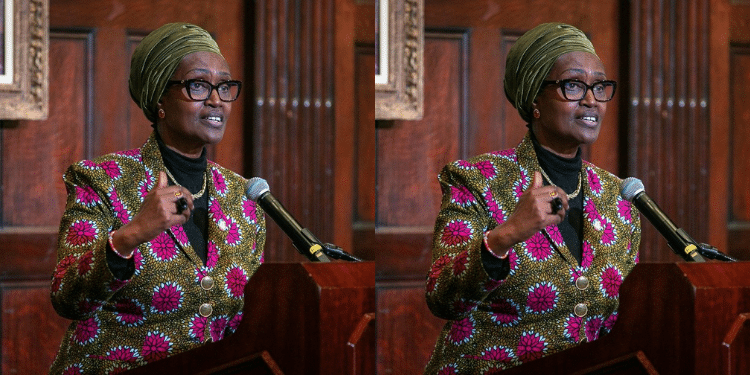
Kizza Besigye’s Wife Lands New Global Role
The wife of Ugandan opposition leader Kizza Besigye, Winnie Byanyima, has been appointed chair of the board of trustees of the International Institute for Environment and Development (IIED).The Joint United Nations Programme on HIV/AIDS (UNAIDS) announced the appointment on November 3 and congratulated Byanyima on her new role.
-

Police Inspector Kenneth Sang charged with murder of Dr Victoria Mutiso
Listen to articleDr Victoria Mutiso was killed on July 29, 2026, in what was described as an assassination along Mawensi Road in the Kilimani area of Nairobi.A police inspector has been charged with the murder of Dr Victoria Mutiso, who was shot dead in an incident along Mawensi Road in Nairobi on July 29, 2026.