
Nakuru County Agricultural Extension Policy 2026 has been launchedThe Policy aims at strengthening extension services across the County.Speaking on Friday during the launch, Nakuru County CECM for Agriculture, Livestock and Fisheries Leonard Bor termed the establishment of the Policy a key move to the farmers.
Blog
-

The world has 6.3 billion internet users, but connectivity remains out of reach for two billion people
An estimated two billion people remain offline globally despite internet adoption reaching 6.3 billion users in 2026, exposing persistent inequalities in connectivity, affordability and digital skills, according to the International Telecommunication Union (ITU).
The figure represents 76% of the world’s population, up from 6.1 billion people, or 74%, in 2025. However, the latest edition of the ITU’s Facts and Figures report shows that access to the internet remains heavily influenced by income levels, geographical location, gender and the availability of suitable infrastructure.
The differences are particularly pronounced between wealthy and poorer economies. Internet use stands at 93% in high-income countries, compared with 32% in low-income countries, while access to newer mobile networks remains heavily concentrated in wealthier markets.
ITU Secretary-General Doreen Bogdan-Martin said expanding connectivity and making it meaningful for everyone was becoming more important as artificial intelligence creates opportunities in areas such as education and employment. The figures highlight the challenge facing countries seeking to extend the benefits of digital services to populations that remain underserved.
The disparity in internet adoption is accompanied by substantial differences in mobile network coverage. Although 97% of the world’s population lives within reach of at least a 3G network, 5G coverage stands at 86% in high-income countries and just 4% in low-income countries.
The difference matters as newer mobile networks support higher speeds and greater capacity for data-intensive applications, including cloud services, video communications and artificial intelligence tools. Countries with limited 5G availability face additional infrastructure challenges as businesses and public institutions expand their use of advanced digital services.
The ITU’s findings also reveal differences in internet adoption across demographic groups. Globally, 79% of men use the internet, compared with 74% of women, while 86% of people aged 15 to 24 are online, against 74% among the rest of the population.
Geographical inequalities remain significant despite progress in connecting rural communities. Internet use stands at 82% among urban residents and 63% among rural populations, demonstrating the continuing difficulty of extending meaningful connectivity beyond major population centres.
The cost of devices and connectivity continues to influence who can participate in the digital economy. Mobile phone ownership among people aged 10 and above stands at 84% globally, but the figure ranges from more than 95% in high-income countries to just 57% in low-income economies.
Differences in data consumption also illustrate the unequal nature of internet access. Average monthly mobile broadband traffic per subscription reaches 20GB in high-income countries, almost six times the 3.4GB recorded in low-income countries.
The ITU’s affordability measurements show that the global median price of a data-only mobile broadband basket has fallen to 1.2% of gross national income per capita. Fixed broadband costs a median of 2.3%, although the cost burden remains substantially higher in poorer economies.
Landlocked developing countries and small island developing states met the widely recognised target of keeping mobile broadband costs below 2% of GNI per capita for the first time in 2026. Least developed countries, however, recorded a median mobile broadband cost of 6.1% of GNI per capita.
The ITU also found that three in 10 economies fail to meet the 2% affordability target for either fixed or mobile broadband. This leaves lower-income populations facing a greater financial burden when purchasing data, maintaining subscriptions and acquiring internet-enabled devices.
Africa’s connectivity challenges illustrate the distinction between infrastructure availability and actual internet adoption. The GSMA’s 2026 research estimates that only 36% of the continent’s population used mobile internet in 2025, leaving more than 900 million people offline.
The GSMA estimates that 63% of Africa’s population lives within mobile broadband coverage but does not use mobile internet, while 9% remains outside mobile broadband coverage. This makes the usage gap a major obstacle to expanding digital participation across the continent.
Smartphone affordability is a central part of the problem. The GSMA’s research found that an entry-level internet-enabled handset cost the poorest 20% of people in Sub-Saharan Africa an amount equivalent to 76% of their average monthly income at the end of 2025.
This creates a difficult situation for telecommunications operators and governments investing in network expansion. Even where mobile broadband coverage exists, households still need compatible devices and sufficient disposable income to purchase data and use online services regularly.
The issue also extends to digital skills. People need the ability to navigate online platforms, access digital financial services, use productivity tools and understand emerging technologies if connectivity is to translate into economic opportunities.
Kenya illustrates the complexity of expanding internet adoption in a market where telecommunications infrastructure and mobile subscriptions have grown substantially.
Data from the Communications Authority of Kenya reported by TechTrendsKE shows that the country had 52.26 million connected smartphones and 27.42 million feature phones by June 2026. Mobile broadband subscriptions reached 54.93 million, while total mobile data subscriptions stood at 64.26 million.
The country’s fixed internet market also recorded growth, with subscriptions reaching 2.84 million in June 2026, representing annual growth of 32.4%. Fibre accounted for approximately 1.57 million connections, reflecting the expanding role of fixed broadband alongside mobile internet.
However, these market figures sit alongside significant geographical differences in internet adoption. ITU country data for 2024 showed that 56.6% of individuals in urban Kenya used the internet, compared with 25% in rural areas. Household internet access stood at 81.6% in urban areas and 26% in rural locations.
The same ITU data placed individual internet usage at 37.8% among men and 32.2% among women. Kenya’s 4G population coverage stood at 97.3%, while 5G coverage reached 14% in the dataset.
The figures highlight the challenge of translating network availability into widespread usage. In its earlier reporting on Kenya’s last-mile connectivity, TechTrendsKE examined how remote counties such as Marsabit and Mandera face additional barriers linked to population density, device affordability, electricity access and the economics of network deployment.
Kenya’s satellite internet market also illustrates the different approaches being used to extend connectivity. Starlink had reached 27,616 subscriptions by June 2026, according to figures reported by TechTrendsKE, offering another option for customers in areas where conventional fixed broadband infrastructure is limited.
The expansion of fibre, mobile broadband and satellite services provides additional routes to internet access, but affordability and the availability of suitable devices remain important to adoption.
The ITU argues that expanding internet access must be accompanied by efforts to improve digital skills. Cosmas Luckyson Zavazava, director of the ITU’s Telecommunication Development Bureau, said people need the skills required to use online services and emerging technologies.
Several initiatives covered by TechTrendsKE illustrate how organisations are addressing this challenge in Kenya. Intel, the Kenya National Library Service and the Mandela AI Hub Foundation have partnered on AI training through public libraries and mobile library units, providing learning opportunities for people without technical backgrounds.
A separate digital skills programme in Garissa and Turkana enrolled more than 700 young people, targeting 1,700 participants from refugee and host communities. The programme covers areas including cloud computing, artificial intelligence, data analytics and professional certification.
Google has also introduced its Skilling Africa platform, targeting three million people across the continent by 2030. The initiative incorporates data-light learning, downloadable lessons and offline course access to accommodate users facing connectivity and data-cost constraints.
Electricity access is another consideration in the adoption of digital services. Kenya’s Commonwealth youth AI readiness assessment, reported by TechTrendsKE in November 2026, highlighted electricity access, internet reliability and digital infrastructure among the factors influencing the country’s ability to prepare young people for AI-related opportunities.
The ITU’s latest findings place these challenges within a wider global picture. With 6.3 billion people already using the internet, the remaining two billion represent a substantial population that still faces barriers to digital participation, even as governments, telecommunications operators and technology companies expand connectivity infrastructure.
-

WayaWaya, Choice Bank launch AI-driven banking app
Fintech firm WayaWaya has entered retail banking through a partnership with Choice Bank, betting on artificial intelligence to win customers in Kenya’s crowded digital banking market.
The deal lets WayaWaya offer bank accounts, multi-currency wallets, local and international transfers, and utility payments under Choice Bank’s Central Bank of Kenya (CBK) licence.
Choice Bank, a microfinance lender, will provide the regulated banking infrastructure. WayaWaya will build the app and manage customers.
The product, called WayaWaya Banking, uses AI to analyse a user’s transactions and reorganise the app around how they earn, spend, save and invest.
“Traditionally, banks build applications around products and expect customers to adapt to them. We believe the future should be the opposite: banking should adapt to the customer,” said Teddy Ogallo, WayaWaya’s Founder and Chief Executive.
An entrepreneur collecting payments and paying suppliers would see cash flow and business expenses first. A salaried worker would get budgeting and savings tools up front, while an investor’s dashboard would highlight portfolio activity.
The app is also designed to shift as a customer’s circumstances change. For example, a salaried user who starts a side business would begin to see tools for collecting payments and tracking expenses.
“The idea is to move beyond customers having to search for financial services. Instead, the platform can increasingly anticipate their needs,” said Mr Ogallo.
Choice Bank Chief Commercial Officer Patrick Russel said the lender’s role is to supply the banking rails, with WayaWaya controlling how services are presented to users.
“WayaWaya can then tailor how those services are presented to a business owner managing daily collections or an individual setting money aside,” said Mr Russel.
Regional ambitions
WayaWaya was founded in 2016. It says the Kenyan launch is the first step towards building a pan-African neobank through partnerships with licensed banks in other markets.
The firm plans to connect those partners through a single app, so that businesses operating across borders do not have to deal with a separate banking system, payment network and currency in each country.
“A business expanding from Kenya into Nigeria or Uganda should not have to navigate an entirely disconnected financial experience in every market,” said Mr Ogallo.
The deal adds to a growing list of banking-as-a-service arrangements in Kenya, where licensed lenders rent out their regulatory cover to fintechs that compete on product design.
-

Social media platforms face tougher child-protection rules under Kenya’s proposed Online Safety Bill
Social media companies operating in Kenya could face fines of up to KSh500 million or 10% of their annual global turnover for failing to meet proposed child-protection requirements. The penalty is part of the Kenya Online Safety Bill 2026, introduced by Embakasi West MP Mark Mwenje, which would require platforms to verify users’ ages and obtain parental consent before allowing children under 18 to access their services.
The proposed financial penalties also extend to company leadership. Senior executives involved in non-compliance could face fines of up to KSh10 million, imprisonment for up to five years, or both. The Communications Authority of Kenya (CA) would oversee enforcement, with providers entitled to notification and a hearing before civil penalties are imposed.
The Bill places Facebook, Instagram, WhatsApp, X and TikTok among the services covered by its proposed requirements. For these companies, compliance would involve establishing whether a user is below 18 and confirming that the person authorising access has parental responsibility.
Providers would have to deploy highly effective age verification or age estimation systems to determine whether someone using their services is a child. The Bill also proposes several methods for confirming parental responsibility, including credit card verification, cross-referencing a parent’s identity and decentralised digital identity verification. The CA could approve other verification methods.
This would make age assurance part of the process through which platforms grant access to accounts. A parent or guardian would be able to withdraw consent, after which the provider would have to restrict the child’s access within a prescribed period.
The proposed requirements come against a record of existing platform enforcement activity in Kenya. TikTok reported removing 884,591 videos in the country during the first quarter of 2026, with 99.7% removed proactively before users reported them. The company also reported taking down 48,739 accounts suspected of belonging to users under 13 and interrupting 103,847 LIVE rooms.
Those figures illustrate the scale of moderation and age-related enforcement activity reported by TikTok. The Online Safety Bill would add a distinct obligation by requiring platforms to obtain parental authorisation for users below 18, extending the proposed controls beyond the removal of accounts suspected of belonging to children under 13.
The proposal follows parliamentary scrutiny of TikTok. In February 2026, Parliament’s Public Petitions Committee recommended stronger regulation of the platform rather than an outright ban, calling for measures that included age verification, periodic compliance reviews by the CA and engagement between platforms and the Office of the Data Protection Commissioner.
In May 2026, ICT Cabinet Secretary William Kabogo also called on X to establish a local office in Kenya to support government engagement on harmful content and child protection. These developments have placed platform accountability and the ability of Kenyan authorities to engage technology companies within the country’s regulatory agenda.
Another legislative proposal addresses wider platform obligations. The Kenya Information and Communications Amendment Bill 2026 proposes requirements covering platform registration, reporting unlawful activity and remedial action, and establishing complaint-handling mechanisms. The Online Safety Bill is separate, concentrating on children’s access to social media and the authorisation required from parents or guardians.
A Kaspersky analysis covering the first eight months of 2026 identified YouTube, YouTube Kids and TikTok as prominent applications in children’s observed online activity in Kenya. The company’s figures put YouTube at 23.5% of observed application activity, while YouTube Kids and TikTok each accounted for 17%.
Kaspersky also identified grooming, phishing, cyberbullying and the manipulation of children’s images and videos using generative AI among the risks facing young internet users. The Bill addresses some of the content-related concerns by identifying pornography, material encouraging suicide or deliberate self-harm, eating disorders, dangerous stunts and online challenges as harmful to children.
Under the proposal, parents and guardians would be responsible for guiding children’s safe internet use and supervising their online activity according to age and maturity. They would also be expected to report suspected online abuse and exploitation to the relevant platform, the CA, the National Council for Children Services or the National Police Service.
The Bill would not make parents liable merely because a child accessed harmful content or participated in harmful online activity. Its proposed responsibilities instead focus on supervision, guidance and reporting, while the platform obligations centre on access controls and age verification.
The proposed Kenyan threshold is higher than the age limits cited in several European countries. France requires parental consent for children under 15, while Germany’s rules cover minors aged 13 to 16. Italy requires parental approval for children below 14.
Kenya’s proposal would apply parental consent requirements to everyone under 18 using the covered services. The Bill therefore places the responsibility for establishing a child’s age and obtaining authorisation on social media providers, with the CA responsible for enforcement.
The country’s earlier child-safety initiatives have also involved cooperation between regulators and industry. In 2021, the CA, Safaricom, Airtel, Telkom Kenya, Jamii Telecom and GSMA worked together on a portal providing online safety guidance for children. The proposed legislation would add statutory obligations for social media companies to that existing child-protection effort.
For platforms covered by the Bill, the proposed compliance framework would bring together age assessment, parental identity verification, consent management and restrictions on access after consent is withdrawn. Companies that fail to meet those requirements could face financial penalties, while executives involved in non-compliance could also face personal legal consequences.
-
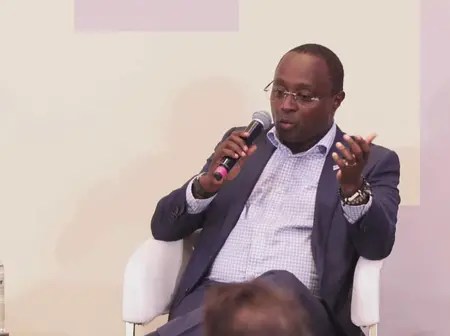
US investors increase their exposure to Kenya as Nairobi strengthens its position in Africa’s financial markets
American investors increased their portfolio holdings in Kenya by 45 percent in 2025 to Sh258 billion ($1.9 billion), marking the highest level in four years as demand for Kenyan government securities and listed companies recovered after a prolonged decline.
Data from the US Department of the Treasury shows that holdings of Kenyan equities and long-term debt securities by US investors rose by Sh80 billion ($615 million), from Sh178 billion ($1.3 billion) in 2024. The increase marked a second consecutive year of growth following four years of declining exposure, pointing to renewed interest in Kenya’s financial markets among American investors.
The recovery came against a difficult international investment environment, as geopolitical tensions and uncertainty surrounding US President Donald Trump’s trade policies prompted investors to reassess their exposure to emerging and frontier markets. Relatively high interest rates in developed economies, particularly the United States, also intensified competition for international portfolio capital.
Daniel Mainda, chief executive of the Nairobi International Financial Centre, attributed Kenya’s appeal to improvements in its financial products and efforts to strengthen the investment environment. He said that the country had taken deliberate steps to maintain economic stability while identifying alternative methods of attracting direct investment.
American investors’ exposure to Kenya remains heavily concentrated in long-term debt securities, which accounted for approximately 90 percent of their total portfolio holdings in 2025.
US holdings of Kenyan long-term debt securities increased by 42 percent to Sh231 billion ($1.785 billion), compared with Sh164 billion ($1.261 billion) a year earlier. The increase reflects the continued importance of government securities in attracting international portfolio investors, with Treasury bonds and infrastructure bonds offering exposure to Kenya’s domestic debt market.
The growth coincided with a decline in domestic interest rates as the Central Bank of Kenya eased monetary policy. Treasury Bill rates averaged 8.7 percent in June 2025, down from 16.5 percent in June 2024, according to the CBK, creating an opportunity for investors to secure prevailing returns on longer-dated securities.
Government securities remained an important component of Kenya’s investment proposition as the Treasury continued issuing bonds to finance public expenditure and infrastructure development. For international investors, these instruments provide access to shilling-denominated returns, while their attractiveness is influenced by interest rates, currency movements and developments in the domestic economy.
Despite the growth in debt holdings, American investors’ exposure to Kenyan equities recorded the faster rate of expansion. Equity holdings almost doubled to Sh27 billion in 2025, up from approximately Sh14 billion in 2024, reflecting increased exposure to companies listed on the Nairobi Securities Exchange.
The increase in American equity holdings coincided with a recovery in the Nairobi Securities Exchange, where improving share prices and trading activity supported renewed investor participation.
The NSE All Share Index gained 24.3 percent in the first half of 2025, while market capitalisation increased by 24.6 percent over the same period, according to the CBK. Foreign investor activity also improved, with net purchases on the exchange reaching a record Sh1.2 billion in August 2025 as uncertainty surrounding President Trump’s tariffs eased.
The recovery continued into 2026. The NSE recorded Sh395 billion in equity turnover during the first nine months of the year, compared with Sh145 billion across the entire 2025 calendar year, according to TechTrendsKE reporting. The exchange also added 333,043 investors between January and September 2026, taking its reported investor base to 2.36 million.
Kenya’s broader capital-market position also improved. The country rose from seventh to fifth place in the 2026 Absa Africa Financial Markets Index, scoring 65 out of 100, according to the index findings reported by TechTrendsKE. Improvements in stock and bond trading, dollar-denominated securities and market transparency contributed to Kenya’s stronger position.
These developments provide a wider context for the increase in American holdings, as the Nairobi Securities Exchange works to deepen its markets and expand access to domestic and international investors.
Kenya is also pursuing investment through the Nairobi International Financial Centre, which is intended to attract financial institutions, investment funds and multinational businesses seeking to establish operations in the country.
The NIFC reported that 15 newly certified companies had investment commitments worth Sh25.8 billion ($200 million), adding to efforts to position Nairobi as a regional financial and investment hub. The commitments were associated with the centre’s certification framework and investment incentives introduced through the Finance Act 2025.
In October 2026, NIFCA chief executive Daniel Mainga outlined plans for a $250 million technology and artificial intelligence investment fund targeting startups and companies in Kenya and across Africa. The proposed fund forms part of the centre’s wider ambition to attract capital into technology businesses and expand Nairobi’s role in regional investment activity.
The developments complement the growth in portfolio holdings by showing how Kenya is pursuing different sources of international capital. While government securities and listed equities provide foreign investors with access to financial markets, the NIFC’s initiatives target companies and investment structures operating across the wider economy.
The Capital Markets Authority has also reported growth across Kenya’s investment industry, including money market funds, fixed-income funds, special funds and digital investment platforms. The expansion of these products is widening the range of investment opportunities available to individuals and institutions participating in the country’s financial markets.
The growth in foreign investment comes as Kenya continues to manage its fiscal financing requirements and efforts to maintain stability in the foreign-exchange market.
CBK Governor Kamau Thugge attributed the shilling’s stability to improvements in the balance of payments, financial inflows and the accumulation of foreign-exchange reserves. He reported a current account deficit of $4.68 billion alongside a financial and capital account surplus of $7.458 billion.
Foreign portfolio investment contributes to the financial account by bringing external capital into Kenyan securities markets. When international investors purchase government bonds or listed shares, they can also support foreign-exchange supply as they convert funds into shillings to acquire those assets.
However, the government’s continued reliance on domestic borrowing presents a competing policy consideration. Thugge has urged the National Treasury to rein in domestic borrowing, arguing that heavy government demand for local financing could undermine efforts to reduce lending rates and improve access to credit for businesses.
For Kenya, attracting international portfolio investors provides another source of demand for government securities and listed companies, while expanding the pool of capital available to its financial markets. The 2025 increase in American holdings represents a recovery from the preceding years of decline, although total exposure remains below the pre-pandemic peak of Sh390 billion ($3 billion).
The recovery therefore comes as Kenya works to strengthen its capital markets, broaden international participation and establish Nairobi as a destination for investment across Africa.
-

How UEDCL plans to fix power outages
Uganda Electricity Distribution Company Limited (UEDCL) has outlined measures being implemented to strengthen electricity supply and address infrastructure constraints amid rapidly growing demand.UEDCL’s customer base has grown by approximately 71% over the past five years, from 1.64 million customers in 2021 to approximately 2.8 million today.
-

Levixone lines up Africa’s gospel music icons for his ‘A One Tym Experience’ concert tomorrow
Seventeen years in music is no small achievement. And gospel singer Levixone wants to celebrate the milestone in style. The singer is set to bring together some of Africa’s biggest gospel names for a night of music and worship at the Kampala Serena Hotel, tomorrow, Saturday, November 7th, at a concert dubbed ‘A One Tym Experience,’ powered by I&M Bank Uganda Limited.
-

Nairobi United Lands SportyBet Sponsorship
The 2025 Football Kenya Federation (FKF) Cup champions Nairobi United have secured a landmark KSh380 million three-year deal with international betting firm SportyBet, marking the largest club sponsorship deal ever announced in Kenyan football history.The deal will see SportyBet become the club’s official shirt sponsor and aims to support Nairobi United's push in the FKF Premier League and securing a return to continental football continental competitions (including the CAF Champions League and Confederation Cup).
-

Paraguay President Santiago Peña Resigns After Bank Collapse
Paraguay’s President Santiago Peña has announced his resignation following a political crisis sparked by the collapse of a bank linked to him.“I want to apologise to the people if at any point I failed,” he said in a video message on social media.
-
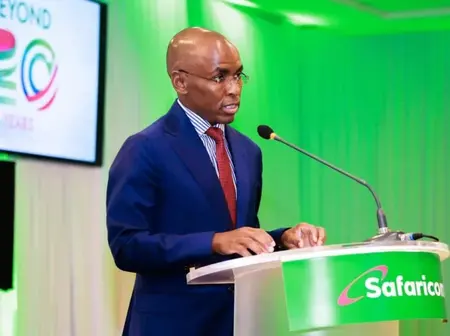
Safaricom Net Profit Jumps 35.9% to KSh58.2 Billion as M-Pesa Revenue Crosses KSh100 Billion
Safaricom PLC has reported a 35.9 per cent increase in net profit to KSh58.2 billion for the first half of the 2026/2027 financial year, driven by strong growth in its Kenyan business and improved performance in Ethiopia.The telecommunications giant attributed the performance to rising M-Pesa revenues, increased customer activity and significant improvements in its Ethiopian operations, which are now approaching profitability.