
Somalia is participating in the China International Import Expo (CIIE) for the first time, bringing more than 40 companies to Shanghai. During an exclusive interview with CGTN's Zhang Meng, Gamal Mohamed Hassan, Somalia's minister of commerce and industry, said the core goal is to connect Somali businesses with Chinese partners and take full advantage of China's zero-tariff policy.
Blog
-

Oscar Kampala: The Ugandan fashion entrepreneur building a 7,000-man business movement across Africa
At just 25, Ugandan fashion entrepreneur Oscar Nyesiga, popularly known as Oscar Kampala, is pursuing ambitions that go beyond building a successful fashion brand. Through his luxury menswear business and the 7,000 Men Movement, he wants to connect thousands of young African entrepreneurs, promote mentorship and create opportunities for business growth across the continent.
-

Tanzania’s Opposition leader Tundu Lissu Sentenced to Four Years in Prison
Tanzania's main opposition leader, Tundu Lissu, has been found guilty of inciting unrest and sentenced to four years in jail, in a case that has raised concerns about political freedom in the East African country.A panel of three judges at the High Court in Dar es Salaam acquitted him of the more serious offence of treason, saying prosecutors had failed to prove a key element of that charge.
-

6 Kenyan Engineers Behind Major Infrastructure Projects Across Africa
In this storyKenyan engineers are making their mark on major infrastructure projects across Africa.They have been involved in constructing roads, airports, electricity grids, among other facilities.In this article, WoK features six engineers whose work has taken them beyond Kenya’s borders.
-

Foreign applications approach three times their allocation
The foreign investor response comes as Kenya’s capital markets record a larger pool of investors and stronger trading activity. The Capital Markets Authority reported that the NSE investor base reached 2.36 million by September 2026, after adding 333,043 investors between January and September.
The exchange’s market capitalisation also rose to KSh4.12 trillion in September, from KSh2.94 trillion at the end of 2025. Equity turnover reached KSh395 billion in the first nine months of 2026, compared with KSh145 billion for the whole of 2025, although a KSh204.3 billion Safaricom block trade accounted for a substantial portion of this year’s activity.
Foreign investment figures provide another layer of context. TechTrendsKE reported that US investors’ Kenyan portfolio holdings increased by 45% in 2025 to KSh258 billion, from KSh178 billion in 2024. Their equity holdings nearly doubled to KSh27 billion, from KSh14 billion, while long-term debt securities accounted for the bulk of the portfolio.
Quickmart’s foreign subscription figures therefore stand out as a direct measure of demand for a Kenyan consumer-facing business entering the public market. The offer has also attracted domestic retail investors, adding to the participation recorded across the local exchange.
The IPO comprises two billion existing shares being sold by Sokoni Retail Kenya Ltd, representing 50% of Quickmart’s issued share capital. At KSh7.50 per share, the offer values the supermarket chain at approximately KSh30 billion.
Because the shares are being sold by an existing shareholder, the proceeds from the offer go to the selling shareholder rather than directly to Quickmart for its expansion plans. Sokoni Retail Kenya’s ownership structure includes private equity firm Adenia Partners, which holds a 50.79% stake, alongside interests associated with the Kinuthia family, Tumaini’s founders and Peter Kang’iri.
Adenia’s stake in Sokoni means the IPO provides an exit route for part of its investment in the retailer. The private equity firm was central to the consolidation of Quickmart and Tumaini Supermarkets, which helped build the business into one of Kenya’s largest supermarket chains.
The offer gives public market investors exposure to a retailer with an established national footprint and a substantial position in Kenya’s organised grocery market. Quickmart ranks behind Naivas by store count and turnover, with an estimated 15% share of the supermarket market, according to figures cited in the IPO documentation.
Quickmart reported revenue of KSh50.43 billion for the 2025 financial year, alongside adjusted profit after tax of approximately KSh1.7 billion and statutory net profit of about KSh1.51 billion. Its revenue grew at a compound annual growth rate of 18.4% between 2021 and 2025, reflecting the expansion of its store network and customer base.
The KSh30 billion valuation represents approximately 19.9 times the retailer’s FY2025 statutory net profit, or 17.6 times its adjusted profit. These valuation measures give investors a basis for assessing the offer against the company’s earnings and its position in the supermarket sector.
Quickmart has expanded from four stores to 72 outlets across 16 counties. The company has also outlined plans to add between 10 and 15 stores annually, extending its reach as it competes with Naivas, Carrefour and other retailers for customers in Kenya’s grocery market.
Its customer activity extends beyond physical supermarket visits. Quickmart’s partnership with Bolt Food made more than 12,000 products available through the delivery platform across over 60 stores, covering groceries, household goods, beverages and wellness products. The retailer also operates its Q-Points loyalty programme, which had attracted 2.5 million members by the first half of 2026.
The business reported revenue of KSh27.3 billion in the first half of 2026 and averaged approximately five million customer transactions a month during the period. Those figures provide a more recent view of its operating scale as investors prepare for the company’s market debut.
Quickmart’s listing adds a major consumer retail business to the NSE at a time when the exchange has recorded several significant corporate market developments. Kenya Pipeline Company completed its IPO in March 2026, while Family Bank joined the exchange through a listing by introduction in June.
The supermarket’s public listing will give investors another way to gain exposure to Kenya’s consumer economy through listed shares. Its performance will also offer the market a public company against which to assess the financial prospects of large-scale supermarket retailing.
Quickmart’s dividend policy targets an annual payout of at least 80% of profit after tax, with distributions planned on a semiannual basis. The company expects the first dividend relating to the second half of 2026 to be paid in the first half of 2027, subject to financial performance, capital requirements and board approval.
The IPO’s 122.7% subscription rate gives the retailer a strong demand profile going into its November 12 NSE listing. With foreign applications approaching three times their allocation and retail investors also exceeding their reserved portion, the offer has drawn interest across the investor groups participating in the sale.
-

MCA Leah Wambui reveals plan she has towards addressing water issue in Agricultural-rich Kabatini Ward
Kabatini Ward is one of the Wards that feed Nakuru Town residents with the richness in agriculture.Area MCA Leah Wambui Ng’ang’a has revealed a plan she has to ensure enough water for farming activities.Speaking to this publication on Friday November 6, 2026 MCA Leah stated that inorder to help the many farmers who rely on water for farming, she will be engaging stakeholders to come up with a plan on sustainable water supply.
-
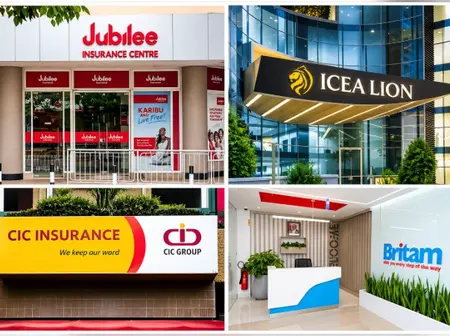
Kenya’s Richest Insurance Firms In 2026 And The Business Leaders Behind Them
Kenya has about 59 licensed insurance companies.According to the Insurance Regulatory Authority (IRA), Kenya’s insurance industry collected KSh 466.58 billion in premiums in 2025.This was a 16.5% increase from KSh 400.59 billion in 2024.In this article, WoK has compiled a list of Kenya’s richest insurance firms and their leaders.
-
NCBA shareholders take an 8.37% stake in Nedbank as the South African bank assumes control of the Kenyan lender
Nedbank’s acquisition of a controlling interest in NCBA has given former shareholders of the Kenyan lender an equity position in one of South Africa’s largest banking groups, while handing the acquirer control of a regional financial services business with established digital lending operations.
Eligible NCBA investors received 43,631,052 newly issued Nedbank shares, representing approximately 8.37 percent of the enlarged South African bank. The transaction also delivered KSh23.2 billion in cash payments, completing a settlement structured around a combination of equity and cash consideration.
The ownership change leaves Nedbank with 66 percent of NCBA, while the remaining 34 percent continues to trade on the Nairobi Securities Exchange. For Nedbank, the acquisition provides an operating platform across East and West Africa, including a digital banking business that has become a significant contributor to NCBA’s earnings.
NCBA’s value to the South African group extends beyond its Kenyan operations. The lender operates in six African markets, has a substantial corporate banking business and has developed digital lending products with reach through mobile money and other distribution channels.
NCBA’s 2025 financial results provide a measure of the business Nedbank has taken control of. The lender reported KSh23.4 billion in profit after tax, operating income of KSh73.3 billion, total assets of KSh716 billion and customer deposits of KSh532 billion. Its digital lending business generated KSh8.9 billion in profit during the year, demonstrating the contribution of technology-led credit to the group’s earnings.
The bank disbursed KSh1.4 trillion in digital loans during 2025, according to its results coverage, with lending volumes increasing 33 percent. Its Fuliza partnership with Safaricom is a major part of that business, giving NCBA exposure to customers who access short-term credit through mobile money. The bank also operates ConnectPlus, a corporate banking platform offering payments, liquidity management, collections and trade finance services.
These capabilities help explain why Nedbank’s interest in NCBA has centred on more than its physical banking network. The Kenyan lender has developed technology, customer distribution and lending systems that could support the South African group’s operations across other markets. Nedbank chief executive Jason Quinn has previously pointed to the opportunity to connect banking platforms across Southern and East Africa to support trade, investment and economic growth.
NCBA’s regional operations also contribute to its earnings. Its businesses outside Kenya generated KSh3.6 billion in profit before tax in 2025, while the Kenyan banking subsidiary contributed KSh22.9 billion. The group operates in Kenya, Uganda, Tanzania, Rwanda, Ivory Coast and Ghana, giving Nedbank an established presence across several markets without having to build a comparable network from the ground up.
NCBA had already outlined its own expansion priorities through its 2026–2030 Ubuntu strategy, which covers strengthening core banking, digital transformation, regional growth, wealth management, SME banking and insurance. The acquisition places those ambitions under a parent group with a larger balance sheet and an established Southern African footprint.
The acquisition also reflects Nedbank’s approach to investments in other banking groups. Before pursuing NCBA, the South African lender held an approximately 22 percent stake in Ecobank Transnational. Quinn previously explained that the minority position limited Nedbank’s ability to influence the bank’s strategy and its capacity to extract dividends.
Nedbank subsequently moved away from that investment, with the experience informing its preference for controlling interests in businesses where it intends to deploy capital and influence strategic decisions. The NCBA transaction gives it a 66 percent stake and the authority that comes with majority ownership.
The acquisition was valued at approximately KSh116.3 billion in the regulatory approval coverage, equivalent to around 1.4 times NCBA’s book value. That valuation placed a premium on the Kenyan lender’s existing business, including its earnings, regional presence and digital banking capabilities.
Nedbank has said it intends to use its larger balance sheet to help NCBA grow its corporate banking business and finance larger transactions. The opportunity is particularly relevant to companies operating across African markets, where trade finance, payments and cross-border banking services can require access to funding and infrastructure beyond what a single local institution can provide.
NCBA’s digital lending operation is a major source of income, but the growth of that business also needs to be considered alongside the cost of managing credit risk. The lender’s 2025 results showed that credit-loss provisions rose 46.3 percent to KSh8 billion, while operating expenses increased 17 percent to KSh37.5 billion.
The increase in provisions is relevant to the value Nedbank expects to extract from the acquisition. Digital credit can generate substantial transaction volumes and income, but the quality of the loan book and the cost of defaults influence how much of that income ultimately reaches the bottom line. NCBA’s lending partnerships and technology infrastructure therefore represent both an earnings opportunity and an area requiring continued risk management.
Capital requirements will also shape the returns available to the new parent company. In September 2026, TechTrendsKE reported on proposed CBK capital rules linking dividend distributions to banks’ Common Equity Tier 1 capital ratios. The proposals included a requirement for banks below a specified capital threshold to retain all earnings, a consideration for any shareholder seeking to maximise distributions from a banking subsidiary.
Nedbank’s control gives it influence over NCBA’s capital allocation and dividend policy, but those decisions remain subject to applicable regulatory requirements. The ability to direct earnings towards expansion, strengthen capital or distribute dividends will therefore depend on the bank’s financial position and the rules governing its operations.
The transaction’s consideration was structured with 80 percent paid in Nedbank shares and 20 percent in cash. Under the conversion terms, eligible investors received 4.02994 Nedbank shares for every 100 NCBA shares, while the cash option was priced at up to KSh105 per NCBA share.
Nedbank shares were valued at 250 rand, equivalent to KSh1,928.50 at the exchange rate used for the transaction. The new issuance increased Nedbank’s total shares in issue to 520,903,680. At a market price of 300 rand on Thursday, the newly issued shares had an indicative value of approximately 13.09 billion rand.
The cash component amounted to KSh23.2 billion. Investors who received Nedbank shares can retain them to participate in the South African bank’s dividends and share-price performance or sell their holdings. Families linked to former Kenyan presidents Jomo Kenyatta and Philip Ndegwa were among the NCBA owners allotted Nedbank shares.
The issuance has also changed the proportional holdings of Nedbank’s existing shareholders. As at January 30, 2026, the Public Investment Corporation held 14.8 percent of the bank, Allan Gray held 9.5 percent and BlackRock held 5.4 percent. The additional shares have diluted the percentage represented by those existing holdings in Nedbank’s enlarged share capital.
The final allocation followed a takeover process in which shareholder participation exceeded the 66 percent stake Nedbank sought. By August, valid acceptances had reached approximately 79.9 percent of NCBA’s issued shares, after which excess acceptances were scaled back to meet the acquisition target. Earlier in the process, 15 major shareholders had provided irrevocable undertakings representing 77.54 percent of NCBA.
Nedbank’s acquisition changes control of NCBA without removing the Kenyan lender from the local market. NCBA remains listed on the NSE, with public investors retaining a 34 percent interest, while its brand, Nairobi headquarters, local management, branches, products and digital channels remain in place.
The governance arrangements outlined during the acquisition process provide for Nedbank to nominate at least two representatives to NCBA’s board, while NCBA shareholders were expected to receive representation on Nedbank’s board. The structure gives the new parent influence over the subsidiary while preserving a channel for the Kenyan shareholder base to participate in the wider group’s governance.
Employment was another issue addressed during the acquisition process. Nedbank gave assurances that existing NCBA employees would retain their jobs and contractual and statutory rights under the offer arrangements. NCBA had 3,712 employees at the end of December 2024, according to the February 2026 TechTrendsKE coverage of the proposed transaction.
NCBA chief executive John Gachora previously described the acquisition as an expansion of the bank’s capabilities, saying: “The name is the same, the people are the same, but the ambition and capabilities are tremendously magnified.”
For Nedbank, the transaction provides a controlling interest in a profitable regional bank with established digital and corporate banking operations. For former NCBA shareholders, the settlement has converted part of their investment into an interest in the South African parent, while public investors continue to hold shares in the Kenyan subsidiary.
-
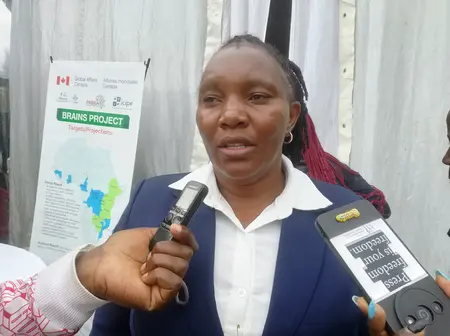
Kabatini MCA Leah Wambui joins leaders in demanding justice for family of late minor who was brutalized
Kabatini Ward MCA Leah Wambui has joined fellow leaders in calling for justice for the family of minor Elvis who lost his life after he was brutalized.The young Elvis Maina from Cedar Lodge, Kabatini, is said to have been assaulted by fellow youths after he returned from circumcision.
-
Equity Bank’s Sh1.49bn payroll fraud case exposes the challenge of tracing money across banks and crypto platforms
The High Court has authorised Equity Bank to freeze accounts holding Sh303.2 million in connection with an alleged Sh1.49 billion salary-processing fraud, while ordering the conversion of cryptocurrency holdings linked to the dispute into ordinary currency. The Equity Bank salary fraud proceedings centre on transactions allegedly carried out between November 2023 and June 2024, involving the bank’s internal payroll operations, several recipient businesses and accounts held at other financial institutions.
The orders extend across UBA, Absa, NCBA, Stanbic and Co-operative Bank. They also cover cryptocurrency holdings associated with three defendants on Binance or other digital asset platforms. The court directed that identifiable digital assets be converted within 10 days, with the proceeds placed in an account at a Central Bank of Kenya-licensed tier-one bank under the CBK’s appointment as escrow agent.
The proceedings put the movement of money after the alleged transfers at the centre of Equity’s recovery effort. The bank says funds were routed through third-party accounts, with some subsequently converted into cryptocurrency. The preservation orders are intended to keep identifiable assets available while the court considers the lender’s claim against the individuals and businesses named in the case.
The court’s restrictions cover accounts associated with six companies and the individual defendants. The largest listed amount is Sh156.2 million in accounts held by Axteron Technologies at UBA and Absa. Other restrictions include Sh30.8 million in a KT Owen Group account at NCBA and Sh14 million in Mac and Gray Trading accounts at Stanbic and Co-operative Bank.
The orders also cover Sh32.8 million in a Blue Kenfresh account, Sh24.2 million in a Goodmans Fresh account and Sh8.7 million in a Muda Ventures account at UBA. A further Sh36 million is covered in accounts associated with Ruth Muthoni Kamau at NCBA and Co-operative Bank. The restrictions extend to the cryptocurrency holdings identified in the proceedings.
The conversion order gives the digital assets a defined route into conventional banking. If the defendants do not facilitate conversion within 10 days, the relevant platform operators may identify and convert the holdings. The proceeds are then to be placed in the designated banking arrangement, with the CBK acting as escrow agent pending determination of the recovery suit.
That arrangement matters because the bank is seeking to preserve value across different parts of the financial system. Funds held in commercial bank accounts can be restricted through the institutions maintaining those accounts, while cryptocurrency holdings require cooperation from the platforms where the assets are held. The court’s directions bring both categories within the preservation process.
Equity traces the disputed transactions to its salary-processing general ledger, accusing its former Manager-Salary Processing, David Machiri Kimani, of using authorised access to move money to third-party accounts. The bank says the transfers were disguised as salary payments despite being unrelated to genuine payroll obligations.
The transactions allegedly took place over eight months, from November 2023 to June 2024. In its case, Equity said Kimani used his assigned computer and user credentials to initiate the transfers, drawing money from the bank’s general ledger.
The bank relied on SWIFT messages identifying Equity’s institutional code, EQBLKENAXXX, as the sender and the general ledger as the source of the payments. It presented the messages alongside transaction records linking the activity to Kimani’s assigned computer and user ID.
Salary-processing operations involve payment instructions, employee details and employer funds moving through systems designed to handle large numbers of transactions. Equity alleges that the access available to the former manager was used to initiate transfers outside that purpose, with recipient accounts providing the next stage of the alleged movement.
The bank also told the court that some of the money was converted into cryptocurrency after passing through third-party accounts. It argued that the movement of funds, relationships among the recipients and the possibility of further transfers justified urgent restrictions on the assets.
The recovery proceedings name Kimani, Owen Karanja Kuguru and Ruth Muthoni Kamau alongside KT Owen Group Limited, Axteron Technologies Ltd, Mac and Gray Trading Ltd, Blue Kenfresh Ltd, Goodmans Fresh Ltd and Muda Ventures Limited.
Equity accused the businesses of receiving or handling funds diverted through the salary-processing transactions. It argued that some companies were incorporated specifically to facilitate the scheme, while the links between the named recipients pointed to coordinated activity.
The alleged use of commercial businesses is central to the bank’s account of how the money moved beyond its original ledger. The recipient companies are associated with different bank accounts, which is why the preservation orders extend across five financial institutions rather than remaining within Equity’s own banking network.
The case also brings together conventional banking records and digital-asset holdings. Equity’s position is that the transaction trail can be followed from its general ledger through recipient accounts and into cryptocurrency. The court’s orders are intended to preserve assets identified along that trail as the parties contest the bank’s claims.
The defendants have disputed the allegations and offered different explanations for the transactions and assets covered by the proceedings.
Kuguru told the court that Axteron Technologies and Mac and Gray Trading provided trade-finance, import and shipping services. He maintained that the payments received by the companies arose from legitimate client transactions and that they were unaware the money allegedly originated from Equity. He also said the companies charged commissions of five per cent.
Joseph Kimani Machiri, who described himself as the guardian of his son David Machiri Kimani, denied that the former manager owned cryptocurrency accounts or authorised the transactions. He also challenged the bank’s calculations of the alleged loss.
Kamau, identified as the owner of Blue Kenfresh and Goodmans Fresh, challenged Equity’s use of confidential banking and personal information. She argued that the information had been obtained unlawfully and in breach of an earlier court order.
The court dismissed her application after finding that her lawyer had sworn an affidavit addressing contested matters. The judge held that an advocate should not act as both counsel and witness and treated the affidavit as hearsay. The legality of the information itself was left for consideration at the full trial.
The judge granted the preservation orders after finding that Equity had presented a sufficiently strong preliminary case to require an explanation or rebuttal from the defendants.
“The plaintiff has demonstrated a right that strongly appears to have been infringed by the defendants so as to call for an explanation or rebuttal,” the judge said.
The ruling also drew a boundary between preserving assets and determining responsibility for the alleged diversion. The judge said the preliminary assessment did not mean Equity would necessarily succeed when the full case was heard, stating: “I am not saying that the plaintiff will obviously succeed at the full trial.”
The court declined to issue further tracing and accounting directions sought by the bank, reasoning that such measures risked presuming liability before the evidence had been fully considered. The current orders therefore preserve the identified assets while the defendants retain the opportunity to challenge the bank’s case.
The proceedings follow an internal review by Equity that identified suspicious transactions through staff bank and mobile-money accounts. The bank initially dismissed about 195 employees after the review. The figure relates to that wider internal exercise and is separate from any finding of individual responsibility in the current recovery proceedings.
The case comes against a difficult recovery environment for Kenyan banks. CBK figures reported by TechTrendsKE show that lenders lost Sh1.9 billion to fraud in 2025, a 19.4 per cent increase from the previous year. The amount exposed to fraudulent activity reached Sh2.03 billion, while banks recovered Sh127.43 million, representing approximately 6.25 per cent of the exposed funds.
The figures cover the wider banking sector and a different reporting period from the transactions under dispute at Equity. They nevertheless illustrate why preserving assets early can matter when a bank is pursuing money that has passed through several accounts or been converted into digital holdings.
A separate Assets Recovery Agency investigation reported by TechTrendsKE in July 2026 involved alleged money laundering through intermediary accounts, companies and Binance wallets. That case included cryptocurrency holdings and bank accounts subject to preservation measures, illustrating the practical demands of tracing funds across conventional financial institutions and digital-asset platforms.
Kenya’s 2026 virtual-asset regulatory framework also provides a wider backdrop for the growing intersection between digital assets and financial services. The framework sets out licensing, governance, consumer protection, cybersecurity and anti-money-laundering requirements for virtual asset service providers, with supervisory roles assigned to the CBK and the Capital Markets Authority.
For Equity, the immediate proceedings concern the preservation of funds it says were diverted through its salary-processing operations. The bank’s recovery claim will turn on the evidence connecting the original transactions, the recipient accounts and the assets now subject to court restrictions.