Blog

  • NCBA shares to resume trading as NSE lifts suspension

    NCBA shares to resume trading as NSE lifts suspension

    NCBA shares to resume trading as NSE lifts suspension

    The Nairobi Securities Exchange (NSE) has announced it is lifting the suspension on trading in NCBA Group Plc shares, paving the way for the completion of a major share acquisition involving Nedbank Group Limited.

    In a notice issued on Tuesday, November 3, 2026, the NSE said the suspension, which took effect at the close of trading on Wednesday, October 21, 2026, had been lifted effective Tuesday, November 3.

    However, investors seeking to trade in the banking group’s shares will have to wait for the completion of a temporary trading halt scheduled for the same day.

    The exchange explained that trading in NCBA Group shares would be temporarily halted on Tuesday, November 3, 2026, to facilitate the execution of a block trade through the NSE Block Trade Board.

    NCBA statement on the suspension of its shares following Nedbank’s acquisition deal. PHOTO/NCBA Group

    The transaction relates to Nedbank Group Limited’s acquisition of approximately 66 per cent of the issued ordinary shares of NCBA Group Plc.

    In its announcement, the NSE stated that the temporary halt was intended to facilitate the orderly execution and settlement of the transaction.

    “The temporary halt is intended to facilitate the orderly execution and settlement of the transaction,” the exchange said.

    The development marks a significant step towards the completion of the transaction, which will see South African banking giant Nedbank acquire a controlling stake in one of Kenya’s leading financial institutions.

    The NSE further clarified that trading in NCBA Group Plc shares would resume upon completion of the block trade process.

    “Trading in NCBA Group Plc shares will resume upon completion of the block trade process,” the notice stated.

    The suspension initially imposed on October 21, 2026, was intended to provide room for the acquisition process and the subsequent transfer of the shares through the exchange’s block trading mechanism.

    The latest announcement provides investors with an update on the transaction, outlining the arrangements put in place to facilitate the transfer of the approximately 66 per cent stake.

    The notice was signed by Boniface Mbogo, the Branding, Marketing and Communications Manager at Nairobi Securities Exchange Plc.

    The NSE urged investors and market participants to take note of the arrangements as the transaction moves towards settlement.

    NCBA Group is among the major financial services providers in Kenya, with operations spanning banking, asset finance and other financial services.

    Nedbank’s proposed acquisition is expected to strengthen its presence in the East African financial services market, with NCBA providing an established banking network in the region.

  • Full list of 2027 bank holidays as seven dates will move

    Full list of 2027 bank holidays as seven dates will move

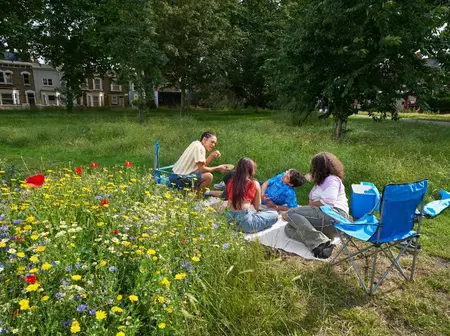
    Friends lying in the grass in London enjoying a picnic on the grass in a park

    Eight bank holidays have been confirmed for England and Wales(Image: We Are via Getty Images)

    The complete list of 2027 bank holidays has been announced, with seven of those recognised in England and Wales set to shift dates next year.

    Christmas Day and Boxing Day both land on a Saturday and Sunday in 2027, meaning "substitute" bank holidays will be observed on Monday, December 27, and Tuesday, December 28. Weekends aren't the only factor determining when bank holidays occur, as the annually shifting Easter date also causes Good Friday and Easter Monday to move from year to year.

    England and Wales will see eight bank holidays throughout 2027, beginning with New Year's Day on January 1. Good Friday will arrive on Friday, March 26, with Easter Monday following on Monday, March 29 – notably earlier than the 2026 dates of Friday, April 3, and Monday, April 6.

    May's opening bank holiday will come a day earlier, as these always take place on a Monday, while the second will arrive later. In 2027, the Early May bank holiday falls on May 3, with the Spring bank holiday on May 31.

    The summer bank holiday, which typically marks the conclusion of the school summer holidays, will be on Monday, August 30, one day ahead of this year's date of August 31. Rounding off the year, the Christmas Day and Boxing Day bank holidays will be recognised on December 27 and 28, as previously mentioned.

    Friday, January 1 – New Year's Day

    Friday, March 26 – Good Friday

    Monday, March 29 – Easter Monday

    Monday, May 3 – Early May bank holiday

    Monday, May 31 – Spring bank holiday

    Monday, August 30 – Summer bank holiday

    Monday, December 27 – Christmas Day (substitute day)

    Tuesday, December 28 – Boxing Day (substitute day)

  • Grief as 17-year-old KCSE candidate dies after sitting her first papers

    Grief as 17-year-old KCSE candidate dies after sitting her first papers

    thumbnail

    A family's hopes of celebrating their daughter's completion of secondary school have turned into grief following the death of a 17-year-old KCSE candidate in Homa Bay County.Conjestina Achieng, a Form Four student at Alaru Mixed Secondary School, died after sitting her first KCSE examination papers after developing chest pains.

  • KCSE heartbreak: Candidate dies after sitting first exam papers in Homa Bay

    KCSE heartbreak: Candidate dies after sitting first exam papers in Homa Bay

    A family is mourning the death of their Form Four daughter who died shortly after sitting her first Kenya Certificate of Secondary Education (KCSE) examination papers.

    The family of David Ogweno is grieving the loss of Congestina Achieng, a student at Alaro Central Secondary School in Kanyaliech village, Koyugi sub-location, Kibiri Ward, Karachuonyo Constituency in Homa Bay.

    The candidate died on Monday evening after complaining of severe chest pains, hours after completing her first two examination papers.

    Earlier that day, teachers had noticed that she was visibly unwell during the examinations and contacted her parents, who rushed to check on her.

    Her father, Ogweno, said he received a call from the school principal asking him to attend to his daughter after she had sat for the first two papers.

    "Her condition worsened rapidly. We rushed her to Termary Hospital but unfortunately she passed away. It is very painful," he said.

    Speaking to journalists on Tuesday, Ogweno said the family had struggled to educate Achieng alongside her siblings, adding that one of his other children was studying at Tom Mboya University.

    He said Achieng had aspired to become a lawyer and viewed the national examinations as a stepping stone towards improving her family's circumstances.

    "She was a brilliant child and we hoped she was going to pass exams. I am perturbed Achieng is no more," he said.

    Her mother, Pamela Atieno, said the teenager had been unwell since the previous week and had complained of chest pains.

    "She complained of chest pains, and I bought her some over-the-counter medicine to relieve the pain so she could sit for the national exams. I was later called and told she could no longer continue," Atieno said.

    Her teachers, Isaiah Opere and Austine Achina, described Achieng as an exemplary and disciplined student who was well behaved.

    "She was gentle, composed, and well-behaved. She was never once in trouble or punished for misconduct," Opere said.

    Her body was taken to the Homa Bay County Teaching and Referral Hospital mortuary.

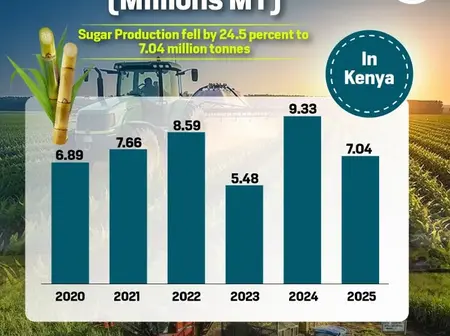
  • Domestic sugar production(Millions MT)

    Domestic sugar production(Millions MT)

    Kenya’s domestic sugar production declined by 24.5 per cent in 2025, according to figures from the Kenya National Bureau of Statistics (KNBS).

    The production figure fell to 7.04 from 9.33 in 2024, reversing the previous year’s strong performance. The chart shows production stood at 5.48 in 2023, after rising from 6.89 in 2020 to 8.59 in 2022.

    The figures highlight a significant decline following the 2024 peak, raising questions about the factors behind the latest drop in domestic sugar output.

  • How counties can turn social media engagement into real value

    How counties can turn social media engagement into real value

    Kenya's digital landscape continues to expand. Platforms such as Facebook, TikTok, YouTube, Instagram, LinkedIn, X and WhatsApp have become the spaces where citizens consume information, debate public issues and engage with institutions.

    As a result, government communication has changed. Gone are the days when public communication meant issuing a press release, holding a press conference or placing an advertisement in a newspaper and waiting for citizens to respond. For County Governments, this shift towards social media platforms and other forms of digital communication presents both an enormous opportunity and a significant responsibility.

    Social media therefore cannot be treated simply as another noticeboard for posting photographs of meetings and speeches. It is increasingly part of the public service itself, acting as a vital tool for widespread democratic participation and catalyst for social change.

    A well-managed county social media channel can explain a new health programme, tell farmers where to access extension services, alert residents about an emergency, explain a budget decision, showcase a local enterprise or direct a citizen to the office that can resolve a problem.

    However, simply being online does not guarantee meaningful engagement. The greatest value of government social media is not the number of followers. It is the trust created when citizens consistently receive information that is timely, accurate, relevant and understandable. This requires County communication executives to rethink what success looks like.

    First, communication must be citizen centred. The starting question should not be, "What did the Governor do today?" but rather, "What does the citizen need to know?" A commissioning of a health facility matters, but citizens are more interested in where it is, what services it offers, who can access them and how their lives will be changed.

    Second, authenticity matters. Government does not have to sound like advertising. Citizens can tell genuine communication from content created simply to make an institution look good. Showing real people, real projects and real experiences can be more powerful than polished publicity.

    Third, trust must be earned through accuracy. While Social media rewards speed, government communication must prioritise verification. A false post can reach far more people than the correction that follows it.

    Communication teams therefore need strong systems for verifying information with technical departments before publication, particularly during emergencies and periods of heightened public interest.

    Fourth, counties must listen, not merely broadcast. A social media account that only publishes announcements is only utilizing half of its potential. Citizens are asking questions, reporting problems and sharing experiences every day. Communication teams should monitor these conversations and establish clear pathways for referring legitimate service issues to the responsible departments.

    Fifth, one Kenya does not mean one audience. The communication needs of a young person in Nairobi may differ greatly from those of a farmer in Turkana, a trader in Mombasa or a parent in Taita Taveta. Even within a single County, urban and rural communities may consume information differently.

    This is why social media should complement, rather than replace, traditional communication channels. County governments must continue to use community radio, public meetings, local networks, websites, SMS and other appropriate channels. Kenya's County public participation framework already recognises the need to use multiple communication platforms depending on their reach, effectiveness and the diversity of the people they serve.

    There are also genuine risks. Social media can amplify misinformation, deepen political tensions, expose institutions to reputational damage and create pressure for communication teams to respond before facts are established.

    The answer, however, is not for government to retreat from social media. It is to become better at using it. County communication executives need clear editorial policies, rapid verification systems, crisis communication protocols, trained digital teams and regular analysis of audience behaviour.

    They must also invest in compelling storytelling, data, visual communication and the capacity to produce content in formats suited to different platforms and users.

    Most importantly, they must understand that digital communication is not simply about technology. It is about relationships.

    The future of government communication will belong to institutions that can explain, listen, respond and build trust consistently. Social media gives County Governments an unprecedented opportunity to make Devolution more visible, understandable and accessible to the people it was created to serve.

    The question is no longer whether government should be on social media, it is whether government is using that space well enough to make citizens better informed, better heard and better served.

    For county governments, that is the real measure of digital communication.

  • Gachagua hits back at Matiang’i, Muturi over political bullying claims

    Gachagua hits back at Matiang’i, Muturi over political bullying claims

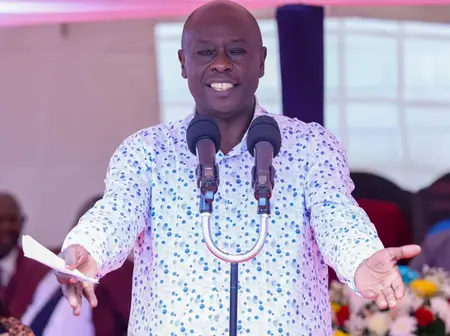
    Former Deputy President Rigathi Gachagua has hit back at Jubilee Party leader Fred Matiang’i and Democratic Party (DP) leader Justin Muturi over accusations of political bullying and arrogance, insisting that his approach to Opposition unity is driven by electoral realities.

    Gachagua defended his proposal to unite three political blocs – Mt Kenya, Ukambani and Western Kenya – arguing that their combined numerical strength could give the Opposition an advantage in the 2027 General Election.

    Speaking at his Wamunyoro residence in Nyeri on Tuesday, where he hosted a delegation from the county, Gachagua claimed that some of his political colleagues were uncomfortable with his straightforward approach and insistence on discussing electoral numbers.

    “Some my friends think that I am arrogant for being truthful. I am not arrogant. I am just truthful.”

    “When I tell some we wake up and work, they say I am bullying them. No!” asserted Gachagua, who is also the Democracy for the Citizens Party (DCP) leader.

    His remarks came a day after Muturi accused him of using political bullying and ultimatums in his engagements with fellow Opposition leaders.

    “Let it be clear: No individual owns the United Opposition, and no community has a monopoly on Kenya’s presidency. Political partnerships must be built on mutual respect, not ultimatums, political bullying or supremacy contests,” he stated.

    Matiang’i had also criticised Gachagua’s numerical proposal, warning that it could undermine efforts to build a united Opposition.

    "That majoritarian arrogance and that particular pride is precisely what is going to split the opposition and make it very difficult for the opposition to come together,” said Matiang’i, duringa television interview.

    However, Gachagua maintained that presidential ambitions must be backed by the ability to attract votes, regardless of an individual's political standing or policy proposals.

    “I have told those leaders that, when you want to be the president of Kenya, you must be voted for, regadless of the policies you have.”

    “And for you to get votes, you must look for them. No vote can be found in hotels or in the television. Votes are looked for.”

    He argued that electoral politics was fundamentally about numbers, maintaining that Opposition leaders needed to establish their potential voter base and develop strategies to secure a majority.

    “Politics is a game of numbers. The science of politics is numbers. We are anticipating there shall be 26 million [registered voters]. To be on the safe side we must get 13 million plus 1. ..we must look for those numbers.”

    Gachagua also invoked his experience in the 2022 General Election, claiming that his mobilisation efforts had played a significant role in securing President William Ruto's victory.

    “I am a believer of numbers. I am also experienced. I delivered the presidency in the last election [2022] through mobilisation of numbers. Some are uncomfortable discussing numbers; but they must be discussed,” he said.

  • Makerere reviews security after ex-student’s indecent exposure at Freshers’ Ball

    Makerere reviews security after ex-student’s indecent exposure at Freshers’ Ball

    Uganda's Makerere University has launched an immediate review of security and event management protocols following an incident in which a former student stripped naked during the institution's Freshers' Ball.

    The university said on Tuesday that it was reviewing security arrangements for all university-sanctioned social events to prevent a recurrence of the incident, which attracted widespread attention after videos circulated on social media.

    In a statement, Dean of Students Dr Winifred Kabumbuli said the university had noted with concern the conduct of the former student during the event held on October 31 at the university grounds.

    "The university wishes to clarify that it does not condone any conduct that undermines the values, principles and standards of behaviour expected of members of the university community," she said.

    The university also clarified that the woman involved was not a newly admitted student, as had been suggested in some public discussions, but a former student.

    It explained that the Freshers' Ball is traditionally organised as a public event, attracting different stakeholders, including alumni and members of the general public.

    The incident occurred when the woman climbed onto a table in the stage area and removed her clothes completely as a cheering crowd watched and recorded the spectacle.

    She continued dancing before she was eventually pulled down from the platform.

    The footage triggered widespread criticism on social media, with users questioning how such an incident could occur at an event hosted on university grounds.

    Following the incident, university management announced the indefinite suspension of campus social events, including the Freshers' Ball, Porridge Nights and Bazaars.

    The security review announced on Tuesday signals an additional response aimed at tightening controls over university-sanctioned gatherings.

    The university also acknowledged an appeal by the woman's family asking members of the public to stop circulating videos and photographs of the incident.

    Makerere said it remained committed to providing a safe, inclusive and dignified environment for its students and other stakeholders.

    The Freshers' Ball is among the social activities traditionally associated with the beginning of the academic year at the premier institution, bringing together new students, continuing students, alumni and members of the public.

  • KenGen risks losing Sh363m in Stima Investment Co-op

    KenGen risks losing Sh363m in Stima Investment Co-op

    KenGen

    KenGen risks losing its investment of more than Sh363 million in the form of fixed deposits in Stima Investment Co-operative Society after the latter failed to repay the amount to the power producer.

    The Nairobi Securities Exchange-listed firm invested Sh100 million in Stima between 2015 and 2016—when it was led by former chief executive Albert Mugo—through its charitable arm KenGen Foundation.

  • Second body recovered from Eastleigh building rubble as rescue operation continues

    Second body recovered from Eastleigh building rubble as rescue operation continues

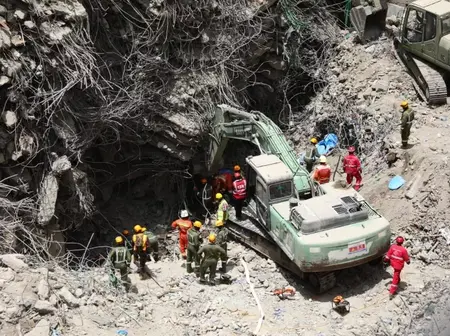
    A second body has been recovered from the rubble of a collapsed building in Eastleigh, Nairobi, as search-and-rescue operations continue.

    The National Police Service (NPS) in a statement on Tuesday said that a multi-agency team retrieved the body of a woman from the site, bringing the number of recovered bodies to two.

    Four people have so far been rescued alive from the rubble, according to the police.

    In a statement, the NPS said it continued to support the ongoing rescue operation and extended its condolences to the family and friends of the deceased.

    The Service also wished those injured a quick and full recovery.

    Police urged members of the public to keep away from the affected site to allow emergency responders, rescue personnel and specialised equipment to operate without interference.

    The multi-agency team is continuing to clear the remaining debris in an effort to establish whether more people are trapped.

    The NPS said it would issue further updates as new developments emerge.

    The latest recovery comes 11 days after the multi-storey building under construction collapsed along 9th Street in Eastleigh on October 23, trapping workers and people who may have been inside the premises.

    The first body, also that of a woman, was recovered on Friday, October 30, eight days after the incident. The discovery came as rescue teams intensified efforts to access the lower sections of the structure, particularly the basement, where some missing people were believed to be trapped.

    The operation has faced challenges as rescuers work through tonnes of concrete and other debris to reach sections of the building that remain inaccessible.

    As of November 1, about 85 per cent of the debris had been cleared, with 16 people still unaccounted for following a verification exercise by the Kenya Red Cross and the Directorate of Criminal Investigations (DCI).

    Nairobi North County Commissioner Simon Osumba said investigators had used mobile phone data to establish that nine of the missing individuals were at the building shortly before it collapsed.

    The collapse also triggered investigations into possible breaches of construction regulations and failures in building supervision.

    The Director of Public Prosecutions directed the DCI to investigate possible negligence, omissions or misconduct by public officials, developers and construction professionals involved in the project.

    Investigators are expected to establish whether the building had the necessary approvals, was properly inspected and complied with construction safety requirements.

    The NPS said the multi-agency team remained committed to the search-and-rescue operation and would issue further updates as new developments emerged.