Environmental sustainability has become a common phrase, and not just locally but globally. This is because our health and well-being largely depend on how often we protect and nurture the environment.
Therefore, responsible management of natural resources is something we cannot afford to ignore. I also believe we, humans, prefer to live in a green, serene environment, free from litter. A place with fresh air emanating from the surroundings, which you intensely feel slapping across your cheeks at the crack of dawn, at midday and at sunset.
That aside, have you ever wondered how you can handle your litter? Specifically, textile waste? For context, textile waste is any fabric that is unwanted and that you prefer to throw away. You’d be surprised that what you call waste is a gem to some.
Africa Collect Textiles, a textile company based in Kenya, saw a problem and turned it into a golden opportunity. Kenya is the largest importer of second-hand clothing in Africa, and with these huge tonnes of garments that get shipped in, come obsolete clothing as well. But for Africa Collect Textiles, they upcycle them and recreate beautiful pieces out of them.
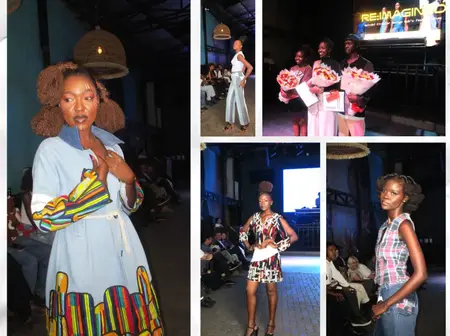
It is with this consistent upcycling of leftover second-hand clothing that they skyrocketed their efforts a notch higher by garnering global partners and organising a fashion show known as Nairobi Circular Design Hub.
In collaboration with the Estonian Academy of Arts and SEI Tallinn, both based in the capital of Estonia, Kenyatta University and emerging Kenyan designers, they transformed second-hand materials into contemporary fashion. What started as a project at Kenyatta University in January 2025 quickly turned into a fashion show, which was the culmination of this project.
This vibrant fashion show held in Nairobi showcased 15 different collections made by fashion design students. It was not just another fashion show. It was an event that intentionally chose to give young, emerging designers a chance to nurture their craft. What made it more interesting is that every piece of clothing was made out of ‘mitumba’, as we Kenyans prefer to call second-hand clothes.
Harry Moora, who works with the Stockholm Environment Institute (SEI Tallinn), said that through this partnership, he and his team are learning a lot from Kenya. Coming from a country that exports these clothes to Africa, Harry has been inspired by the fact that young Kenyans are taking what he termed “shifting our problem to Kenya” into a modern fashion sensation.
"We have gotten proof that you have skilful, innovative and bright people, and I would love to say that Kenya could be an example for other African countries on how to utilise and make a problem a solution," Harry says.
Through this initiative, SEI Tallinn, among other partners, now wants to contribute to coming up with solutions related to textile waste and ensure that this journey leads to a wider circular economy in Kenya.
"Estonia is quite an environmentally conscious country. Even in terms of circular design, Europe in general is into a circular economy," Margaret Aus, a researcher at the Estonian Academy of Arts, adds.
THE CATCH
This collaboration aims to manage textile waste, but that only solves a minute part of the problem. Textile waste comes in heaps, and making only garments from it doesn't consume all this waste. Dr Jacqueline Kisato, a senior Fashion Design Lecturer at Kenyatta University, adds this other perspective.
"The problem is large. We need to think higher and larger by going into different sectors, such as interior design. For example, we can use textile waste to make bricks."
The fashion show was not just entertainment. It was also meant to empower the upcoming generation by showing them that one can turn their skills into a source of income.
"The idea of this event was to empower the students to turn these garments into real businesses, posing the question: Would someone out there buy these garments?" Dr Jacqueline said.
As the world continues to grapple with the growing challenge of textile waste, initiatives such as the Nairobi Circular Design Hub remind us that sustainability requires us to rethink how we consume, produce and dispose of the things we use.
The future of fashion may not necessarily be about producing more clothes but finding creative ways to make use of what already exists. Through collaborations that bring countries, institutions and young designers together, Kenya has an opportunity to contribute to this global conversation, while learning from others.
Ultimately, environmental sustainability is a collective responsibility, and perhaps the next big thing in fashion is learning how to turn what we consider waste into something valuable.
Leave a Reply