A new poll by Tifa Research has revealed who Kenyans believe is causing division within the united opposition ahead of the 2027 general election.
According to the survey, former Deputy President Rigathi Gachagua is perceived as the main figure responsible for disagreements within the opposition, with 43% of respondents blaming him.
The poll shows that 15% of Kenyans, on the other hand, blame President William Ruto and the UDA government for the divisions in the opposition.
The findings come at a time when the opposition has been trying to present a united front against Ruto in 2027, but has been rocked by public disagreements, competing ambitions, and fights over who should be the joint presidential candidate.
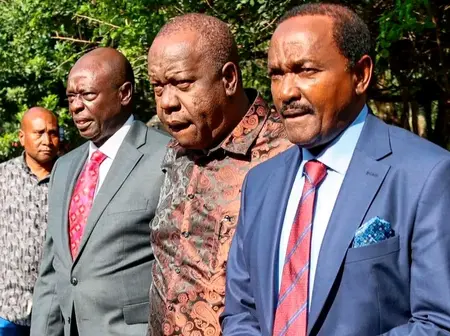
Gachagua, who leads the Democracy for Citizens Party (DCP), has been one of the loudest voices in the opposition. He has been touring the country with other opposition leaders, including Kalonzo Musyoka, Martha Karua, Fred Matiang'i, and Edwin Sifuna.
But his style of politics has divided opinion. His supporters say he is bold, fearless, and the only one who can speak truth to power. They say he is the one who mobilised Mt Kenya against Ruto after his impeachment as Deputy President.
The Tifa poll suggests that many Kenyans now share that second view.The 43% figure is a major blow to Gachagua, who has been pushing to be the opposition's presidential candidate or at least the kingmaker in deciding who faces Ruto.
It also explains why the opposition unity talks have stalled in recent weeks. Leaders have failed to agree on a single candidate, a joint party, and a common campaign strategy, with each camp accusing the other of sabotage.
Meanwhile, the 15% who blame Ruto and the UDA government believe the divisions are being sponsored from within government. They argue that the government is using divide-and-rule tactics to weaken the opposition by planting moles, funding rival camps, and fuelling internal wars.
Opposition leaders have in the past accused Ruto of trying to break their unity by using state machinery and money to lure some of their members.
For Gachagua, the poll is a wake-up call. If he wants to remain relevant in the united opposition, he will have to soften his approach and work with others instead of fighting them.
For the opposition as a whole, the poll shows that Kenyans are watching closely. They want unity, not endless fights. If the opposition continues to fight among themselves, they risk handing Ruto an easy win in 2027, even as he faces growing criticism.
As the 2027 polls draw closer, the big question remains: can the opposition put aside their personal ambitions and unite behind one candidate, or will division hand Ruto a second term?
Leave a Reply