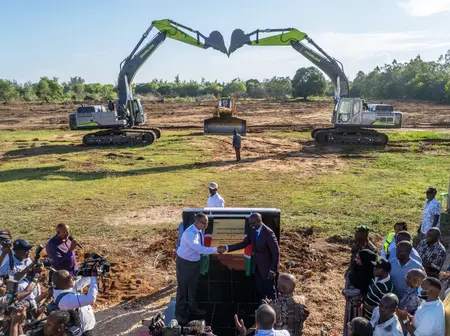
The facility is expected to produce 5,000 tonnes of clinker daily, or about 1.6 million tonnes a year. Once operational, it will raise Bamburi’s total clinker capacity from one million to 2.6 million tonnes and lift overall cement production from 1.8 million to four million tonnes annually.
Ruto framed the project as part of a wider effort to give investors stronger incentives across the country. The goal, he said, is straightforward: create jobs, make more of what Kenyans consume, keep more value inside the economy, and make sure every region benefits from national growth.
Local production of clinker, the key ingredient in cement and a major cost driver, should cut the need for imports, save foreign exchange, and support related businesses. Construction alone is expected to generate work, while the finished plant will open skilled positions and create demand for transporters, suppliers and small traders in the surrounding area.
The site already shows heavy machinery at work, with excavators moving earth under the bright coastal sun. For Kwale residents, the plant represents more than industrial statistics. It is a concrete signal that manufacturing investment is spreading beyond the usual centres and into the counties.
Leave a Reply