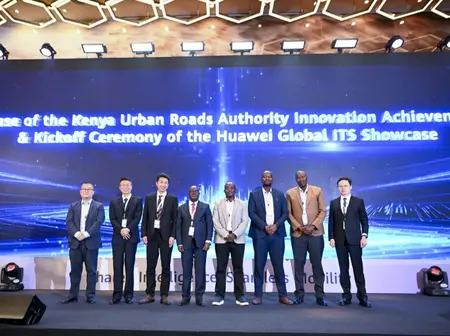
The Kenya Urban Roads Authority (KURA) has unveiled an Intelligent Transport System (ITS) that will use real-time data, smart traffic signals and surveillance technology to improve traffic management and ease congestion on Nairobi roads.
The system was showcased Friday, November 27, during the Kenya Intelligent Transportation Forum in Nairobi, presided over by Roads Principal Secretary Joseph Mbugua, with Botswana's Minister for Transport and Infrastructure Keoagile Atamelang attending as chief guest.
The launch marks a major step in the government's efforts to modernise urban mobility by shifting from conventional traffic control to technology-driven management of road networks.
The wider Nairobi Intelligent Transport System programme is estimated to cost Sh44.8 billion and targets 230 major junctions through a three-phase implementation plan.
The first phase, valued at approximately Sh7.9 billion, covers 25 junctions and includes the establishment of a central Traffic Management Centre.
The second phase will cover 60 additional junctions at an estimated Sh13 billion, while the third phase will extend the system to another 125 junctions at a cost of about Sh24 billion.
The technology is expected to enable authorities to monitor traffic conditions, coordinate signals, detect incidents and respond more quickly to accidents and other emergencies.
It will also incorporate CCTV cameras, vehicle detection systems, variable message signs and electronic enforcement equipment, reducing dependence on officers physically directing traffic at busy intersections.
Mbugua has previously called for the adoption of intelligent engineering systems, including artificial intelligence, Geographic Information Systems and digital monitoring, to improve infrastructure planning and delivery.
He has said technology can strengthen decision-making, optimise resources and improve the efficiency of public infrastructure investments.
Representing Cabinet Secretary Davis Chirchir during the event, the PS acknowledged the significance of the project.
He stated that the government welcomes collaborations that enhances safer roads and sustainable urban development.
"Every investment that we make we make is an investment for our generations and future of our country," he said.
Huawei Kenya Vice President Kerry Xu represented the technology partner behind the showcase.
Huawei has been working with KURA on the development of intelligent transport capabilities, including traffic monitoring, signal optimisation and incident detection.
He said: “Our partnership with KURA demonstrates how technology can support smarter urban mobility. By combining intelligent traffic signals, surveillance systems and data analytics, we are working towards safer, more efficient and better-connected roads.”
The company's wider transport technology solutions use artificial intelligence and connected infrastructure to identify traffic incidents and adjust signal timings in response to changing road conditions.
KURA Director General Silas Kinoti said the collaboration had helped Kenya develop capabilities in traffic perception, analysis and dispatch.
“This project is a key milestone in our efforts to leverage technology for smarter and safer transportation in urban areas. It will enhance road safety, ease traffic flow, and provide data-driven solutions for effective traffic management," he said.
The project also received international recognition, with Kinoti receiving the Pyramid Award 2026 from the World Transportation Sciences Academy for his contribution to global transportation.
The award recognises achievements in transportation innovation and development. The Nairobi ITS project, jointly implemented by KURA and Huawei, was among the initiatives recognised by the academy.
Assistant Director for Intelligent Transport Systems at KURA Mwinyi Bwika highlighted traffic congestion as one of the most pressing challenges facing Nairobi and other growing urban centres.
He noted that congestion was evident from the moment visitors arrived at Jomo Kenyatta International Airport and travelled into the city, underscoring the need for better coordination of road networks.
Atamelang's participation provided a regional perspective on the role of technology in addressing urban transport challenges. Botswana has also been pursuing reforms in public transport, including its TANA electric bus and planned metro rail initiative.
The forum, held under the theme 'Transportation in the AI Era: Opportunities and Challenges', brought together government officials, technology companies and transport stakeholders to examine how emerging technologies can improve mobility.
Leave a Reply