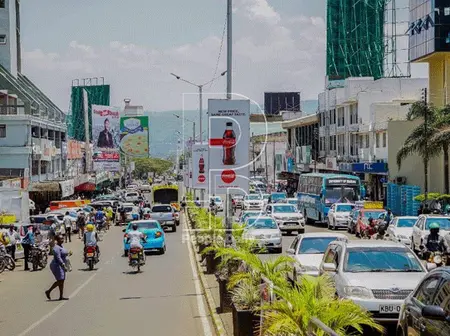
Kisumu’s approach to managing its central business district (CBD) offers a glimpse of how Nairobi could tackle persistent congestion, after the lakeside city introduced restrictions on matatus, relocated traders and invested in designated markets to reclaim busy streets.
Unlike Nairobi, where public service vehicles, hawkers and competing transport interests continue to occupy valuable road and pedestrian space, Kisumu has pursued a series of measures aimed at moving commercial and transport activities away from its busiest streets.
The strategy has not eliminated congestion or disputes, but it has provided a framework for reorganising the city centre through designated transport routes, enforcement and alternative trading spaces.
One significant intervention came in March 2021, when Kisumu County directed matatus and buses to stop picking up and dropping passengers at several locations within the CBD.
The directive, issued by then Acting City Manager Abala Wanga, required public service vehicles to use designated routes and access the main bus park through stipulated entry points.
The restrictions affected stages around Kisumu Boys Roundabout, Aga Khan, Dal International, Kamas, Kisumu Girls and Yellow Line, among other locations.
The county warned that vehicles operating outside the designated arrangements risked being impounded.
In May 2022, the city further reorganised traffic ahead of the Africities Summit, directing matatus and buses to use the Uhuru Business Park Complex along Nyerere Road.
The restrictions remained controversial. In April 2023, the city manager maintained that the CBD ban was still in force despite resistance from some operators.
Kisumu also pursued market redevelopment as part of efforts to move traders from undesignated roadside spaces into organised commercial facilities.
Projects included Kibuye Market and Uhuru Business Park, alongside other markets developed to provide traders with designated business spaces.
The county’s 2023–2027 development plan identifies Kibuye, Uhuru Business Complex, Otonglo and Chichwa among markets developed during the preceding planning period.
However, relocating traders has not always been straightforward. Some have complained about losing customers, inadequate consultation and the cost of operating from designated facilities.
Nairobi’s congestion involves a much larger and more complex transport network, with matatus, hawkers, pedestrians, delivery vehicles and private motorists competing for limited CBD space.
Attempts to reorganise the capital have also encountered resistance.
In January 2025, Nairobi County’s efforts to relocate hawkers from major streets triggered disagreements with matatu operators over the use of central stages. The dispute required intervention by county officials, who negotiated an arrangement for the two groups to coexist.
Kisumu’s experience suggests that clearing city streets requires more than banning matatus or removing traders. It requires designated transport facilities, accessible markets, sustained enforcement and consultation with the people whose livelihoods depend on the CBD.
For Nairobi, the challenge is not simply to remove congestion, but to reorganise the city without transferring the burden to commuters, traders and transport operators.
Leave a Reply